What Is This Guitar Chord: Easy Chord Identification Guide
This guitar chord is a group of notes played together to create harmony, mood, and movement in a song.
When someone asks, “what is this guitar chord?” they usually want to identify an unfamiliar chord shape, name the notes, or learn how to play it. This guide explains how chord names work, how to identify any guitar chord, and how to check your answer with simple music theory and practical fretboard tests.
What Is This Guitar Chord?
A guitar chord is made from two or more notes played at the same time. Most common chords contain at least three different notes, called a triad. These notes usually include a root, a third, and a fifth.
For example, a C major chord contains:
• C as the root
• E as the major third
• G as the perfect fifth
The guitar may play some of these notes more than once. That is why a six-string C chord can still be called a three-note chord.
When you ask, “what is this guitar chord?” the answer depends on three things:
• Which frets are pressed
• Which strings are played
• Which notes those strings produce
A chord shape is only a visual pattern. The chord name comes from the notes created by that pattern.

Why Guitar Chord Names Can Feel Confusing
Guitar chord names often look complex because they describe both the main chord and any added or changed notes. A basic chord may be called C, while another shape may be called Cmaj7, Cadd9, Csus4, or C/G.
The first part usually tells you the root note. The rest explains the chord’s quality or bass note.
Here is a simple guide:
• Major: Bright and stable, such as C or G
• Minor: Darker and more reflective, such as Am or Em
• Seventh: Adds tension, such as G7 or A7
• Major seventh: Smooth and colorful, such as Cmaj7
• Minor seventh: Soft and soulful, such as Am7
• Suspended: Replaces the third, such as Asus4
• Added tone: Adds a note without changing the basic triad, such as Cadd9
• Slash chord: Shows a different bass note, such as D/F#
A useful way to think about chord names is to treat them like a street address. The root tells you where the chord lives, and the extra symbols describe the details of the house.
How to Identify an Unknown Guitar Chord
If you want to know what is this guitar chord, do not rely on the shape alone. Follow the notes.
Step 1: Write down the strings and frets
List each string from low to high:
- Low E
- A
- D
- G
- B
- High E
Then mark each string as:
• Open
• Muted
• Fretted at a certain fret
For example, a common open C shape is:
x 3 2 0 1 0
This means:
• Low E is muted
• A string is fretted at the third fret
• D string is fretted at the second fret
• G string is open
• B string is fretted at the first fret
• High E is open
Step 2: Convert each string into a note
Use a standard-tuned guitar as your reference:
• Low E string: E
• A string: A
• D string: D
• G string: G
• B string: B
• High E string: E
Each fret raises a note by one half step. For example, the open A string is A, the first fret is A-sharp or B-flat, and the second fret is B.
Step 3: Find the lowest sounding note
The lowest note often reveals the chord’s bass note. It is not always the root, though.
For example, the notes in D/F# are D, F#, and A, but F# is the lowest note. This creates a slash chord. It is still a D major chord, but with F# in the bass.
Step 4: Remove repeated notes
Many guitar shapes repeat notes. A six-string chord may contain only three unique notes.
For instance, a major chord uses:
• Root
• Major third
• Perfect fifth
If the notes are C, E, and G in any order, the chord is likely C major.
Step 5: Compare the notes with chord formulas
Common chord formulas include:
• Major: 1, 3, 5
• Minor: 1, flat 3, 5
• Dominant seventh: 1, 3, 5, flat 7
• Major seventh: 1, 3, 5, 7
• Minor seventh: 1, flat 3, 5, flat 7
• Suspended four: 1, 4, 5
• Add9: 1, 3, 5, 9
This process may seem slow at first. After some practice, your ear and hand will begin to recognize common shapes quickly.

How to Read a Guitar Chord Diagram
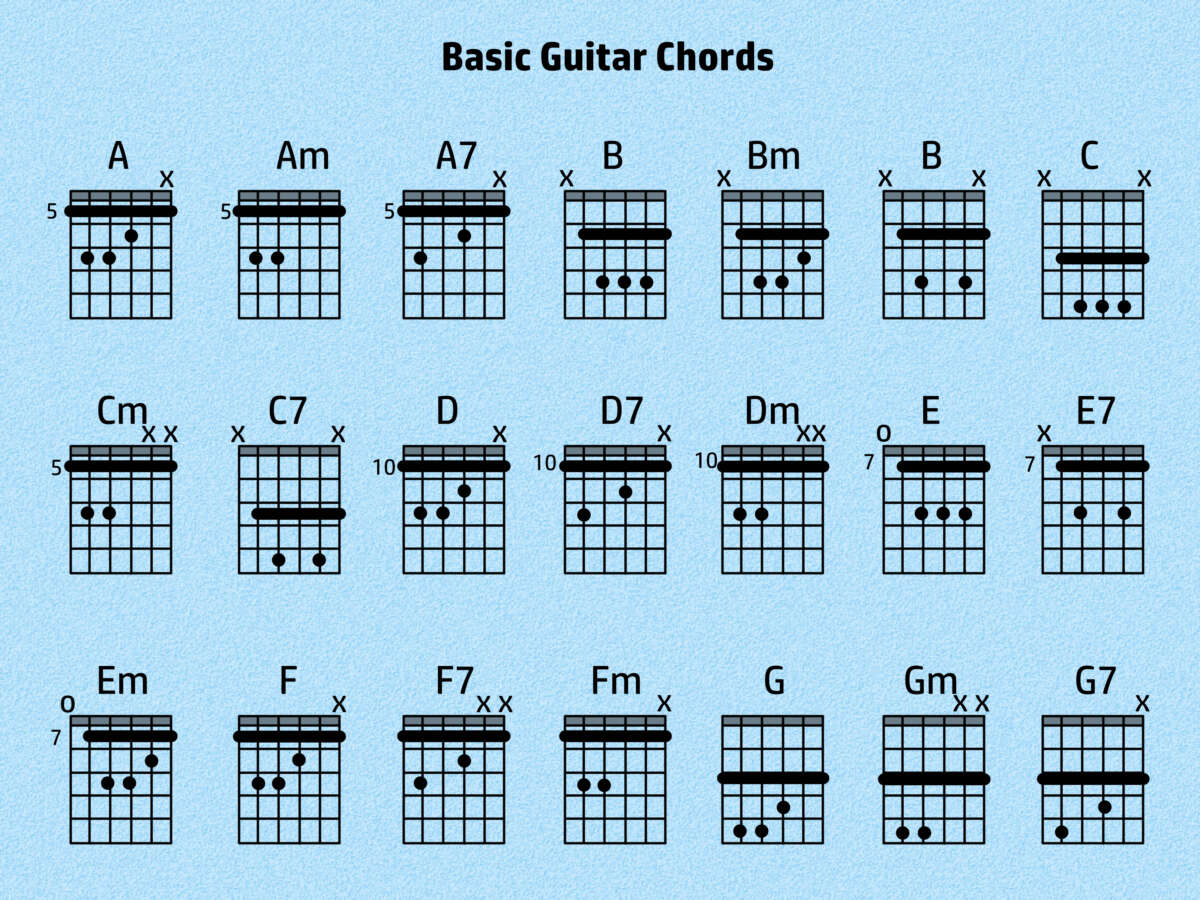
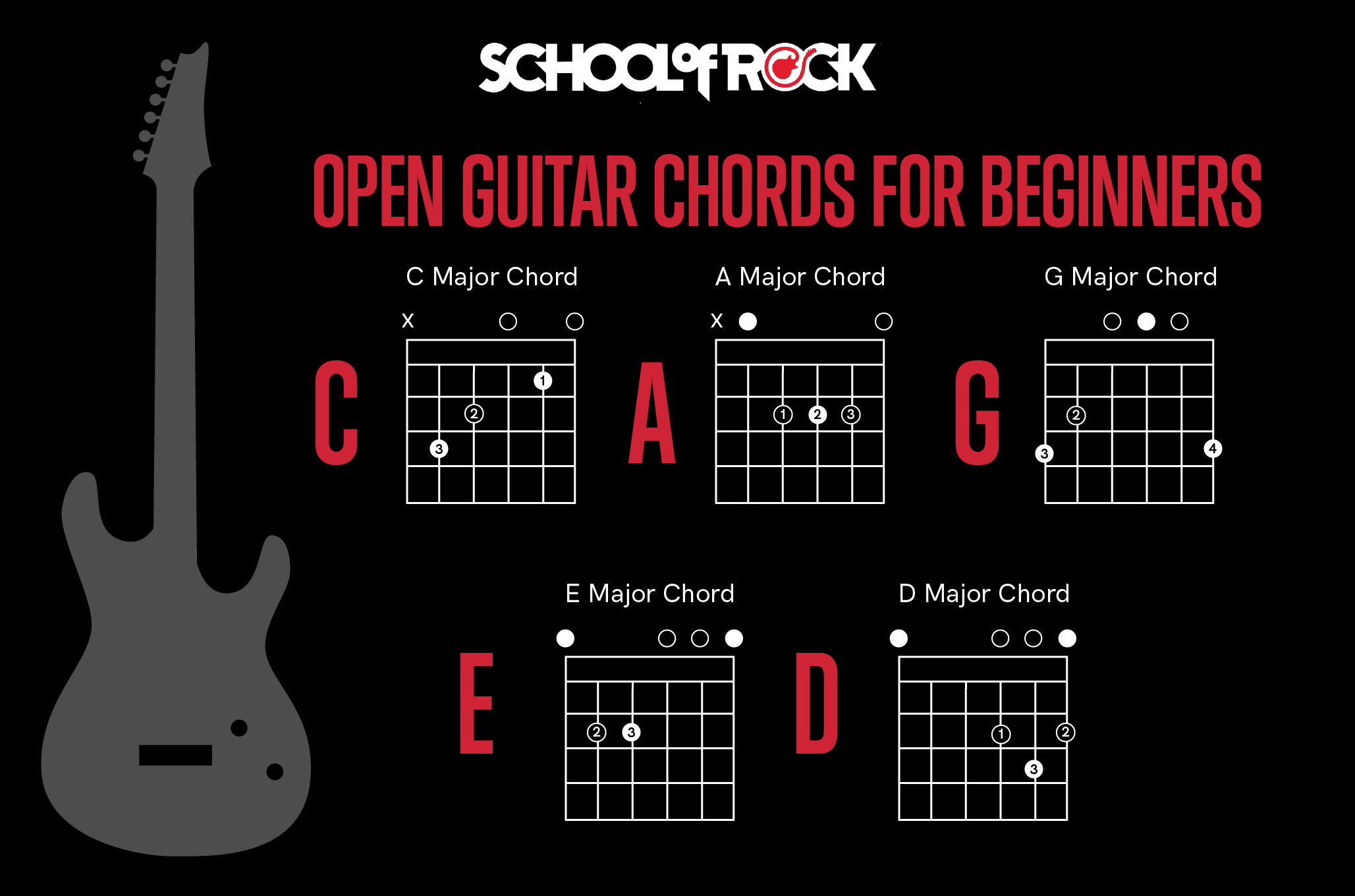
A chord diagram is a small picture of the guitar neck. Learning its symbols makes chord identification much easier.
Most diagrams include:
• Vertical lines for the strings
• Horizontal lines for the frets
• Dots for finger placement
• An “O” for an open string
• An “X” for a muted string
• A number showing a fret beyond the first position
The thick line at the top often represents the nut. If there is no nut line, a number may show the starting fret.
Remember that diagrams can be shown from different viewpoints. Most chord charts display the low E string on the left and the high E string on the right. A chart that looks backward may still show the same chord.
When checking what is this guitar chord, always confirm the tuning first. Standard tuning is E-A-D-G-B-E, but many players use drop D, open G, DADGAD, and other tunings.
Common Guitar Chords and Their Notes
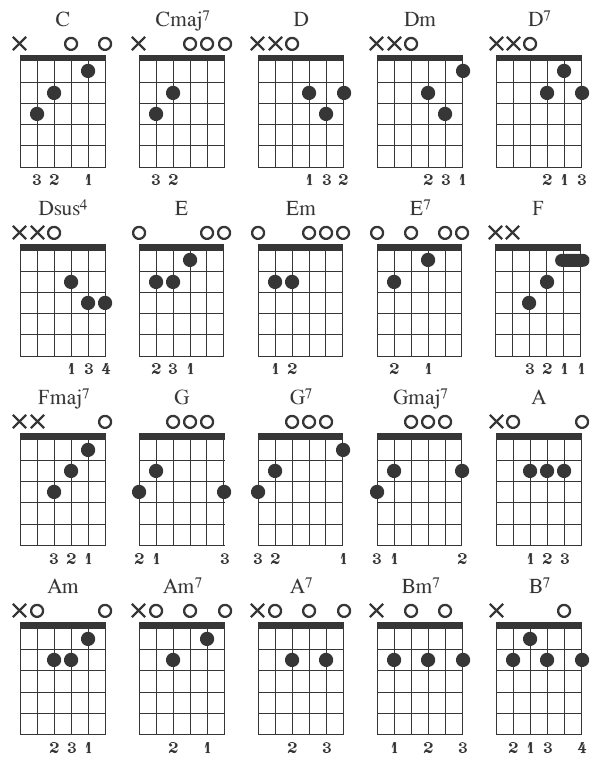
Knowing basic chord families helps you identify unfamiliar shapes.
Major chords
Major chords usually sound clear, open, and settled. Their formula is 1, 3, 5.
Examples include:
• C major: C, E, G
• G major: G, B, D
• D major: D, F#, A
• A major: A, C#, E
Minor chords
Minor chords often sound warmer, sadder, or more serious. Their formula is 1, flat 3, 5.
Examples include:
• A minor: A, C, E
• E minor: E, G, B
• D minor: D, F, A
The lowered third is what gives a minor chord much of its character.
Seventh chords
Seventh chords add color and tension. A dominant seventh chord uses the formula 1, 3, 5, flat 7.
For example, G7 contains:
• G
• B
• D
• F
A dominant seventh chord often wants to resolve to a chord a perfect fifth below. G7 commonly resolves to C.
Suspended chords
Suspended chords replace the third with another note. This removes the clear major or minor quality.
Asus4 contains A, D, and E. The D replaces the usual C-sharp. Many players resolve Asus4 to A because the suspended note falls back into the major third.

Chord Shape Versus Chord Name
A chord shape is a finger pattern. A chord name describes the sound and notes created by that pattern.