How Much Is An Electric Drum Set: Prices & Buying Guide
An electric drum set usually costs $300 to $3,000, with premium kits reaching $5,000 or more.
Wondering how much is an electric drum set is a smart first step before you shop. Prices vary widely because a basic practice kit and a stage-ready professional kit are very different instruments. This guide breaks down real price ranges, key features, hidden costs, and buying tips so you can choose with confidence.
How Much Is an Electric Drum Set?
The average electric drum set costs between $500 and $1,500 in the United States. Entry-level kits can cost as little as $250 to $400, while advanced kits may cost $2,000 to $5,000 or more.
Here is a simple price guide:
• $250 to $500: Basic beginner kits for home practice
• $500 to $1,000: Better beginner and intermediate kits
• $1,000 to $2,000: Advanced kits with stronger sounds and better pads
• $2,000 to $5,000 or more: Professional kits for recording, touring, and live shows
The answer to how much is an electric drum set depends on the module, pad type, rack quality, pedals, sounds, and brand. A low-cost kit may include the main parts but leave out a throne, headphones, or a proper kick pedal.
A good electric drum set should feel like a musical instrument, not just a group of plastic pads. The more you pay, the more likely you are to get realistic response, better sounds, stronger hardware, and useful connection options.
Electric Drum Set Price Ranges Explained
Entry-level electric drum sets: $250 to $500
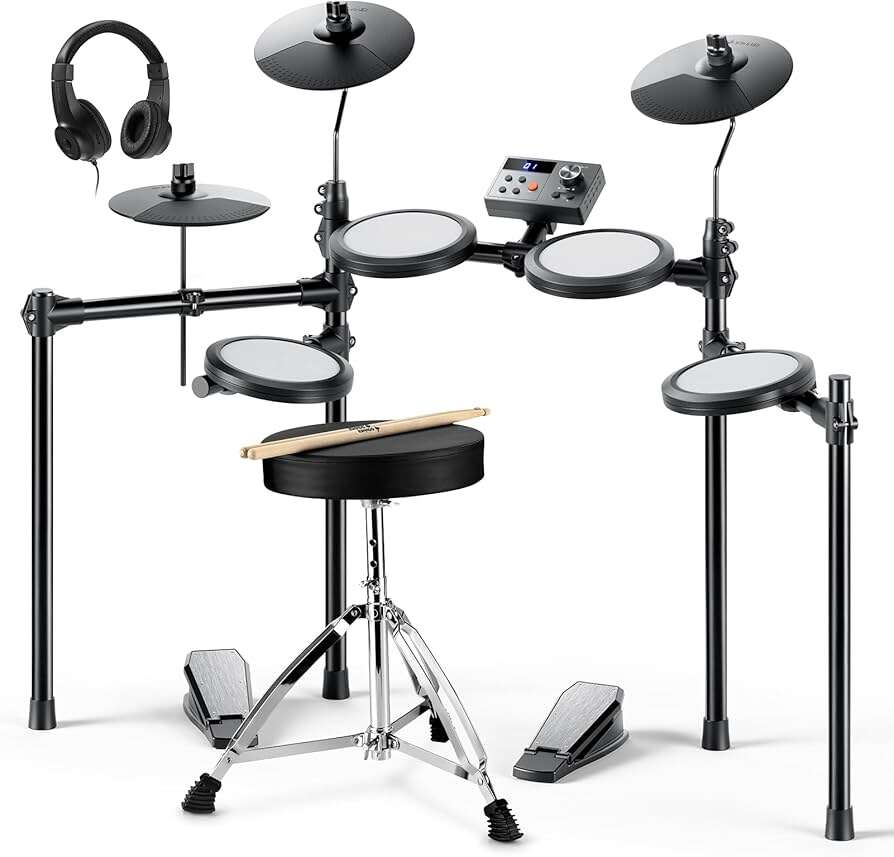
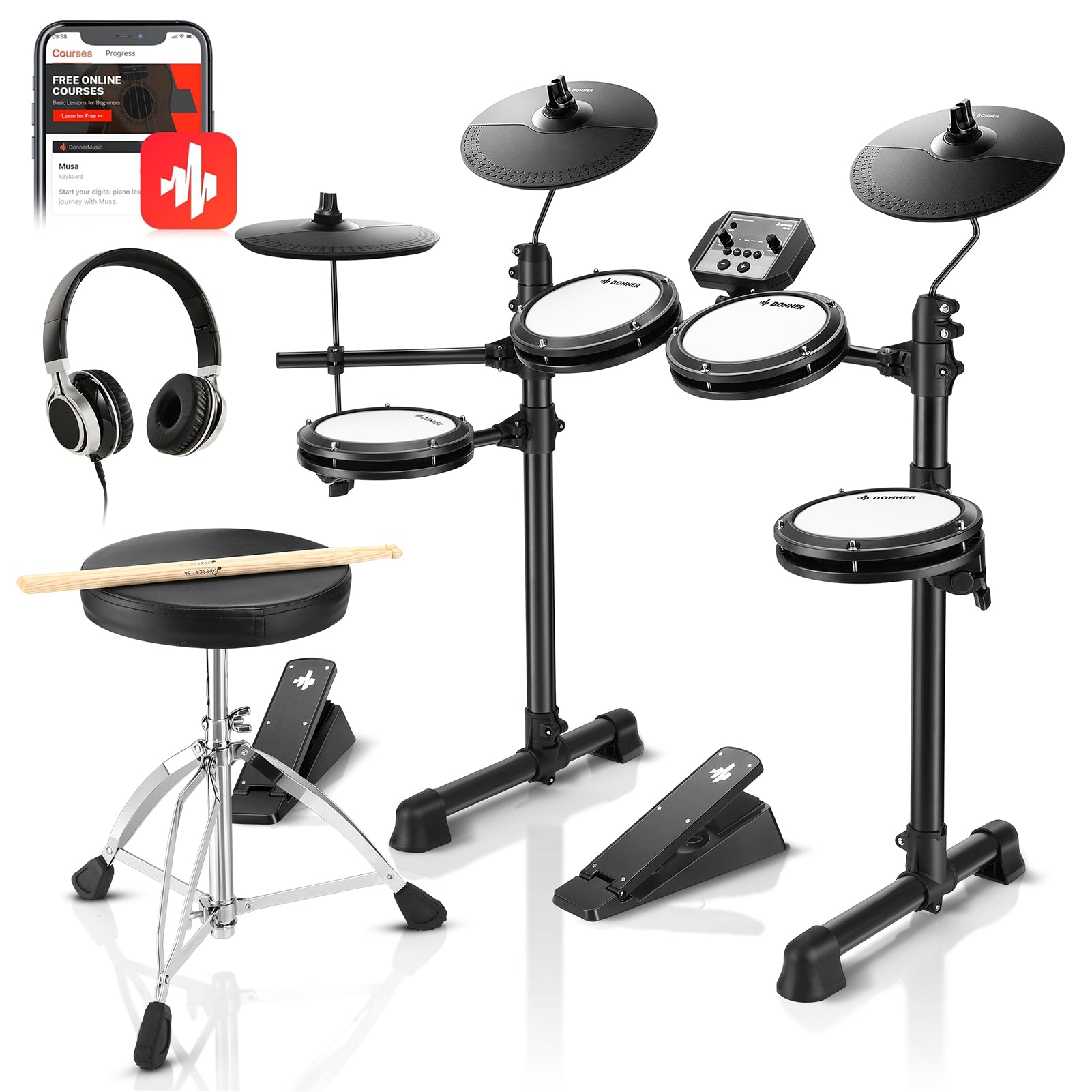
Entry-level kits are made for new drummers, casual players, and quiet home practice. Most include four or five drum pads, three cymbal pads, a rack, a sound module, and basic cables.
At this price, you may find small rubber pads and a compact rack. The sounds can be useful, but they may not respond to soft hits, rim shots, and playing changes as well as more expensive kits.
These kits work well if you:
• Want to learn basic drum patterns
• Need a quiet practice tool
• Have a small room
• Are not sure if drumming will become a long-term hobby
A beginner kit can be a wise choice. However, avoid buying the cheapest set only because it has many built-in sounds. Pad feel and build quality often matter more than having hundreds of sounds.
Mid-range electric drum sets: $500 to $1,000
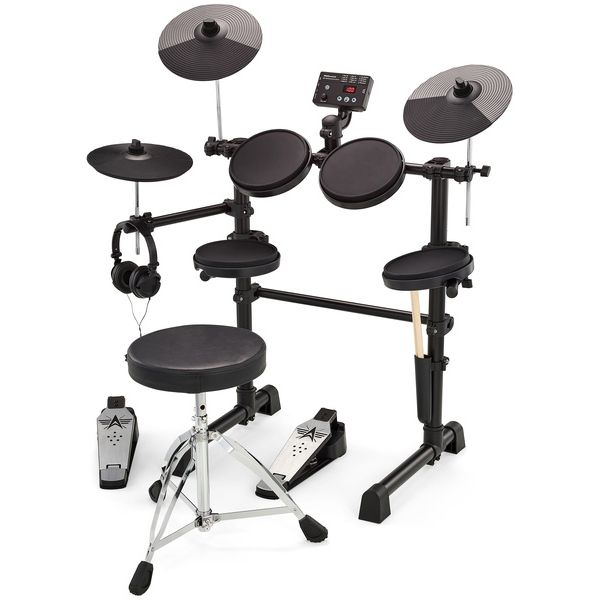
This is where many buyers find the best balance between price and performance. Mid-range kits often include mesh heads, improved cymbal response, a better kick tower, and a more useful sound module.
Mesh heads feel closer to acoustic drumheads. They also produce less physical noise than hard rubber pads, though the kick pedal can still create sound through the floor.
In this price range, you may get:
• Adjustable tension on mesh heads
• Dual-zone snare pads
• Chokeable cymbals
• USB or MIDI connections
• More realistic drum kits
• Better coaching and recording features
For many home players, a mid-range electric drum set offers enough quality for several years. It can support lessons, practice, computer recording, and small performances.
Advanced electric drum sets: $1,000 to $2,000
Advanced kits are aimed at serious students, working musicians, and players who want a more natural experience. The pads are usually larger, the rack is stronger, and the module gives you deeper control over sounds.
Some advanced kits use a full-size snare and larger tom pads. This helps players move from an electric kit to an acoustic drum set with less adjustment.
You may also find:
• More detailed sound editing
• Multi-layer drum samples
• Better sensitivity across the pad
• Multiple outputs for live sound
• Bluetooth audio on some models
• Better support for music software
If you practice every day, the higher price may be worth it. A reliable kit can feel more like a long-term investment than a temporary solution.
Professional electric drum sets: $2,000 to $5,000 or more
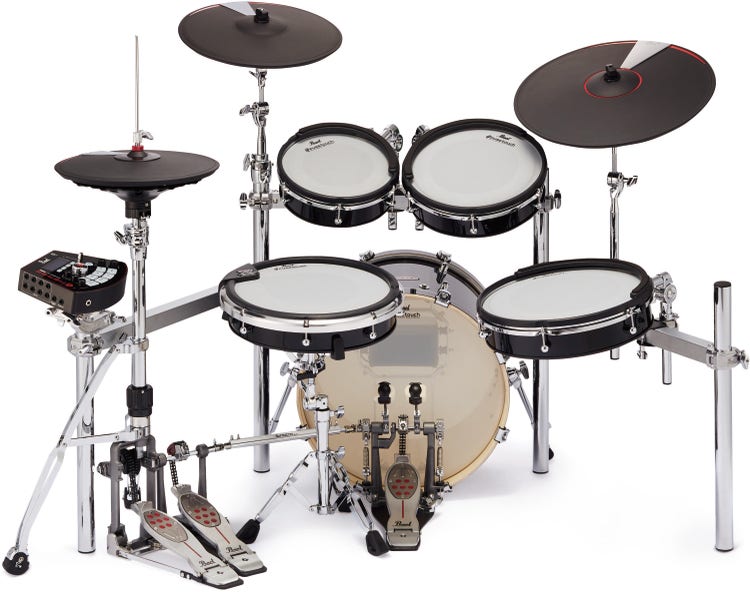
Professional electric drum sets focus on realism, durability, and control. They may use large shells, advanced trigger systems, high-quality mesh heads, and premium sound modules.
These kits are often used by touring musicians, churches, recording studios, music schools, and serious performers. Some professional systems allow you to replace individual pads or expand the setup over time.
The cost of a professional kit may include:
• Large drum pads with natural spacing
• Advanced modeling or multi-sampled sounds
• Strong metal hardware
• High-quality cymbal movement
• Independent audio outputs
• Professional MIDI and USB features
For most beginners, this level is not required. It makes sense when the kit directly supports paid work, frequent recording, or demanding performance needs.
What Affects the Cost of an Electric Drum Set?
Knowing how much is an electric drum set is easier when you understand what drives the price. Two kits may look similar but feel very different when you play them.
Drum pad material
Rubber pads are common on cheaper kits. They are durable and easy to clean, but they can feel hard and less natural.
Mesh heads cost more, but they offer a softer and more realistic rebound. Many mesh heads also allow tension adjustment. This lets you tune the playing feel to your preference.
Silicone pads sit between rubber and mesh in feel and price. They can be quiet and responsive, but the experience depends on the design.
Sound module quality
The sound module is the brain of the kit. It controls the drum sounds, effects, recording tools, metronome, and connections.
A basic module may offer a few drum kits and simple practice songs. A better module may include:
• More natural sounds
• Layered samples
• Custom sound editing
• Effects such as reverb and compression
• USB audio or MIDI
• Bluetooth playback
• Computer software support
A kit with fewer sounds but a better module can be more useful than one with 500 weak sounds.
Cymbal design
Low-cost cymbals may trigger only one sound across the whole surface. Better cymbals can detect the bow, edge, bell, and choke.
Cymbal movement also affects realism. A fixed cymbal can work for practice, but a swinging cymbal feels more natural during live playing.
Kick pedal and kick tower
Some compact kits use a small trigger pedal. This saves space, but it may not feel like a real bass drum pedal.
A separate kick tower lets you use a standard single or double pedal. This is important for players who want to build proper foot technique.
Before you buy, check whether the kick pedal is included. Many listings show a pedal in product photos but sell it separately.
Rack and hardware
A weak rack can move while you play. This is frustrating and may cause pads to shift out of place.
More expensive kits usually have stronger tubes, better clamps, and improved adjustment points. Hardware quality is easy to overlook, but it affects comfort every time you practice.
Brand support and warranty
Established brands often charge more because they provide better documentation, firmware updates, replacement parts, and customer support.
A longer warranty can also protect your investment. Check the warranty terms before buying, especially for cymbal pads, cables, triggers, and the sound module.
Hidden Costs to Include in Your Budget
The listed price is not always the final price. When people ask how much is an electric drum set, they often forget the extra equipment needed to play comfortably.
Plan for these possible costs:
• Drum throne: $50 to $200
• Headphones: $30 to $250
• Bass drum pedal: $50 to $300
• Drum mat: $30 to $150
• Monitor speaker: $100 to $500
• Extra cables: $10 to $50
• Expansion pads: $75 to $400
• Drum software: Free to $300 or more
• Assembly tools: Usually $10 to $40
A drum throne is especially important. A cheap chair can place your hips too low or make you lean forward. That can lead to poor technique and back pain.
Headphones are the simplest way to keep practice quiet. Still, remember that mesh heads and rubber pads make physical tapping noise. If you live in an apartment, a thick mat can reduce vibration through the floor.
In my own setup work, the most common surprise was the kick pedal. Buyers often assumed it was included, then discovered they needed to spend another $100 for a pedal that felt stable and smooth.

Are Cheap Electric Drum Sets Worth It?
Cheap electric drum sets can be worth buying when you have realistic expectations. They are useful for learning timing, basic coordination, sticking, and simple grooves.
They are less ideal for players who need highly accurate dynamics or a realistic acoustic feel. A very cheap kit may also have limited repair support if a trigger or cable fails.
Before choosing a low-cost kit, test or confirm these features:
-
Does the snare detect more than one playing area?
-
Does the kick pedal feel stable?
-
Can you connect headphones?
-
Can you adjust pad sensitivity?
-
Are replacement parts available?
-
Does the rack fit your height?
A cheap kit is a poor deal if you replace it after a few months. But it can be a good first step if it helps you practice consistently and discover whether drumming suits you.
The best value is not always the lowest price. It is the kit that you will enjoy using often.

Electric Drum Set vs. Acoustic Drum Set Cost
An acoustic drum set can cost about $400 to $1,500 for a beginner or intermediate shell pack. Professional acoustic kits can cost much more. However, acoustic drums often need additional cymbals, stands, pedals, a throne, microphones, and sound treatment.
An electric drum set may cost more at the start than a basic acoustic kit. Yet it can be more practical for home use because you can control the volume with headphones.
Here is a basic comparison:
| Feature | Electric drum set | Acoustic drum set |
|---|---|---|
| Starting cost | About $250 to $500 | About $400 to $1,500 |
| Quiet practice | Headphone-friendly | Usually very loud |
| Space | Often compact | Needs more room |
| Sound changes | Built into the module | Requires tuning or extra drums |
| Recording | USB or MIDI on many kits | Often needs microphones |
| Maintenance | Electronics and triggers | Heads, cymbals, and tuning |
| Playing feel | Varies by pad and module | Natural drumhead response |
Electric drums are not silent. The kick pedal can transmit thumps through walls and floors. Acoustic drums also offer a different physical response, so advanced players may prefer having access to both types.

How to Choose the Right Electric Drum Set
Start with your main reason for buying. Your needs will guide your budget better than a feature list.
For beginners
Look for a kit between $300 and $700. Prioritize a stable rack, a usable snare, a proper kick tower, and headphone output.
You do not need hundreds of drum sounds. You need a kit that makes practice easy and keeps you interested.
For apartment practice
Choose a compact kit with mesh heads and a quiet kick solution. Place it on a dense rubber mat to reduce vibration.
Also measure your room before ordering. Some full-size kits need more depth than expected, especially when the kick pedal and throne are included.
For recording
Look for USB MIDI, USB audio, or standard MIDI connections. USB MIDI lets a computer use the kit as a controller for drum software.
A better module can provide usable sounds, but many recording drummers prefer software instruments. Check whether the kit works with your computer and preferred recording program.
For live performance
Focus on reliable triggering, strong hardware, and separate outputs. A kit with poor cable connections can create problems on stage.
You should also confirm how easily the module can switch between drum kits. Fast changes matter when you perform several songs.
For advanced players
Choose larger pads, adjustable mesh heads, a strong rack, and a module with detailed editing. Expansion support is useful if you plan to add another cymbal, tom, or auxiliary trigger.
Do not pay for features you will never use. Advanced specifications are valuable only when they improve your playing or workflow.

New or Used: Which Electric Drum Set Costs Less?
A used electric drum set can save 20% to 50% compared with a new model. It may be a smart option when you buy from a trusted seller and inspect the kit carefully.
Before purchasing used equipment, test every pad and cymbal. Check the cables, rack joints, power adapter, pedals, and module screen.
Ask these questions:
• How old is the kit?
• Has it been stored in a dry room?
• Are all original cables included?
• Does the seller have the manual?
• Have any pads or triggers been replaced?
• Does the module start without errors?
Some electronic parts become difficult to replace as a kit gets older. A low used price is not helpful if one special pad costs nearly as much as the entire kit.
If possible, play the kit before paying. Hit each pad softly, at medium strength, and hard. The kit should respond evenly without missed notes or false triggers.
Common Mistakes When Buying an Electric Drum Set
Buying by sound count alone
A module with many sounds may look impressive. But you may use only a few drum kits. Response, comfort, and connection options are usually more important.
Ignoring physical noise
Headphones remove sound from your ears, not from the floor. A kick pedal can still disturb people in nearby rooms.
Ask about vibration control before setting up in an apartment or shared home.
Choosing a kit that is too small
Compact kits save space, but tiny pads may force you to change your technique. This can become uncomfortable as your skills grow.
Measure the available space and compare the pad layout with a standard acoustic setup.
Forgetting future expansion
Some low-cost modules cannot support extra pads. If you think you may grow the kit later, check the number of trigger inputs before buying.
Skipping the warranty
Electronics can fail. A warranty and available replacement parts provide valuable peace of mind.
Buying without checking pedal compatibility
Not every kick tower works with every pedal. Confirm the pedal type, mounting space, and compatibility with double pedals if that matters to you.
How to Get the Best Value
The best way to control how much is an electric drum set is to match the kit with your actual goals.
Use these steps:
-
Set a complete budget, including the throne, pedal, headphones, and mat.
-
Decide whether you need rubber pads, mesh heads, or larger professional pads.
-
Compare the module connections, not only the built-in sounds.
-
Read the warranty and replacement-part policy.
-
Check the kit dimensions before ordering.
-
Look for seasonal sales and open-box deals from reputable retailers.
-
Test used kits carefully before buying.
A useful rule is to spend more on the parts you touch most. For many players, that means the snare, kick tower, pedals, and throne.
You can also save money by buying a kit with a simple module and using free practice tools. A metronome, lesson app, or computer software may provide more value than extra built-in songs.
From years of helping players set up practice kits, I have found that comfort creates consistency. A moderately priced kit that fits your body can produce better results than an expensive kit that feels awkward.
Frequently Asked Questions About How Much Is an Electric Drum Set
How much is an electric drum set for a beginner?
A beginner electric drum set usually costs $250 to $700. A kit near the middle of this range often offers better mesh pads, a stronger rack, and a more useful kick pedal.
Is a $300 electric drum set good?
A $300 electric drum set can be good for basic practice and learning rhythm. It may have smaller pads, fewer realistic sounds, and less accurate response than a mid-range kit.
Are electric drum sets worth the money?
Electric drum sets are worth the money for quiet practice, home recording, lessons, and flexible sound control. They are especially useful when acoustic drum volume is not practical.
How long does an electric drum set last?
A well-maintained electric drum set can last for many years. The sound module, cables, triggers, and cymbal pads may need replacement sooner if the kit receives heavy use.
Do electric drum sets need an amplifier?
No, an electric drum set does not need an amplifier for headphone practice. You need an amplifier or powered monitor when you want other people to hear the kit in a room.
Can I use regular drumsticks on an electric drum set?
Yes, most electric drum sets are designed for standard wooden or nylon drumsticks. Nylon tips may reduce marks on some pads, but always follow the manufacturer’s care advice.
What is the quietest electric drum set?
Kits with mesh heads usually feel and sound quieter than kits with hard rubber pads. A quiet pedal system and a thick floor mat also help reduce noise and vibration.
Conclusion
So, how much is an electric drum set? Most buyers should expect to spend $500 to $1,500 for a reliable kit with useful features. Basic models cost less, while professional systems can reach $5,000 or more.
Focus on pad feel, the kick pedal, module quality, noise control, warranty support, and room size. Do not judge a kit only by its sound count or product photos.
Choose the kit that fits your goals and makes you want to practice. Compare complete costs, test used equipment carefully, and explore trusted reviews before you buy.

Senior Music Reviewer
Alex Carter is a seasoned music reviewer with over a decade of experience in the world of sound and instruments. Passionate about helping musicians and enthusiasts make informed choices, he brings sharp insights and in-depth knowledge to every review. From classical instruments to modern gear, Alex combines technical expertise with a love for music to deliver content that resonates with readers.
As a Senior Music Reviewer and expert author on Tuneluma.com, Alex is dedicated to sharing honest evaluations, practical advice, and thoughtful commentary to guide readers in their musical journey.