Best Books On Music Theory For Guitar: Top Picks
The best books on music theory for guitar turn fretboard shapes into clear, useful musical ideas.
You may know a few chords, copy songs, and still feel lost when someone says “play in G” or “use the Dorian mode.” That gap is common. Guitar theory can seem like a wall of notes, yet the right book makes it feel more like a map. I reviewed these guitar theory books with beginners, self-taught players, songwriters, and advancing guitarists in mind. Each choice teaches a different path, from simple first lessons to deep fretboard study. The best books on music theory for guitar should help you understand what you play, not just memorize more shapes.
Hal Leonard Music Theory for Guitar

Tom Kolb’s Music Theory – Hal Leonard Guitar Method is one of the most balanced choices in this guide. It explains scales, chords, intervals, keys, modes, and ear training in a clear guitar-first way. The book suits a player who wants more than chord charts but does not want a dense college text. Its step-by-step layout gives each idea a place on the fretboard.
The included audio tracks add real value because you can hear the examples instead of reading them in silence. I especially like how the lessons connect written theory to common guitar shapes and musical use. Beginners can move slowly, while intermediate players can use the book to fill gaps. Among the best books on music theory for guitar, this is a strong all-around pick for structured study.
Pros:
- Clear lessons for beginner and intermediate players
- Connects theory directly to guitar shapes
- Includes 94 audio tracks for ear training
- Covers scales, chords, modes, and keys
- Works well for self-study or teacher-led lessons
- Uses short sections that make practice easy to plan
Cons:
- Some advanced players may want deeper harmony lessons
- Audio access and setup may feel less convenient for some readers
- Players who only want tabs may find the theory work demanding
My Recommendation
I recommend this book to new guitarists who want a guided theory course and to intermediate players who need a solid reset. It is especially useful if you learn best by seeing a diagram, reading a short lesson, and then hearing the result. The audio tracks make the material more active than a theory book that stays on the page. It offers excellent value as a main study book and remains widely available through major music retailers.
| Best for | Why |
|---|---|
| New guitar students | It builds theory in small, easy steps. |
| Self-taught players | Examples and audio help explain ideas without a teacher. |
| Intermediate players | It fills common gaps in scales, chords, and modes. |
Music Theory for the Bass Player
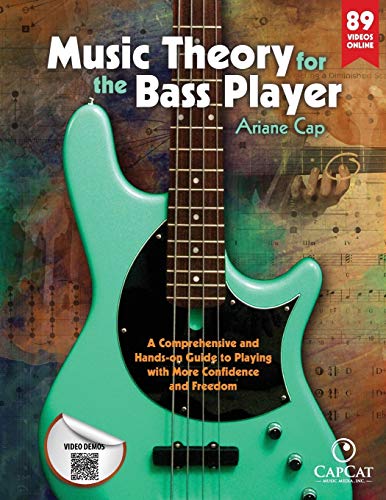
This book targets bass, but guitarists should not dismiss it. Ariane Cap’s approach explains rhythm, harmony, intervals, chord tones, and fretboard logic in a very practical way. The bass focus encourages you to think about the notes that support a chord, which can make your guitar lines sound more intentional. It is hands-on rather than abstract.
I find this especially useful for guitarists who play with bands, write songs, or want to understand groove. The book teaches you to see the neck as connected musical territory instead of a set of isolated boxes. Some examples use bass language, but the core theory transfers well to guitar. For players searching for the best books on music theory for guitar, this is a smart choice for rhythm and fretboard fluency.
Pros:
- Explains harmony through useful fretboard examples
- Strengthens rhythm and groove awareness
- Helps players understand chord tones
- Useful for band players and songwriters
- Encourages active practice rather than passive reading
- Shows how notes work together in real music
Cons:
- Written mainly for bass players
- Some guitar-specific techniques receive little attention
- New players may need a basic theory foundation first
My Recommendation
I recommend this guide to guitarists who want stronger timing, better note choices, and a clearer sense of harmony. It is a good match for rhythm guitarists, songwriters, and players who rehearse with a band. If your main goal is learning guitar-specific scales from the start, another book here may fit better. If you want to understand how your part supports the whole song, this book offers lasting value.
| Best for | Why |
|---|---|
| Band guitarists | It explains how notes support rhythm and harmony. |
| Songwriters | It helps turn chord knowledge into stronger musical ideas. |
| Rhythm players | It gives groove and chord-tone practice a clear focus. |
No Bull Music Theory for Guitarists

No Bull Music Theory for Guitarists takes a direct route. It focuses on the knowledge most players use, such as notes, intervals, keys, scales, chords, and progressions. The writing avoids heavy academic language, so the lessons feel like advice from a patient guitar teacher. This makes the book inviting when music theory has always seemed confusing.
The practical examples help you move from “I know this shape” to “I know why this shape works.” I like this style for players who lose focus in long explanations. It does not try to replace every advanced harmony text, but it gives you a useful working base. In my view, it belongs among the best books on music theory for guitar for readers who want simple answers and quick application.
Pros:
- Uses plain language and direct explanations
- Focuses on theory guitarists use often
- Good choice for self-taught players
- Helps connect shapes with musical meaning
- Easy to read in short practice sessions
- Builds confidence without overloading the reader
Cons:
- May feel brief for advanced theory students
- Less suited to readers seeking formal notation training
- Some players may want more audio examples
My Recommendation
This is my pick for the guitarist who says, “Just explain it in a way I can use.” It suits beginners who already know a few chords and intermediate players who want to remove confusion from the fretboard. The friendly style makes it a strong first theory purchase. Its value comes from helping you use core ideas at once, rather than leaving them buried under long academic detail.
| Best for | Why |
|---|---|
| Practical learners | It explains the ideas that matter during real playing. |
| Self-taught guitarists | The simple tone makes solo study less stressful. |
| Players with theory gaps | It gives a quick and useful review of core topics. |
First 50 Acoustic Guitar Songs

First 50 Songs You Should Play on Acoustic Guitar is not a pure music theory manual. Instead, it teaches theory through songs, chord shapes, lyrics, and easy guitar tab. That makes it useful for a new player who needs motivation to practice. Each song gives you a reason to change chords, follow rhythm, and notice how a progression feels.
Songbooks can quietly teach key ideas such as repeated chord patterns, song structure, timing, and transposition. This collection is most effective when you pause and ask why the chords work together. It will not cover modes or advanced fretboard mapping in depth. Still, it can serve as one of the best books on music theory for guitar when learning through music feels more natural than studying definitions.
Pros:
- Uses familiar songs to make practice enjoyable
- Includes chords, lyrics, and easy tab
- Good fit for adult beginners
- Builds chord-change speed through repetition
- Introduces song structure in a natural way
- Helps students stay motivated between lessons
Cons:
- It does not teach complete music theory by itself
- Some songs may still challenge a total beginner
- Players seeking scales and modes need a second book
My Recommendation
I recommend this songbook to beginners who learn best by playing real music. It is also helpful for teachers who need a friendly practice book for adult students. Use it beside a theory guide, and study the chord patterns rather than only copying the shapes. Its greatest benefit is consistency: players often practice longer when the lesson leads to a song they recognize.
| Best for | Why |
|---|---|
| Acoustic beginners | Simple songs make the first months feel rewarding. |
| Adult learners | Lyrics and familiar tunes give practice a clear purpose. |
| Guitar teachers | It provides ready-made songs for chord and rhythm work. |
First 50 Electric Guitar Songs

This electric guitar collection teaches through riffs, chords, solos, and classic rock songs. It gives new players an enjoyable path into power chords, single-note lines, bends, and basic rhythm parts. The tab format reduces the barrier for readers who do not yet read standard notation. It also gives intermediate players a pool of songs for improving technique.
Although it is not a dedicated theory text, the material can show how riffs fit a key and how guitar parts repeat across a song. I suggest pairing each song with a short theory note: find the root, name the chord, and identify the repeated scale pattern. That approach turns a songbook into an active learning tool. It is one of the best books on music theory for guitar only when used as a practical companion, not as a complete theory course.
Pros:
- Offers riffs and songs that inspire regular practice
- Includes tab for players who read little notation
- Builds power-chord and rhythm skills
- Introduces classic rock guitar vocabulary
- Supports beginner and early intermediate players
- Helps players learn by copying complete musical parts
Cons:
- It gives less direct theory than a method book
- Some solos may take time for new players
- Song difficulty and technique needs can vary
My Recommendation
This book is best for electric guitar beginners who need a fun reason to pick up the instrument each day. It also suits players who want to move beyond isolated exercises and learn full parts. I would not buy it as your only theory resource. Buy it with a structured theory method, then use the songs to test scales, keys, rhythm, and form in a musical setting.
| Best for | Why |
|---|---|
| Rock beginners | Recognizable riffs make technique practice feel exciting. |
| Tab readers | Tab lets you start playing before notation feels familiar. |
| Early intermediate players | The songs add useful rhythm and lead challenges. |
Essential Elements for Guitar Book 1

Essential Elements for Guitar Book 1 offers a formal beginner method with chords, tab, notation, theory, and songs. Its lessons build from basic posture and note work toward more useful guitar skills. The book works well in classrooms because the path is steady and easy to track. It can also guide home learners who prefer a planned course.
The theory sections are not flashy, but they provide the building blocks that many players skip. You learn how rhythm, notes, chords, and written music fit together. Popular songs help keep the course connected to actual playing. For parents, teachers, and new students comparing the best books on music theory for guitar, this one offers a dependable starting structure.
Pros:
- Provides a clear beginning-to-end lesson path
- Combines tab, notation, chords, and theory
- Works well for teachers and classroom use
- Uses songs to reinforce new skills
- Supports careful reading and rhythm practice
- Helps beginners form good study habits
Cons:
- The school-method style may feel slow to some adults
- Players wanting advanced theory need later volumes
- Some lessons require patience and regular review
My Recommendation
I recommend this book for a true beginner who wants a complete foundation rather than random online lessons. It is especially strong for children, teens, teachers, and adults who like a workbook feel. The mix of tab and standard notation also helps you avoid becoming dependent on one system. Its overall value is high if you want a stable course that can support months of steady progress.
| Best for | Why |
|---|---|
| Complete beginners | It starts with basic skills and adds ideas in order. |
| Students with teachers | Lessons are easy to assign and review. |
| Notation learners | It introduces standard music reading beside guitar tab. |
Music Theory for Guitarists Complete Method

This complete edition collects Volumes 1, 2, and 3 into one larger method. That gives you a longer learning path, from core terms to more advanced fretboard and harmony ideas. It is a good option for players who dislike buying separate books as their level grows. The guitar remains the center of the lessons, so theory does not drift too far from your hands.
The full format can help you build a reference library in one purchase. You can work through the early chapters, skip familiar material, and return later when a topic appears in your playing. The book demands more patience than a short beginner guide, but that is also its strength. If you want the best books on music theory for guitar in one continuous set, this complete method is a serious contender.
Pros:
- Combines three volumes in one edition
- Offers a long-term path from basic to advanced study
- Keeps theory tied to guitar shapes and concepts
- Useful as both a course and a reference
- Reduces the need to search across several books
- Supports players who want steady, deep progress
Cons:
- The larger book may feel heavy or less portable
- Beginners may find the full scope intimidating
- Some sections need slow practice and review
My Recommendation
I recommend this complete method to committed self-taught players and guitarists who want one long-term theory resource. It is also useful for an intermediate player who wants to revisit the basics and continue into harder concepts. Do not rush it like a normal songbook. Treat it as a reference map, and mark pages that answer questions from your current practice.
| Best for | Why |
|---|---|
| Committed self-learners | Three volumes provide a sustained study plan. |
| Intermediate players | You can review basics and move to harder ideas. |
| Reference use | The broad coverage makes it useful beyond one lesson. |
Music Theory for Guitarists Volume 3

Volume 3 is aimed at intermediate and advanced guitarists who already understand basic notes and chords. It explores scales, modes, chord progressions, and fretboard concepts with a more mature focus. This is the kind of book you open when familiar shapes no longer feel enough. It helps explain how players choose notes across a progression.
I would not suggest starting here if you still struggle to name basic chords or find root notes. For a prepared player, however, the material can open new doors for soloing, composition, and improvisation. The lessons reward a guitar in hand, not a quick read on the couch. It is among the best books on music theory for guitar for players ready to connect theory with creative control.
Pros:
- Targets intermediate and advanced guitar needs
- Develops modal and scale understanding
- Explains chord progression choices
- Supports improvisation and solo planning
- Pushes players beyond common memorized boxes
- Useful for composing and arranging guitar parts
Cons:
- Not suitable as a first theory book
- Advanced ideas may need extra listening examples
- Players must practice actively to gain full benefit
My Recommendation
This volume is best for a guitarist who knows the basic fretboard but wants more freedom when soloing or writing. It suits lead players, composers, and serious intermediate students. If you are not ready for modes and progression work, choose a foundation book first. For the right reader, it provides focused value and a clear next step toward fluent fretboard thinking.
| Best for | Why |
|---|---|
| Lead guitarists | It links scales and modes to musical progressions. |
| Improvisers | It helps you choose notes with more purpose. |
| Songwriters | Progression and fretboard ideas support better arranging. |
Rolling Stone Guitar Classics Volume 2
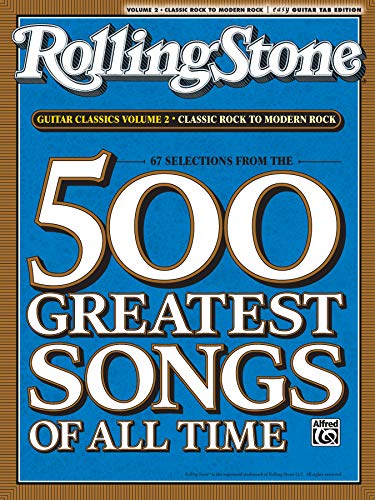
This collection brings together recognizable guitar classics in easy guitar tab. It is aimed at players who want to learn parts from classic rock through more modern rock. A strong song collection can teach phrasing, riff design, chord movement, and the role of repetition. It also gives you a useful way to test theory outside of drills.
The book does not explain music theory lesson by lesson, so I see it as a companion rather than a main method. You can study the key of each song, locate its root notes, and compare its verse and chorus. That simple habit turns favorite songs into small theory labs. For this reason, it can support a search for the best books on music theory for guitar, especially when motivation matters.
Pros:
- Features songs that encourage repeated practice
- Easy guitar tab lowers the reading barrier
- Shows real riff, chord, and lead construction
- Useful for classic rock and modern rock fans
- Helps players study song form through complete examples
- Works well beside a formal theory method
Cons:
- Does not teach theory in a full course format
- Easy tab does not mean every part is effortless
- Song selection may not suit every player’s taste
My Recommendation
I recommend this book to guitarists who learn through songs and want classic material to study. It is a good gift for an electric player, and it can make a dry theory lesson feel alive. Use a pencil to mark keys, chord changes, and repeated motifs as you play. Its value rises when you combine enjoyment with careful listening and analysis.
| Best for | Why |
|---|---|
| Classic rock fans | It offers a broad set of familiar guitar songs. |
| Tab-based learners | Easy tab helps you start without full notation skills. |
| Theory companions | Real songs give theory lessons a clear musical context. |
A Modern Method for Guitar Volume 1

A Modern Method for Guitar – Volume 1 comes from the Berklee approach and gives beginners a formal route into guitar playing. It covers chords, scales, reading, technique, rhythm, and core theory. The method expects regular practice and careful attention to detail. It is less like a list of quick tricks and more like a musical training course.
This book is a strong choice if you want to build reading skills along with fretboard knowledge. Some self-taught players may find the early pages more disciplined than expected, but that discipline can prevent weak habits. I suggest using a metronome and moving at a calm pace. It earns a place among the best books on music theory for guitar for learners who want a serious first method.
Pros:
- Builds a broad foundation in guitar and theory
- Introduces standard notation and rhythm reading
- Includes scales, chords, and technique work
- Uses a proven music-school style of progression
- Supports long-term skill development
- Helpful for students preparing for formal study
Cons:
- Can feel demanding for casual learners
- Some beginners may prefer more songs early on
- It requires steady practice to show its full effect
My Recommendation
I recommend this method to serious beginners who want strong fundamentals and the ability to read music. It is also a good fit for students who may later study jazz, arranging, or formal guitar. Casual players may prefer a lighter song-based book. If you value structure and do not mind a slower climb, this method can become the base of a very dependable guitar education.
| Best for | Why |
|---|---|
| Serious beginners | It teaches technique and theory in a planned order. |
| Notation students | Reading skills receive steady attention from the start. |
| Formal learners | The Berklee-style method supports disciplined study. |
How I Chose the Best Guitar Theory Books
I looked at more than the word “theory” on a cover. A useful guitar theory book must show how an idea works on the neck. It should explain notes, intervals, scales, chords, keys, and rhythm without making every lesson feel like a test. I also considered the needs of different players because a first-year student should not use the same book as an advanced improviser.
I paid attention to layout, practice value, clarity, and the link between theory and sound. Books with audio, songs, or fretboard diagrams have a clear advantage for many self-taught players. I also checked whether each title works alone or needs a companion. The best books on music theory for guitar should make you more independent after each study session.
What Should a Guitar Theory Book Teach?
Start with the musical alphabet and the notes on the guitar neck. Then learn whole steps, half steps, intervals, major scales, minor scales, and basic chord building. These topics explain why chords belong together and why a melody sounds stable or tense.
After that, study key signatures, the number system, triads, seventh chords, and common progressions. Players who want to improvise should add pentatonic scales, modes, chord tones, and phrasing. Players who write songs should also study form, rhythm, voice leading, and transposition.
You do not need to master every topic at once. Think of theory as a set of tools in a guitar case. Learn one tool, use it in a song, and then add the next one. That approach keeps music theory useful instead of turning it into a pile of terms.
How to Study Guitar Music Theory Without Getting Stuck
Keep your guitar close while you read. If a book explains a C major scale, play it in at least two places. If it explains a chord progression, strum it and listen for the home chord. Sound should confirm what your eyes see.
Use short sessions. Ten focused minutes can beat an hour of distracted reading. I suggest this simple plan: read one idea, play one example, name what you hear, and use it in a short phrase. Write down one question for your next session.
Do not collect books without opening them. Pick one main method and one songbook. Too many resources can scatter your attention. The best books on music theory for guitar work when you return to them often and apply the lesson to music you enjoy.
FAQs Of best books on music theory for guitar
What is the best guitar theory book for a complete beginner?
Essential Elements for Guitar Book 1 and A Modern Method for Guitar – Volume 1 are strong starting points. Essential Elements feels more guided and accessible. A Modern Method offers a more formal path with extra focus on reading and technique.
Can I learn guitar theory without reading standard music notation?
Yes. You can begin with fretboard diagrams, chord charts, and tab. However, learning basic notation later will expand your options and improve rhythm reading.
Are songbooks good for learning music theory?
Songbooks teach theory indirectly. They show chord movement, rhythm, riffs, and song form. Pair one with a theory method for a fuller learning plan.
Which guitar theory book is best for modes and improvisation?
Music Theory for Guitarists Volume 3 is the strongest choice in this list for prepared players. It focuses on scales, modes, progressions, and fretboard ideas. Learn the basic theory first if these topics feel new.
How long does it take to learn guitar music theory?
You can learn useful basics in a few weeks with regular practice. Full fluency takes much longer because you must connect knowledge to sound and movement. Short, daily sessions usually work better than rare long sessions.
Final Verdict: Which Should You Buy?
Tom Kolb’s Hal Leonard Music Theory for Guitar is the best overall choice for most players. It gives clear lessons, guitar-based examples, and helpful audio. For advanced study, choose Volume 3; for a complete course, choose the combined method.
The best books on music theory for guitar match your level and goal. Pick one guide, play every example, and let theory turn the fretboard into a map.

Senior Music Reviewer
Alex Carter is a seasoned music reviewer with over a decade of experience in the world of sound and instruments. Passionate about helping musicians and enthusiasts make informed choices, he brings sharp insights and in-depth knowledge to every review. From classical instruments to modern gear, Alex combines technical expertise with a love for music to deliver content that resonates with readers.
As a Senior Music Reviewer and expert author on Tuneluma.com, Alex is dedicated to sharing honest evaluations, practical advice, and thoughtful commentary to guide readers in their musical journey.