Best Pick Thickness For Electric Guitar: Find Your Fit
For most electric guitar players, a medium pick from 0.73 to 0.88 mm offers the best balance of control and tone.
You know the moment: your pick bends during a fast riff, slips during a solo, or makes each chord sound too sharp. The right pick thickness can fix much of that trouble. Thin picks feel soft and bright, while thick picks give firm control and a focused attack. For many electric guitar players, the best pick thickness for electric guitar falls near the medium range. Still, your style, strings, grip, and music matter. I tested these variety packs as practical ways to compare feel, sound, and value without guessing.
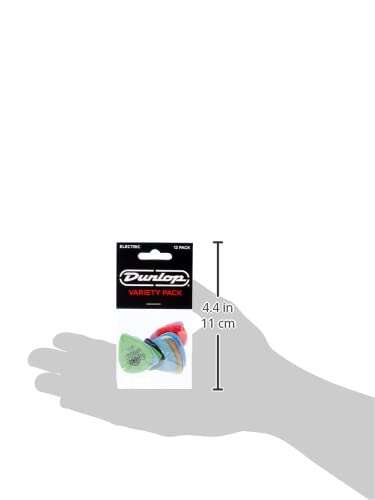
Jim Dunlop Electric Pick Variety Pack

This Jim Dunlop variety pack gives electric guitar players an easy way to compare pick shapes, feels, and thicknesses. Dunlop makes many well-known picks for rock, blues, metal, and general electric playing. A variety pack helps you hear how a flexible pick changes the attack of a chord. It also lets you test a firmer pick before spending more on a single style.
I like this pack for players who still ask, “What is the best pick thickness for electric guitar?” You can try thin, medium, and heavy options with the same guitar and strings. Thin picks can add a light, quick snap, while thicker picks improve note control for lead work. The range makes this set useful for beginners and experienced players who want to refine their touch.
Pros:
- Offers several pick styles for direct comparison
- Useful for testing thin, medium, and heavy feels
- Strong choice for electric guitar practice
- Recognized Dunlop quality and easy availability
- Helps players find a personal pick preference
Cons:
- The exact mix may not suit every player
- Some users may prefer one consistent shape
- Variety packs can include picks you rarely use
My Recommendation
I recommend this pack for new players, teachers, and guitarists who change styles often. It is especially useful if you play rhythm and lead on the same electric guitar. Start with a medium pick, then compare it with a thicker option for solos and palm-muted riffs. For many hands, the best pick thickness for electric guitar becomes clear after this kind of side-by-side test.
| Best for | Why |
|---|---|
| Beginners | It makes thickness testing simple. |
| Rock players | It offers useful choices for riffs and leads. |
| Teachers | Students can compare picks during one lesson. |
Fender 351 Medium Celluloid Picks

Fender’s 351 shape remains one of the safest choices for general guitar use. This pack uses medium picks, which usually sit near the sweet spot between bend and control. The celluloid material has a smooth feel and a familiar, warm response. The standard shape gives your thumb and index finger plenty of room to hold the pick.
For many players, a medium 351 pick answers the question of the best pick thickness for electric guitar. It bends enough for strumming but feels firm enough for single-note lines. I find this style comfortable for pop, blues, country, classic rock, and worship music. If you want one simple starting point, the medium Fender 351 is a strong choice.
Pros:
- Medium thickness suits many playing styles
- Classic 351 shape feels familiar in the hand
- Celluloid offers a smooth, natural surface
- Good balance for chords and lead notes
- Convenient 12-pack provides useful spares
Cons:
- Medium picks may feel too flexible for heavy metal
- Celluloid can wear faster than some modern materials
- The large shape may not suit small grips
My Recommendation
I suggest this pack for players who want a dependable medium pick without a long learning curve. It works well for electric guitarists who mix strumming, riffs, and basic solos. It also makes a thoughtful low-cost gift for a new guitarist. If you want a proven answer to the best pick thickness for electric guitar, start with this medium option.
| Best for | Why |
|---|---|
| General electric playing | Medium thickness handles many tasks. |
| Beginners | The 351 shape is easy to grip. |
| Blues and pop | It gives a smooth attack and warm feel. |
21-Pack Guitar Picks With Storage Box

This 21-pack includes thin, medium, and heavy celluloid picks in several colors. Its small storage box helps keep picks from disappearing under a sofa or inside a gig bag. A mixed set has real value because thickness affects both hand comfort and string response. You can use the same riff to compare each group.
Thin picks suit light rhythm work, while heavy picks help with tight alternate picking. The medium choices often provide the best pick thickness for electric guitar when you need one pick for many jobs. I also like the range for players who use acoustic guitar, bass, or ukulele. The box makes the set practical for a home studio or school music room.
Pros:
- Includes three useful thickness groups
- Provides enough picks for practice and backup
- Storage box reduces loss and clutter
- Celluloid has a familiar smooth feel
- Works across electric and acoustic instruments
Cons:
- Color selection may arrive at random
- Some players may dislike the celluloid edge feel
- Heavy picks may feel stiff for new players
My Recommendation
This set fits families, students, and multi-instrument players best. It gives you room to learn what your hands prefer instead of locking you into one thickness. I would begin with the medium group, then move thinner for soft strumming or thicker for precise leads. That process makes finding the best pick thickness for electric guitar much less stressful.
| Best for | Why |
|---|---|
| Multi-instrument players | It covers several instruments and feels. |
| Students | It supports easy pick experiments. |
| Home studios | The box keeps spare picks organized. |
Plornix 30-Pack Celluloid Guitar Picks

The Plornix pack offers 30 celluloid picks in three listed thicknesses: 0.46 mm, 0.71 mm, and 0.96 mm. That spread covers light, medium, and firm playing needs. The included metal case adds a stronger storage solution than a loose plastic bag. It can also help you carry extra picks to rehearsals and shows.
The 0.71 mm group sits close to the best pick thickness for electric guitar for many rhythm players. The 0.96 mm group should feel more stable for lead work and strong attack. The 0.46 mm picks can make quick chord patterns feel less demanding. I value this set because its thickness numbers make comparison easier.
Pros:
- Clearly listed thicknesses simplify testing
- Thirty picks offer strong quantity
- Metal case protects picks in a gig bag
- Includes both flexible and firm options
- Useful for electric, acoustic, bass, and ukulele
Cons:
- Celluloid may not suit players wanting a grippy pick
- 0.96 mm can feel too rigid for soft strumming
- The case adds a little extra weight
My Recommendation
I recommend Plornix for players who want clear thickness choices and many spares. It works well for bands, lesson rooms, and guitarists who often lose picks. Test 0.71 mm first, then compare it with 0.96 mm for lead guitar. For a low-cost search for the best pick thickness for electric guitar, this pack gives you a useful range.
| Best for | Why |
|---|---|
| Gigging players | The metal case protects spare picks. |
| Lead guitarists | The 0.96 mm option gives firm control. |
| Budget buyers | Thirty picks provide excellent quantity. |
D’Addario Medium Celluloid Picks
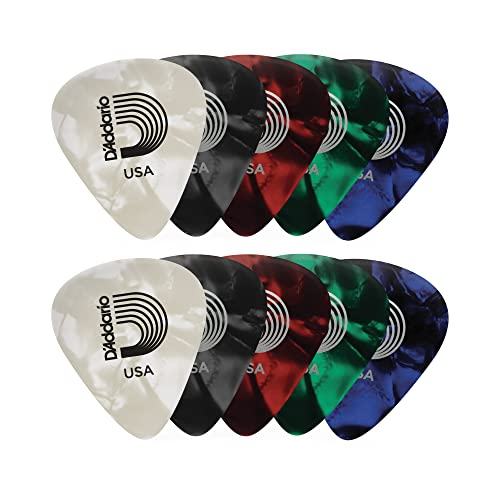
D’Addario’s medium celluloid picks are listed at 0.70 mm and come in a 10-pack. This thickness offers a touch more firmness than many thin picks without becoming stiff. The celluloid surface gives a natural feel that many players enjoy. The classic guitar pick shape also supports steady rhythm work.
A 0.70 mm pick is very close to the best pick thickness for electric guitar for players who want balance. It can handle clean chords, overdriven riffs, and simple lead lines with ease. I find this range helpful for players whose thin picks flap against the strings. It also stays comfortable during long practice sessions.
Pros:
- 0.70 mm thickness offers balanced control
- Good choice for rhythm and light lead work
- Natural-feel celluloid surface
- Ten-pack gives practical replacements
- Works with electric, acoustic, and bass guitar
Cons:
- May not provide enough stiffness for metal leads
- Celluloid can show wear with heavy use
- Players wanting a sharp tip may prefer another shape
My Recommendation
I recommend this D’Addario pack for players who want a simple, focused purchase. It suits beginners who have outgrown very thin picks and players who prefer a natural feel. The 0.70 mm thickness is an excellent first test when searching for the best pick thickness for electric guitar. It offers a calm middle ground without too much flex or resistance.
| Best for | Why |
|---|---|
| Rhythm guitar | It balances flex and control. |
| Practice sessions | The feel stays comfortable over time. |
| New electric players | It avoids the extremes of thin and heavy picks. |
ROTOPATA 15-Pack Guitar Pick Variety

The ROTOPATA variety pack gives players a compact group of picks with an organizer box. Variety packs make sense when you are still learning how pick thickness affects your sound. A light pick can make strumming feel easy, while a thicker pick can make notes sound more direct. This set lets you explore those changes with less cost.
I see this as a useful starter kit for electric guitar students. You can begin near the middle and move up or down based on pick noise and hand comfort. The best pick thickness for electric guitar should not cause your wrist to tense. A small organized set like this helps you find a pick that feels natural rather than forcing a trend.
Pros:
- Compact set works well for beginners
- Organizer box helps prevent lost picks
- Multiple feels support easy comparison
- Useful for practice and casual playing
- Affordable way to build a pick supply
Cons:
- The assortment may not include enough of one favorite
- Exact thickness details may need checking on arrival
- Some advanced players may want premium materials
My Recommendation
I recommend ROTOPATA for beginners, gift buyers, and casual electric guitar players. It offers enough variety to help you learn your own preference without making the choice feel technical. Try the medium option first, since it often matches the best pick thickness for electric guitar. Once you know your feel, you can buy a larger pack of your favorite style.
| Best for | Why |
|---|---|
| Beginners | It offers simple, low-risk testing. |
| Guitar gifts | The box makes the set neat and useful. |
| Casual players | It provides a practical supply for home use. |
60-Pack Thin, Medium, and Heavy Picks

This 60-pack is built for players who want a large supply and several thickness groups. It includes thin, medium, and heavy picks for electric guitar, acoustic guitar, bass, and ukulele. The organizer box keeps the collection in one place. A large pack also makes sense for rehearsal spaces where picks vanish quickly.
When I compare options for the best pick thickness for electric guitar, I value a full range like this. Thin picks can work for soft rhythm, medium picks suit broad use, and heavy picks support strong picking accuracy. The set may also help a band test picks together. Each player can choose a thickness that matches their own attack.
Pros:
- Large 60-piece supply offers strong value
- Thin, medium, and heavy groups cover many styles
- Organizer box supports neat storage
- Useful for bands, schools, and music rooms
- Works across several string instruments
Cons:
- Large assortments may include unused picks
- Not ideal if you already know one exact style
- Quality and color may vary across the assortment
My Recommendation
I recommend this pack for busy households, teachers, bands, and players who lose picks often. It is less about one perfect pick and more about learning how each thickness behaves. Start with the medium group to find the best pick thickness for electric guitar, then keep thin and heavy picks for special tasks. The high quantity gives this set strong practical value.
| Best for | Why |
|---|---|
| Music teachers | Many students can try the assortment. |
| Bands | It supplies several players at once. |
| Players who lose picks | Sixty pieces provide plenty of backups. |
Aitoper Thin, Medium, and Heavy Picks

Aitoper offers 21 picks across thin, medium, and heavy categories. This layout suits players who want a clear path from easy strumming to firm picking. The pack can support electric guitar, acoustic guitar, bass, and other small string instruments. It gives you enough choices for home practice and spare storage.
I would use the medium picks first when testing the best pick thickness for electric guitar. If the pick feels too soft during alternate picking, move to the heavy group. If your chords sound too hard or your hand feels tired, try the thin group. This simple test can reveal more than advice based on genre alone.
Pros:
- Three thickness types support skill growth
- Twenty-one picks provide a useful supply
- Good option for comparing picking resistance
- Suitable for many instruments
- Helpful for players with changing techniques
Cons:
- Heavy picks may need a short adjustment period
- Thin picks may wear quickly with hard attack
- Players may want a better storage case
My Recommendation
Aitoper is best for students and intermediate players who want to improve picking control. It lets you move from flexible picks to firm picks as your technique grows. The medium group remains the best pick thickness for electric guitar for many mixed-style players. This pack gives you a low-cost way to test that choice before buying premium picks.
| Best for | Why |
|---|---|
| Skill development | You can compare resistance as you improve. |
| Mixed styles | It covers rhythm and lead needs. |
| Students | The 21-pack supports regular practice. |
Cobahom 45-Piece Celluloid Pick Set

The Cobahom set includes 45 celluloid picks and a velvet bag. It targets players who like colorful picks and want many spares in one package. Celluloid often feels smooth and light in the fingers. The broad quantity also makes it useful for a studio, classroom, or family of guitar players.
Different thickness choices let you compare brightness, control, and comfort. For electric guitar, a medium pick often gives the most flexible starting point. A heavy pick may improve clean note separation, while a thin pick may soften a strong strum. That range helps you discover the best pick thickness for electric guitar through real playing.
Pros:
- Forty-five picks offer excellent quantity
- Velvet bag gives the set a gift-ready feel
- Celluloid offers a smooth natural touch
- Colorful designs make picks easy to spot
- Useful for several guitar types
Cons:
- A velvet bag gives less rigid protection than a case
- Color and thickness may vary by assortment
- Celluloid may not offer a high-grip surface
My Recommendation
I recommend Cobahom for families, gift buyers, and guitarists who enjoy a large colorful set. The velvet bag adds a nice touch, while the quantity keeps replacements close. Use the medium picks as your first test for the best pick thickness for electric guitar. Choose this set when variety and presentation matter as much as strict uniformity.
| Best for | Why |
|---|---|
| Gift buyers | The velvet bag adds a polished touch. |
| Families | Forty-five picks can serve many players. |
| Color lovers | Bright picks are easy to find and sort. |
Aolfior 21-Pack Guitar Picks

The Aolfior pack includes 21 picks in thin, medium, and heavy groups, plus a storage box. It is designed for electric and acoustic guitar, bass, and ukulele use. The assortment gives you a simple way to test how pick mass changes your attack. The box also makes it easier to keep different thicknesses apart.
I like this layout for players who are not sure whether they need a flexible or firm pick. The medium group is usually the best pick thickness for electric guitar when you play both chords and single notes. Heavy picks may suit precise metal or hard rock work. Thin picks can help if you use a light touch and want less string resistance.
Pros:
- Includes thin, medium, and heavy choices
- Storage box keeps the set organized
- Twenty-one picks give useful backup stock
- Suitable for guitar, bass, and ukulele
- Supports easy sound and feel tests
Cons:
- Random colors may not match your preference
- Some players may need more picks of one thickness
- Heavy picks may feel less friendly to beginners
My Recommendation
Aolfior suits beginners, hobby players, and musicians who use more than one instrument. It offers enough variety without the bulk of a very large pack. I would begin with medium picks while searching for the best pick thickness for electric guitar. The included box adds useful value for players who practice in more than one room.
| Best for | Why |
|---|---|
| Multi-instrument use | The assortment suits several instruments. |
| Home practice | The box keeps picks ready to use. |
| Beginners | It offers a clear thin-to-heavy test. |
How Pick Thickness Changes Electric Guitar Tone
Pick thickness changes the way your hand connects with the string. A thin pick bends as it crosses the string. That bend can create a softer attack and a brighter, looser feel. A thick pick stays more stable, so it often gives a stronger and more focused note.
Thin picks usually measure below about 0.60 mm. Medium picks often sit around 0.60 to 0.88 mm. Heavy picks commonly measure above 0.88 mm, though brands use different labels. These ranges are useful guides, not strict rules.
The best pick thickness for electric guitar depends on the job. A thin pick can work well for broad chord strums and light pop parts. A medium pick can cover rhythm, blues, country, and basic lead work. A heavy pick can help with fast alternate picking, tight riffs, and controlled solos.
Your amplifier also changes what you hear. High gain can make pick attack sound sharp and loud. A thick pick may produce a clear front edge that cuts through distortion. A thin pick may soften that edge, but it can also feel less exact during fast passages.
Thin, Medium, or Heavy: Which Pick Should You Choose?
Thin picks suit players who strum more than they pick single notes. They move easily across the strings and can feel forgiving. They may also reduce the force of an aggressive attack. The trade-off is less control when you play fast or use heavy strings.
Medium picks are the safest starting point for most electric guitarists. They give enough flex for chords and enough strength for riffs. If you only want to buy one pick style, start close to 0.73 mm or 0.88 mm. That is why the medium range often wins tests for the best pick thickness for electric guitar.
Heavy picks suit players who want a firm response. They do not fold as easily under the string. This helps with accurate alternate picking and strong palm-muted parts. Still, heavy picks can feel less smooth during large chord strums.
Pick thickness also changes your technique. A thin pick may hide small timing errors because it gives under pressure. A thick pick shows more of your attack. That can feel demanding at first, but it may help you build a cleaner picking motion.
Does Pick Shape Matter as Much as Thickness?
Yes, shape matters. A large 351 pick gives your fingers more room. A smaller jazz-style pick can make precise lead work feel easier. A sharp tip may improve note focus, while a rounded tip can sound softer.
Do not judge the best pick thickness for electric guitar without considering shape. A thick, small pick can feel easier to control than a thin, large pick. Your grip changes the result too. Hold the pick with enough pressure to control it, but not so much that your thumb aches.
Start with a common shape, such as the 351. Once you know the thickness you like, try a smaller or sharper design. Change one feature at a time. That method helps you understand what truly improved your playing.
How I Evaluate Electric Guitar Picks
I look at more than the number printed on the package. I check how well the pick stays in my fingers during long practice. I also listen for unwanted click, harsh attack, and weak note focus. A good pick should support your technique rather than fight it.
I compare picks on clean and distorted tones. Clean sounds reveal brightness and string noise. Distortion reveals attack, control, and unwanted scraping. I also play open chords, palm-muted power chords, alternate-picked scales, and bends.
Material matters as well. Celluloid often feels smooth and gives a familiar tone. Nylon can feel softer and may offer a little grip. Delrin and other firm materials can provide a fast release. No material wins for every hand, so I focus on comfort and control.
Simple Test to Find Your Best Pick Thickness
Choose one riff and one chord pattern. Play both with a thin, medium, and heavy pick. Keep your amp settings, guitar volume, and picking hand position the same. Listen for volume, attack, and unwanted noise.
Next, play for ten minutes with each pick. Notice your thumb, index finger, and wrist. The best pick thickness for electric guitar should feel controlled without causing extra tension. If your hand grows tired, the pick may be too stiff or your grip may be too tight.
Finally, record yourself. A pick can sound very different under your ear than it does across a phone recording. Compare the attack and note clarity. Choose the pick that helps you play well and sounds good in the mix.
Common Pick Thickness Mistakes
Many new players assume a thicker pick always sounds better. It does not. A heavy pick may improve lead control but make full chords feel rough. A thin pick may sound bright and lively but struggle during fast riffs.
Another mistake involves copying a famous guitarist. Your hand, strings, amp, and technique differ from theirs. A pick that works for a professional may feel wrong in your grip. Use player choices as clues, not commands.
Players also ignore pick wear. A rounded or damaged tip can make notes sound dull. It may cause extra drag and make your timing feel uneven. Replace worn picks when the tip no longer feels smooth.
Electric Guitar Pick Thickness by Playing Style
For blues, try a medium pick near 0.70 to 0.88 mm. This range supports chord work, bends, and single-note phrases. A rounded tip can give a smooth voice. A sharper tip can add more bite.
For rock, medium-heavy picks often work well. They give power chords a firm attack and help riffs stay clear. If you play classic rock with lots of strumming, stay near the middle. If you play fast leads, move closer to 1.0 mm.
For metal, many players prefer heavy picks. A firm pick helps with tight alternate picking and palm-muted riffs. The best pick thickness for electric guitar in metal may sit above 1.0 mm. Still, use what lets your wrist stay loose.
For funk and pop rhythm, thin or medium picks can work well. A flexible pick can add bounce to quick chord patterns. Medium picks offer more control when the part includes muted single notes. Your strumming force should guide the final choice.
For country, medium picks are a useful starting point. They can handle rhythm while keeping lead notes clear. Some players prefer a thicker pick with a sharp tip for fast chicken-picking lines. Others like a thinner pick for a softer snap.
FAQs Of best pick thickness for electric guitar
What is the best pick thickness for electric guitar beginners?
A medium pick around 0.70 to 0.88 mm is a strong starting point. It gives enough flex for chords and enough control for simple riffs.
Are thick picks better for electric guitar?
Thick picks are not always better. They offer firm control for leads and heavy riffs, but medium picks may feel smoother for mixed playing.