What Are The Black Keys On A Piano Called: A 2026 Guide
The black keys on a piano are commonly referred to as sharps and flats or accidental keys.
When I first sat at a piano as a child, the black keys stood out. They looked sleek and a little mysterious next to the ivory white keys. My teacher told me they unlock richer harmonies. She said they are the bridge from simple tunes to deeper emotion. Learning what the black keys on a piano are called is my first tip for new players. It makes the keyboard feel less random and more like a map. Whether you are a total beginner or just curious about piano layout and piano theory, this guide will help you understand how the black keys shape sound and music.

Understanding the Role of Black Keys
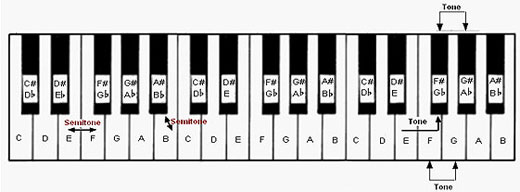
At first glance the keyboard can look like a random pattern. It is not. The black keys follow a precise layout. They represent the chromatic notes between the white keys. The white keys are the natural notes of the C major scale. Together, white and black keys divide the octave into twelve half steps. This twelve-tone layout lets you play in any key signature. It also makes transposition and modulation possible.
In lessons I ask students to think of the black keys as a map for the hands. They are grouped in patterns of two and three. These groups become tactile landmarks. When you feel for them you build keyboard proprioception. That means your fingers learn where to land without looking. Over time you stop hunting for notes. You gain speed and confidence in scales, chords, and improvisation.
Black keys and musical range — quick facts
- The black keys fill in the semitones (half steps) missing from the white keys.
- Each black key can be named two ways: as a sharp or as a flat.
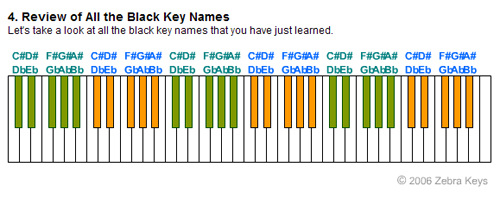
- There are five black keys in each octave: they complete the twelve-note chromatic scale.
- The grouping of two and three black keys helps you find C and other reference notes quickly.
Why are they called sharps and flats
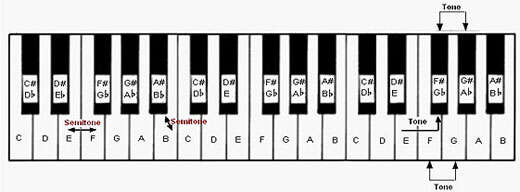
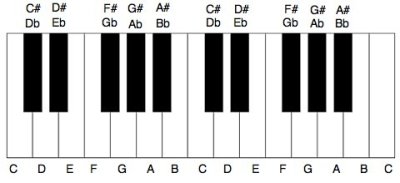
“Sharp” means a note raised by a half step. “Flat” means a note lowered by a half step. Pressing a black key modifies the white key next to it. For example, the black key to the right of C is called C sharp. The same key is also D flat when named from the D note. This dual naming is common. Musicians call it enharmonic equivalence.
At first I found the two names confusing. I used a simple trick. I named the black key based on the chord or scale I was playing. If the piece was in G major, I thought in sharps. If it was in B flat major, I used flats. That small habit helped me read music faster and play with fewer mistakes.
Enharmonic equivalence — simple examples
- C# = Db
- D# = Eb
- F# = Gb
- G# = Ab
- A# = Bb
Composers choose one name or the other for clarity. The choice follows the key signature and the harmonic context. This flexibility is one reason composers can write in many modes and keys without changing the layout of the keyboard.
The Logical Pattern of the Keyboard
The black-key layout is purposeful. It serves the diatonic scale, which is the backbone of Western music. Look for groups of two and three black keys. The white key to the left of the two-black-key group is always C. That gives you a reliable reference point. From C you can find any other note.
I tell beginners to close their eyes and feel the pattern. Place your hand so your index finger rests near a two-key group. Count from C to find other notes. This exercise builds muscle memory. It also improves your ability to navigate scales, chords, and arpeggios without looking down.
How the pattern supports chords and scales
The arrangement makes certain chord shapes repeat across octaves. For instance, a major triad uses a simple spacing of whole and half steps. The black keys help you visualize and place that spacing. When you learn scale fingerings, the black keys guide your thumb movements. They make smooth hand shifts and crossovers easier.
You can also use the pattern to learn intervals. Try finding a major third or a minor seventh by counting keys, not letters. The black keys serve as consistent markers for these intervals.
For more on hand placement and practical tips, see this quick guide on the piano.
Frequently Asked Questions of what are the black keys on a piano called
Are black keys harder to play than white keys?
Not really. They feel different. Black keys are shorter and raised. That changes hand shape and finger angle. You do need a slightly different technique. Practice scales and simple melodies that use black keys. That builds comfort. Soon they feel as natural as white keys.
Why do some pianos have different colored keys?
Standard pianos use black and white. Some modern or antique instruments reverse colors or use different materials. The color does not change the layout or tuning. The note positions stay the same.
Do all black keys have two names?
Yes. Every black key can name a sharp and a flat. Which name you use depends on the key signature and the musical context. The choice affects notation and harmonic clarity.
Why are there only five black keys per octave?
The five black keys are the missing notes from the C major scale. Add them to the seven white keys and you get twelve semitones per octave. This system allows you to play in all twelve major and minor keys. That is essential for modulation and full chromatic harmony.
Is there a specific finger I should use for black keys?
Avoid the thumb on most black keys when possible. The thumb is shorter and sits lower. Use longer fingers like the index, middle, or ring finger for reach and control. That said, some advanced passages require clever thumb placement. Learn standard fingerings for scales and chords first. Then adapt as needed for comfort and accuracy.
How should I practice black keys to build confidence?
Practice slowly. Use hands-separate drills first. Play scales that include many black keys, such as G major, D major, and B major. Try short chord progressions that move across black keys. Repeat them until your fingers find the landmarks. Use a metronome to steady your timing. Small, focused practice sessions beat long, unfocused ones.
Where can I read more about keyboard theory?
Start with basic music theory books and trusted online resources. Wikipedia offers clear entries on scales, intervals, and key signatures. For hands-on lessons, look for beginner piano method books or local teachers. Lessons that combine reading, ear training, and keyboard geography will speed your progress.
Conclusion
Understanding what the black keys on a piano are called turns the keyboard into a logical tool. When you call them sharps and flats, you open doors. You can play in many keys. You can read complex music. Every expert pianist started as a beginner at the same place. Use the black keys as anchors. Feel the groups of two and three. Practice the fingerings and scales that use those notes. If you enjoyed this guide, consider exploring further lessons on music theory or leaving a comment about your own experiences learning the piano.

Senior Music Reviewer
Alex Carter is a seasoned music reviewer with over a decade of experience in the world of sound and instruments. Passionate about helping musicians and enthusiasts make informed choices, he brings sharp insights and in-depth knowledge to every review. From classical instruments to modern gear, Alex combines technical expertise with a love for music to deliver content that resonates with readers.
As a Senior Music Reviewer and expert author on Tuneluma.com, Alex is dedicated to sharing honest evaluations, practical advice, and thoughtful commentary to guide readers in their musical journey.