How Many Octaves On A Piano: The 2026 Musician’s Guide
A standard full-sized modern piano typically contains 88 keys, which translates to a total range of seven octaves plus a few extra notes.
When I first started learning music, I remember feeling small in front of that long row of ivory and ebony. The keyboard looked endless. You might look at it and ask: why so many keys? Or you might wonder how many octaves on a piano actually shape the sound we hear. Knowing the piano’s octave range matters for every player—beginner to professional. In this article I’ll walk you through the anatomy of the keyboard, show how the notes are laid out, and share practical tips from my own practice sessions.
Understanding the Standard Keyboard Range
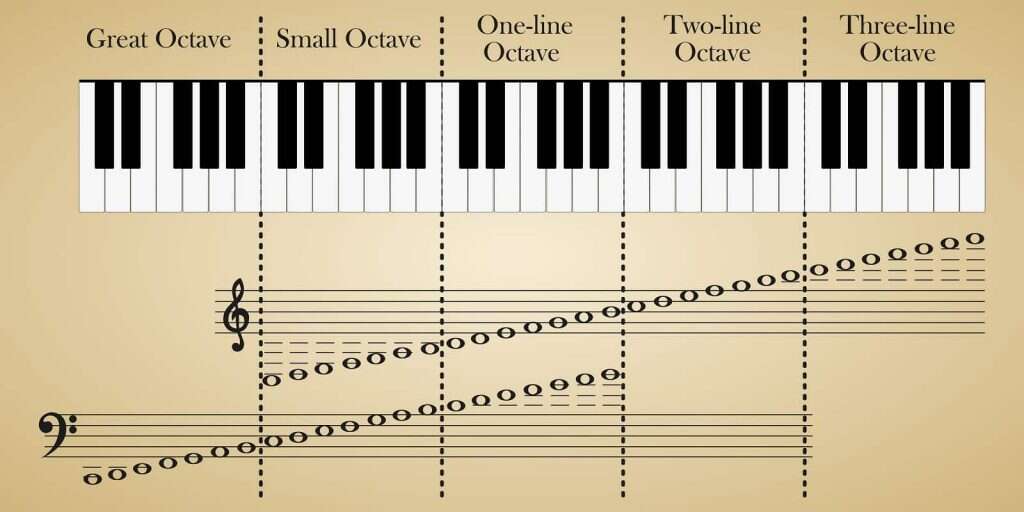
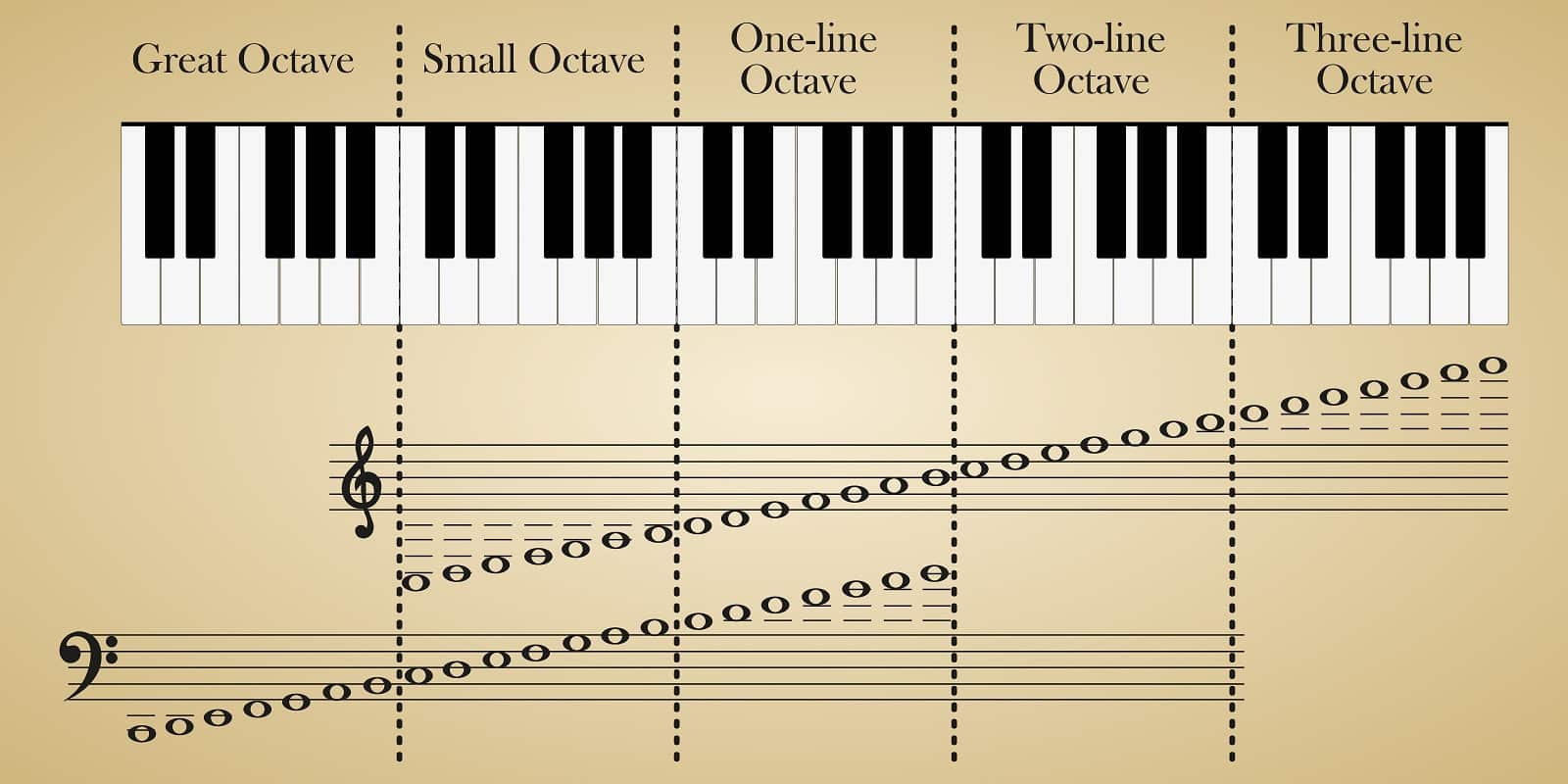
The modern acoustic piano is an engineering marvel. Most have 88 keys. Those keys form repeating groups of 12 notes: seven white and five black. That group of 12 notes is one octave. Because of this pattern, 88 keys cover seven full octaves plus a minor third. In note names, a standard piano runs from A0 up to C8. In MIDI terms, that is MIDI note 21 (A0) through MIDI note 108 (C8).
To make this concrete: A0 vibrates at about 27.5 Hz. C8 is roughly 4186 Hz. That huge span covers most of the human hearing range used in music. The low octaves give you powerful bass. The high octaves add sparkle. Together they let a solo pianist suggest an entire orchestra.
When I studied music theory, I learned that this layout shapes the piano’s voice. The lower octaves ground the harmony. The upper octaves carry the melody. Having a full seven-octave-plus range means you can play orchestral reductions, complex classical works, detailed jazz voicings, and big cinematic arrangements. Knowing how many octaves on a piano you have helps you pick the right instrument for your goals and space.

Why Do Different Pianos Have Different Octaves
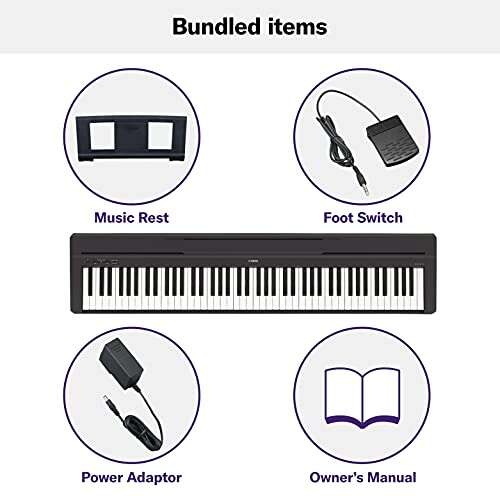
Although 88 keys is the modern standard, not every piano or keyboard follows it. Older acoustic models sometimes had fewer keys. Many digital and portable keyboards ship with 61 or 76 keys. These smaller models save space and cost. They still serve many musical needs. But the reduced range limits some repertoire.
History explains this. Early pianos started with 60–70 keys. Craft and demand expanded the range over decades. Manufacturers settled on 88 because it balanced musical need and practicality. Still, you will see a range of options today. For example, 61-key keyboards typically cover five octaves. They work well for pop, rock, and basic study. Seventy-six-key models give you about six and a quarter octaves. They are a good compromise for more advanced players who need extra range but want portability.
From my experience, practicing on a smaller keyboard can be useful. It forces you to think creatively about transposition, hand distribution, and arranging. But it can be frustrating when a piece requires notes outside your instrument’s range. If you plan to learn classical repertoire or orchestral covers, aim for at least 76 keys. Ideally, choose 88 keys so you won’t be restricted as you progress. Always check spec sheets before you buy. Know exactly how many octaves on a piano your instrument offers.
How to Count Octaves on a Piano
Counting octaves is simple and practical. Find any note—for example, middle C. Move up 12 semitones to the next C. That interval is one octave. On the keyboard, a set of 12 adjacent keys (including both white and black) equals one octave. If you start at A0 and go up to A1, that’s one octave. Repeat that seven times to understand the 88-key span.
Another quick method is to use note names. The standard range A0–C8 covers seven full cycles of A to A, plus the extra A–C at the top. In MIDI, you can also count from note 21 (A0) to note 108 (C8) to confirm the 88-note spread.
Practical Benefits of a Full Range
Having the full seven octaves on a piano gives you clear benefits. The bass notes add body and presence. Low A or low C can make an entire room vibrate. The top notes give clarity and shimmer. This contrast is part of why people call the piano an orchestra in a box.
I tell my students to explore the full keyboard. Don’t stay only in the middle register. Play bass lines down low. Try melodies up high. Changing octaves alters timbre and color. That practice builds musical sensitivity and improves arranging skill.
Real-World Uses for the Extra Range
Composers and arrangers use the extreme ranges for effect. Film composers add low tension with sub-bass piano notes. Jazz pianists use extended high notes for clear ornamentation. Solo piano literature—think Liszt or Rachmaninoff—often requires that full 88-key span. In chamber music, the piano’s low end can substitute for a double bass. The top end can cut through winds and strings.
For recording and live sound, the extra range also gives engineers more tonal options. Mic placement and EQ differ for bass strings versus treble strings. So an 88-key piano behaves differently in a mix than a 61-key keyboard run through samples.

Frequently Asked Questions of how many octaves on a piano
Does every piano have 88 keys?
No. Not every piano has 88 keys, though 88 is the modern standard for most acoustic grands and uprights. Some vintage pianos and many portable keyboards have fewer keys. Always check the model specs to confirm the key count.
Can you play all music with fewer than seven octaves?
You can play most pop songs and many practice exercises on 61 or 76 keys. But advanced classical works and some orchestral reductions will require the full 88-key range. If you plan to perform those pieces, you will need an instrument with the extra octaves on a piano.
How many octaves on a piano are standard for beginners?
Most teachers recommend at least 76 keys for beginners who want room to grow. That said, many beginners start on 61 keys. If you want a long-term instrument for study, aim for 88 keys. That prevents early limits as repertoire becomes harder.
Are there pianos with more than 88 keys?
Yes. Some specialty makers add extra bass keys. For example, Bösendorfer has made 92-key and 97-key concert grands. These add extra low notes for greater depth and extended tonal options. Such instruments are rare and best suited to concert halls and advanced repertoire.
How do I count octaves on a piano?
Find a note and move up or down 12 semitones until you hit the same note name again. That is one octave. A standard 88-key piano covers slightly more than seven full cycles of 12 semitones. You can also count octaves by using note names (A0 to A1) or MIDI note numbers (21–108).
Quick reference: common keyboard sizes and their octave coverage
- 49 keys — about 4 octaves (compact controllers)
- 61 keys — about 5 octaves (many portable keyboards)
- 76 keys — about 6.25 octaves (great compromise)
- 88 keys — 7 octaves + a minor third (standard acoustic piano)
- 92–97 keys — extended bass models (specialty concert grands)
Conclusion
Understanding how many octaves on a piano exist gives you a clearer path as a player. A standard 88-key instrument gives you over seven octaves on a piano. That lets you explore deep bass, rich middle tones, and bright treble. Whether you choose a grand, an upright, or a digital piano, know your instrument’s range. Use that knowledge to select music, arrange parts, and plan practice. Start exploring the full keyboard today. Try playing across all octaves so you learn how timbre and color change. Keep practicing, stay curious, and let every key expand your musical world.

Senior Music Reviewer
Alex Carter is a seasoned music reviewer with over a decade of experience in the world of sound and instruments. Passionate about helping musicians and enthusiasts make informed choices, he brings sharp insights and in-depth knowledge to every review. From classical instruments to modern gear, Alex combines technical expertise with a love for music to deliver content that resonates with readers.
As a Senior Music Reviewer and expert author on Tuneluma.com, Alex is dedicated to sharing honest evaluations, practical advice, and thoughtful commentary to guide readers in their musical journey.