How To Read Drum Sheet Music: Step-By-Step Guide
Learning how to read drum sheet music starts with understanding the staff, note placement, and rhythmic values.
I’ve taught and played drums for over a decade, and I’ll walk you through how to read drum sheet music in a clear, step-by-step way. This guide breaks down the staff, note meanings, time signatures, dynamics, common patterns, and practice tips. Read on to gain real skills you can use at the kit, in rehearsal, or when learning new songs.
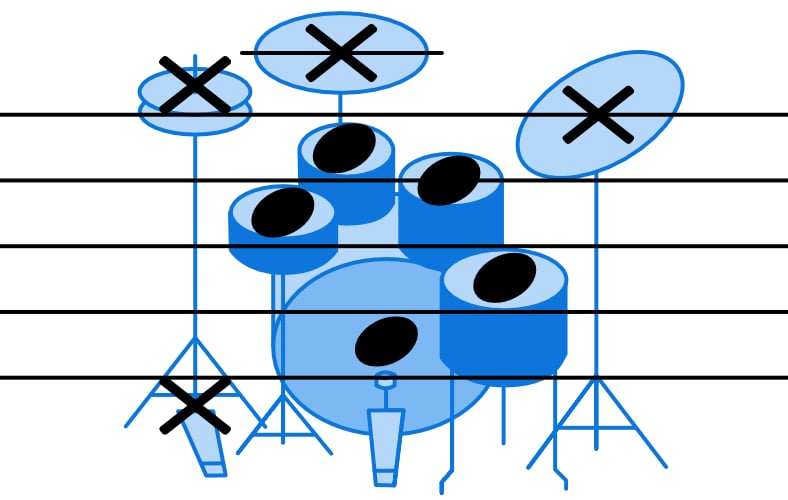
Basics: what drum sheet music shows and why it matters
Drum sheet music is a specialized form of musical notation for drums and percussion. It tells you which drum or cymbal to hit and when to hit it. Unlike melodic notation, drum music focuses on rhythm, placement, and articulation.
Learning how to read drum sheet music helps you learn songs faster, communicate with other musicians, and memorize parts. I remember learning a studio chart in one hour because I could read the drum sheet music clearly. That felt like a superpower.
The drum staff and how to read it
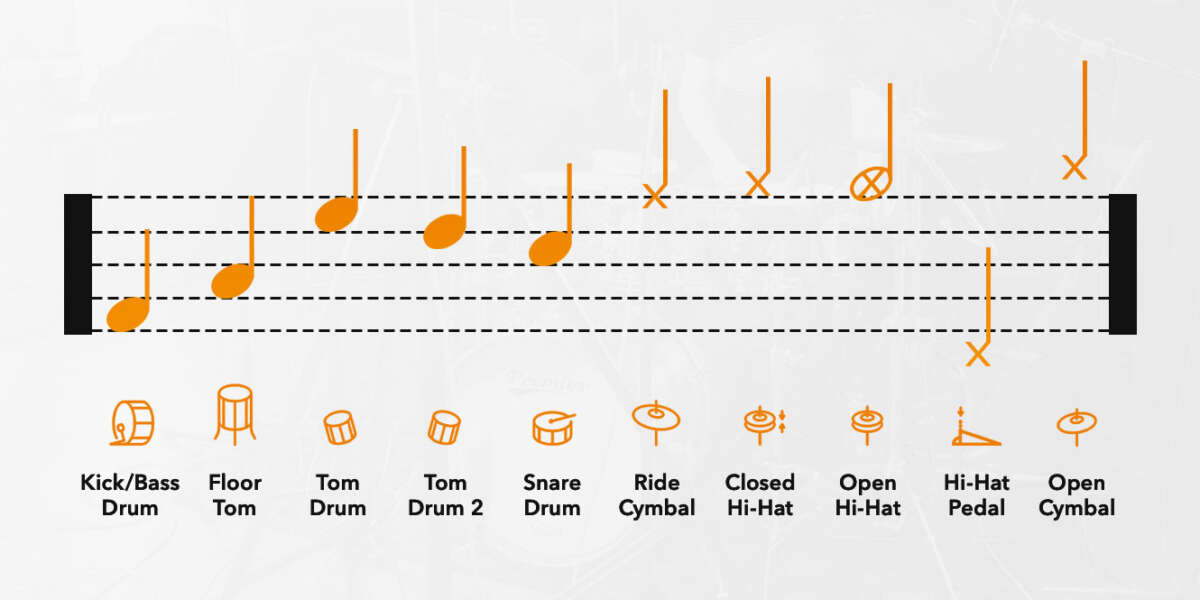
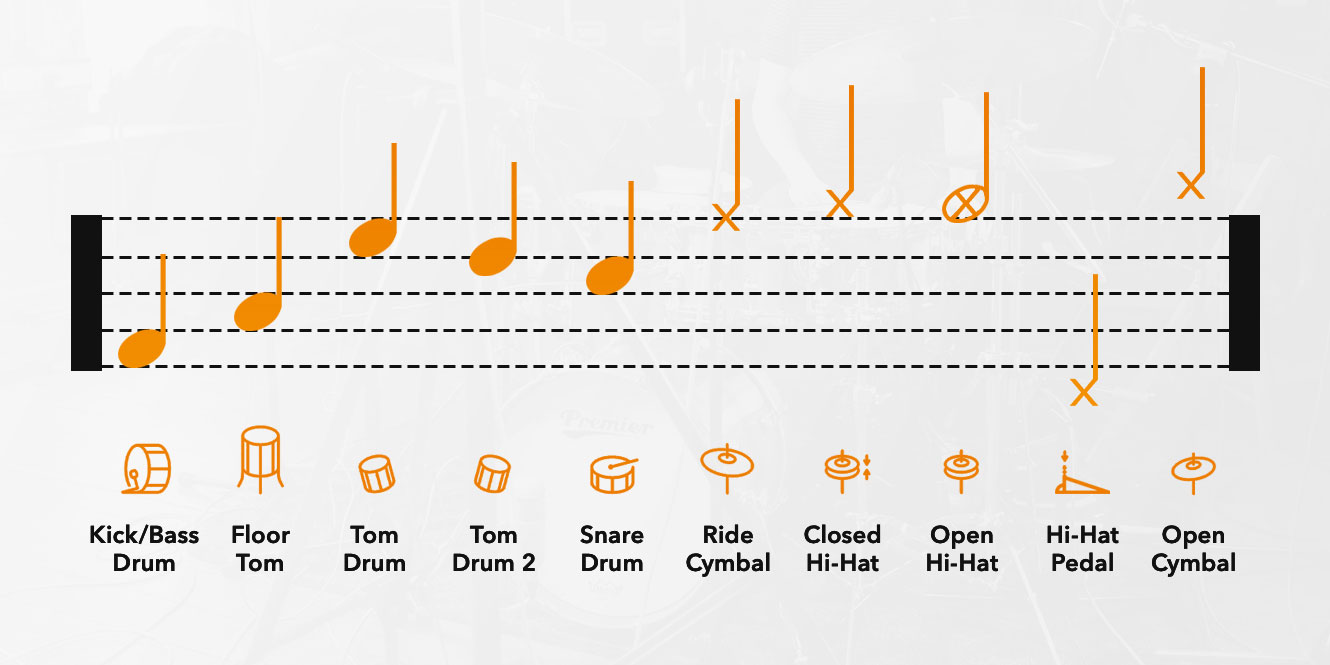
A drum staff usually has five lines like a regular staff, but each line or space maps to a different drum or cymbal. There is no clef that changes pitch meaning here—symbols and note placement do the work.
Common placements
- Snare sits on the third space or second space depending on the chart style.
- Bass drum is commonly on the bottom space or line.
- Hi-hat and cymbals appear above the staff.
- Toms fill the lines and spaces between bass and snare.
When reading how to read drum sheet music, always check the legend or key at the top. That tells you how that particular chart assigns instruments to staff positions. I learned this the hard way by assuming every chart used the same placement. Always check the legend first.

Note values and rests: telling time with rhythm
Note shapes tell you how long to play a sound. Reading rhythm is the backbone of how to read drum sheet music.
Quick guide to values
- Whole note equals four beats in 4/4.
- Half note equals two beats.
- Quarter note equals one beat.
- Eighth notes divide the beat in two.
- Sixteenth notes divide the beat into four pieces.
Rests work the same way as in other notation. A quarter rest means silence for one beat. Practice clapping rhythms while counting out loud. That habit made reading drum sheet music much easier for me.
Time signatures, tempo, and counting
Time signatures define the meter. Tempo marks tell how fast the piece should go. Together, they shape how you read drum sheet music.
Common meters and what they mean
- 4/4 means four quarter-note beats per measure.
- 3/4 means three quarter-note beats per measure.
- 6/8 feels like two groups of three eighth notes.
Look for tempo markings like BPM (beats per minute) or words like Allegro. Use a metronome. Start slow and build speed. I always set the metronome 20–40 BPM below the target tempo when learning a new drum sheet music part.
Instrument placement on the kit: mapping staff to drums
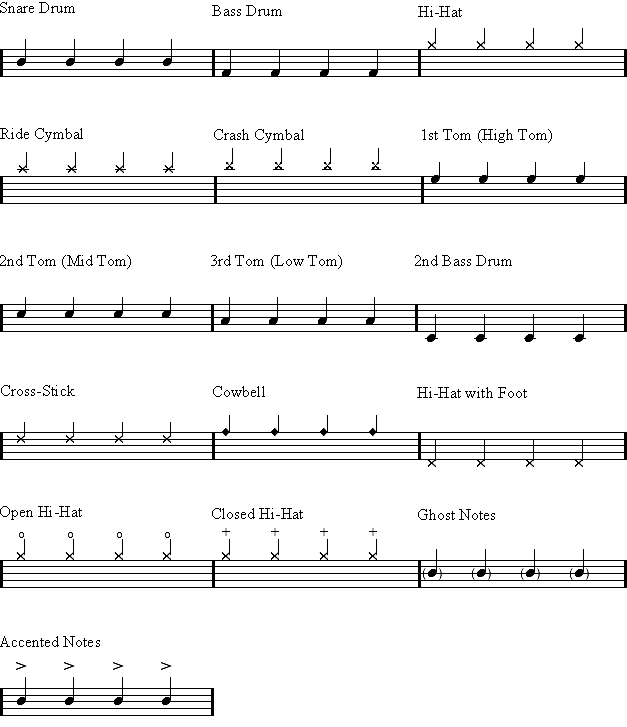
Different publishers map instruments differently. A quick mapping reference makes reading drum sheet music faster.
Typical mapping (general)
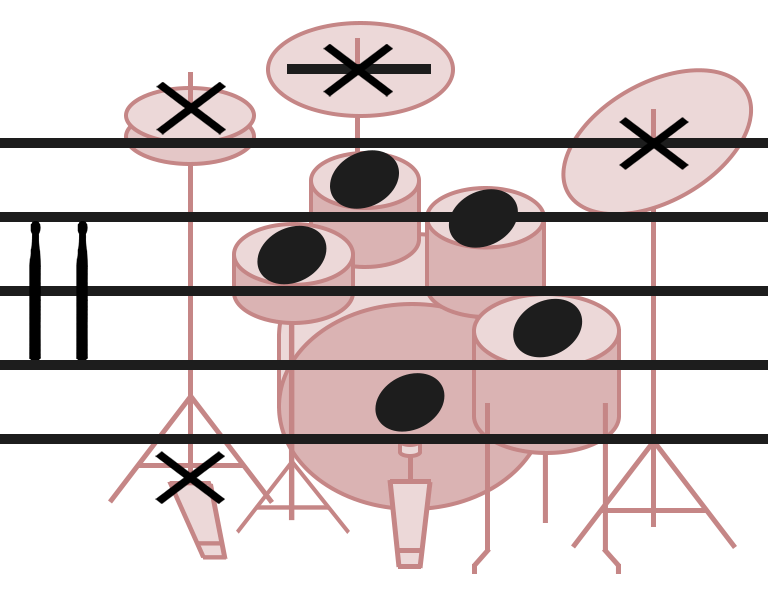
- Hi-hat: top space or above staff with an x-shaped note head.
- Ride cymbal: above staff with an x or diamond head.
- Snare drum: middle line or space.
- Bass drum: bottom line or space with regular note head.
- Floor tom, high tom, and mid tom: placed between snare and bass positions.
Make a cheat sheet for the charts you use most. I taped a small legend to my music stand when I toured. It saved time and reduced mistakes.

Dynamics, articulations, and accents
Drum music uses dynamics to shape grooves and fills. These markings tell you how soft or loud to play and whether to accent or ghost notes.
Key symbols and meanings
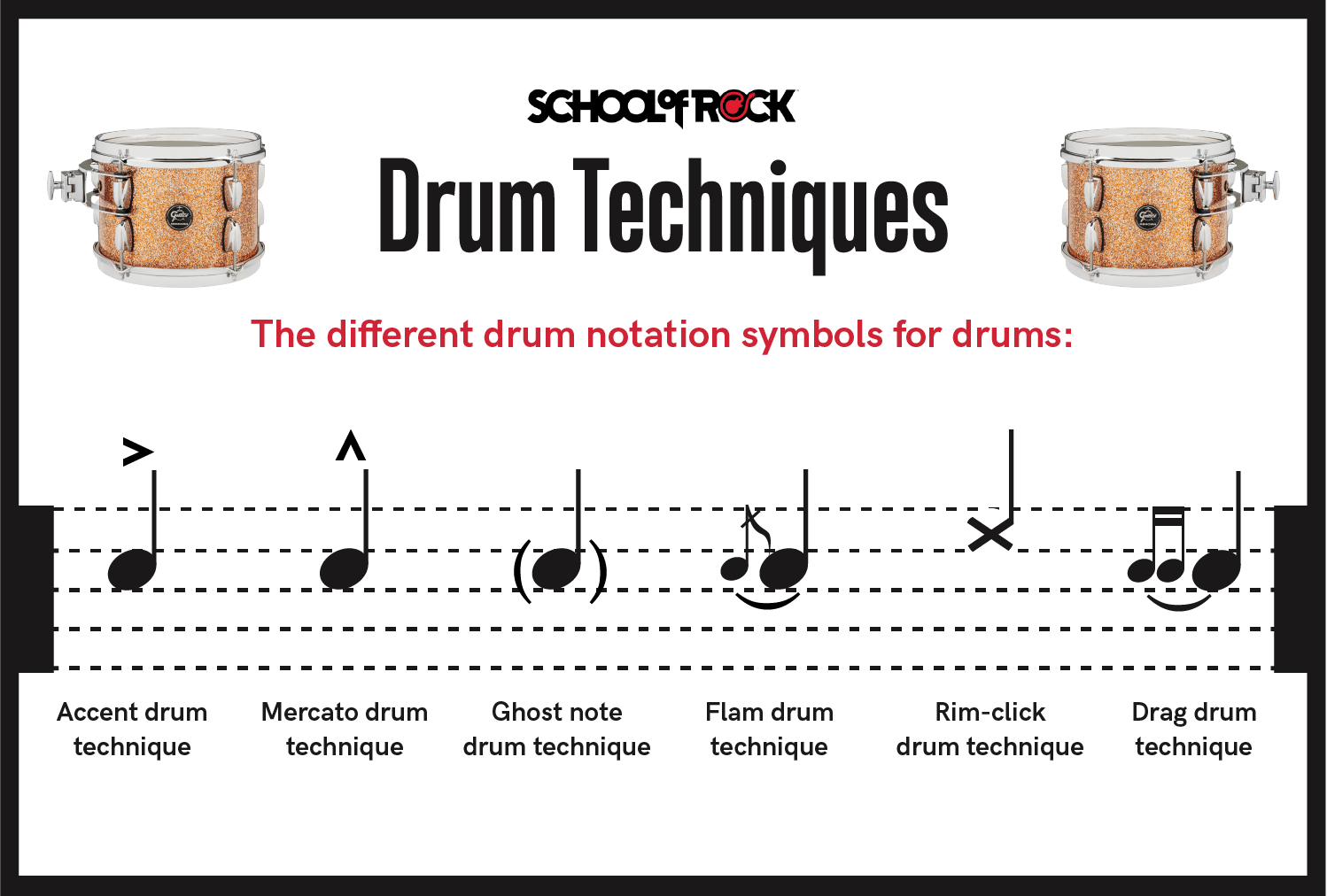
- Accent (> or > above a note) means play louder on that note.
- Ghost note (parentheses or smaller note head) means very soft.
- Flam is two quick notes hit almost together for a fuller sound.
- Drag and buzz indicate grace-note ornaments.
Pay attention to sticking and limb distribution suggested in the chart. Good articulation makes the part musical, not just rhythmic.
Reading fills, grooves, and patterns
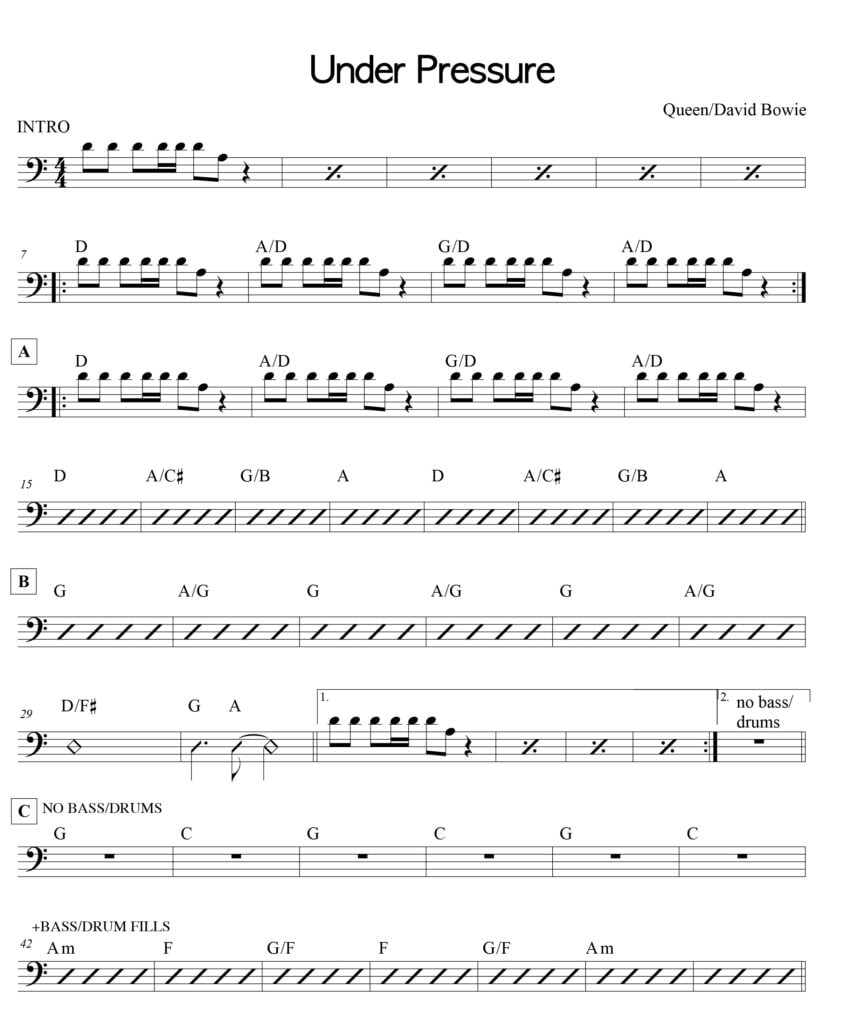
Grooves and fills are the most practical parts of drum music to learn. They show you how to support a song and move between sections.
How to approach them
- Break a groove into one-measure chunks.
- Count out loud and tap the hi-hat to feel subdivisions.
- Practice fills slowly, focusing on even timing and dynamics.
When I first learned to read drum sheet music for pop songs, I isolated the groove and looped it for hours. That repetition built confidence and timing.
Common symbols and notation variations
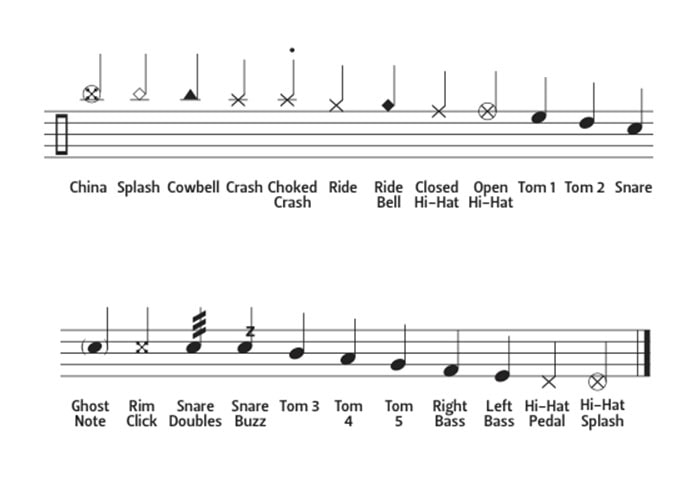
Publishers use signs that vary slightly. Spotting them speeds up how you read drum sheet music.
Common notations
- X-shaped note head — cymbal or hi-hat.
- Regular round note head — drum (snare, tom, bass).
- Small note heads — ghost notes.
- Slashes through stems — repeated strokes (e.g., hi-hat hits).
When unsure, consult the chart legend. That little step prevents misreading a cymbal hit as a snare hit.
Practice plan: build fluency reading drum sheet music
A focused practice plan changes reading ability quickly. Keep sessions short, focused, and progressive.
Weekly plan example
- Day 1: Sight-read simple one-measure grooves for 15 minutes.
- Day 2: Practice reading fills with a metronome at slow tempo.
- Day 3: Work on dynamics and ghost notes for 20 minutes.
- Day 4: Sight-read from a new chart to build adaptability.
- Day 5: Record a run-through and evaluate timing and feel.
Track progress. I used short daily drills for a month and noticed big gains in comfort reading drum sheet music.
Tools and resources to speed learning
The right tools help you read faster and more accurately.
Useful resources
- Metronome or metronome app for steady tempo.
- Drum notation books and method books.
- Drum chart apps that play back notation.
- A practice pad and headphones for quiet study.
Use playback features to hear a chart. Hearing the chart while following notation links the dots between printed notes and real sound.
Mistakes to avoid and tips from experience
Learning from mistakes prevents frustration. I’ve made many, so here are practical tips.
Tips and common errors
- Don’t assume staff mapping is universal; check legends.
- Avoid cranking tempo too fast before nailing the rhythm.
- Don’t ignore dynamics; they give the part musicality.
- Practice counting subdivisions to avoid rushing fills.
When you struggle, slow the chart and isolate troublesome measures. That method always works.
PAA-style questions within the article
What should I learn first when reading drum sheet music?
- Start with understanding the staff layout and basic note values. Practice simple grooves in 4/4 while counting aloud.
How long does it take to read drum sheet music fluently?
- With daily practice, you can gain basic fluency in a few weeks. Complex charts may take months, depending on difficulty and practice quality.
Can drum sheet music show stickings and limb assignments?
- Yes. Many charts include sticking suggestions, accents, and limb distribution to clarify how to execute the part.
Frequently Asked Questions of how to read drum sheet music
What is the best way to start reading drum sheet music?
Start by learning staff layout and basic note values. Practice simple grooves with a metronome and count out loud.
How do I know which line or space is the snare or cymbal?
Check the chart legend first, then memorize common mappings. Many charts use similar placements for standard kits.
Do I need to learn standard notation to play drums?
Yes. Standard notation is the most universal way to communicate drum parts. It helps you learn songs faster and play with others.
How do I practice reading fills from sheet music?
Slow them down with a metronome, loop the measure, and split complex fills into small segments. Gradually increase speed while keeping control.
Can drum sheet music show dynamics and ghost notes?
Yes. Dynamics, accents, and ghost notes are commonly notated. They guide volume and touch for a musical performance.
Should I use apps to learn to read drum sheet music?
Apps can help by providing playback and visual cues. Use apps as a supplement, not a replacement for hands-on kit practice.
Conclusion
Learning how to read drum sheet music unlocks clearer communication, faster learning, and better performances. Focus on the staff layout, note values, time signatures, dynamics, and consistent practice. Start small, use a metronome, and build up speed and complexity slowly. Try a daily 15–30 minute routine and pick one chart to master each week. Share your progress, subscribe for more tips, or leave a question below and let’s keep improving together.

Senior Music Reviewer
Alex Carter is a seasoned music reviewer with over a decade of experience in the world of sound and instruments. Passionate about helping musicians and enthusiasts make informed choices, he brings sharp insights and in-depth knowledge to every review. From classical instruments to modern gear, Alex combines technical expertise with a love for music to deliver content that resonates with readers.
As a Senior Music Reviewer and expert author on Tuneluma.com, Alex is dedicated to sharing honest evaluations, practical advice, and thoughtful commentary to guide readers in their musical journey.