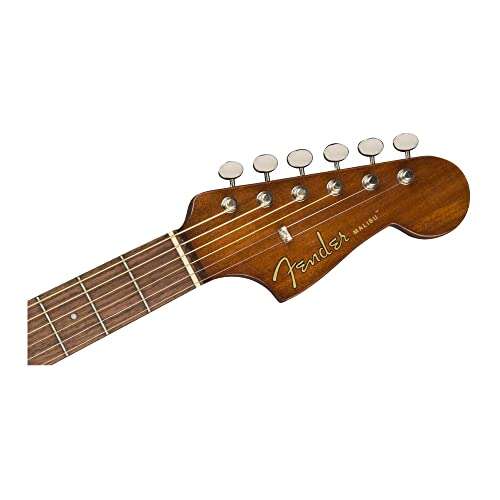
How Many Frets Are On An Electric Guitar: Complete Guide
Most electric guitars have 21, 22, or 24 frets. The most common designs in the United States use 22 frets, but the exact number depends on the guitar brand, model, scale length, and style.
A 21-fret guitar is common on many traditional Fender-style instruments. A 22-fret guitar is widely used on modern electric guitars, including many Gibson-style designs. A 24-fret guitar gives you two full octaves on each string and is common on rock, metal, and shred guitars.

What Is a Fret?
A fret is the thin metal strip set into a guitar’s fingerboard. The space between two frets is also often called a fret, although players may use the word for both the metal bar and the note position.
When you press a string behind a fret, you shorten the string’s vibrating length. This raises the pitch. The first fret produces the note just above the open string, while higher frets produce higher notes.
The fret closest to the headstock is the first fret. The nut is not usually counted as a fret.
How frets are numbered
Count from the headstock toward the guitar body:
- The space after the nut is the first fret.
- The next space is the second fret.
- Continue toward the bridge.
- The highest numbered fret is the last playable fret.
Some guitars have a zero fret. A zero fret sits where the nut would normally be and helps set the open-string height. On these guitars, manufacturers may describe the zero fret separately, so check the model’s specifications when counting.
Common Electric Guitar Fret Counts
The following table shows the fret counts you will see most often on electric guitars sold in the United States.
| Fret count | Common use | Practical result |
|---|---|---|
| 21 frets | Traditional vintage-style guitars | Classic layout and slightly lower top range |
| 22 frets | Many standard electric guitars | Balanced range and familiar feel |
| 24 frets | Modern rock, metal, and lead guitars | Two full octaves per string |
| 27 or more frets | Specialty and extended-range guitars | Extra high notes for specific playing styles |
A 22-fret guitar is often the safest general answer. Still, “standard” does not mean every electric guitar has 22 frets.
For example, official specifications for many Fender models list 21 or 22 frets, while many Gibson models list 22 frets. Ibanez and similar performance-focused brands offer many 24-fret models. Always check the exact model page rather than relying on the brand name alone.

Why Do Electric Guitars Have Different Numbers of Frets?
Electric guitars have different fret counts because designers balance note range, pickup placement, neck feel, and musical style.
A guitar with more frets can reach higher notes. However, adding frets also changes the relationship between the neck, body, and pickups. A 21-fret and 22-fret guitar can have the same scale length but place the neck pickup in a slightly different position.
That small change can affect the pickup’s response. A neck pickup on a 22-fret guitar sits in a different spot than a neck pickup on a 21-fret guitar with the same scale length.


21-fret guitars
Twenty-one-fret guitars are strongly linked with classic Fender-style designs. They suit blues, country, rock, and many traditional guitar parts.
The highest note is one semitone lower than the highest note on an otherwise similar 22-fret guitar. For many players, that difference is not a problem. Most rhythm parts and many lead parts stay well below the last fret.
22-fret guitars
Twenty-two frets provide a useful middle ground. You get a broad playing range without the neck becoming as long as it may be on a 24-fret design.
Many players choose 22-fret guitars because they feel familiar and work well for rhythm, blues, rock, pop, country, and general-purpose playing.
24-fret guitars
A 24-fret guitar reaches two octaves above each open string. This makes it useful for lead playing, fast solos, tapping, and music that uses high-register notes.
On a standard-tuned guitar, the 24th fret produces the same note name as the open string, two octaves higher. For example, the 24th fret on the low E string produces a higher E.
A 24-fret guitar is not automatically better. It simply gives you more range. The best choice depends on whether you need those extra notes and how the neck feels in your hand.
How Many Frets Does a Guitar Need for Two Octaves?
A guitar needs 24 frets to provide two full octaves from an open string to the same string’s 24th fret.
The octave pattern works like this:
- 12th fret: one octave above the open string
- 24th fret: two octaves above the open string
This applies to standard fretting on an equal-temperament guitar. The 12th fret sits at the midpoint of the vibrating string length. The 24th fret repeats that octave relationship one more time.
A 22-fret guitar does not reach the second octave on every string. It comes close, but the final two frets are missing. You can still play very high notes by using bends, another string, or a different position.

How to Count the Frets on Your Electric Guitar
You can count the frets in less than a minute.
- Place the guitar in a stable position.
- Find the nut at the end of the fingerboard.
- Identify the first metal fret after the nut.
- Count each metal fret toward the guitar body.
- Stop at the last full fret under the strings.
- Check the manufacturer’s specifications if the final fret is hard to see.
Do not count the nut as the first fret. Do not count decorative inlays, fret markers, or the bridge.
Some guitars use a neck joint that makes the last few frets hard to access. The frets still count even when the guitar body covers part of the fingerboard.


Signs you counted correctly
Your count should match one of these common layouts:
- 21 frets
- 22 frets
- 24 frets
- A specialty count, such as 27 or more
The 12th fret usually has a double-dot marker. The 24th fret, when present, may also have a double-dot marker. These markers can help you check your count, but they are not a substitute for counting every fret.
Does the Number of Frets Change the Sound?
The fret count alone does not determine an electric guitar’s sound. Pickups, pickup position, scale length, wood, construction, strings, amplifier settings, and playing technique all have a larger effect in many situations.
Fret count can influence sound indirectly through pickup placement. On some designs, a 22nd fret pushes the neck pickup slightly closer to the bridge than it would sit on a 21-fret version with the same basic layout.
The difference may be subtle. It is not accurate to say that every 21-fret guitar sounds warm or that every 24-fret guitar sounds bright. Those descriptions are too broad.
The more direct difference is playing range. More frets give you access to higher notes, while fewer frets may preserve a traditional layout and neck-pickup position.

Does a 24-Fret Guitar Have a Longer Neck?
Not always. A 24-fret guitar may have a longer neck, but manufacturers can also fit more frets into a similar overall length by changing the body joint or fret spacing.
The key measurement is the scale length. Scale length is the distance from the nut to the bridge saddle, measured along the vibrating string length.
A guitar with a 25.5-inch scale and 24 frets does not necessarily have a 25.5-inch longer neck than a 22-fret guitar with the same scale. The extra frets use progressively smaller spaces near the body.
The body shape and neck joint also matter. A guitar with a deep set neck joint may make the upper frets harder to reach, even if it has 24 frets. A guitar with a carved heel or extended cutaway may make those frets easier to play.
Are More Frets Better for Beginners?
More frets are not automatically better for beginners. A beginner should choose a guitar that feels comfortable, stays in tune, and suits the music they want to play.
A 21- or 22-fret guitar is enough for most basic chords, scales, songs, and early solos. A 24-fret guitar may help if the player already wants to learn metal, modern rock, technical lead guitar, or two-octave scale patterns.
The extra two frets on a 24-fret guitar are useful only if you play them. They should not outweigh more important factors such as:
- Comfortable neck shape
- Reasonable string height
- Stable tuning
- Good fretwork
- Suitable body weight
- Easy access to the lower frets
- A sound that fits the player’s music
For a first electric guitar, comfort usually matters more than the difference between 22 and 24 frets.


What Fret Count Should You Choose?
Choose the fret count based on your playing needs.
| Your main goal | A sensible choice |
|---|---|
| Blues, country, classic rock | 21 or 22 frets |
| Pop, worship, general playing | 21, 22, or 24 frets |
| Hard rock and modern rock | 22 or 24 frets |
| Metal and fast lead guitar | Often 24 frets |
| Vintage-style tone and feel | Often 21 frets |
| Two-octave scales on one string | 24 frets |
This is a starting point, not a rule. A skilled player can use any fret count for many styles.
If you are replacing a guitar, match the fret count only when the upper register is important or when you strongly prefer the feel of the old instrument. A different fret count does not automatically make a guitar easier or harder to play.
Common Mistakes About Electric Guitar Frets
Mistake 1: Counting the nut as a fret
The nut guides the strings but is not normally counted as a fret. Begin with the first metal fret after the nut.
Mistake 2: Assuming every electric guitar has 22 frets
Twenty-two frets are common, but 21- and 24-fret guitars are also widespread. Some specialty guitars have more.
Mistake 3: Thinking more frets always mean a better guitar
More frets add range. They do not guarantee better tone, easier playing, or higher quality.
Mistake 4: Confusing fret markers with frets
Dots, blocks, and other inlays help you navigate the neck. They are not frets.
Mistake 5: Assuming the last visible fret is always playable
Some guitars have a partial fret, a fret extension, or a body design that hides part of the final fret. Count the actual metal fret used by the strings.

Frequently Asked Questions
How many frets are on a standard electric guitar?
Most standard electric guitars have 21, 22, or 24 frets. Twenty-two frets are a common middle option, but there is no single fret count used by every electric guitar.
Is 21 or 22 frets better?
Neither is universally better. A 21-fret guitar may suit players who want a traditional Fender-style layout. A 22-fret guitar offers one extra high note and is a common all-purpose choice.
Is a 24-fret guitar harder to play?
Not necessarily. The upper frets may be easier to reach on some 24-fret designs, especially those with a deep cutaway. The neck shape, body joint, and setup affect playability more than fret count alone.
Can I play the same songs on a 21-fret and 24-fret guitar?
Usually, yes. Most songs do not require the highest two or three frets. When a part uses those notes, you may need to move the phrase to another string, use a bend, or choose a guitar with more frets.
Do acoustic guitars have the same number of frets?
No. Acoustic guitars often have 20 frets, although designs vary. An acoustic guitar’s body and neck joint usually make the highest frets less accessible than those on an electric guitar.


How do I find the exact fret count for my guitar?
Count the metal frets from the first fret after the nut to the highest fret. You can also check the model’s official specifications, owner’s manual, or manufacturer support page.
Key Takeaways
- Most electric guitars have 21, 22, or 24 frets.
- 22 frets are a common general-purpose choice.
- 21 frets are common on traditional vintage-style guitars.
- 24 frets provide two full octaves on each string.
- The nut is not normally counted as a fret.
- More frets add range, but they do not automatically improve tone or playability.
- Check the exact model specifications when the fret count matters.
Conclusion
The short answer is that most electric guitars have 21 to 24 frets, with 22 frets being one of the most common layouts in the United States.
Choose 21 frets for a traditional feel, 22 frets for a balanced all-purpose design, or 24 frets when you need a full two-octave range on each string. Before buying or replacing a guitar, count the frets on the instrument itself or confirm the exact model specification.

Senior Music Reviewer
Alex Carter is a seasoned music reviewer with over a decade of experience in the world of sound and instruments. Passionate about helping musicians and enthusiasts make informed choices, he brings sharp insights and in-depth knowledge to every review. From classical instruments to modern gear, Alex combines technical expertise with a love for music to deliver content that resonates with readers.
As a Senior Music Reviewer and expert author on Tuneluma.com, Alex is dedicated to sharing honest evaluations, practical advice, and thoughtful commentary to guide readers in their musical journey.