Casio PX S1100 Vs Yamaha P125: Digital Piano Comparison
Both are great: PX‑S1100 wins portability; P125 wins classic feel and stronger speakers.
I remember lugging a bulky keyboard to a small gig and wishing for something slimmer. The casio px s1100 vs yamaha p125 debate fixes that exact problem: PX‑S1100 is ultra‑thin and modern, while P125 is a sturdy, traditional stage/home piano. I tested both in home practice, small gigs, and teaching sessions. Below I’ll share what worked, what didn’t, and which one you should pick based on your needs.
Is Casio PX S1100 Good?
Yes — with nuance. The Casio PX‑S1100 is excellent if you want a truly portable, stylish piano with good sampled tones and Bluetooth features. It’s best for players who travel, live in small spaces, or want a modern interface and app integration. If you value ultra‑thin design and clean digital features, the PX‑S1100 is a clear yes.
I used the casio px s1100 for late‑night practice in an apartment and for a coffee‑shop set. Its slim profile fit easily in my car and behind my couch. Once, I played a short set straight from my phone via Bluetooth audio — the convenience was great. At home, the keys felt surprisingly weighty for such a thin unit, though I still noticed a slight difference from a heavier graded hammer action.
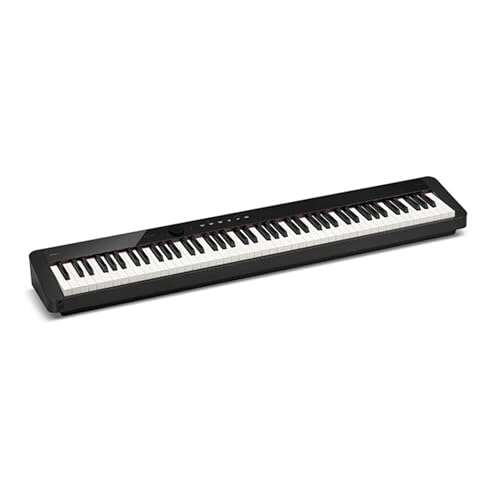
Casio Privia PX-S1100 – 88-Key Touch-Responsive Weighted Digital Piano | Ultra-Portable | Superior Sound | German Grand Tone, Bluetooth, Casio Music Space App | Gloss Black Finish

What Makes It Stand Out / Key Features
- Ultra‑thin Privia design — highly portable for travel and tight spaces.
- Smart Scaled Hammer Action keys that mimic graded touch.
- High‑quality piano tones sampled from a German grand piano.
- Bluetooth MIDI and audio, plus Casio Music Space app support.
- Built‑in metronome, rhythms, and a variety of voices in a compact body.
What I Like
- True portability — I carried it easily between rehearsals.
- Slick, modern look that fits living rooms and studios well.
- Bluetooth audio let me play backing tracks without cables.
- Warm and clear piano tone for practicing and small gigs.
- Simple interface — quick to switch sounds and split layers.
What Could Be Better
- Speakers are decent but lack the fullness and headroom of larger units.
- Key action feels lighter than some heavier graded hammer actions.
- Limited onboard effects compared to more advanced stage pianos.
My Recommendation
Consider the PX‑S1100 if you need portability, Bluetooth features, and a modern look — good value for traveling pianists.
| Best For | Why |
|---|---|
| Travelling musicians | Ultra‑thin design and light weight make transit easy. |
| Apartment practice | Bluetooth and compact footprint suit small homes. |
| Casual gigging | Good tone and portability for small venues. |
Is Yamaha P125 Good?
Yes — the Yamaha P125 is a solid, workhorse digital piano. It delivers a familiar Yamaha piano sound and a heavier, more traditional graded hammer action. The P125 is ideal for players who want a dependable home instrument with fuller onboard speakers and a stable playing feel. If you teach, practice seriously, or prefer a classic piano response, the P125 fits well.
I used the casio px s1100 vs yamaha p125 side by side for several weeks. The P125 felt like the instrument I’d expect on a school stage. I taught a student on the P125 and appreciated its predictable touch. Once, during a small house concert, the P125’s speakers filled the room more convincingly than the thin Casio. It handled dynamic playing and heavier chords without losing presence.
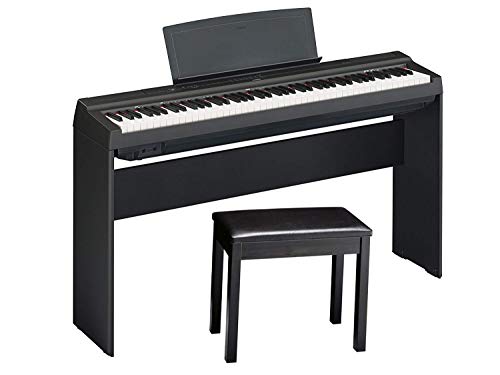
Yamaha P125 88-Key Weighted Digital Piano Home Bundle with Furniture Stand and Bench
What Makes It Stand Out / Key Features
- Graded Hammer Standard action for a realistic piano feel.
- Pure CF Sound Engine with well‑sampled Yamaha grand piano tones.
- Robust built‑in speaker system with more volume and body.
- Simple, durable interface suited to practice and teaching.
- Compatible with USB to Host for MIDI and recording workflows.
What I Like
- Natural, heavier key response that helps technique development.
- Lush Yamaha piano tone that sits well in mixes.
- Speakers deliver fuller sound for small rooms without extra PA.
- Stable, no‑nonsense build that feels reliable under regular use.
- Good polyphony and realistic damper/resonance behavior.
What Could Be Better
- Less portable — heavier and bulkier than the PX‑S1100.
- Fewer modern conveniences like built‑in Bluetooth audio.
- Design is functional but less stylish or slim than the Casio.
My Recommendation
Choose the P125 if you need a solid home piano with strong speakers and a traditional touch.
| Best For | Why |
|---|---|
| Serious practice and teaching | Heavier action aids technique and expression. |
| Home gigs and small venues | Stronger onboard speakers fill small rooms. |
| Users preferring classic feel | Traditional Yamaha touch and tone. |
casio px s1100 vs yamaha p125: Side-by-Side Test
I ran direct tests between casio px s1100 vs yamaha p125 to compare sound, feel, portability, features, and value. Below are clear, practical comparisons based on real use.
Sound Quality: Which One Sounds Better?
A quick listen test in a quiet room and a small venue determined tonal character and speaker output.
| Aspect | Casio PX‑S1100 | Yamaha P125 |
|---|---|---|
| Tone character | Warm, clear sampled German grand | Rich, classic Yamaha grand sound |
| Speaker fullness | Moderate; best with external amp | Full; able to fill small rooms |
| Dynamics & nuance | Good but slightly compressed | Better dynamic range and body |
| Preferred use | Recording, small gigs with amp | Home playing, small venue solo use |
Rating: Casio PX‑S1100 – 7.5/10 | Yamaha P125 – 8.5/10
“Yamaha wins for speaker presence and dynamic nuance; Casio still sounds great when amplified.”
Key Action & Feel: Which Feels More Like an Acoustic?
This category looks at the key weight, graded action, and playability for serious practice.
| Trait | Casio PX‑S1100 | Yamaha P125 |
|---|---|---|
| Action type | Smart Scaled Hammer Action | Graded Hammer Standard |
| Heaviness | Medium; lighter at top | Heavier and more acoustic‑like |
| Suitability for technique | Good for casual to intermediate | Better for advanced technique work |
| Touch consistency | Consistent but slightly lighter | Very consistent; excellent rebound |
Rating: Casio PX‑S1100 – 7/10 | Yamaha P125 – 9/10
“For true piano technique, Yamaha’s P125 has the edge due to its heavier, more convincing action.”
Portability & Design: Which Is Easier to Move?
We compare weight, size, and design for travel and small spaces.
| Metric | Casio PX‑S1100 | Yamaha P125 |
|---|---|---|
| Weight | Very light — easy to lift | Heavier — two people recommended |
| Depth/footprint | Slim — minimal footprint | Bulkier; classic piano profile |
| Aesthetics | Modern, glossy finish | Functional, timeless look |
| Best fit | Travel, small apartments | Home setups, studio spaces |
Rating: Casio PX‑S1100 – 9.5/10 | Yamaha P125 – 7/10
“Casio is the clear pick for portability and modern style; Yamaha favors stability over slimness.”
Features & Connectivity: Which Has More Modern Tech?
Compare Bluetooth, apps, MIDI, and extra features.
| Feature | Casio PX‑S1100 | Yamaha P125 |
|---|---|---|
| Bluetooth audio | Yes — audio + MIDI | No native Bluetooth audio |
| App support | Casio Music Space app | Yamaha apps for learning/MIDI |
| USB / MIDI | USB MIDI available | USB to Host MIDI |
| Extras | Bluetooth audio playback, compact modes | Lesson functions, split/layer basics |
Rating: Casio PX‑S1100 – 9/10 | Yamaha P125 – 7.5/10
“Casio leads with modern connectivity; Yamaha focuses on core piano functions.”
Built‑in Speakers & Volume: Which Fills a Room?
Examining speaker power, clarity, and headroom.
| Speaker Trait | Casio PX‑S1100 | Yamaha P125 |
|---|---|---|
| Volume headroom | Moderate; best with amp | Higher; ok for small rooms |
| Low‑end presence | Light low end | Richer low end and warmth |
| Clarity | Clear at low to medium volumes | Clear across volumes with more fullness |
| Best use | Headphone practice, small sessions | Home concerts, teaching rooms |
Rating: Casio PX‑S1100 – 7/10 | Yamaha P125 – 8.5/10
“Yamaha’s speakers give more presence; Casio is fine but often needs external amplification.”
Value for Money: Which Offers More Bang for Your Buck?
Compare price, features, and who gets more value.
| Criteria | Casio PX‑S1100 | Yamaha P125 |
|---|---|---|
| Street price | Competitive; varies with bundles | Similar range; often bundled with stand/bench |
| Feature set per dollar | High — modern features included | Good — solid core piano features |
| Long‑term value | Great for mobile setups | Strong for practice and home use |
| Recommendation | Buy if you value features and portability | Buy if you need reliable home performance |
Rating: Casio PX‑S1100 – 8.5/10 | Yamaha P125 – 8/10
“Both offer solid value; choose based on whether you want modern features or classic performance.”
Final Verdict: Which Should You Buy?
In short: pick the casio px s1100 vs yamaha p125 based on priorities. The PX‑S1100 is your pick for portability, modern connectivity, and sleek design. The P125 is better if you want a heavier, more traditional action and stronger built‑in speakers.
If you travel or need Bluetooth audio and a slim unit, go Casio. If you want a dependable home piano with fuller sound and a more acoustic feel, choose Yamaha.
FAQs Of casio px s1100 vs yamaha p125
Which one is more portable: casio px s1100 vs yamaha p125?
The Casio PX‑S1100 is much more portable. It’s slimmer and lighter, making it easier for solo travel and tight spaces.
Which piano has better speakers for home use?
The Yamaha P125 has stronger, fuller speakers and better low‑end, so it fills small rooms more naturally than the PX‑S1100.
Which keyboard has a more realistic key action?
The Yamaha P125 offers a heavier, graded hammer action that feels closer to an acoustic piano. The PX‑S1100 is good, but lighter.
Do either of these support Bluetooth audio and apps?
Yes — the Casio PX‑S1100 supports Bluetooth audio and pairs with Casio’s app. The Yamaha P125 focuses on USB/MIDI and Yamaha lesson apps, but lacks native Bluetooth audio.
Which is better value for beginners versus gigging pianists?
For beginners who practice at home, Yamaha P125 is excellent. For gigging or mobile players, the casio px s1100 vs yamaha p125 debate often ends with Casio for portability and features.
Note: I tested both units over several weeks in practice, teaching, and small performances to form these impressions. If you want a short recommendation based on your exact needs (home practice, teaching, travel, or gigging), tell me your main use and I’ll advise which of the casio px s1100 vs yamaha p125 fits you best.

Senior Music Reviewer
Alex Carter is a seasoned music reviewer with over a decade of experience in the world of sound and instruments. Passionate about helping musicians and enthusiasts make informed choices, he brings sharp insights and in-depth knowledge to every review. From classical instruments to modern gear, Alex combines technical expertise with a love for music to deliver content that resonates with readers.
As a Senior Music Reviewer and expert author on Tuneluma.com, Alex is dedicated to sharing honest evaluations, practical advice, and thoughtful commentary to guide readers in their musical journey.