Best Martin Guitar For The Money: Top Value Picks
The Martin D-X1E offers the best mix of tone, playability, features, and long-term value for most players.
You may want a real Martin sound without spending the price of a premium, all-solid-wood guitar. That is where this guide helps. I compared Martin guitars and useful Martin accessories for tone, comfort, build, electronics, and daily value. The best Martin guitar for the money depends on your size, style, and need for plug-in sound. A small beginner guitar needs different features than a full-size stage guitar. I will help you find the right fit without paying for features you will not use.
Play Solo Flamenco Guitar With Juan Martín

This book is not a Martin guitar, but it can add real value to a Martin purchase. It presents solo flamenco guitar pieces linked to Juan Martín, with music that can challenge both your hands and your sense of rhythm. The format suits players who want more than simple chord songs. It gives a Martin owner a clear path toward stronger technique and more expressive playing.
I would view this as a learning add-on rather than a guitar choice. Flamenco uses sharp accents, quick finger work, and strong control over tone, so the lessons can expose weak spots in your playing. A comfortable guitar such as the LX1, D-X1E, or GPC-X2E will make practice less tiring. If your goal is to grow as a player, this book may help you get more from the best Martin guitar for the money you choose.
Pros:
- Offers focused flamenco guitar material
- Helps build finger control and rhythm
- Gives experienced players fresh practice goals
- Works well with acoustic guitars of many sizes
- Adds musical value without a large gear cost
- Can make a new Martin purchase more inspiring
Cons:
- It is a music book, not a guitar
- Flamenco pieces may feel hard for new players
- It may not suit players who only want pop or folk songs
Martin LX1E Little Martin Acoustic-Electric
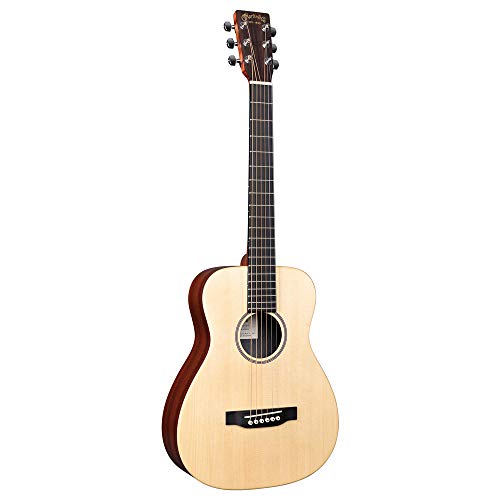
The Martin LX1E is one of the most useful small acoustic-electric guitars in the Martin line. It uses a solid Sitka spruce top with mahogany-patterned HPL on the back and sides. The smaller body feels easy to hold, yet the spruce top gives the guitar more life than many basic travel guitars. Its built-in electronics also let you connect to an amp, mixer, or recording setup.
I like the LX1E for players who need a guitar that can travel, teach, write, and perform. Its shorter scale and compact body make long practice sessions feel less demanding. It will not move as much air as a full-size dreadnought, so its bass has a natural limit. Still, for many players, the LX1E is the best Martin guitar for the money when comfort and portability matter most.
The HPL back and sides also make this model easier to live with in changing weather. That does not mean you should ignore humidity, but it does reduce some worry during trips and daily use. The included gig bag adds useful protection and makes the guitar ready for the road. Plugged in, it can fill a small room or sit well in a simple home recording mix.
Pros:
- Compact body feels easy to play while seated or standing
- Solid Sitka spruce top gives clear acoustic response
- Built-in electronics support live use and recording
- HPL back and sides handle travel well
- Included gig bag improves portability
- Shorter scale can help players with smaller hands
Cons:
- Small body produces less bass than a dreadnought
- Some players may prefer a wider full-size neck feel
- Electronics add battery and cable needs
Martin D-X1E Mahogany Acoustic-Electric

The Martin D-X1E is my top all-around pick for most buyers. Its dreadnought body gives it the strong low end and broad projection that many players expect from a Martin. The figured mahogany look adds visual appeal, while the X Series construction keeps the price below many traditional all-solid models. It also includes acoustic-electric electronics for quick stage or recording use.
This guitar feels at home with strumming, flatpicking, country, bluegrass, worship, and singer-songwriter work. The large body can sound full when you play open chords, but it may feel big to a smaller player. I would choose it for someone who wants one guitar that can cover practice, jams, and small shows. In my view, it is the best Martin guitar for the money if you want the most sound and flexibility from one purchase.
The X Series design uses modern materials in areas that help control cost and improve day-to-day stability. That can be a smart trade for a working musician who wants dependable use without paying for ornate wood appointments. The tone may not have the complex bloom of a higher-end all-solid Martin, but it remains lively and useful. A good setup and fresh strings can make this guitar feel even better.
Pros:
- Full dreadnought sound suits strong strumming
- Acoustic-electric design supports live performance
- Figured mahogany finish gives it a refined look
- Modern construction helps keep the price practical
- Works across folk, country, rock, and worship styles
- Offers more projection than the Little Martin models
Cons:
- Dreadnought size may feel large for some players
- HPL construction lacks the aging effect of all-solid wood
- May need a setup after shipping or a change in climate
Martin LX1 Little Martin
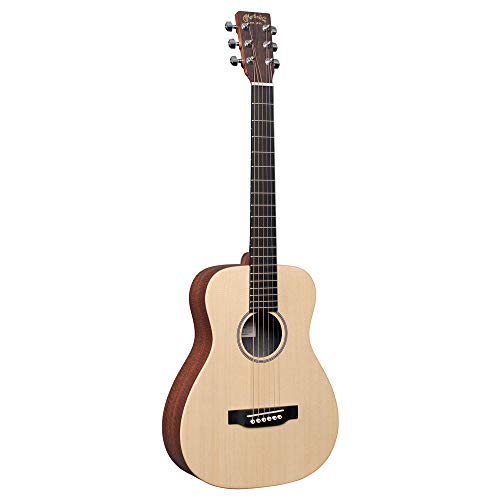
The Martin LX1 is the simple, non-electric cousin of the LX1E. It keeps the compact Little Martin shape and pairs it with a solid Sitka spruce top and HPL body materials. This design makes the guitar light, friendly, and easy to carry. It suits beginners, travelers, songwriters, and anyone who wants a smaller couch guitar.
The biggest difference from the LX1E is the lack of built-in electronics. That lowers complexity and may improve value for players who do not plan to plug in. The guitar has enough voice for practice and small acoustic settings, though it cannot match a dreadnought for deep bass. If you want a straightforward Martin with a low travel burden, this model can be the best Martin guitar for the money.
I also like the LX1 as a first serious guitar for a young player or adult beginner. Its smaller size can remove the stiff, awkward feeling that often makes new players quit. The solid spruce top responds well to a light touch, so a learner does not need to hit the strings hard. For stage work, you can add a microphone or an external pickup later.
Pros:
- Easy-to-hold body supports comfortable practice
- Solid spruce top adds a clear, lively voice
- No electronics means fewer parts to manage
- Compact size makes travel and storage simple
- Good choice for beginners and younger players
- HPL body materials offer practical durability
Cons:
- No built-in pickup or tuner
- Limited low-end power compared with a full-size guitar
- Some advanced players may outgrow its smaller voice
Martin Guitar Capo

A capo is a small tool, but a good one can change how often you use your guitar. This Martin capo is designed for one-hand operation and aims to keep fretting pressure even across the neck. That matters because uneven pressure can pull notes sharp or cause buzzing. It fits most common neck profiles, making it useful across a Martin collection.
I see this as a practical add-on for singers and players who change keys often. You can keep familiar chord shapes while moving the song into a more comfortable vocal range. It also helps beginners play songs that use open chords in a higher key. While it does not make a guitar the best Martin guitar for the money by itself, it helps you use that guitar in more musical situations.
The best way to use a capo is to place it just behind the fret rather than directly on top of it. Then check each string before you start playing. Even a well-made capo can create sharp notes if you clamp it too tightly or place it poorly. Used with care, this tool adds speed without forcing you to relearn every chord.
Pros:
- One-hand operation helps during live playing
- Supports fast key changes
- Can improve vocal comfort without new chord shapes
- Fits many Martin and other acoustic guitar necks
- May reduce buzz when placed correctly
- Small size makes it easy to keep in a gig bag
Cons:
- Incorrect placement can pull notes sharp
- It cannot replace learning movable chord shapes
- Fit may vary with unusual neck profiles
Martin Lifespan 2.0 Acoustic Strings

Fresh strings often create the biggest low-cost improvement you can make to an acoustic guitar. Martin Lifespan 2.0 strings use a treatment designed to slow the effect of dirt, sweat, and moisture. The result is a more consistent playing feel over time. They are a sensible match for Martin guitars, especially for players who dislike changing strings every few weeks.
These strings can help a guitar sound clearer when its old strings have become dull. I still recommend wiping the strings after each session, since coated or treated strings are not maintenance-free. The exact feel depends on the gauge and your picking style. If you want to judge a Martin guitar fairly, test it with new strings before deciding that its tone lacks life.
String choice remains personal. Some players like the smooth feel of treated strings, while others prefer the raw snap of fresh uncoated bronze. Lifespan 2.0 is most useful for people who play often, sweat a lot, travel, or want fewer interruptions. It can also protect your budget because longer string life may offset the higher cost of a treated set.
Pros:
- Helps strings stay usable for a longer period
- Resists the dull feel caused by dirt and sweat
- Can restore clarity to a tired acoustic guitar
- Useful for frequent players and performers
- Pairs naturally with Martin acoustic instruments
- Reduces the need for constant string changes
Cons:
- Treated strings may feel different from standard strings
- Some players may prefer the tone of uncoated bronze
- Higher upfront cost can matter to casual players
Rolling Stone Easy Guitar Classics

This songbook gives players a useful reason to pick up their guitar each day. It includes guitar arrangements connected to Rolling Stone’s collection of great songs, with easy guitar tab aimed at accessible playing. The selection spans classic rock and more modern rock material. That range makes it a practical choice for players who learn best through familiar songs.
I often recommend songbooks like this to buyers who feel stuck after learning basic chords. A new Martin can sound beautiful, but it will not build skill if it stays in its case. Easy tab lets you work on timing, chord changes, riffs, and song structure without facing a wall of complex notation. It is not a guitar, yet it can increase the real value of the best Martin guitar for the money.
The word “easy” does not mean every song will feel effortless. Some pieces may still require steady rhythm and clean changes. I would use the book as a bridge between beginner lessons and more advanced arrangements. It is also a good choice for casual players who want to entertain friends without spending months learning one song.
Pros:
- Uses well-known songs to keep practice engaging
- Easy tab helps beginners read guitar parts
- Covers classic and modern rock styles
- Supports chord, rhythm, and riff practice
- Works with acoustic or electric guitars
- Can make daily practice feel more rewarding
Cons:
- Arrangements may not match the original recordings exactly
- Some songs still need strong rhythm skills
- Not ideal for players seeking advanced solo notation
Martin DX Johnny Cash Signature Guitar

The Martin DX Johnny Cash Signature Edition brings a bold look to the practical X Series platform. It uses HPL construction, a modified D-14 fret body design, a Performing Artist neck, and a black finish. The acoustic-electric layout makes it ready for a cable and a stage system. Its design also gives fans a clear visual link to Johnny Cash without moving into the price range of a premium custom instrument.
This model makes sense for a player who wants a full-size Martin with character. The dreadnought-style body offers strong rhythm support, while the neck shape aims to feel comfortable in many playing positions. The black finish can show marks more easily than a natural wood look, so careful handling helps. For a performer or Cash fan, it may be the best Martin guitar for the money because it combines identity, stage utility, and a familiar Martin feel.
HPL does not respond and age in the same way as all-solid wood, but it has clear practical benefits. It handles normal travel and changes in conditions with less fuss than delicate premium wood. The included gig bag helps protect the instrument between rehearsals. I would choose this guitar for bold strumming, songwriting, country rhythm, and players who want their instrument to stand out.
Pros:
- Distinctive Johnny Cash signature design
- Full-size body gives strong rhythm projection
- Acoustic-electric features support live use
- Performing Artist neck feels approachable for many players
- HPL construction suits regular travel
- Includes a gig bag for basic protection
Cons:
- Black finish can show fingerprints and scratches
- HPL does not develop like an all-solid wood guitar
- Large body may not suit smaller players
Martin Custom Light 80/20 Bronze Strings

These Martin Authentic Acoustic strings use a custom light 11–52 gauge and 80/20 bronze alloy. The lighter gauge can feel easier under the fingers than a standard medium set. The 80/20 mix often gives a bright, crisp attack that works well for strumming. That combination makes these strings a useful way to adjust the feel of a Martin without changing the guitar.
I would consider them for beginners, players with hand strain, and anyone who wants a quick response. The lighter tension can make bends and chord work less tiring, though it may reduce some punch on a large dreadnought. They can also help a smaller guitar speak with a lively top end. Good strings do not replace a quality setup, but they can make the best Martin guitar for the money feel more inviting.
Bronze strings lose brightness as they collect sweat and grime, so regular care still matters. I suggest trying one set before buying several boxes. Your guitar, picking force, tuning, and preferred sound all affect the result. Players who want a warm and thick voice may prefer a heavier gauge or a different bronze formula.
Pros:
- Custom light gauge feels easier on many fingers
- Bright 80/20 bronze tone suits strumming
- 11–52 tension can help new players practice longer
- Useful for smaller guitars and light picking
- Easy way to refresh an older guitar’s sound
- Available in a familiar Martin string format
Cons:
- Lighter strings may sound less full on some dreadnoughts
- Bright tone can fade with heavy use
- Players who prefer strong tension may find them too soft
Martin GPC-X2E Ziricote Acoustic-Electric

The Martin GPC-X2E Ziricote offers a useful middle ground between a compact travel guitar and a large dreadnought. Its Grand Performance body gives players a balanced shape with good reach around the upper bout. The ziricote-style finish adds a rich, patterned appearance that feels more special than a plain entry-level design. Acoustic-electric electronics make it suitable for home use, rehearsal, and performance.
I would choose this model for players who want comfort but still need a broad, capable acoustic voice. The body often feels easier to manage than a dreadnought while offering more fullness than a Little Martin. It works well for fingerstyle, mixed picking, pop, worship, and general songwriting. For many players, this can be the best Martin guitar for the money when balanced tone and stage flexibility matter more than the deepest bass.
As with other X Series guitars, the modern body materials focus on value and practical use. The guitar may not offer the same wood response as a costly all-solid model, but it can be less stressful to carry to lessons and shows. A professional setup can improve action and intonation if the guitar arrives after a long trip. I also recommend keeping it in a stable room and using a proper humidifier when local conditions are very dry.
Pros:
- Grand Performance shape balances comfort and projection
- Ziricote-style look gives strong visual appeal
- Acoustic-electric system supports live playing
- More versatile body than a small travel guitar
- Works well for fingerstyle and strumming
- Modern construction offers practical everyday value
Cons:
- Not as compact as the LX1 or LX1E
- May lack the woody complexity of an all-solid Martin
- Some buyers may prefer the classic dreadnought shape
My Recommendation
After comparing these products, I would start with the Martin D-X1E for most adult players. It gives you a full-size body, useful electronics, strong projection, and a price-conscious X Series build. If comfort and travel come first, choose the LX1E. If you want the same compact idea without electronics, the LX1 is the cleaner value.
The GPC-X2E is the better fit for players who want a balanced body and more style. The Johnny Cash model is a smart choice for fans and performers who want a bold stage look. The books and accessories do not replace a guitar, but they make ownership more useful. Fresh strings, a capo, and a good songbook can turn a good purchase into a daily habit.
| Best for | Why |
|---|---|
| Best overall value | The D-X1E combines full sound, electronics, and practical construction. |
| Best for travel and small hands | The LX1E stays light and compact while still offering a pickup. |
| Best for balanced comfort | The GPC-X2E offers a versatile body for fingerstyle and strumming. |
How I Judge the Best Martin Guitar for the Money
Price alone does not show value. I look at what the guitar lets you do, how often you will use it, and how well it fits your body. A low price is not a bargain if the guitar feels hard to play. A higher price can make sense when it brings better tone, stronger comfort, or features you will use every week.
I also separate solid wood from HPL construction. Solid wood often gives a more open and complex tone, and it can change as it ages. HPL offers strong resistance to common travel stress and helps Martin keep many X Series models affordable. Neither choice is perfect for every player. The best Martin guitar for the money is the one that matches your needs without forcing you to pay for a premium feature you do not need.
Martin Guitar Body Size Matters
Body size changes both sound and comfort. A dreadnought like the D-X1E can push a lot of air. It suits strong strumming and players who want a deep, bold voice. The trade-off is a larger body that can feel tiring for a smaller person.
A Little Martin such as the LX1 or LX1E feels easier to hold. It works well for travel, practice, and songwriting on the sofa. Its smaller body has less bass, but that can help the sound sit neatly under a singer. The GPC-X2E sits between these ideas and offers a balanced option.
When possible, sit with the guitar for at least ten minutes. Notice where your arm rests. Check if your fretting shoulder stays relaxed. Comfort is not a small detail; it is the bridge between owning a guitar and playing it.
Acoustic or Acoustic-Electric?
An acoustic guitar works without extra gear. That keeps the setup simple and avoids batteries. It is ideal for home practice, lessons, campfires, and quiet songwriting. The Martin LX1 is a good example of this direct approach.
An acoustic-electric guitar includes a pickup system. You can connect it to an amplifier, PA, audio interface, or mixer. This makes the LX1E, D-X1E, GPC-X2E, and Johnny Cash model more flexible for shows and recording. Still, electronics do not improve unplugged tone by themselves.
If you may perform in the future, paying a bit more for electronics can save you from adding a pickup later. If you know you will only play at home, a non-electric guitar may offer better value. Think about your next two years, not only your first week.
What Makes Martin X Series Guitars a Good Value?
Martin X Series guitars use modern materials and efficient designs to offer the Martin name at a more approachable price. Many models combine a solid spruce top with HPL back and sides. The solid top helps preserve a lively acoustic response. The HPL body helps control cost and can make the guitar less demanding during travel.
These guitars are not copies of high-end all-solid Martins. Their tone, finish, and response follow a different goal. They aim to give you a reliable instrument that feels musical and useful. That focus is why the D-X1E and smaller Little Martins appear often in searches for the best Martin guitar for the money.
I suggest judging the guitar by its role. A working player may value stable materials and electronics. A collector may value rare wood and hand-finished details. A beginner may value low weight and easy reach. The right value comes from the match.
Setup, Strings, and Humidity Tips
A new guitar may need a setup. Small changes in shipping temperature can affect neck relief and action. A qualified repair shop can check the neck, saddle, nut, and intonation. A setup does not turn one model into another, but it can make the guitar easier to play.
Strings also shape your first impression. Old strings can make a bright guitar sound dull. Very heavy strings can make a new player quit from sore fingers. Try the included set first, then test a light or custom light set if you need a softer feel.
Wood still reacts to dry air, even when the guitar uses HPL sides. Keep the guitar away from heaters, sunny windows, and damp areas. In a dry climate, use a sound-hole humidifier made for acoustic guitars. Simple care protects the neck, bridge, top, and finish.
Who Should Buy a Martin Little Martin?
The Little Martin line suits people who want less guitar to carry. It can fit beside a desk, in a small apartment, or under an airplane seat with the right travel plan. Its compact body also helps children and smaller adults reach around the instrument. Many songwriters like it because it is easy to grab for a quick idea.
The LX1 has a direct acoustic design. The LX1E adds plug-in flexibility. Both can serve as practice guitars, backup guitars, or travel guitars for an experienced player. Neither should be expected to sound like a full dreadnought from across a large room.
For a new player, easy access can matter more than maximum volume. A guitar that feels friendly may get played five days a week. That habit creates more progress than a larger instrument that stays in its case.
Who Should Buy the Martin D-X1E?
The D-X1E suits a broad group of players. It is a good choice for adults who want a first serious acoustic, singers who need a full chord bed, and performers who want built-in electronics. Its dreadnought body gives it room to grow with your skills. You can use it for simple open chords now and more demanding picking later.
I would not make it the first choice for someone with shoulder pain or a very small frame. The size can feel large when you sit for long sessions. In that case, the GPC-X2E may offer a gentler fit. But if you want loud, full rhythm tone at a sensible price, the D-X1E is hard to ignore.
Who Should Buy the GPC-X2E?
The GPC-X2E is for the player who wants balance. It has more acoustic presence than a Little Martin and less bulk than a traditional dreadnought. That makes it useful for players who switch between fingerstyle, light strumming, and lead parts. Its acoustic-electric design also gives it a clear path to small performance spaces.
This model may be a strong long-term choice for a songwriter. It does not force you into one narrow sound. You can play softly, add a pick, use a capo, or connect to a PA. If your style changes over time, a flexible body can protect your purchase.
Common Buying Mistakes to Avoid
Do not select a guitar only because its picture looks good. Finish and wood pattern matter, but neck comfort matters more. A beautiful guitar that hurts your hand will not feel like a bargain after a month.
Do not assume a high price guarantees a perfect setup. Every guitar can benefit from a careful inspection. Check the fret ends, neck relief, bridge, tuners, and action. If you buy online, use a seller with a clear return policy and inspect the guitar soon after delivery.
Do not ignore the cost of useful extras. A capo, tuner, strings, humidifier, and safe case can add to the first-year budget. The guitar with the lowest sticker price may not be the lowest total cost. Include the tools that help you play and protect the instrument.
FAQs Of best martin guitar for the money
What is the best Martin guitar for the money?
For most players, I recommend the Martin D-X1E. It offers a full dreadnought voice, built-in electronics, and practical X Series construction. Choose the LX1E instead if travel size and comfort matter more than bass.
Is the Martin D-X1E good for beginners?
Yes. It provides room to grow and works for many music styles. Its full body may feel large to some beginners, so smaller players should also try a Little Martin or GPC-style body.