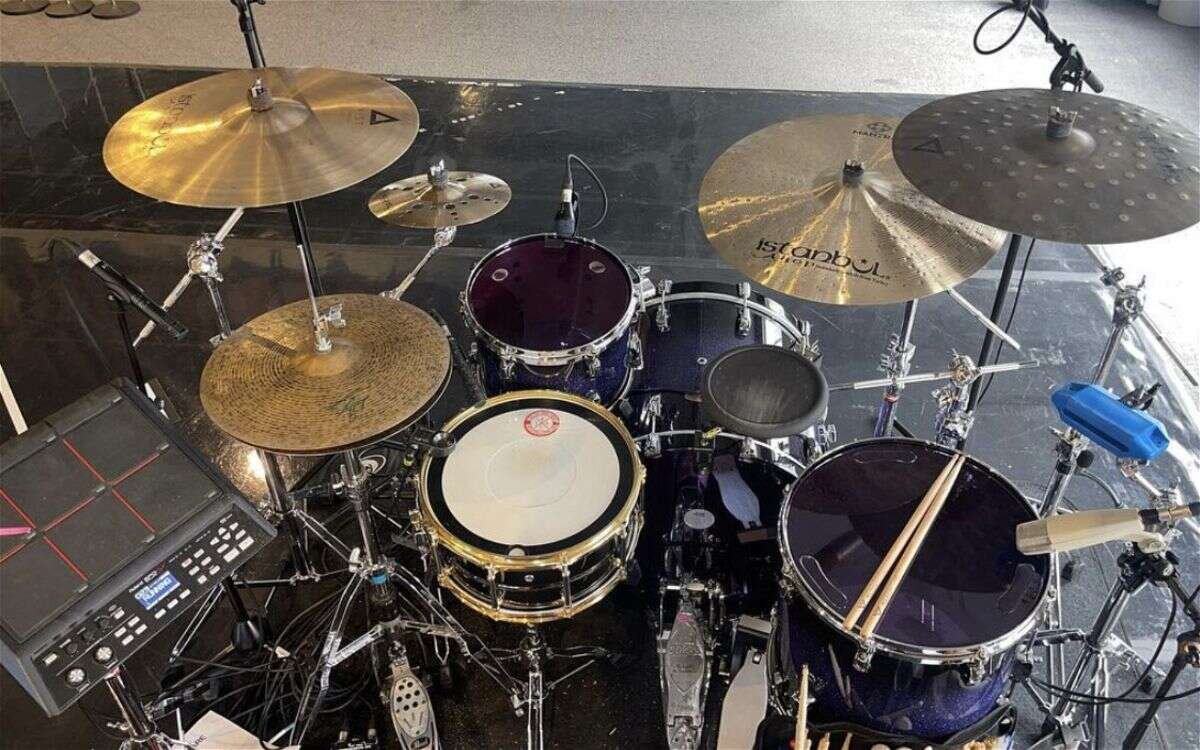
Drum Set And Drum Kit: What’s The Difference?
In the United States, “drum set” and “drum kit” usually mean the same instrument: a group of drums, cymbals, stands, pedals, and other parts played by one drummer. The main difference is word choice. “Drum set” is more common in American English, while “drum kit” is common in the United Kingdom and many other countries.
There is one small practical difference in some buying situations. A drum kit may mean a complete package sold with several parts, while a drum set may describe the assembled playing setup. However, this is not a strict industry rule. Manufacturers, music stores, teachers, and players often use both terms for the same thing.

Drum Set vs. Drum Kit: The Short Answer
A drum set and a drum kit are generally the same instrument.
Both terms can describe an acoustic setup with:
- A bass drum, also called a kick drum
- A snare drum
- One or more rack toms
- A floor tom
- Hi-hats
- Crash cymbals
- A ride cymbal
- Stands, pedals, and mounting hardware
The words do not usually describe two different types of drums. If someone in the United States asks you to bring a “drum kit,” they will likely mean the same setup another drummer calls a “drum set.”
The clearest distinction is regional and contextual:
| Term | Common use | Typical meaning |
|---|---|---|
| Drum set | United States and Canada | The complete group of drums and cymbals played by one drummer |
| Drum kit | United Kingdom, Australia, and many other regions | The same complete setup |
| Shell pack | Music retail | Drum shells only, often without cymbals, stands, or pedals |
| Starter kit | Music retail | A beginner package that may include drums, hardware, cymbals, and accessories |
Do not assume that “kit” always includes every part. Read the product description before buying. Some drum kits include only the shells and hardware, while others include cymbals, a throne, and pedals.

What Is a Drum Set?
A drum set is a collection of drums and cymbals arranged so one person can play several sounds at once.
The setup grew from the need for one drummer to combine parts that were once played by several percussionists. A modern drum set lets a player use their hands for the snare and toms and their feet for the bass drum and hi-hat.
A typical five-piece drum set includes:
- A bass drum
- A snare drum
- Two rack toms
- One floor tom
The number “five-piece” counts the drums, not the cymbals. A five-piece set may still include a hi-hat, crash cymbal, and ride cymbal. Those cymbals are usually counted separately.
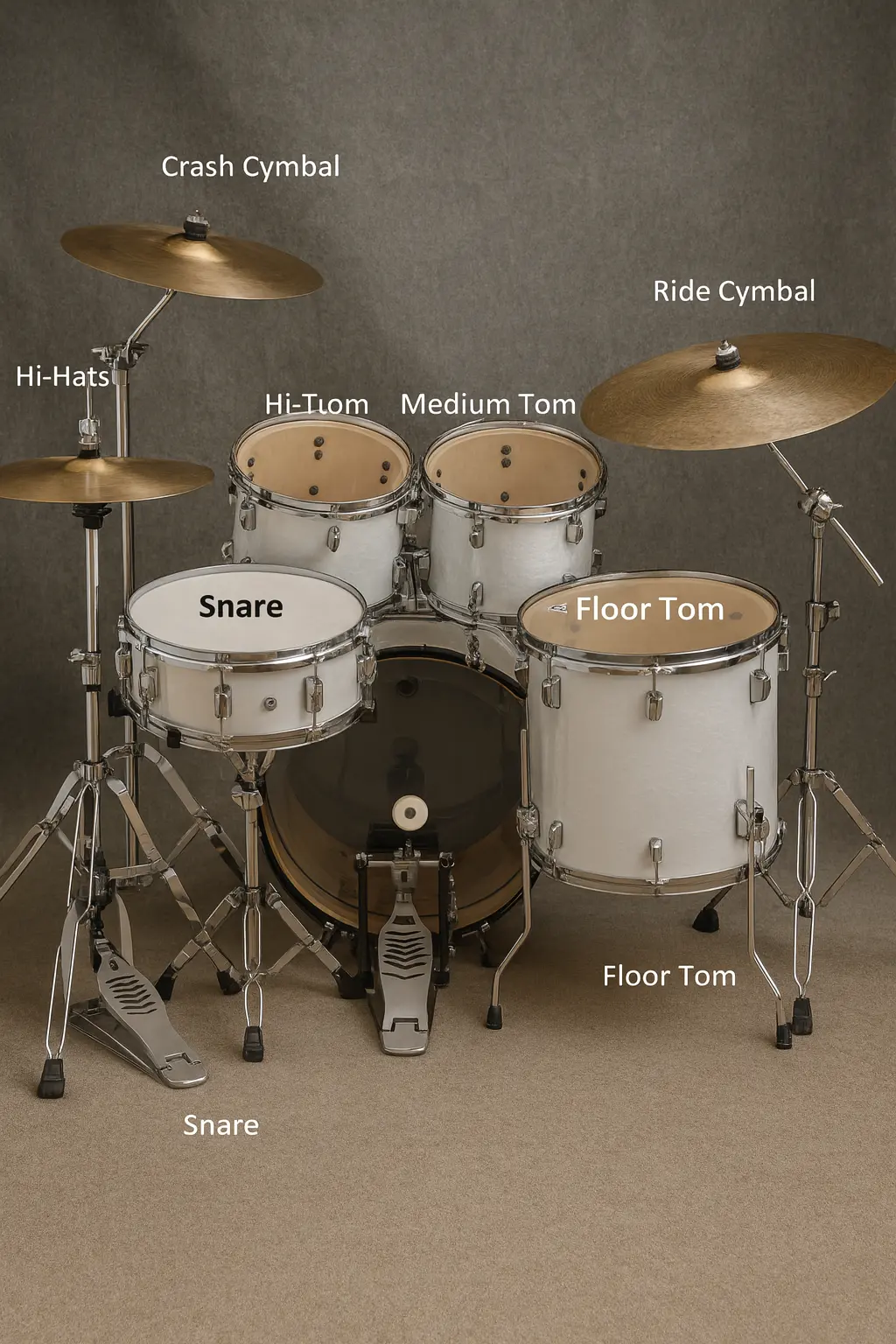
Main parts of a drum set
Bass drum: The large drum on the floor. The drummer plays it with a foot pedal. It creates the low pulse in rock, pop, country, jazz, and many other styles.
Snare drum: The drum with metal wires, called snares, stretched across the bottom head. It produces a sharp, crisp sound.


Toms: Drums without snare wires. Rack toms sit above the bass drum, while a floor tom stands on legs beside the drummer.
Hi-hat: Two cymbals mounted face to face on a stand. A foot pedal opens and closes them. The drummer can play them with sticks, foot pressure, or both.
Crash cymbal: A cymbal used for accents and loud hits.
Ride cymbal: A larger cymbal used for steady patterns and sustained sounds.
Hardware: The stands, bass drum pedal, hi-hat stand, tom mounts, and other mechanical parts that hold and operate the set.
A drum set is not defined by one fixed number of drums or cymbals. Jazz players may use a compact four-piece setup. Rock players may use several toms and cymbals. The music, available space, and player’s style all affect the layout.
What Is a Drum Kit?
A drum kit is another name for a complete multi-drum setup played by one person.
The term is especially common in British English. UK music schools, retailers, and players often use “drum kit” where American musicians would say “drum set.” The two terms describe the same basic instrument.
The word “kit” can also suggest a group of parts sold together. For example, a retailer might list a product as a “complete drum kit” and include:
- Drum shells
- Snare drum
- Drumheads
- Stands
- Bass drum pedal
- Hi-hat stand
- Cymbals
- Drum throne
- Drumsticks
But “complete” does not have one universal legal or technical meaning in every store listing. One package may include cymbals but no throne. Another may include hardware but leave out the cymbals. Check the included-parts list rather than relying on the name.
This is why “drum kit” has two related uses:
- It can mean the same instrument as a drum set.
- It can describe a bundled package of equipment.
The first use is the normal musical meaning. The second is more common in product descriptions.

Why Do Some People Say “Drum Set” and Others Say “Drum Kit”?
The difference mainly comes from regional English and local music culture.


American musicians commonly say:
- Drum set player
- Drum set lessons
- Drum set parts
- Drum set cymbals
British musicians commonly say:
- Drum kit player
- Drum kit lessons
- Drum kit parts
- Drum kit cymbals
Both terms are widely understood in the global music industry. A US drummer will usually understand “drum kit,” and a UK drummer will usually understand “drum set.”
The terms may also vary by brand, store, teacher, or publication. A company may use “drum kit” in a product title because it is familiar to customers around the world, even if the company sells in the United States.
This is similar to other regional music terms. For example, American musicians often say “quarter note,” while British musicians may say “crotchet.” The object or idea remains the same even when the name changes.

Is a Drum Kit Different From a Drum Set When Buying One?
Usually, no. The product name alone does not tell you exactly what is included.
When buying drums in the United States, look for the terms below:
Shell pack
A shell pack usually contains the drum shells and sometimes the tom mounts. It often does not include:
- Cymbals
- Cymbal stands
- Snare stand
- Drum throne
- Bass drum pedal
A shell pack can be useful for experienced players who already own hardware and cymbals. It may cost less at first, but the missing parts add to the total cost.
Complete drum set or complete drum kit
A package labeled “complete” may include the drums, hardware, and cymbals. However, the exact contents vary by brand and model.
Before buying, confirm whether the package includes:
- Snare drum
- Bass drum pedal
- Hi-hat stand
- Cymbal stands
- Hi-hat cymbals
- Crash and ride cymbals
- Drum throne
- Drumsticks
Electronic drum kit
An electronic drum kit uses trigger pads and a sound module instead of acoustic drum shells. It is still a drum kit because it provides the parts and playing layout of a drum setup.
Electronic kits may offer:
- Headphone practice
- Adjustable volume
- Built-in sounds
- USB or MIDI connections
- Compact storage
They do not feel exactly like acoustic drums. Pad size, rebound, speaker response, and foot pedal design can differ. A beginner should choose based on practice space, noise limits, playing goals, and budget—not just the word “kit” or “set.”


What Is the Difference Between a Drum Set and a Percussion Set?
A drum set is one type of percussion setup, but “percussion set” is a broader term.
Percussion includes instruments that are struck, shaken, scraped, or otherwise activated. A percussion setup may include:
- Congas
- Bongos
- Tambourines
- Shakers
- Cowbells
- Wood blocks
- Mallets
- Orchestral percussion instruments
A drum set focuses on the standard drum-and-cymbal layout used in popular music, jazz, worship music, marching-related settings, and many other styles.
A band may also have a drumline, which is different from a drum set. A drumline often includes several players who share parts such as:
- Snare drums
- Bass drums
- Tenor drums
- Cymbals
In a drum set, one player controls the main parts from one seat. In a drumline, several performers divide the work.

How Many Drums Are in a Standard Drum Set?
There is no single standard number, but a common beginner or intermediate setup is a five-piece drum set.
The five drums are usually:
- Bass drum
- Snare drum
- Two rack toms
- Floor tom
A compact jazz setup may have four drums:
- Bass drum
- Snare drum
- One rack tom
- One floor tom
A larger rock or metal setup may have six or more drums. It may add:
- Extra rack toms
- Two floor toms
- Side snare drums
- Auxiliary bass drums
- Specialty drums
Cymbals are not normally included in the drum count. A “five-piece” set does not mean five drums and five cymbals. It means five main drums.
The number of pieces helps compare packages, but it does not measure quality. A well-tuned four-piece set can be more useful than a poorly arranged ten-piece set. More drums also require more space, stands, tuning time, and transport effort.

Which Term Should You Use?
Use “drum set” when writing or speaking to a US audience. It is the clearest American term for the full acoustic or electronic playing setup.


Use “drum kit” when:
- You are speaking with musicians from the UK or other regions
- The product listing uses that term
- You mean a bundled package of equipment
- You are discussing an electronic kit
- You want a term recognized across international music markets
You do not need to correct someone who uses the other term. In most musical conversations, both words point to the same instrument.
If you are searching for parts, use both terms. Search phrases such as “drum set hardware” and “drum kit hardware” may lead to different product pages even though the parts are compatible with the same general setup.

Common Mistakes to Avoid
Mistake 1: Assuming “five-piece” includes cymbals
A five-piece package usually counts drums only. Confirm whether cymbals are included.
Mistake 2: Treating a shell pack as a complete setup
A shell pack may need stands, pedals, cymbals, and a throne before you can play it.
Mistake 3: Buying cymbals without checking their size and mounting needs
Cymbals need suitable stands or mounts. A cymbal pack alone does not provide the hardware to hold it.
Mistake 4: Confusing a drum set with a drumline
A drum set is normally played by one person. A drumline divides the parts among several players.
Mistake 5: Assuming more drums mean a better set
Extra drums can add range, but they also add cost, weight, setup time, and maintenance.
Mistake 6: Ignoring noise and hearing protection
Acoustic drums can produce high sound levels. Wear properly fitted hearing protection during loud practice and performance. If you experience ringing, pain, or muffled hearing, stop playing and seek advice from a qualified health professional.

Key Takeaways
- Drum set and drum kit usually mean the same instrument.
- “Drum set” is more common in the United States.
- “Drum kit” is more common in the United Kingdom and many other regions.
- A five-piece set usually counts five drums, not five cymbals.
- A shell pack may not include cymbals, stands, pedals, or a throne.
- Always check the included-parts list before buying.
- The best setup depends on the music, space, noise limits, budget, and player’s needs.
Frequently Asked Questions
Is a drum kit bigger than a drum set?
No. The terms do not describe size. A drum kit and a drum set can have four drums, five drums, or many more. The number of parts depends on the specific setup.
Do drum sets include cymbals?
Sometimes. A complete package may include cymbals, but a shell pack usually does not. Check the manufacturer’s contents list before purchasing.
Is an electronic drum set the same as an electronic drum kit?
Yes. “Electronic drum set” and “electronic drum kit” usually describe the same type of instrument: trigger pads and pedals connected to a sound module.
What does a five-piece drum set include?
A typical five-piece setup includes a bass drum, snare drum, two rack toms, and one floor tom. Cymbals and hardware may or may not be included.
Should a beginner buy a drum set or a drum kit?
Either term can describe a suitable beginner instrument. Focus on what the package includes, how much space it needs, how loud it is, and whether it has the pedals, stands, cymbals, and throne needed to play.
Conclusion
For musicians in the United States, drum set is usually the most natural term. Drum kit is not a different instrument; it is a widely used alternative name. In a store, “kit” may also suggest a bundled package, but the included parts can vary.
Before buying, ignore the label for a moment and read the specifications. Count the drums, check for cymbals and hardware, and make sure the setup fits your music, space, and practice needs.

Senior Music Reviewer
Alex Carter is a seasoned music reviewer with over a decade of experience in the world of sound and instruments. Passionate about helping musicians and enthusiasts make informed choices, he brings sharp insights and in-depth knowledge to every review. From classical instruments to modern gear, Alex combines technical expertise with a love for music to deliver content that resonates with readers.
As a Senior Music Reviewer and expert author on Tuneluma.com, Alex is dedicated to sharing honest evaluations, practical advice, and thoughtful commentary to guide readers in their musical journey.