What Are The Best Violin Strings For Beginners: Easy Guide
The best violin strings for beginners are affordable, comfortable synthetic-core sets with stable tuning and a warm, clear tone.
Choosing violin strings can feel harder than learning your first scale. Many sets look similar, yet they can differ in tone, tension, comfort, price, and durability. After helping new players compare student strings and troubleshoot common setup issues, I have found that the best violin strings for beginners are usually medium-tension synthetic-core strings from a trusted brand.
The right strings will not fix every problem, but they can make the violin easier to tune and more pleasant to play. This guide explains which beginner violin strings are worth buying, how each type feels, and how to avoid spending money on a poor match.
What Makes Violin Strings Good for Beginners?
The best violin strings for beginners should respond easily under the bow. They should also hold their pitch well and produce a sound that is clear without being harsh.
Beginners often press too hard with the bow or left hand. Very stiff strings can make this habit worse. A comfortable string gives useful feedback and allows the player to learn smooth bow control.
Look for these features:
- Medium tension for a balanced feel
- Synthetic or composite core for a warm, flexible sound
- Reliable tuning stability
- A smooth surface that feels comfortable under the fingers
- A full set made for the violin’s size
- A price that makes regular replacement practical
String choice is only one part of the sound. The bridge, tailpiece, pegs, nut, bow hair, and instrument setup also matter. A well-fitted student violin with average strings can sound better than a poorly adjusted violin with expensive strings.
For most new players, medium-tension strings are the safest starting point. They offer a useful middle ground between easy playability, strong projection, and a pleasant tone.

The Best Violin Strings for Beginners: Top Picks
There is no single perfect set for every violin. Each instrument reacts in its own way. Still, several string sets are widely trusted for student instruments.
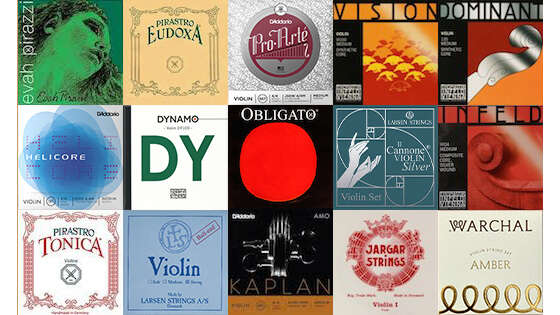
1. D’Addario Prelude
D’Addario Prelude strings are among the best violin strings for beginners who want a low-cost and dependable option. They use a solid steel core and are designed for stable performance in school, practice, and early ensemble playing.
Their tone is focused and bright. This can help a quiet student violin speak more clearly. They also tend to handle changes in temperature and humidity well.
Choose Prelude strings if:
- You need an affordable first replacement set
- Your violin sounds dull or lacks focus
- You want a simple, durable option
- You play in a school orchestra or group class
Their sound may feel less warm than that of synthetic-core strings. However, their low price and reliable response make them a sensible choice for many beginners.
2. Thomastik-Infeld Dominant
Dominant strings are a classic choice and remain some of the best violin strings for beginners with a decent-quality instrument. They use a synthetic core and offer a warm, flexible sound with good projection.
Many teachers recommend Dominant because they provide a useful reference tone. They are not overly bright, dark, stiff, or soft. This balance helps players learn what their violin can do.
Dominant strings may cost more than basic student sets. They can also take a short time to settle after installation. Once stable, they often provide a comfortable playing feel and a richer tone.
Choose Dominant strings if:
- Your teacher recommends a synthetic-core set
- You want a warm and balanced sound
- Your violin is ready for a moderate upgrade
- You plan to play for several years
3. Pirastro Tonica
Pirastro Tonica strings are another strong option for beginners and developing players. They use a synthetic core and produce a clear, lively sound without feeling overly demanding.
Tonica strings often work well on violins that sound dark or slow to respond. They can add brightness and energy while keeping a smoother tone than many basic steel strings.
They are a good choice when you want more color than a starter steel set but do not need a professional-level string. Their price is usually reasonable for an intermediate student.
4. D’Addario Ascente
Ascente strings are designed for students who want a warm and flexible synthetic-core sound. They are often easier to manage than advanced strings because they offer a balanced response across all four strings.
These strings can be useful when a beginner’s violin feels rough or overly bright. They may also suit players who practice for longer periods and want a softer feel under the fingers.
Ascente strings are worth considering when:
- You want a warm student sound
- Your instrument is bright or thin
- Your fingers dislike very firm steel strings
- You want more comfort without buying premium strings
5. Thomastik-Infeld Alphayue
Alphayue strings are made with student players in mind. They offer a synthetic-core feel at a lower price than some advanced string sets.
They are usually warm, smooth, and easy to control. This makes them one of the best violin strings for beginners who want to move beyond basic steel strings.
Alphayue may not provide the same depth or projection as higher-priced strings. Still, they can be an excellent match for lessons, home practice, and early performances.
6. D’Addario Helicore
Helicore strings have a flexible stranded steel core. They often sound clear and focused while feeling more responsive than traditional solid steel strings.
They can work well for beginners whose violins sound too dark with synthetic strings. They are also popular with players who need quick tuning stability and a direct response.
Helicore strings are not always the warmest choice. If your violin already sounds bright, Dominant, Tonica, or Alphayue may offer a gentler balance.
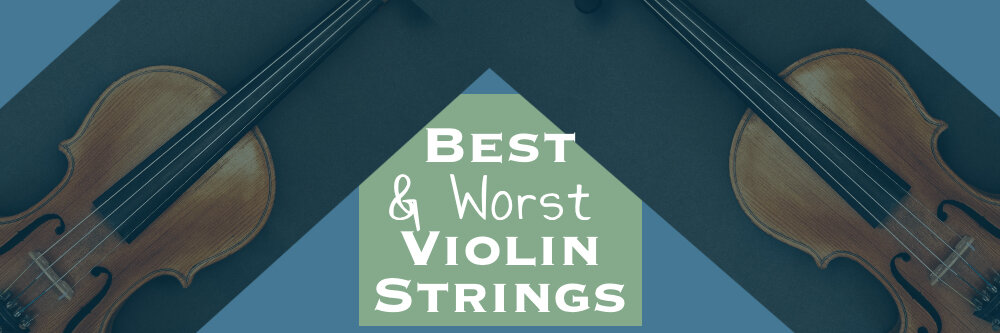
Synthetic-Core vs. Steel-Core Violin Strings
Understanding string cores makes it easier to choose the best violin strings for beginners. The core is the material inside the winding that gives the string its main playing character.
Synthetic-core strings
Synthetic-core strings use materials such as perlon or other synthetic fibers. They usually create a warm, rounded tone with a flexible response.
Benefits include:
- A rich and pleasant sound
- Comfortable response under the bow
- Good balance between warmth and clarity
- A feel that many classical players enjoy
Limitations include:
- A higher price than basic steel strings
- A longer settling period after installation
- More sensitivity to temperature and humidity
- Slightly less immediate tuning stability in some cases
Dominant, Tonica, Ascente, and Alphayue are common examples.
Steel-core strings
Steel-core strings use a solid or stranded metal core. They often produce a direct, bright, focused sound.
Benefits include:
- Fast tuning stability
- Strong durability
- Clear projection
- Lower cost in many cases
Limitations include:
- A firmer feel on some violins
- A brighter sound that may become harsh
- Less tonal warmth for certain instruments
- More noticeable finger pressure for some players
Prelude and Helicore are common examples.
Neither type is automatically better. The best violin strings for beginners depend on the violin, the player’s touch, and the sound they need. A dark violin may benefit from steel strings. A bright violin may sound better with synthetic strings.

How to Choose the Right Violin Strings
Buying strings by brand alone can lead to disappointing results. Use the violin’s size, current sound, and playing needs as your guide.
Check the violin size
String sizes must match the instrument. A full-size violin uses 4/4 strings. Smaller instruments may use 3/4, 1/2, 1/4, or smaller sizes.
Never guess if you are unsure. Check the label, ask the teacher, or have a violin shop measure the instrument. The wrong size can create poor tension and may cause setup problems.
Match the sound of the violin
Listen to the instrument before choosing a new set.
- A bright or harsh violin may suit warm synthetic strings
- A dark or muffled violin may suit clear steel strings
- A weak violin may need a focused set with good projection
- A nasal violin may need a warmer and more balanced set
Strings cannot completely change an instrument’s voice. Think of them as adjusting the color of a picture rather than repainting the whole image.
Consider the player’s comfort
A beginner may practice for only 10 minutes at first. Later, practice may last 30 minutes or more. Strings that feel too stiff can cause unnecessary hand tension.
Medium-tension strings are usually a sensible starting point. Extra-light strings may feel easy but can sound thin. Heavy strings may project well but require more effort.
Follow the teacher’s advice
A teacher often knows how the student’s violin responds. They may also recognize whether the problem comes from the strings, bow technique, bridge position, or instrument setup.
If a teacher recommends a specific set, ask why. Understanding the reason helps you make better choices later.
Set a realistic budget
A complete set usually costs less than buying four premium strings separately. Beginners should not feel pressure to buy the most expensive option.
It is often better to buy a reliable mid-priced set and replace it on time than to keep old, worn strings because they were expensive.

When Should Beginners Replace Violin Strings?
The best violin strings for beginners will still wear out. String life depends on practice time, hand oil, sweat, climate, and playing style.
Many active students replace strings about every three to six months. A casual player may use the same set for longer. However, the calendar is only a guide.
Watch for these signs:
- The strings sound dull or lifeless
- The violin becomes harder to tune
- The winding starts to unwind
- The string feels rough under the fingers
- Notes sound unstable even with good technique
- The A or E string develops a false, uneven tone
- The string breaks or shows visible damage
A string can look fine and still sound worn. Over time, the winding loses its ability to vibrate evenly. The result is often a flat tone and weaker response.
One mistake I often see with new players is waiting until a string breaks. This can make practice frustrating for weeks. A simple replacement schedule keeps the violin more predictable.
Always replace damaged strings at once. If one string breaks repeatedly, ask a teacher or repair technician to inspect the bridge, nut, fine tuner, and peg.

How to Install and Care for Beginner Violin Strings
Replacing strings is not difficult, but careless installation can damage the bridge or create tuning problems.
Use these steps:
- Replace one string at a time. This helps keep the bridge and soundpost area stable.
- Check that the string sits in the correct peg and fine tuner.
- Guide the bridge so it remains upright and centered.
- Wind the string neatly on the peg without overlapping other windings.
- Tune slowly to the correct pitch.
- Stretch the string gently with light finger pressure.
- Retune several times during the first day.
Do not pull a string sharply. Sudden force can break the string or move the bridge.
Keep the violin in a case when you are not playing. Wipe the strings and instrument with a clean, dry cloth after practice. Do not use household cleaners or polish unless the product is made for violins.
Rosin dust can build up near the bridge and fingerboard. Too much dust may affect the finish and create a rough playing surface. A soft cloth removes light dust, while heavy buildup should be handled by a violin shop.
Temperature and humidity also matter. Large changes can affect tuning, glue joints, and the wooden body. A stable indoor environment is safer than leaving a violin in a hot car or near a heater.

Common Mistakes When Buying Beginner Violin Strings
String shopping becomes easier when you know what to avoid. Some mistakes are harmless, while others can affect playability.
Choosing the cheapest set without checking quality
Low-cost strings can be useful, but extremely poor strings may sound unstable or feel rough. A trusted student set is a better value than an unknown product with no clear size or tension information.
Buying the wrong size
A 4/4 set will not fit a smaller violin correctly. Confirm the size before opening the package.
Mixing random strings
Mixing strings is common among advanced players, but beginners should start with a complete set. A matched set offers a more even tone and predictable tension.
Choosing heavy tension too soon
Heavy strings can produce strong volume, but they may feel hard under the fingers. They can also encourage a beginner to press too firmly.
Blaming strings for every sound problem
Scratchy tone often comes from bow angle, bow speed, excess pressure, or too much rosin. A new string set may help, but lessons and proper setup are just as important.
Ignoring the violin setup
A raised bridge, sharp nut, loose fine tuner, or poorly fitted peg can make any strings feel difficult. If the instrument is hard to tune or play, have it checked by a qualified violin technician.

A Simple Starter Recommendation
If you want a clear starting point, choose based on your instrument and budget.
- For the lowest-cost reliable option, try D’Addario Prelude.
- For a warm and balanced upgrade, try Thomastik-Infeld Dominant.
- For a lively synthetic-core sound, try Pirastro Tonica.
- For a comfortable student set, try D’Addario Ascente.
- For an affordable synthetic-core choice, try Thomastik-Infeld Alphayue.
- For a focused steel sound, try D’Addario Helicore.
For many beginners, Dominant, Tonica, Ascente, or Alphayue are the best violin strings for beginners when the instrument is already in good condition. Prelude may be the better choice for a basic student violin, a school rental, or a player who needs maximum durability.
The safest approach is to buy one complete medium-tension set first. Keep the package so you can remember what worked. Then compare the sound and feel after several weeks of practice.
Frequently Asked Questions
What are the best violin strings for beginners?
The best violin strings for beginners are usually medium-tension strings with a comfortable response and stable tuning. D’Addario Prelude, Thomastik-Infeld Dominant, Pirastro Tonica, D’Addario Ascente, and Thomastik-Infeld Alphayue are reliable options.
Should a beginner use steel or synthetic violin strings?
Both types can work well. Steel strings are often bright, durable, and affordable, while synthetic strings usually sound warmer and feel more flexible.
How much should beginner violin strings cost?
A dependable student set may cost less than a premium professional set, but prices vary by size and brand. Focus on trusted quality rather than choosing the absolute cheapest package.
How often should a beginner change violin strings?
Many active beginners change strings every three to six months. Replace them sooner if they sound dull, feel rough, lose tuning stability, or show damage.
Do expensive violin strings make a beginner sound better?
Expensive strings cannot replace good technique or proper violin setup. They may improve tone and response, but the best result comes from matching the strings to the instrument and player.
Can beginners change violin strings themselves?
Yes, beginners can learn to change strings, but they should work slowly and replace one string at a time. A teacher or violin shop can demonstrate the process and check that the bridge stays in the correct position.
What violin string size should a beginner buy?
The string size must match the violin. A full-size violin needs 4/4 strings, while smaller instruments need the matching fractional size.
Conclusion
The best violin strings for beginners are not always the most expensive strings. They are the strings that match the violin, feel comfortable, stay in tune, and support steady practice.
Start with a trusted medium-tension set such as Prelude, Dominant, Tonica, Ascente, or Alphayue. Pay attention to tone, comfort, and tuning over several weeks. If the violin still feels difficult, have its setup checked before buying another string brand.
A good string set can make practice feel smoother and more rewarding. Choose carefully, keep your strings clean, and ask your teacher or local violin shop for advice as your playing develops.

Senior Music Reviewer
Alex Carter is a seasoned music reviewer with over a decade of experience in the world of sound and instruments. Passionate about helping musicians and enthusiasts make informed choices, he brings sharp insights and in-depth knowledge to every review. From classical instruments to modern gear, Alex combines technical expertise with a love for music to deliver content that resonates with readers.
As a Senior Music Reviewer and expert author on Tuneluma.com, Alex is dedicated to sharing honest evaluations, practical advice, and thoughtful commentary to guide readers in their musical journey.