Best Dehumidifier For Piano Room: Top Safe Picks
The best dehumidifier for piano room use keeps humidity near 40–50% RH quietly, steadily, and safely.
A piano room can feel fine while excess moisture slowly harms the instrument. Wood may swell, keys may stick, strings may lose tune, and metal parts may corrode. I have found that the right dehumidifier works like a quiet guard at the door: it removes damp air before that moisture reaches the piano. The best choice depends on room size, noise needs, drainage, and how often you want to empty the tank.
Waykar 80-Pint Dehumidifier

The Waykar 80-pint model is built for large rooms, open floor plans, basements, and music spaces that hold a lot of moisture. Its listed coverage reaches up to 5,000 square feet, so it has far more capacity than most small piano rooms need. That extra power can help in a damp home, especially during a wet summer. I would still use a separate hygrometer beside the piano because room coverage claims vary with temperature, insulation, and starting humidity.
This unit includes an intelligent humidity control system, auto defrost, and a self-drying function. The included drain hose can send water to a floor drain, which saves frequent tank emptying. Its portable design also helps if I need to move it between a piano room and a basement. For best piano care, I would set the target near 45% RH and place the unit several feet away from the instrument.
Pros:
- High moisture capacity for large or very damp spaces
- Drain hose supports long, low-maintenance use
- Auto defrost helps in cooler rooms
- Self-drying feature can reduce damp residue inside the unit
- Portable design makes room changes easier
- Useful for basements, studios, and open living areas
Cons:
- May be more powerful than needed for a small piano room
- Larger body takes more floor space
- Compressor noise may be noticeable during quiet practice
My Recommendation
I recommend the Waykar for a large piano room, a basement music studio, or a home with serious humidity problems. It is especially useful when I want continuous drainage instead of carrying a full water tank. The large capacity gives it room to work through wet weather without running at its limit. It is a strong candidate for the best dehumidifier for piano room use when moisture control matters more than compact size.
| Best for | Why |
|---|---|
| Large piano rooms | Its high capacity suits broad spaces. |
| Basement studios | Auto defrost and hose drainage help in damp areas. |
| Hands-off operation | Self-drying and continuous drainage reduce daily work. |
Trazico 21-Pint Dehumidifier

The Trazico 21-pint dehumidifier targets rooms up to 1,500 square feet. That makes it a sensible size for many bedrooms, offices, teaching rooms, and small music rooms. A piano room rarely needs the huge output of a commercial machine unless the building has a major moisture issue. This model offers a more balanced approach for everyday humidity control.
The drain hose is a key benefit because I can connect it to a suitable drain for longer operation. A smaller compressor unit may also fit more neatly beside a wall or cabinet, though I would never place it directly against the piano. It should remove moisture without turning the room into a cold, windy space. I would check the room humidity at different times of day before choosing a permanent setting.
Pros:
- Practical capacity for small and medium rooms
- Drain hose supports continuous water removal
- More compact than many high-output models
- Good fit for bedrooms and private music rooms
- Can help reduce damp air around a piano
- Usually easier to move than commercial units
Cons:
- May struggle in a very wet basement
- Smaller tank may need regular emptying without a hose
- Coverage depends heavily on room temperature and air leaks
My Recommendation
The Trazico is best for a typical piano room that measures under its stated 1,500-square-foot range. I like this size for players who want useful moisture control without buying a very large appliance. It can be a good value for a closed room with moderate humidity. If the room stays damp after rain, I would choose a larger model or use the hose for steady drainage.
| Best for | Why |
|---|---|
| Small piano rooms | The 21-pint capacity fits many normal home spaces. |
| Budget-minded buyers | It avoids paying for oversized output. |
| Daily room control | A hose can reduce tank-emptying chores. |
Glowells 52-Pint Dehumidifier

The Glowells 52-pint unit is designed for large spaces up to 4,500 square feet. Its three operating modes and intelligent humidistat make it flexible for a music room that shares air with a hall, basement, or open living area. The higher output can pull down humidity faster after storms or in muggy seasons. For a piano, steady control matters more than simply removing water as fast as possible.
This model includes auto defrost, a smart compressor, and drain-hose support. Those features are helpful when I want to run the unit for long periods without constant attention. A quiet compressor design may make it more comfortable during practice, but no compressor dehumidifier is completely silent. I would use a low fan setting during lessons and keep airflow pointed away from the piano’s soundboard.
Pros:
- Large capacity for broad or connected rooms
- Intelligent humidistat helps maintain a chosen humidity level
- Three modes offer useful control options
- Auto defrost supports cooler spaces
- Drain hose allows extended operation
- Suitable for homes, RVs, and larger studios
Cons:
- May be excessive for one small, well-sealed room
- Needs careful placement to avoid airflow toward the piano
- Large coverage claims may not apply to cold or very leaky rooms
My Recommendation
I would choose the Glowells for a large piano room, a rehearsal studio, or a home where several spaces share the same damp air. The intelligent humidistat is valuable because it helps prevent constant manual adjustment. Its features make it one of the more versatile choices in this group. For many large spaces, it has the balance I look for in the best dehumidifier for piano room protection: capacity, control, and drain support.
| Best for | Why |
|---|---|
| Large music studios | Its high output supports wide areas. |
| Variable humidity | The intelligent humidistat can manage changing conditions. |
| Long run times | Auto defrost and hose drainage add convenience. |
AEOCKY 6000-Square-Foot Commercial Unit

The AEOCKY is a commercial-style dehumidifier rated for spaces up to 6,000 square feet. It is aimed at demanding conditions rather than a small spare room. I see it as a tool for a large rehearsal hall, a building with repeated condensation, or a piano space connected to a damp basement. Its Energy Star Most Efficient 2024 designation, as listed for the product, may appeal to buyers who need high output with better energy awareness.
Commercial power can solve a real problem, but it also brings trade-offs. This type of unit may be heavier, louder, and more expensive than a home model. I would not buy it just because the coverage number looks impressive. A piano owner should first measure humidity, seal obvious leaks, and confirm that the electrical and drainage setup suit the machine.
Pros:
- Very high capacity for severe moisture conditions
- Designed for broad commercial or large residential spaces
- Energy-focused rating may help with operating costs
- Useful for rehearsal halls and large studios
- Better suited to heavy, repeated dampness than small units
- Can support whole-area moisture reduction when sized correctly
Cons:
- Overkill for most single piano rooms
- May be heavier and harder to move
- Commercial output can create more noise and airflow
- Likely costs more than a standard home dehumidifier
My Recommendation
The AEOCKY is best for professionals, schools, churches, and owners of large studios with a serious moisture load. It makes sense when a piano shares a big space with many instruments or when smaller units cannot keep RH stable. For a normal living-room piano, I would select a quieter, smaller model instead. This is a specialist option, not the automatic best dehumidifier for piano room buyers.
| Best for | Why |
|---|---|
| Large rehearsal halls | Commercial capacity handles wide areas. |
| Severe damp conditions | High output can address heavy moisture loads. |
| Professional facilities | Its scale suits schools, churches, and studios. |
SEMKAP 32-Pint Dehumidifier

The SEMKAP 32-pint dehumidifier is a middle-size option for rooms rated up to 2,500 square feet. It sits between compact bedroom units and powerful large-area machines. That middle ground can work well for a piano room with moderate dampness, especially in an older home. The unit should have enough capacity for routine moisture control without taking over the room.
A drain hose makes it practical for long use, while the portable format gives me room to move it when needed. I would place it on a level floor with open space around the air intake and outlet. It should not sit beneath the piano or blow directly toward its case. Since piano wood responds slowly to climate shifts, gradual humidity control is preferable to constant on-and-off use.
Pros:
- Balanced size for medium rooms
- Drain hose supports continuous operation
- More capable than small thermoelectric units
- Portable enough for seasonal use
- Useful for piano rooms, basements, and bedrooms
- Less oversized than commercial models
Cons:
- May not handle a very wet basement alone
- Compressor sound may be heard during quiet playing
- Actual performance changes in cooler rooms
My Recommendation
I recommend SEMKAP for homeowners who need a sensible middle path. It suits a medium piano room where humidity rises but does not reach extreme levels. The hose is a useful advantage for owners who want stable control during humid months. If I wanted one of the most balanced options for the best dehumidifier for piano room search, this model would deserve a close look.
| Best for | Why |
|---|---|
| Medium piano rooms | Its capacity fills the gap between small and large units. |
| Seasonal humidity | Portable design helps during wet months. |
| Hose drainage | It can run longer with less tank maintenance. |
Gasbye 115-Pint Large-Room Dehumidifier
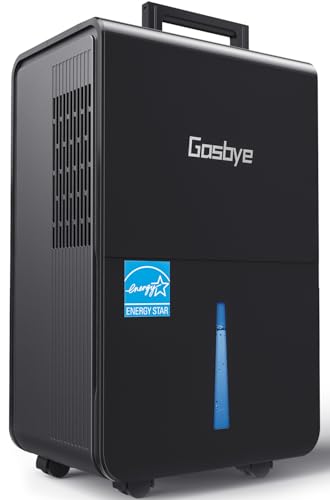
The Gasbye is a high-output model listed for areas up to 4,500 square feet. Its maximum removal claim reaches 115 pints per day under test conditions, so buyers should not expect that figure in every home. Still, the large compressor can be useful in a wet basement, large studio, or open floor plan. The listed 45 dB quiet-compressor figure also makes it more appealing than some louder heavy-duty units.
This model has a 1.7-gallon tank, auto shut-off, auto restart, and drain-hose support. Those features matter if the unit runs while I am away or during a long practice day. Auto restart is especially helpful after a brief power failure, though I would still confirm the room returns to the desired RH. Its size and output call for careful placement, stable flooring, and good airflow around the cabinet.
Pros:
- High output for large and damp areas
- Listed 45 dB compressor level may suit shared spaces
- Large tank reduces frequent emptying
- Drain hose enables extended use
- Auto shut-off helps prevent overflow
- Auto restart adds convenience after power loss
Cons:
- Too large for many ordinary piano rooms
- High capacity may use more energy when run hard
- Requires careful drainage planning
- Actual pint removal varies with temperature and RH
My Recommendation
Gasbye is best for a large piano studio in a damp climate or a room that also serves as a basement workspace. I like its combination of high output, hose drainage, and restart protection. It is not my first choice for a small room because oversizing can add cost, space use, and noise. For severe moisture, however, it can protect the wider room that surrounds the piano.
| Best for | Why |
|---|---|
| Very damp basements | High output helps manage heavy moisture loads. |
| Unattended operation | Auto shut-off and restart add peace of mind. |
| Large studios | The coverage rating suits broad spaces. |
GoGuess 21-Pint Compressor Dehumidifier

The GoGuess compressor dehumidifier is rated for spaces up to 1,600 square feet and removes up to 21 pints per day. That capacity fits many home piano rooms, offices, and bedrooms. A compressor design usually makes more sense than a tiny moisture absorber when the goal is whole-room control. It can help keep RH steady instead of only treating a small corner.
This model is a useful choice for a buyer who wants simple, focused moisture removal. I would pair it with a digital hygrometer and place both devices where air can circulate freely. The best results come from closing windows and doors while the unit runs. I would also clean the filter on schedule because dust can lower airflow and make the compressor work harder.
Pros:
- Suitable capacity for many home piano rooms
- Compressor technology supports whole-room moisture removal
- Compact choice for apartments and smaller homes
- Simple option for routine humidity control
- Can serve bedrooms, offices, and music spaces
- Lower output is less likely to be excessive in a small room
Cons:
- May need frequent tank emptying without continuous drainage
- Not ideal for very large or severely damp spaces
- Compressor cycling creates some sound
My Recommendation
I would suggest GoGuess to a homeowner with one average-size piano room and moderate humidity. It has the right general scale for everyday protection without a commercial footprint. Buyers should measure actual RH rather than rely only on the coverage label. When paired with a hygrometer, it can be a practical and affordable contender for the best dehumidifier for piano room use.
| Best for | Why |
|---|---|
| Average home rooms | The 21-pint size is easy to match to normal spaces. |
| First-time buyers | It offers straightforward compressor-based control. |
| Moderate dampness | It can lower RH without oversized output. |
35-Ounce Small Quiet Dehumidifier

This 35-ounce small dehumidifier takes a different approach from the compressor models above. It is designed for small areas such as closets, bathrooms, bedrooms, RVs, and compact rooms. Its ultra-quiet sleep mode may appeal to a pianist who dislikes background noise during practice. I would view it as a small-space helper, not a complete solution for a full-size piano room.
The compact body is easy to place on a stable surface, but it must stay away from the piano’s finish and any risk of spills. Auto shut-off helps when the small tank fills. Seven color lights add a decorative touch, although they do not improve humidity control. For a piano, I would use this unit only when a hygrometer confirms that the room has a small, localized moisture issue.
Pros:
- Very compact and easy to place
- Quiet sleep mode suits practice and rest areas
- Auto shut-off helps protect against overflow
- Portable for closets, RVs, and small rooms
- Energy-saving design may cost less to run
- Simple choice for localized dampness
Cons:
- 35-ounce tank is much smaller than compressor models
- Not suitable for most large piano rooms
- May take longer to change whole-room humidity
- Color lights may distract during music practice
My Recommendation
This compact unit is best for a small enclosed music nook, a closet that stores music gear, or a room with only mild moisture. It may also work near, but not directly beside, a digital piano or keyboard storage area. I would not choose it as the main best dehumidifier for piano room protection in a large room. Its quiet operation and small footprint are its strongest advantages.
| Best for | Why |
|---|---|
| Small music nooks | Its compact body fits tight spaces. |
| Quiet practice areas | Sleep mode helps reduce distractions. |
| Closets and storage | It targets small spaces with mild dampness. |
Frigidaire 50-Pint Wi-Fi Dehumidifier

The Frigidaire 50-pint model brings smart-home control to room humidity management. Wi-Fi support can make it easier to check the unit or adjust settings without walking into the room. That feature has real value for a piano owner who travels or wants to monitor a music room from another part of the house. The 50-pint class also gives it enough strength for many larger residential spaces.
Remote control does not replace a proper hygrometer, and a phone reading may not show the exact humidity beside the piano. I would use the app for convenience, then verify conditions with an independent meter. A drain setup is still important if the unit runs for many hours. Frigidaire’s established appliance presence may also appeal to buyers who prefer a familiar household brand, though model features and app support can change over time.
Pros:
- Wi-Fi control adds remote convenience
- 50-pint class suits many large home rooms
- Useful for owners who travel or monitor remotely
- Established appliance brand
- Can reduce manual setting changes
- Strong option for a connected home
Cons:
- Smart features depend on app and network support
- May cost more than a similar non-connected model
- Still needs an external hygrometer for piano-level accuracy
- Compressor noise may be heard during recording
My Recommendation
The Frigidaire is best for a connected home, a recording room, or a piano owner who wants remote access. It offers a useful mix of strong capacity and smart control. I would select it when convenience matters and the room falls within its practical size range. It can be the best dehumidifier for piano room users who want to check moisture control while away from home.
| Best for | Why |
|---|---|
| Smart homes | Wi-Fi adds remote access and control. |
| Traveling owners | Remote checks can reduce worry while away. |
| Large home music rooms | Its 50-pint class offers strong residential capacity. |
Uthfy 5000-Square-Foot Dehumidifier
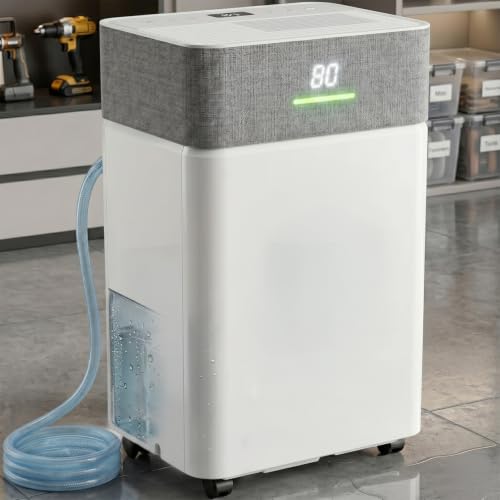
The Uthfy dehumidifier is built for large areas up to 5,000 square feet. Its smart compressor, intelligent humidistat, dual-screen display, and 24-hour timer give it a useful feature set for a home studio. A child lock is helpful when the unit sits in a family room or a teaching space. The reusable filter can also reduce the cost and waste of frequent filter replacement.
This is a large appliance, so I would give it open space and avoid placing it close to the piano. The dual display can make it easier to read the target and current conditions at a glance. Hose drainage supports long operation, while the timer helps me limit run time during lessons or recording. As with every unit, I would let the hygrometer guide the final setting rather than chase the lowest possible humidity.
Pros:
- Large coverage for open homes and studios
- Intelligent humidistat supports steady control
- Dual-screen display improves readability
- Reusable filter helps simplify maintenance
- Child lock is useful in family spaces
- 24-hour timer supports scheduled operation
- Drain hose helps with long run times
Cons:
- Too large for a small, well-sealed room
- Requires careful placement around a piano
- More features may mean a longer setup process
- Compressor operation is not completely silent
My Recommendation
Uthfy is best for large homes, shared studios, and families that want clear controls and useful safety features. The child lock and timer make it more flexible than a bare-bones unit. I would choose it for a piano room that connects to other living areas and needs steady humidity control. In that setting, it is a strong all-around choice for the best dehumidifier for piano room search.
| Best for | Why |
|---|---|
| Family music rooms | The child lock adds a useful layer of control. |
| Open floor plans | Large coverage suits connected spaces. |
| Easy monitoring | The dual display shows key readings clearly. |
How Humidity Affects a Piano
A piano is more than a set of keys and strings. It is a carefully balanced wooden instrument with felt, leather, metal, glue, and finish. These parts react to moisture in the air. When humidity climbs, wood can swell and felt can change shape. When the air becomes too dry, wood may shrink, joints may loosen, and cracks may form over time.
Most piano makers and technicians aim for a fairly stable indoor humidity near 40–50% relative humidity. Some homes work well between about 40% and 60%, but stability matters as much as the exact number. A room that swings from 35% to 70% can stress a piano more than a room that stays at 50%. I always advise using a reliable hygrometer instead of guessing from how the air feels.
A dehumidifier can reduce high humidity, but it cannot fix every climate problem. It will not stop a roof leak, remove standing water, or replace good ventilation. Think of it as one part of a care plan. Keep the piano away from exterior walls, heat vents, open windows, direct sun, and strong drafts when possible.
What to Look for in the Best Dehumidifier for Piano Room Use
Accurate humidity control
The most important feature is a usable humidistat. It should let me choose a target humidity instead of running at full power all day. Even then, the built-in sensor may read air near the machine, not air beside the piano. I use a separate digital hygrometer near the instrument at about piano height.
Correct room size
Do not select a model only by its largest advertised coverage number. A 21-pint unit may fit a sealed bedroom, while a 50-pint model may make more sense in a damp basement. Temperature, insulation, open doors, and local weather all affect real performance. The best dehumidifier for piano room use has enough capacity to lower RH without becoming an oversized nuisance.
Quiet operation
A piano room has a special noise standard. A low hum may disappear under casual listening but become distracting during soft passages, recording, or lessons. Compressor units make some sound when they start and stop. If quiet practice matters, look for sleep mode, a lower fan setting, or a listed sound rating.
Continuous drainage
A small water tank may fill quickly during wet weather. If I forget to empty it, the unit may stop and the room may become damp again. A drain hose can send water to a floor drain or pump, but the hose must slope correctly and stay secure. Never place the drainage end where it can spill near the piano or an electrical outlet.
Auto defrost
Cool rooms can cause ice to form on a compressor dehumidifier coil. Auto defrost pauses the normal cycle and melts that ice. This feature matters in basements, garages, and rooms that stay cool. It can help the unit work more reliably when conditions are less than ideal.
Filter access
Dust, pet hair, and lint can block airflow. A dirty filter reduces moisture removal and may increase power use. I prefer a model with an easy-to-remove, washable, or reusable filter. Set a reminder to inspect it every few weeks during heavy use.
Safe placement
Place the dehumidifier on a level, stable floor with free space around its vents. Do not aim the exhaust at the piano. Do not hide the unit inside a cabinet or push it tightly against a wall. Leave enough room for water removal, filter cleaning, and safe electrical access.
How I Would Set Up a Piano Room Dehumidifier
First, I would measure the room with a hygrometer for several days. Check morning, afternoon, evening, and after rain. This creates a simple humidity map and shows whether the problem is constant or seasonal.
Next, I would place the dehumidifier away from the piano, curtains, and walls. I would keep doors and windows closed while it runs. If the room has a floor drain, I would use the hose and test the connection with a small amount of water before leaving the machine unattended.
I would start with a target around 45% RH. I would not force the room to an extremely dry level because rapid or excessive drying can also stress wood. After a few days, I would compare the machine’s display with the separate hygrometer. If the readings differ, I would trust the stable, well-placed external meter more than a sensor sitting beside the exhaust.
Finally, I would listen during a quiet piano passage. If the sound distracts me, I would use a lower fan setting, run the unit before practice, or move it farther away. A dehumidifier should protect the instrument without making the room unpleasant to use.
Compressor or Thermoelectric: Which Is Better?
Most full-room dehumidifiers in this review use a compressor. These units usually remove more moisture and suit bedrooms, basements, studios, and larger rooms. They can make a low hum and may work less efficiently in cold spaces. They also need more room around the cabinet.
Small thermoelectric models often run quietly and use less power. They suit closets, small bathrooms, and tiny storage areas. Their water removal rate is much lower, so they rarely make the best dehumidifier for piano room choice when the entire room needs control. The 35-ounce model above is better for a small, localized need than for a full acoustic piano space.
Common Piano Humidity Mistakes
- Relying on feel: Comfortable air can still be too damp for a piano.
- Placing the unit too close: Direct air can create uneven drying.
- Ignoring the tank: A full tank can stop moisture control.
- Skipping filter care: Dust reduces airflow and performance.
- Using extreme settings: Very dry air can also harm wood.
- Leaving windows open: Outdoor moisture can defeat the machine.
- Choosing only by pint claims: Test conditions do not match every room.
- Forgetting piano service: A dehumidifier does not replace tuning or inspection.
Maintenance Tips for Better Performance
Empty and rinse the tank as needed. Wipe away standing water and let the tank dry if I plan to store the unit. A clean tank helps reduce odors and residue.