How Long Is A Guitar: Sizes, Types, And More
A full-size guitar is usually 38 to 42 inches long, while smaller guitars can measure 30 to 36 inches.
If you are asking how long is a guitar, the answer depends on its type, body shape, and size. An acoustic guitar, electric guitar, classical guitar, and child-size guitar can all have different measurements. Knowing the difference between total length and scale length will help you choose the right instrument, case, stand, or storage space.
How Long Is a Guitar?
Most full-size guitars measure about 38 to 42 inches from the top of the headstock to the bottom of the body. This measurement is called the guitar’s total length.
Here are common ranges:
• Full-size acoustic guitar: 38 to 42 inches
• Full-size electric guitar: 38 to 41 inches
• Classical guitar: 38 to 40 inches
• Three-quarter guitar: 34 to 36 inches
• Half-size guitar: 30 to 34 inches
• Full-size bass guitar: 42 to 48 inches
These ranges are general. The exact length changes with the guitar’s body shape, headstock design, bridge position, and manufacturer. A dreadnought acoustic guitar, for example, often looks longer and larger than a concert-style acoustic guitar.
Total Guitar Length vs. Scale Length
When people ask how long is a guitar, they often mean total length. However, guitar makers and players also use the term scale length.
Total length is the distance from the end of the headstock to the bottom edge of the guitar body. It tells you how much space the entire instrument needs.
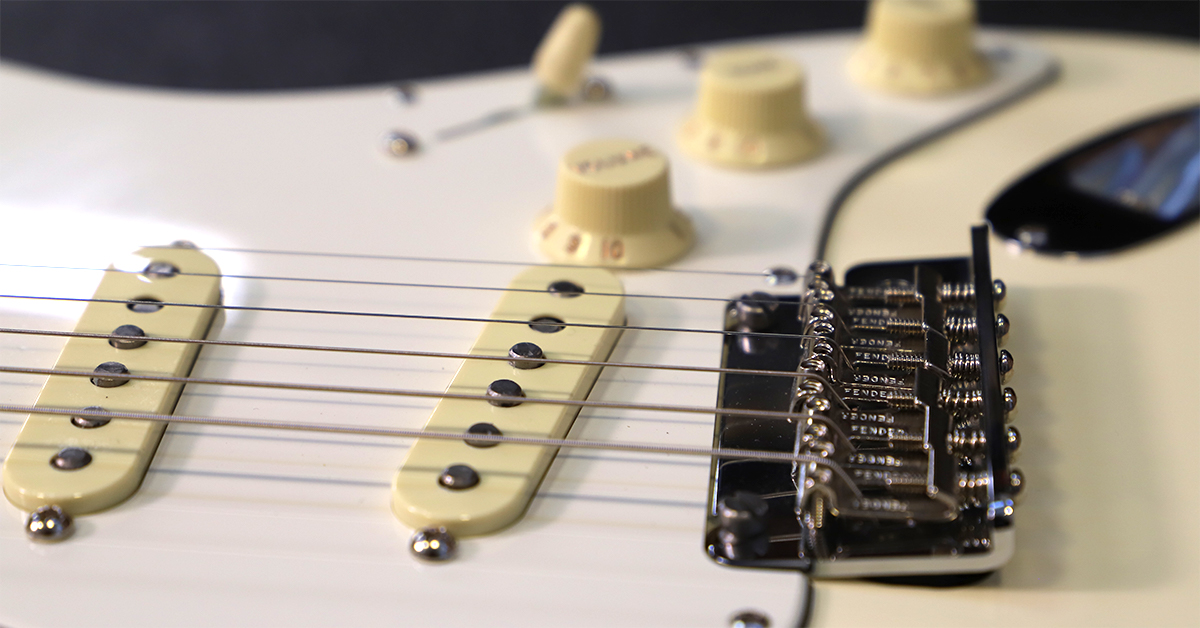
Scale length is the distance from the nut to the bridge saddle. It shows the length of the strings that vibrate. Scale length affects the guitar’s feel, tone, and string tension.
For example, two guitars may both measure 40 inches long but have different scale lengths. One may feel tighter and more spread out, while the other may feel softer and easier to play.
Common scale lengths include:
• Classical guitar: about 25.5 inches
• Steel-string acoustic guitar: about 24.75 to 25.5 inches
• Electric guitar: about 24 to 25.5 inches
• Short-scale electric guitar: about 24 inches
• Bass guitar: about 30 to 35 inches
A longer scale length usually creates more string tension when using the same strings and tuning. A shorter scale length can feel easier for beginners and players with smaller hands.
How Long Is an Acoustic Guitar?
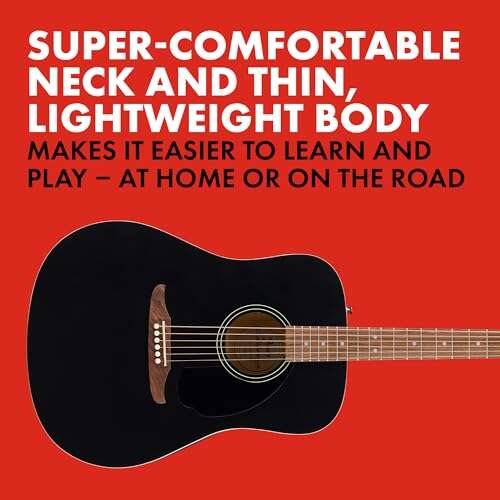
A full-size acoustic guitar usually measures 38 to 42 inches long. Its body length often falls between 19 and 21 inches, while the neck and headstock make up the rest.
The shape of the acoustic guitar has a major effect on its size. A large dreadnought often measures close to 41 or 42 inches. A smaller parlor or concert guitar may measure around 38 to 40 inches.
Common acoustic guitar sizes include:
• Dreadnought: about 40 to 42 inches
• Jumbo: about 40 to 42 inches
• Grand auditorium: about 39 to 41 inches
• Concert guitar: about 38 to 40 inches
• Parlor guitar: about 38 to 40 inches
The total length does not tell the whole story. A jumbo guitar may not be much longer than a concert guitar, but it can be much wider and deeper. This matters when you are choosing a case or deciding whether the instrument will fit in a small room.
In my experience, players often measure only the neck and body length. That mistake can lead to buying a case that is too short. Always measure from the highest point of the headstock to the lowest point of the body.

How Long Is an Electric Guitar?
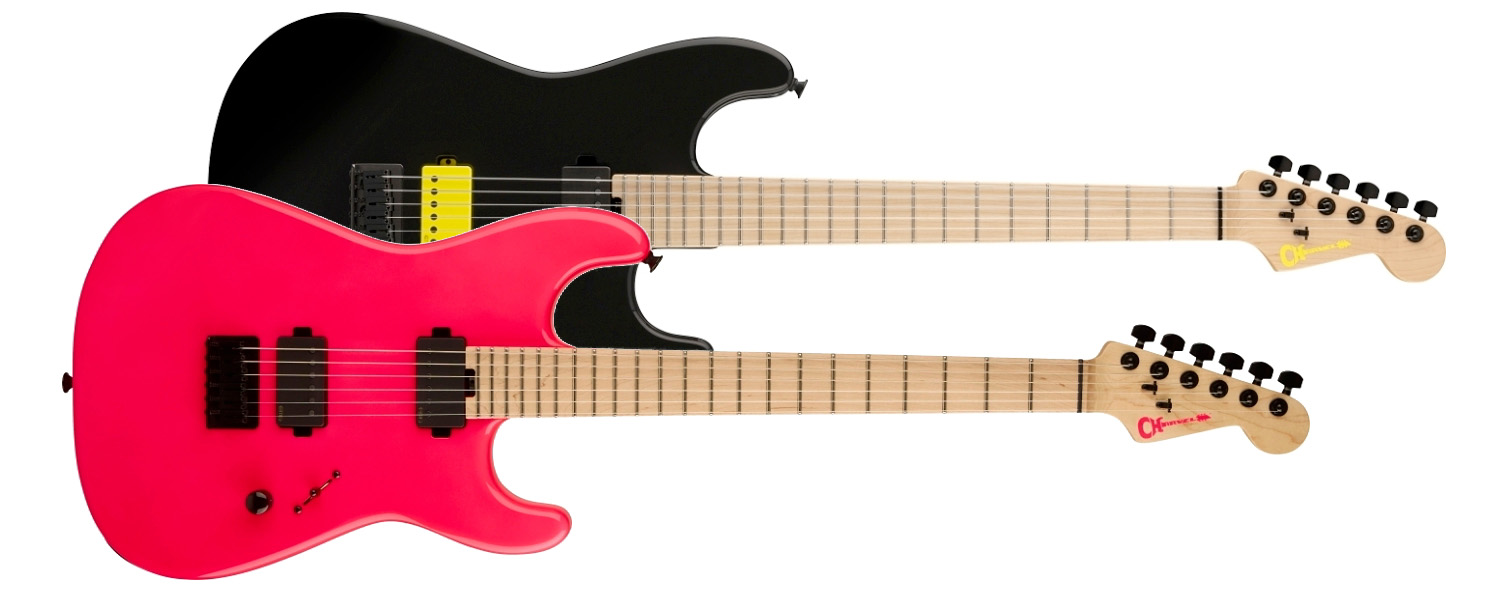
Most full-size electric guitars measure 38 to 41 inches long. They are often similar in total length to acoustic guitars, even though their bodies may be thinner and smaller.
An electric guitar can seem shorter because its body is usually slim. Its neck may also look longer in relation to the body. Still, the headstock adds several inches to the overall length.
Typical examples include:
• Solid-body electric guitar: about 38 to 40 inches
• Offset electric guitar: about 39 to 41 inches
• Short-scale electric guitar: about 35 to 38 inches
• Hollow-body electric guitar: about 40 to 42 inches
A guitar with a longer headstock may have the same scale length as another guitar but a greater total length. This is why you should check the complete manufacturer measurements before buying a gig bag.
Electric guitar body width also matters. Most solid-body models are about 12 to 14 inches wide. Hollow-body models may be 15 to 17 inches wide, which can make them harder to store even if their total length is similar.

How Long Is a Classical Guitar?
A full-size classical guitar usually measures 38 to 40 inches long. Most classical guitars use nylon strings and have a wider neck than steel-string acoustic guitars.
The most common full-size classical guitar has a scale length close to 25.5 inches. Its body is often slightly smaller than a dreadnought acoustic guitar, but the wider neck can make the instrument feel larger in your hands.
Classical guitar sizes often include:
• Full-size classical guitar: about 38 to 40 inches
• Three-quarter classical guitar: about 36 inches
• Half-size classical guitar: about 32 to 34 inches
• Quarter-size classical guitar: about 28 to 30 inches
A classical guitar is not automatically a beginner guitar. It is a specific type of instrument with nylon strings, a flat fingerboard, and a traditional body design. Some beginners find it comfortable, while others prefer the narrower neck of a steel-string acoustic guitar.

How Long Is a Guitar for Kids?
A guitar for kids can measure from about 28 to 36 inches, depending on the child’s age and body size. These instruments are often called quarter-size, half-size, or three-quarter guitars.
Here is a simple guide:
• Quarter-size guitar: about 28 to 30 inches
• Half-size guitar: about 30 to 34 inches
• Three-quarter guitar: about 34 to 36 inches
• Full-size guitar: about 38 to 42 inches
Size labels are not perfectly consistent. One brand’s three-quarter guitar may be slightly longer than another brand’s model. For this reason, check the total length, scale length, body depth, and recommended player height before buying.
A smaller guitar can make learning easier. The neck is shorter, the body is easier to hold, and the strings may require less reach. However, a child should not move to a full-size guitar based on age alone. Arm length, hand size, posture, and comfort matter more.
A useful test is simple: the player should be able to reach the first few frets without stretching, hold the body comfortably, and keep the picking arm relaxed.

How Guitar Size Affects Playing Comfort
Guitar size affects more than storage. It changes how the instrument sits on your body, how far your hands must reach, and how much pressure you need to use.
A large guitar may offer a deep, powerful sound. Yet its wide body can feel uncomfortable for a smaller player. A compact guitar may feel easier to control, but it may produce less bass and volume.
Consider these factors:
• Body width: A wider body may be harder to hold.
• Body depth: A deeper body can push the picking hand outward.
• Scale length: A longer scale spreads out the frets.
• Neck width: A wider neck may suit fingerstyle playing but challenge beginners.
• Weight: A heavy electric guitar can cause shoulder or back strain.
• Playing position: Sitting and standing can feel very different.
One common mistake is choosing a guitar only because it has a loud sound. I have seen new players struggle with large instruments that looked impressive but caused shoulder tension. A comfortable guitar encourages longer practice, and regular practice matters more than impressive size.

How to Measure a Guitar Correctly
You can measure a guitar at home with a tape measure. Use a soft tape if possible, and place the guitar on a flat, safe surface.
Follow these steps:
-
Loosen the strings slightly if the guitar is difficult to place flat.
-
Measure from the highest point of the headstock.
-
Follow the center line of the guitar.
-
Continue to the lowest point of the body.
-
Record the measurement in inches and centimeters.
-
Measure the body width and depth separately.
-
Measure the scale length from the nut to the bridge saddle.
Do not measure along the curve of the guitar’s front or back. A curved measurement can give you a longer result than the true end-to-end length.
If you are buying a case, also measure the lower bout width, upper bout width, waist width, body depth, and headstock shape. A guitar can have the correct total length but still fail to fit because the case is too narrow or shallow.

Guitar Length in Inches and Centimeters
Many guitar listings use inches, but some use centimeters. Knowing both measurements makes comparison easier.
Common conversions include:
• 28 inches: about 71 centimeters
• 30 inches: about 76 centimeters
• 32 inches: about 81 centimeters
• 34 inches: about 86 centimeters
• 36 inches: about 91 centimeters
• 38 inches: about 97 centimeters
• 40 inches: about 102 centimeters
• 42 inches: about 107 centimeters
A full-size guitar that measures 40 inches is about 102 centimeters long. A three-quarter guitar that measures 36 inches is about 91 centimeters long.
Remember that product listings may round measurements. A guitar advertised as 40 inches may measure slightly below or above that number. This is normal and usually does not affect playability.
How Long Is a Guitar With Its Case?
A guitar case adds several inches to the instrument’s total length. A full-size guitar and hard case may require about 42 to 45 inches of storage space.
Typical storage lengths include:
• Small guitar with gig bag: about 32 to 38 inches
• Full-size acoustic with gig bag: about 40 to 44 inches
• Full-size acoustic with hard case: about 42 to 46 inches
• Electric guitar with hard case: about 41 to 45 inches
The case may also add 2 to 5 inches of width and depth. If you are storing a guitar in a closet, car trunk, airplane compartment, or wall rack, measure the case rather than the guitar alone.
For travel, protect the headstock and bridge. These areas can suffer damage if the case is too loose. A snug fit with soft padding is safer than a case that leaves the instrument moving inside.
Guitar Size and Sound
Guitar length can influence sound, but it is not the only factor. Body size, wood, bracing, strings, scale length, and construction all work together.
A larger body often produces more bass and volume. A smaller body may create a focused, balanced tone. A long scale can add string tension and a firm response, while a short scale may feel softer and more relaxed.
The most important sound factors include:
• Body shape and air volume
• Top wood and back and side materials
• Bracing design
• Scale length
• String type and gauge
• Pickup and electronics
Do not assume that the longest guitar sounds the best. A smaller guitar may suit recording, fingerstyle, travel, or quiet home practice. A large dreadnought may work better for strong strumming and group playing.
Guitar makers publish body dimensions and scale lengths to help buyers compare models. Still, measurements cannot fully describe tone. When possible, listen to the exact model or try it in person.
How Long Is a Bass Guitar Compared With a Guitar?
A full-size bass guitar is usually 42 to 48 inches long. It is often longer than a standard guitar because it uses a longer neck and scale length.
Most electric basses use a scale length of about 34 inches. Short-scale basses often use a scale length near 30 inches, which can feel easier for smaller players.
A bass guitar may be longer because:
• Its strings need more length to produce low notes.
• Its neck is often longer.
• Its body and headstock may be larger.
• Its scale length creates proper string tension.
A bass can be difficult to store in a standard guitar stand or case. Use a bass-specific stand and case whenever possible. A guitar case may be too short, even if the body appears similar.
Choosing the Right Guitar Size
The best guitar size depends on your body, playing goals, and comfort. There is no single perfect size for every player.
Use these practical guidelines:
• Choose a full-size model if you can reach the frets easily and hold the body without strain.
• Choose a three-quarter model for travel, smaller adults, or older children who find full-size guitars uncomfortable.
• Choose a parlor or concert acoustic if you want a smaller body with a clear, balanced sound.
• Choose a short-scale electric guitar if you prefer closer frets and lower string tension.
• Choose a full-size dreadnought if you want strong projection for strumming.
• Choose a classical guitar if you prefer nylon strings and a wider neck.
Try the instrument while seated and standing. Check whether your shoulders stay relaxed and whether your wrist remains fairly straight. A guitar that feels natural will help you practice longer and avoid poor habits.
Common Mistakes When Measuring Guitar Length
Many sizing problems come from using the wrong measurement. The most common mistake is confusing scale length with total guitar length.
Other errors include:
• Measuring from the nut instead of the headstock.
• Ignoring the headstock shape.
• Measuring only the body.
• Forgetting the case padding.
• Assuming all three-quarter guitars have the same length.
• Buying a case based only on scale length.
• Measuring a curved edge instead of the center line.
It is also easy to compare a guitar’s scale length with another guitar’s total length. These numbers describe different parts of the instrument. Write down both measurements when comparing models.
When in doubt, use the manufacturer’s official dimensions and compare them with your own measurements. Small differences are normal, but a difference of several inches deserves attention.
Frequently Asked Questions About How Long Is a Guitar
How long is a full-size guitar?
A full-size guitar is usually 38 to 42 inches long. Acoustic, electric, and classical guitars can fall within this range, though their body shapes and scale lengths may differ.
How long is a three-quarter guitar?
A three-quarter guitar commonly measures 34 to 36 inches long. It is smaller than a full-size model and can be a good choice for children, smaller adults, travel, or players who prefer a compact body.
Is guitar length the same as scale length?
No. Guitar length measures the entire instrument from the headstock to the bottom of the body. Scale length measures the vibrating string distance from the nut to the bridge.
How long is an acoustic guitar?
Most full-size acoustic guitars measure about 38 to 42 inches. Dreadnought and jumbo models are often near the upper end, while parlor and concert guitars are usually smaller.
How long is an electric guitar?
Most full-size electric guitars measure about 38 to 41 inches. Their bodies may be thinner than acoustic guitars, but the headstock and neck still create a similar overall length.
What guitar size is best for a child?
The right size depends on the child’s height, arm length, hand size, and comfort. Quarter-size, half-size, and three-quarter guitars range from about 28 to 36 inches, but the child should be able to reach the frets without strain.
How long is a guitar with a case?
A full-size guitar with a gig bag or hard case usually needs about 42 to 46 inches of length. Always measure the case itself before planning storage or travel.
Conclusion
So, how long is a guitar? Most full-size guitars are 38 to 42 inches long, while smaller models may measure 28 to 36 inches. Electric guitars, acoustic guitars, classical guitars, and bass guitars all vary because of their body shape, headstock, scale length, and design.
Measure the full instrument when you need storage space or a case. Check scale length when you want to understand playing feel, fret spacing, and string tension. The best guitar is not always the biggest one; it is the one that feels comfortable and inspires you to play.
Measure a guitar you already own, compare its dimensions with other models, and share your results or questions in the comments.

Senior Music Reviewer
Alex Carter is a seasoned music reviewer with over a decade of experience in the world of sound and instruments. Passionate about helping musicians and enthusiasts make informed choices, he brings sharp insights and in-depth knowledge to every review. From classical instruments to modern gear, Alex combines technical expertise with a love for music to deliver content that resonates with readers.
As a Senior Music Reviewer and expert author on Tuneluma.com, Alex is dedicated to sharing honest evaluations, practical advice, and thoughtful commentary to guide readers in their musical journey.