How Great Thou Art Piano Chords: Easy Piano Tutorial
Common, singable chord progressions that fit most versions and keys.
I’ve spent years arranging hymns and teaching piano, so I know what makes "how great thou art piano chords" both singable and inspiring. This guide breaks the song down into practical chord charts, simple voicings, gospel-style options, transposition tips, and practice routines. You’ll get clear chord progressions, left-hand patterns, and real-world tips I use in worship and lessons to help you play confident, musical renditions of "how great thou art piano chords". Read on to learn the exact chords, smart substitutions, and how to adapt them for any singer or setting.
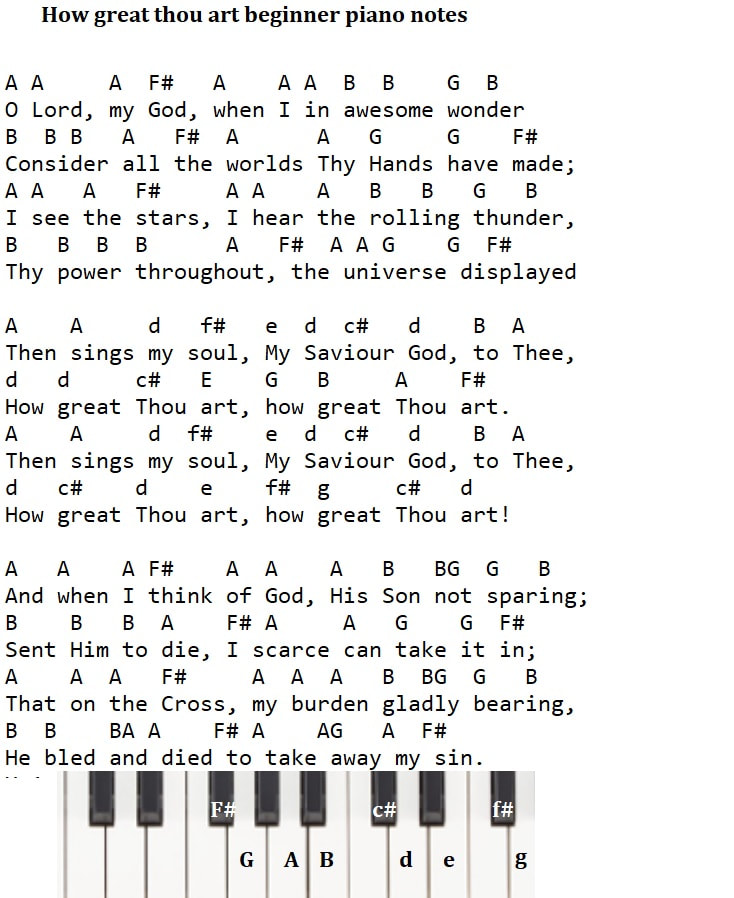
What "How Great Thou Art" sounds like on piano and why chords matter
"How Great Thou Art" lives in several keys, and the piano drives the harmony. Knowing the right chords helps you support a singer or play solo. Here are the essentials in plain terms.
- The song often uses simple diatonic chords: I, IV, V, vi.
- The chorus moves to strong major progressions that feel triumphant.
- Common gospel/sacred variations add maj7, sus2, and add9 for color.
If you want a version that sounds full but stays easy, focus on root-position triads in your left hand and simple triads or added-tone voicings in your right. This is the starting point for "how great thou art piano chords".

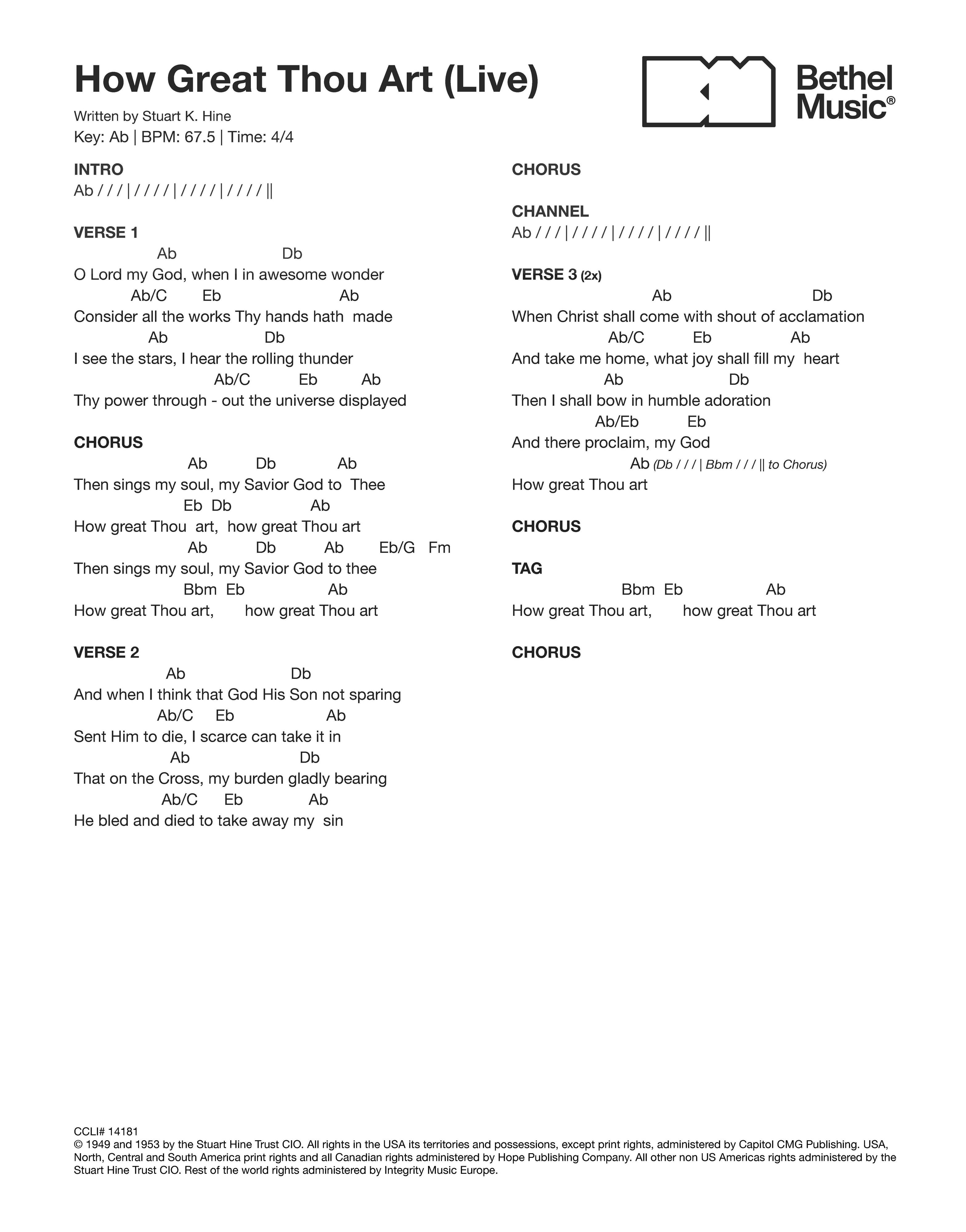
Basic chord chart (Key of C) — quick and playable
Below is a clean, playable chart for "how great thou art piano chords" in C major. Use this for worship, practice, or accompaniment.
-
Verse
- C | C/E | F | C
- C | G7 | C | C
-
Chorus
- F | C/E | Dm | G
- C | C/B | Am | G
- F | C/E | Dm | G
- C | G7 | C | –
-
Bridge / optional tag
- Am | Am/G | F | C/E
- Dm | G | C | –
Fingerings and tips:
- Left hand: play root and fifth, or root and third for smoother motion.
- Right hand: play triads or broken chords to match the vocal line.
This simple chart gives you reliable "how great thou art piano chords" for most congregational uses.
Simplified version for beginners
If you’re new to piano, keep it minimal. Play steady block chords with simple left-hand roots.
- Use these four chords for verses and chorus: C, F, G, Am.
- Play one chord per measure or follow the lyric changes.
- Keep tempo relaxed and focus on steady time and clear changes.
Tip: Practice slow with a metronome. Once you can change smoothly, add simple arpeggios in the right hand to enrich the sound. This approach makes "how great thou art piano chords" accessible for beginners and singers alike.
Rich gospel and modern voicings for the experienced player
To lift the hymn, add tasteful extensions and passing chords. These voicings create a fuller, more modern sound while keeping the hymn’s heart intact.
- C major family: C, Cmaj7 (C E G B), Cadd9 (C E G D)
- F family: F, Fmaj7 (F A C E), Fsus2 (F G C)
- G family: G, G7 (G B D F), Gsus4 (G C D)
- Minor color: Am, Am7 (A C E G), Dm7 (D F A C)
Common substitutions:
- Replace plain C with Cmaj7 or Cadd9 on sustained lines.
- Use Fsus2 to lead gently back to C.
- Add a passing diminished or secondary dominant (A7 -> Dm) for drama.
These options let you play "how great thou art piano chords" with warmth and modern color.
Left-hand patterns and comping styles
Your left hand sets the pulse and foundation. Here are reliable patterns to fit many arrangements of "how great thou art piano chords".
- Basic root-note pattern: Play the root on beats 1 and 3.
- Root-5th pattern: Play root on beat 1, fifth on beat 3 for steady drive.
- Alberti-style arpeggio: Low-high-middle-high pattern for a flowing feel.
- Walk-down bass: Use C, B, Am to connect chords smoothly.
Match the left-hand style to the song mood: gentle ballad, steady hymn, or celebratory gospel. This shapes how your right hand and voice interact with the chords.
Transposing and adapting to singers
"How great thou art piano chords" must suit the singer’s range. Transpose to make it comfortable.
- To raise a song: move every chord up the same number of semitones.
- To lower a song: move chords down. Use capo for guitar; on piano transpose the entire chart.
- Common keys: G, A, Bb, and D are popular depending on vocal range.
Quick trick: Sing through the first verse and chorus to find the lowest and highest notes. Then transpose so the highest note sits comfortably for the singer. This ensures "how great thou art piano chords" support the vocal line, not strain it.
Rhythm, tempo, and dynamics: musical choices that matter
Small choices shape the hymn’s impact. Use dynamics and timing to tell the song’s story.
- Tempo: 60–72 BPM works for reflective versions; 80–100 BPM suits triumphant renditions.
- Dynamics: Start soft in the verse. Build through the chorus. End strong.
- Rubato: Slightly stretch phrases for expressive effect, but return to tempo for congregational singing.
These musical choices make your "how great thou art piano chords" feel alive and communicative.
Practice routine and common mistakes to avoid
Efficient practice leads to confident playing. Here’s a plan I use with students to master "how great thou art piano chords".
- Warm up: 5 minutes of scales and chord progressions.
- Section work: Practice verse, then chorus separately. Repeat slow, then at tempo.
- Transitions: Drill tricky chord changes for 5–10 minutes.
- Musicality: Practice dynamics and phrasing with a recording.
Common mistakes:
- Changing chords late—anticipate changes by a beat.
- Over-playing—support the singer, don’t drown them.
- Ignoring key signatures—transpose properly before performance.
Stick to this routine to play "how great thou art piano chords" smoothly and musically.
Personal insights and lessons from the pianist’s bench
From teaching and playing in services, I learned practical truths about "how great thou art piano chords".
- Keep it simple for congregations. Complex voicings are great for solos, but clarity wins in worship.
- Listen to the singer and breathe with them. Good accompaniment is about space as much as sound.
- Mistakes happen; a calm recovery is more musical than perfection.
One time, I started a modulated chorus too low. I paused, set a supportive pad on the left hand, and the congregation kept singing. The song still soared because the chords were steady and clear. These moments taught me that reliable "how great thou art piano chords" and musical calm matter most.
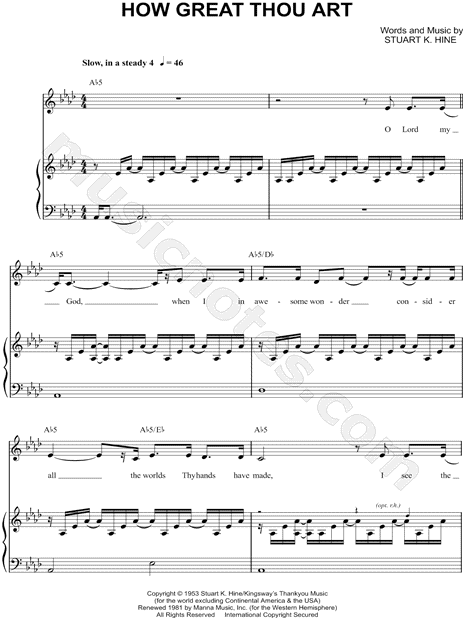
Sheet music and arranging tips
If you arrange your own lead sheets, keep these points in mind.
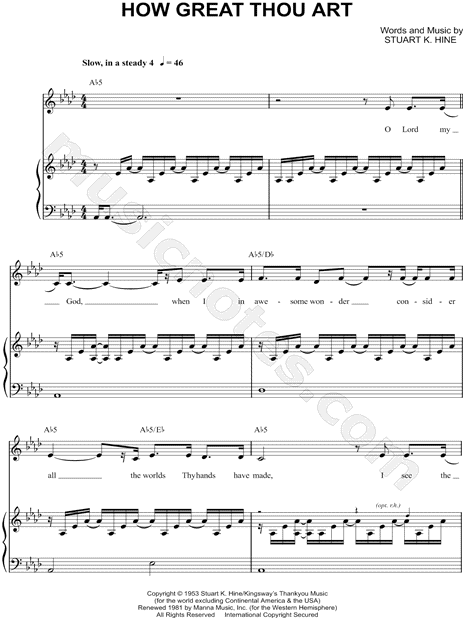
- Notate melody and chord symbols above measures.
- Mark dynamics and recommended voicings for rehearsal.
- Create a simple lead sheet and a fuller pianist arrangement for performance.
When arranging, prioritize singability and clear harmonic movement. That’s how great arrangements of "how great thou art piano chords" support both amateur and skilled singers.
Frequently Asked Questions of how great thou art piano chords
What key is "How Great Thou Art" usually played in?
The hymn is commonly played in keys like C, G, D, A, and Bb. Pick a key based on the singer’s range.
How do I simplify the chords for beginners?
Use four basic chords: I, IV, V, and vi (for example C, F, G, Am in C major). Play block chords and slow changes.
Can I add modern chords like add9 or maj7?
Yes. Add9 and maj7 add warmth. Use them sparingly to keep the melody clear.
How do I transpose the song quickly?
Find the singer’s comfortable high note, then move the song up or down by the number of semitones needed. Practice the new key slowly.
What is a good left-hand pattern for worship settings?
A steady root-5th pattern or simple quarter-note roots works best to support congregational singing.
How can I make the chorus more powerful on piano?
Increase dynamics, use fuller voicings (add9/maj7), and play broader left-hand patterns to lift the chorus.
Conclusion
You now have a complete, practical guide to "how great thou art piano chords" — from simple beginner charts to rich gospel voicings, left-hand patterns, transposition tips, and practice routines. Use the basic charts to build confidence, then add tasteful extensions and dynamics to match the moment. Start small, practice with singers, and focus on supporting the melody. Try the chord chart in your key today, record yourself, and adjust for comfort. If this guide helped, leave a comment or subscribe for more practical piano tips and hymn arrangements.

Senior Music Reviewer
Alex Carter is a seasoned music reviewer with over a decade of experience in the world of sound and instruments. Passionate about helping musicians and enthusiasts make informed choices, he brings sharp insights and in-depth knowledge to every review. From classical instruments to modern gear, Alex combines technical expertise with a love for music to deliver content that resonates with readers.
As a Senior Music Reviewer and expert author on Tuneluma.com, Alex is dedicated to sharing honest evaluations, practical advice, and thoughtful commentary to guide readers in their musical journey.