Do Re Mi Piano Sheet Music: Easy Piano Arrangements
Do re mi piano sheet music gives simple, singable notes and easy piano arrangements for learners.
I’ve taught and arranged piano pieces for years, and I know how valuable clear do re mi piano sheet music can be. This article explains what do re mi piano sheet music is, how to choose the right version, and how to practice it fast and well. You will get practical tips, easy practice plans, licensing pointers, and real-life advice from someone who has used and taught these sheets for students of all ages. Read on to master do re mi piano sheet music with confidence and clarity.

What is do re mi piano sheet music?
Do re mi piano sheet music refers to written music that uses the do re mi melody or solfège syllables for piano. It can mean one of two things.
One meaning is sheet music for the popular song "Do-Re-Mi" from The Sound of Music. That is a copyrighted song usually sold as piano-vocal scores or simplified arrangements.
Another meaning is primer pieces that use solfège. These are educational sheets that help learners connect the scale syllables do, re, mi to piano keys and written notes.
Both uses help beginners learn melody, rhythm, and ear training. The phrase do re mi piano sheet music covers simple melodies, full arrangements, and teaching aids.
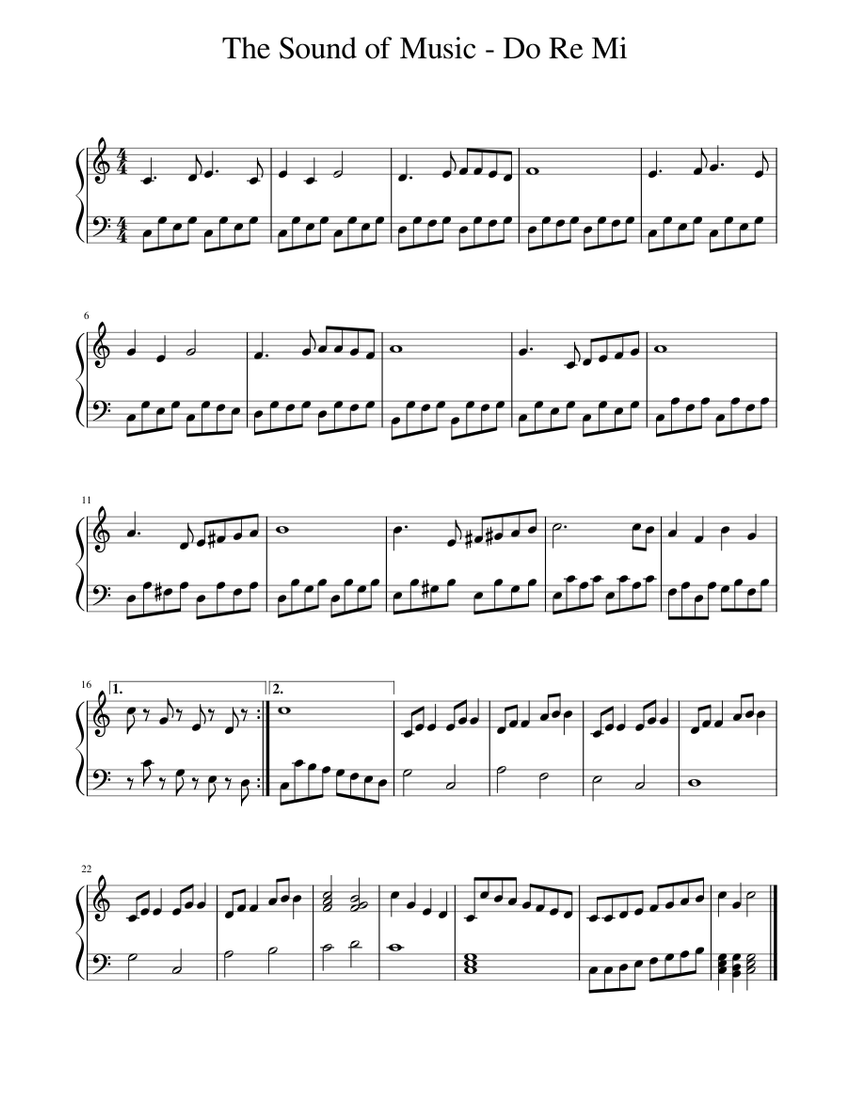
Why learn from do re mi piano sheet music?
Learning from do re mi piano sheet music gives clear benefits.
- It builds a strong ear. Singing do re mi while you play strengthens pitch recognition.
- It simplifies sight-reading. Short, repeated phrases help new readers.
- It teaches scale fluency. The do re mi pattern mirrors major scale steps.
- It boosts confidence. Recognizable melodies make practice fun and motivating.
For many students, starting with do re mi piano sheet music leads to steady progress. The pattern is memorable and easy to repeat. That combination speeds learning and keeps students engaged.
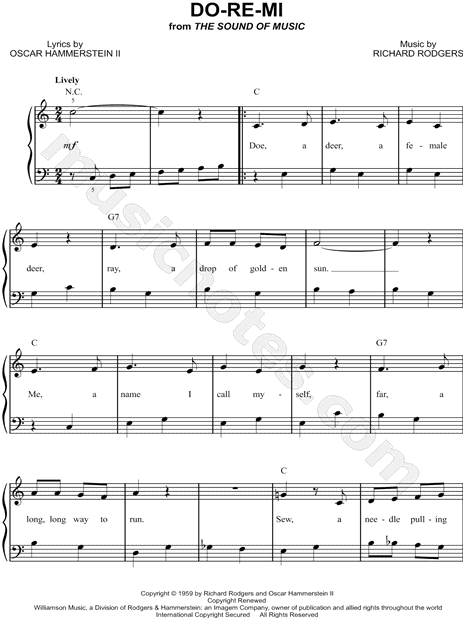
Types of do re mi piano sheet music and how to choose
There are several kinds of do re mi piano sheet music. Choose based on your skill and goals.
- Simplified beginner sheets
- Single-line melody with fingering marks and solfège syllables.
- Great for kids and absolute beginners.
- Piano-vocal scores for the song
- Includes lyrics, chords, and piano accompaniment.
- Good for singers and accompanists.
- Intermediate arrangements
- Adds left-hand patterns and fuller harmony.
- Useful for players building coordination.
- Advanced arrangements and transcriptions
- Rich textures, modulations, and ornamentation.
- For players who want a concert-style rendition.
- Educational solfège exercises
- Focus on connecting do re mi to scale degrees.
- Useful for ear training and theory.
How to pick the right sheet:
- Match sheet level to your current skill. Start easier if unsure.
- Check sample pages before buying. Look for clear notation and finger numbers.
- Consider teacher recommendations. A good teacher can steer you to the best edition.
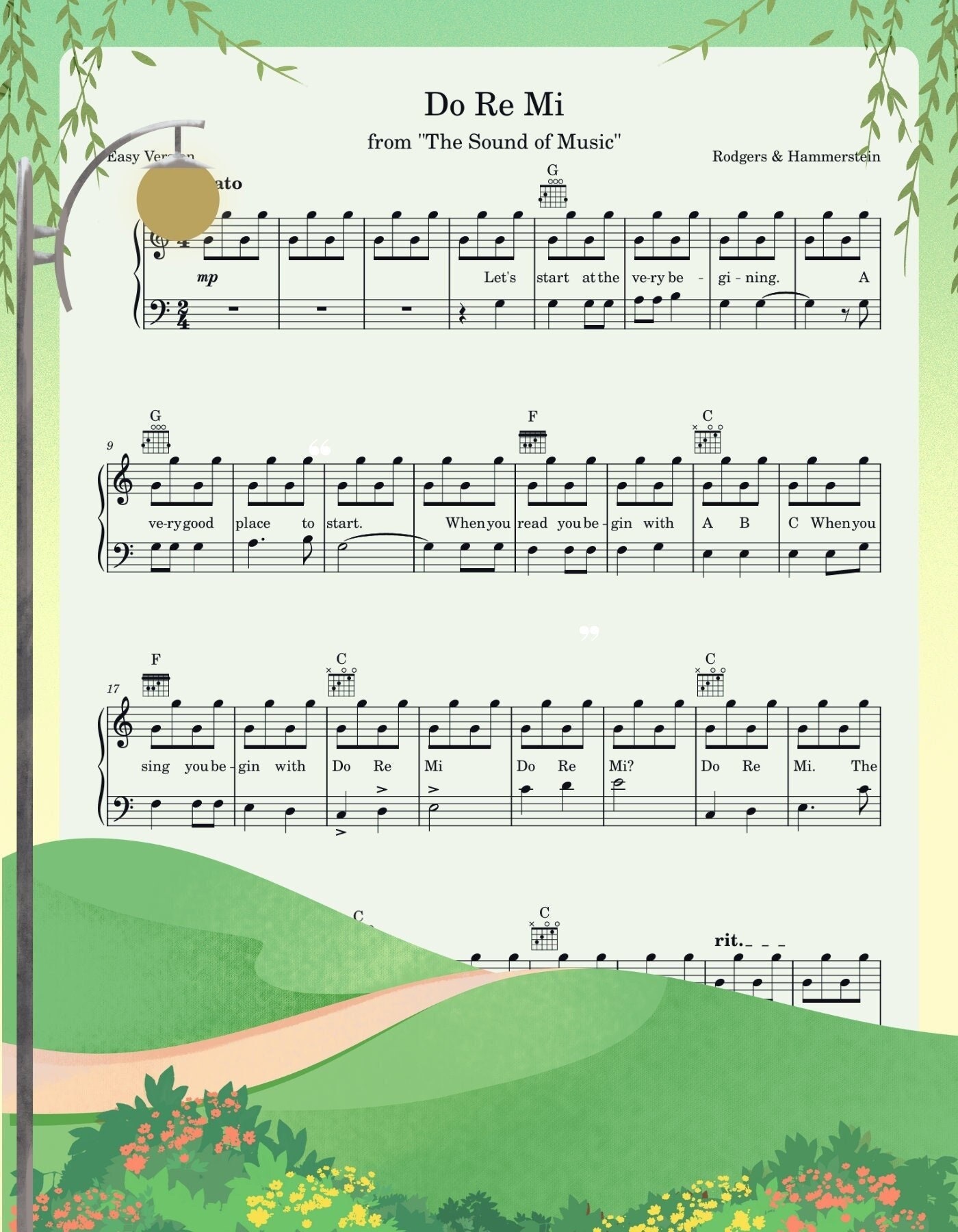
Source: etsy.com
How to read and play do re mi piano sheet music
Follow these steps to read and play effectively.
- Identify the key and starting "do."
- Many beginner sheets place "do" on middle C. Confirm the key signature.
- Sing the melody first.
- Use do re mi syllables while you tap the rhythm. Singing fixes pitch.
- Play the right hand alone slowly.
- Use correct fingerings. Keep wrists relaxed.
- Add the left hand pattern.
- Start with simple root-position chords. Then add broken patterns.
- Combine hands slowly.
- Use a slow metronome. Increase speed only when clean.
- Practice small sections.
- Repeat 2-bar phrases until comfortable. Stitch phrases together.
Practice tips:
- Mark tricky spots with a pencil. Return to them daily.
- Clap rhythms if they feel confusing.
- Record practice to catch timing and pitch issues.
Applying these steps to do re mi piano sheet music gives steady progress. Simple, repeated practice beats long, unfocused sessions.
Arrangements, adaptations, and creative ideas
Do re mi piano sheet music is flexible. You can adapt it to your style.
- Create a simple accompaniment
- Use alternating bass notes and block chords for beginners.
- Add embellishments slowly
- Grace notes, turns, and light arpeggios add interest.
- Use different tempos
- Try a slow ballad take or a jaunty march. Tempo changes teach control.
- Transpose to suit a singer
- Move the key up or down to fit vocal range.
- Make duet versions
- Split melody and accompaniment between two players.
These adaptations keep practice fresh. They also help you develop arranging instincts.
Practice plan for mastering do re mi piano sheet music
A clear plan helps learners progress quickly. Here’s a simple weekly plan.
- Week 1
- Day 1–2: Sing and play the melody hands separately.
- Day 3–4: Add left hand simple chords.
- Day 5–7: Combine hands and practice slow repeats.
- Week 2
- Day 1–3: Increase tempo by 5–8% steps. Focus on accuracy.
- Day 4–7: Add small embellishments and dynamics.
- Week 3
- Consolidate sections and perform for a friend or teacher.
- Work on musical expression and consistent tempo.
Consistency matters. Short daily sessions of 15–20 minutes beat long irregular sessions. Use a metronome. Focus on problem spots first.
Common mistakes and how to avoid them
Students often make the same errors with do re mi piano sheet music. Watch for these.
- Rushing through transitions
- Slow down and repeat tough bars.
- Ignoring dynamics and phrasing
- Even simple pieces need shape. Mark crescendos and rests.
- Skipping fingering practice
- Use consistent fingerings. Change them only if necessary.
- Not singing the melody
- Singing helps keep pitch and rhythm accurate.
- Overcomplicating early
- Keep arrangements simple until you control the basics.
Fix these early. That makes later progress smoother and faster.
Legal and licensing notes for the song "Do-Re-Mi"
If you want sheet music for The Sound of Music "Do-Re-Mi," know the rules.
- The song is under copyright in many countries.
- Buy licensed sheet music from reputable sellers for legal use.
- Public domain versions may not exist for this song.
- For performances, check performance rights or venue licensing.
When you adapt or publish arrangements, secure permissions if required. Respecting copyright keeps you legal and professional.
Recommended resources and where to get sheet music
Here are reliable ways to find do re mi piano sheet music.
- Official music publishers
- Look for piano-vocal or solo piano editions.
- Music stores and digital sheet services
- Download licensed PDFs or buy printed books.
- Educational sites and beginner books
- Find solfège-focused sheets and practice books.
- Teachers and community groups
- Your teacher may have curated arrangements that match your level.
- Libraries and school music programs
- These often carry safe, legal copies.
When in doubt, choose editions with clear notation and teacher endorsements. That increases learning efficiency and reduces frustration.
Personal experience and lessons learned
I have taught beginners who used do re mi piano sheet music as their first piece. Here are the lessons I learned.
- Start with singing. Students who sang first learned faster.
- Use lots of short repeats. Repetition grows muscle memory.
- Keep arrangements simple for the first month. Complexity kills confidence.
- Encourage performance. Even a short recital helps focus practice.
- Watch posture and fingering from day one. Bad habits are hard to break.
One student learned the melody in two weeks and then moved to simple chords. Small wins build momentum. That pattern works again and again.
Practical examples and quick exercises
Try these exercises with your do re mi piano sheet music.
- Exercise 1: Sing and clap
- Sing do re mi while clapping the rhythm. Then play the melody.
- Exercise 2: Left-hand patterns
- Play root note on beat one and chord on beat three for each measure.
- Exercise 3: Transpose by step
- Move the melody up two keys and play slowly to practice key changes.
These exercises reinforce pitch, rhythm, and coordination. They fit into short daily sessions.
Related concepts and next steps
After mastering do re mi piano sheet music, expand your skills.
- Learn scale patterns and major key theory.
- Practice other solfège-based songs to deepen ear training.
- Study chord progressions and common cadences.
- Try arranging a short duet from the melody.
Each step builds on the do re mi foundation and leads to more musical fluency.
Frequently Asked Questions of do re mi piano sheet music
What is the simplest way to start with do re mi piano sheet music?
Start by singing the melody with solfège syllables and then play the right-hand melody slowly. Add left-hand chords only after you can sing and play the melody cleanly.
Can I find free do re mi piano sheet music online?
Yes, there are free beginner arrangements and solfège exercises available, but the famous song "Do-Re-Mi" from The Sound of Music typically requires purchase because it is copyrighted.
How long will it take to learn do re mi piano sheet music?
For most beginners, basic melody and simple accompaniment can be learned in one to three weeks with consistent daily practice. Mastery and polished performance may take longer depending on practice time and prior experience.
Should I sing while learning the piano part?
Yes. Singing the do re mi syllables while you play improves pitch accuracy and helps you internalize the melody faster.
Can I transpose do re mi piano sheet music to another key easily?
You can transpose simple do re mi piano sheet music by shifting each note by the same interval. Start with small shifts and practice slowly to maintain accuracy.
Conclusion
Do re mi piano sheet music is a practical, friendly way to learn melody, rhythm, and ear training. Use simple sheets first, sing while you play, and practice short focused sessions. Choose legal, teacher-recommended editions when working with popular songs, and build gradually from simplified arrangements to fuller accompaniments. Start today with a clear practice plan and small goals. Try one short session now, and leave a comment sharing your progress or questions — I’ll respond with tips and next steps.

Senior Music Reviewer
Alex Carter is a seasoned music reviewer with over a decade of experience in the world of sound and instruments. Passionate about helping musicians and enthusiasts make informed choices, he brings sharp insights and in-depth knowledge to every review. From classical instruments to modern gear, Alex combines technical expertise with a love for music to deliver content that resonates with readers.
As a Senior Music Reviewer and expert author on Tuneluma.com, Alex is dedicated to sharing honest evaluations, practical advice, and thoughtful commentary to guide readers in their musical journey.