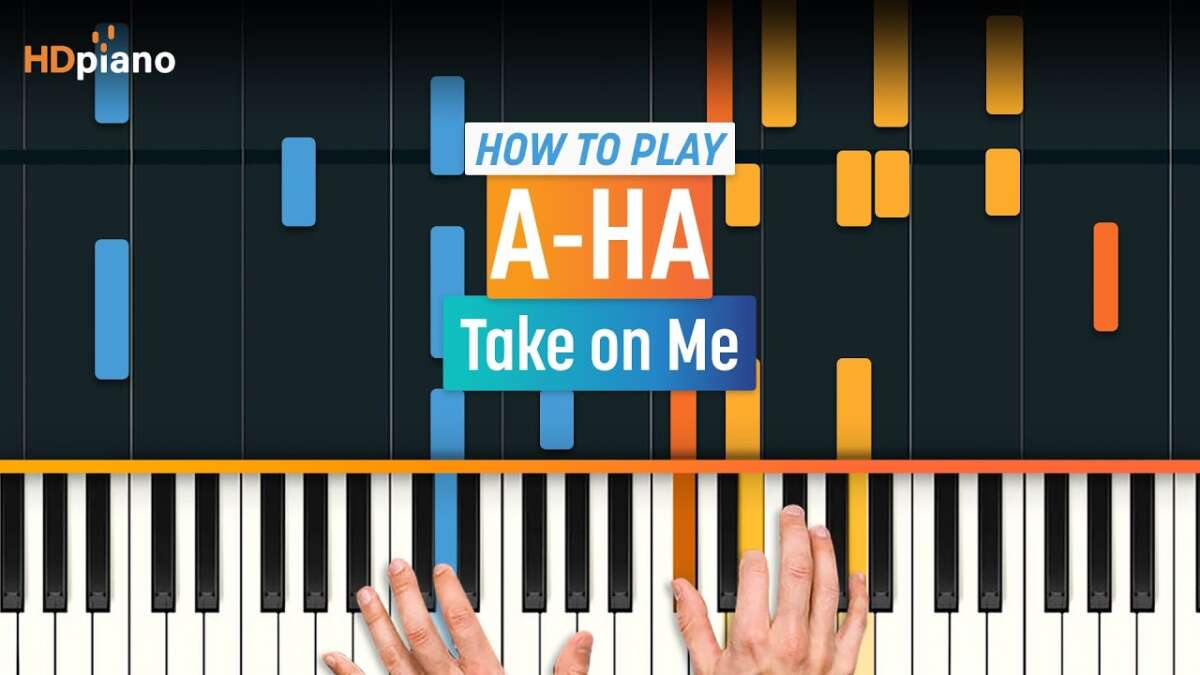
How To Play Take On Me On Piano: Easy Step-By-Step Tutorial
Learn the arpeggiated intro, master the A major progression, and play the vocal melody on piano.
I’ve taught and played this song for years, and I’ll walk you through how to play take on me on piano from first notes to polished performance. This guide breaks the song into bite-size parts: the iconic synth riff, the verse and chorus chords, simple and advanced arrangements, practice plans, and common pitfalls. You’ll get clear fingerings, chord shapes, and practice steps you can use right away to sound like the record or build your own version.

Why "Take On Me" works on piano
"Take On Me" shines on piano because of its bold melody and clean chord shapes. The song’s arpeggiated riff translates well from synth to keys. That riff gives the piano arrangement instant recognition and emotional punch.
On piano you can keep the bright feel with tight rhythm and clear voicing. Playing how to play take on me on piano focuses on clarity and timing more than flashy runs. Keep your left hand steady and let the right hand sing the melody.
What you need to start
- Piano or keyboard: Any full-size keyboard or acoustic piano will work fine.
- Basic skills: Know simple major and minor chords and basic finger numbers.
- Tools: A metronome, simple sheet music or chord chart, and a calm practice space.
- Optional: Headphones for a keyboard, and a backing track for performance practice.
If you want more detail, a basic music reader app or printable sheet helps. The goal is to make how to play take on me on piano feel simple and repeatable.
Understanding the song: key, chord progression, and tempo
The original song sits in A major. The tempo is upbeat, around 171 BPM, but you should practice slower. The most common chord pattern for verse and chorus is A – E – F#m – D. That progression repeats and supports the famous melody.
The synth riff is an arpeggiated figure built on the tonic A major. On piano, you can play the riff in the right hand while the left plays the root and fifth or simple broken chords. Learning the chord progression helps you improvise and sing along while you play how to play take on me on piano.
Step-by-step tutorial: how to play take on me on piano
Follow these steps to learn the song in manageable parts. Practice each part slowly. Put them together only after you can play each part cleanly.
Intro / Main riff
- What it is: The instantly recognizable arpeggiated synth line that opens the song.
- How to play: Right hand plays broken A major arpeggio across two octaves. Left hand holds A in bass, then moves to E.
- Finger tips: Use 1-2-3-5 pattern for the arpeggio in the right hand for smooth motion.
- Tempo tip: Start at 60–80 BPM. Increase gradually until you hit the groove you like.
Verse
- What it is: Vocal melody over A – E – F#m – D progression.
- How to play: Left hand plays root notes or simple octaves. Right hand plays blocked chords or the vocal melody.
- Voicing tip: Put the melody on top and keep chord tones soft under it to let the lyrics shine.
Pre-chorus
- What it is: A short build that leads to the chorus with rising energy.
- How to play: Use the same chords but add rhythmic tension. Play tighter arpeggios and slight crescendos.
- Practice tip: Use a subtle left-hand syncopation to lift energy before the chorus.
Chorus
- What it is: The bright, singable hook — "Take on me, take me on."
- How to play: Right hand doubles the vocal melody while adding octave jumps on key words. Left hand alternates bass patterns.
- Dynamics tip: Play louder than the verse. Use more sustain to mimic synth pads if needed.
Bridge and instrumental sections
- What it is: A contrasting part often with new chord movement and a synth solo.
- How to play: Keep the harmonic feel but add passing notes and fills. Mirror the synth solo with right-hand runs.
- Arrangement tip: If you want, simplify the fills into short motifs so the section stays clean.
Outro
- What it is: A fade of the hook and closing riff.
- How to play: Repeat the main riff with decreasing volume. Finish on an A major chord with full voicing.
Use small loops of 4–8 bars to practice. Repeat them until both hands are steady. That method will help you learn how to play take on me on piano cleanly and confidently.
Simplified arrangement for beginners
If you are new to piano, here is a clean plan to start playing the song now.
- Left hand: Play single root notes on beats 1 and 3.
- Right hand: Play chord tones as block chords on beats 1 and 3. Use A, E, F#m, D.
- Melody start: Learn the opening four notes by ear or from a simple melody line.
- Slow it down: Practice at 60–80 BPM, then move up in 5 BPM steps.
This version lets you sing while playing. It also builds confidence before you tackle the riff and faster tempo. Learning these basics is a fast way to see progress with how to play take on me on piano.
Advanced tips and embellishments
Once you know the song, add texture and interest with these techniques.
- Arpeggiated left-hand patterns: Use broken chords to fill sonic space and mimic synth motion.
- Octave doubling: Play the melody in octaves for a bigger sound at the chorus.
- Suspensions and passing notes: Insert 4-3 suspensions to add motion between chords.
- Rhythmic syncopation: Slightly push or pull rhythms for a live feel; don’t overdo it.
- Pedal use: Use the sustain pedal to connect arpeggios, but clear it on chord changes to avoid muddiness.
Experiment with subtle changes. They let you make the song your own while keeping the recognizable hook. These ideas help you refine how to play take on me on piano for more mature performances.
Practice routine and troubleshooting
A short, daily plan speeds progress. Here is a simple routine I used with students.
- Warm-up (5 minutes): Scales and light arpeggios in A major.
- Riff work (10 minutes): Hands separately, then together at slow tempo.
- Sections (15 minutes): Practice verse or chorus in 4-bar loops.
- Run-through (5 minutes): Play the whole song at comfortable tempo.
- Reflection (2 minutes): Note one small goal for next session.
Common issues and fixes:
- Hands get out of sync: Slow to 40–60% and isolate the problem bar.
- Chords sound muddy: Lift fingers and shorten pedal use.
- Timing slips: Practice with metronome clicks or a drum backing.
From experience, steady short practice beats long irregular sessions. This routine helped my students learn how to play take on me on piano quickly and with fewer errors.
Transposing and singing along
The original key (A major) might be high for some voices. To transpose:
- Move down one whole step to G major: A → G, E → D, F#m → Em, D → C.
- Move down two whole steps to F major if needed. Adjust chord shapes and bass accordingly.
On piano, transpose by shifting all notes down and practicing the new fingerings. Transposing helps when you want to sing and play how to play take on me on piano comfortably.
Related skills to improve
Work on these skills to play the song with greater confidence.
- Ear training: Recognize chord changes by sound to help with improvisation.
- Sight-reading: Learn to read chord charts and short melody lines quickly.
- Rhythm: Practice syncopation and steady eighth-note motion for the riff.
- Dynamics: Control volume to shape verse versus chorus.
These skills make learning other pop songs easier. They also deepen your ability to interpret how to play take on me on piano musically.
PAA-style questions
What is the easiest way to learn the song?
Start with the simplified chord pattern A – E – F#m – D and a slow tempo. Add the riff only after you can play the chords cleanly.
How long will it take to learn the intro riff?
With focused practice, you can learn the riff in a few days. Practice 10–15 minutes per day and use hands-separately work.
Can I sing while playing the piano version?
Yes. Use the simplified arrangement and keep the left hand simple while singing the melody. Transpose the song if the key is too high.
Do I need sheet music?
Sheet music helps but is not required. A chord chart and a small melody line are enough to start. Ear learning also works well for pop songs.
Should I use sustain pedal for the riff?
Use the pedal sparingly for the riff to avoid blurring. Clear the pedal on chord changes to keep the pattern crisp.
Frequently Asked Questions of how to play take on me on piano
How hard is "Take On Me" to play on piano?
It is moderate in difficulty. The main challenge is speed and clean arpeggio control, but simplified versions make it accessible for beginners.
What key is the original song in?
The original is in A major. Transposing down can make singing easier while keeping the same chord shapes.
Can I play the song with just chords?
Yes. Playing block chords for the verse and chorus captures the structure. Adding the riff later increases authenticity.
Should I learn the riff or the chords first?
Learn the chords first for harmonic context. Then add the riff once you are comfortable with the chord progression and tempo.
How do I practice the fast tempo?
Practice slowly with a metronome. Increase the tempo in small steps and only speed up when both hands are secure.
Conclusion
Learning how to play take on me on piano is a rewarding goal that breaks into clear, manageable steps. Start with chords, build the riff slowly, use short daily practice sessions, and add personal touches as you gain confidence. Try the simplified arrangement first, then shape the song with dynamics and voicings to make it yours.
Take a small action today: pick one 4-bar section and loop it for 10 minutes. If you enjoyed this guide, leave a comment, share your progress, or subscribe for more step-by-step piano lessons.

Senior Music Reviewer
Alex Carter is a seasoned music reviewer with over a decade of experience in the world of sound and instruments. Passionate about helping musicians and enthusiasts make informed choices, he brings sharp insights and in-depth knowledge to every review. From classical instruments to modern gear, Alex combines technical expertise with a love for music to deliver content that resonates with readers.
As a Senior Music Reviewer and expert author on Tuneluma.com, Alex is dedicated to sharing honest evaluations, practical advice, and thoughtful commentary to guide readers in their musical journey.