How To Increase Finger Speed On Guitar For Beginners: Tips
Practice slow, steady exercises with a metronome, relaxed hands, and focused repetition daily.
I’ve taught dozens of new players how to increase finger speed on guitar for beginners, and I know the common traps and fast wins. This guide breaks down clear steps, exercises, and mindset tips to help you build speed safely and reliably. You’ll get practical routines, common mistakes to avoid, and simple metrics to track progress so you can increase finger speed on guitar for beginners without strain or bad habits.

Why finger speed matters and what to expect
Finger speed helps you play clean scales, riffs, and solos with clarity. Beginners often confuse speed with tension. Fast playing comes from control, not force.
Increasing finger speed on guitar for beginners improves timing, musical expression, and song accuracy. It also makes learning new songs less frustrating. Expect small, steady gains over weeks, not overnight leaps.
Foundations: posture, grip, and technical basics
Good posture sets the stage for speed. Sit or stand with a straight back. Keep shoulders relaxed and the guitar at a comfortable height.
Left-hand grip should be light. Use fingertips near the tips. Keep your thumb behind the neck roughly opposite the second finger. Avoid squeezing; tension kills speed.
Right-hand technique controls rhythm and articulation. Use economy of motion. Fingers and pick should move just far enough to sound the note. Minimal motion equals faster recovery and better stamina.
Practice these basics daily to increase finger speed on guitar for beginners. They prevent bad habits that slow you down later.

Warm-up and core exercises to build speed
Warm-ups are non-negotiable. Start with 3–5 minutes of gentle finger stretches. Then play single-note chromatic patterns slowly.
Core exercises to increase finger speed on guitar for beginners
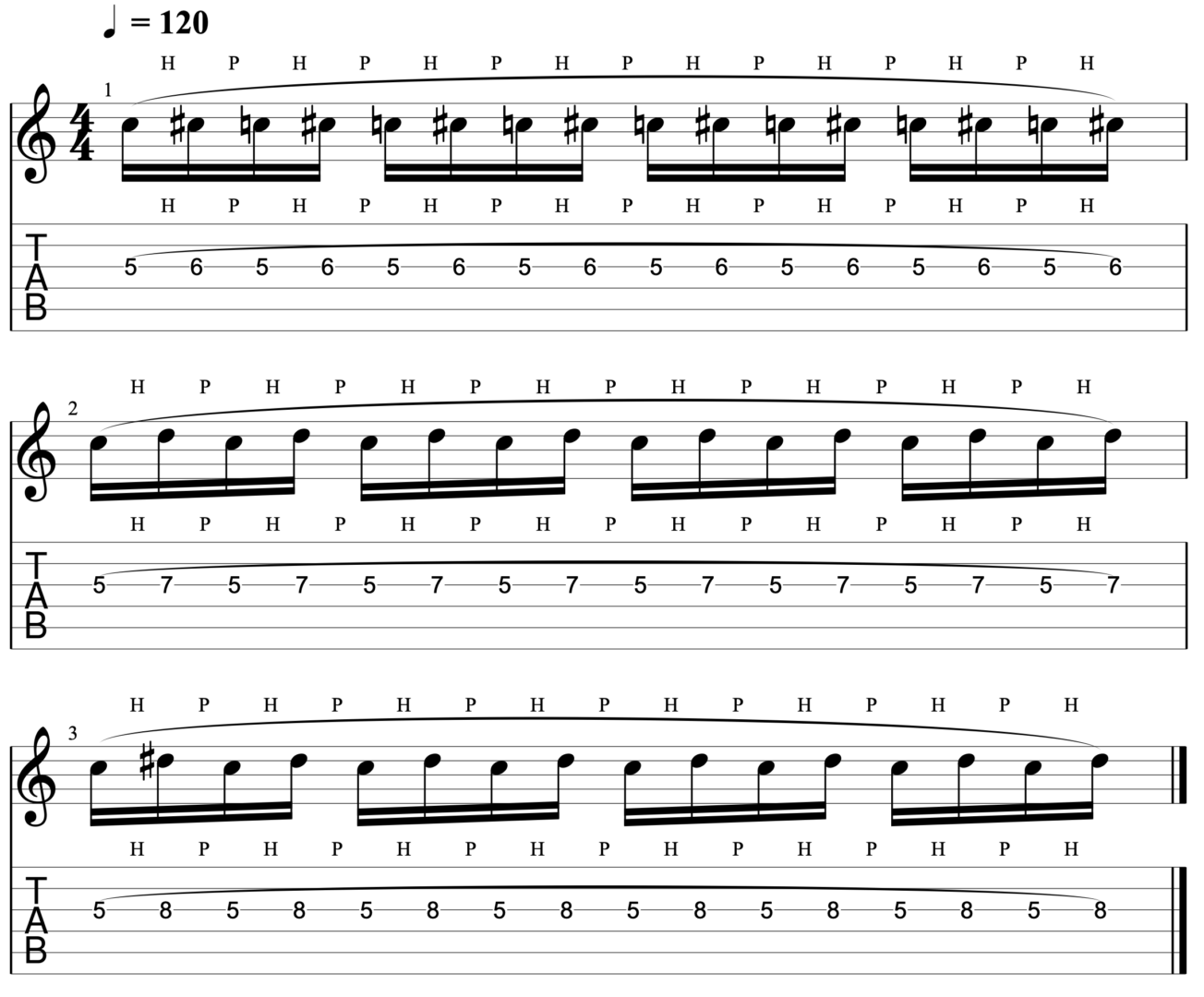
- Finger chromatic 1-2-3-4 pattern across strings for 2–4 minutes.
- Spider exercises: 1-3-2-4 patterns to train independence.
- Alternate picking single-string tremolo for 1 minute per tempo.
- Hammer-ons and pull-offs in small groups to build legato control.
Always begin slow and relax. Speed comes by gradually raising tempo while keeping notes even and clean.

Using tempo, metronome strategy, and progressive overload
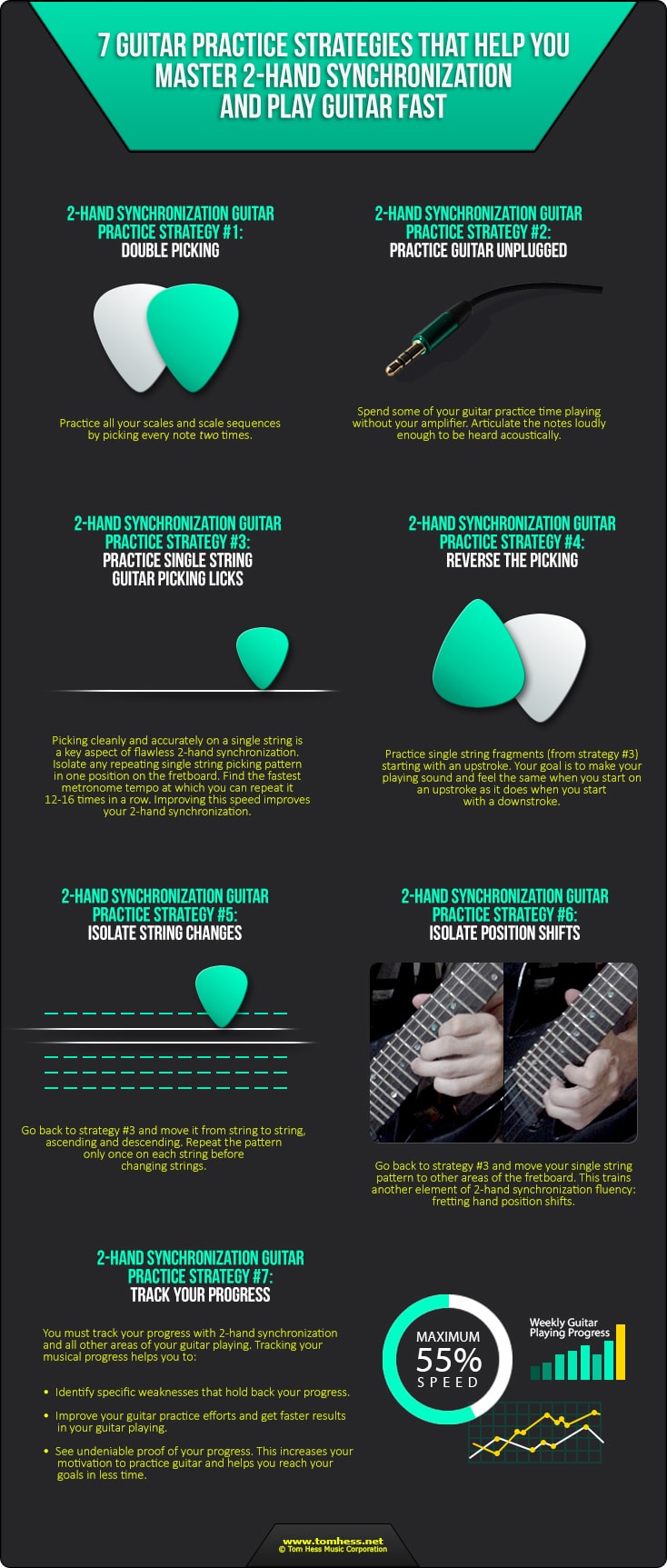
A metronome is your best friend. Set a comfortable tempo where you play cleanly. Increase tempo by 2–5% only when you can play perfectly for several repetitions.
Progressive plan to increase finger speed on guitar for beginners
- Set a base tempo where mistakes are rare.
- Repeat an exercise 5–10 times cleanly.
- Increase tempo slightly and repeat.
- If errors return, drop back and repeat the clean tempo longer.
This gradual loading trains neural pathways and keeps technique intact. Track your tempo gains weekly to stay motivated.

Practice routines: structure for steady gains
Short, focused sessions beat long, unfocused ones. Aim for 20–40 minutes of quality practice daily.
Sample weekly routine to increase finger speed on guitar for beginners
- Day 1: Warm-up + chromatics + alternate picking drills (30 minutes).
- Day 2: Warm-up + scale sequences + hammer-ons/pull-offs (30 minutes).
- Day 3: Warm-up + metronome speed work + song application (30 minutes).
- Day 4: Light technical review + tone and phrasing practice (25 minutes).
- Day 5: Challenge day: new tempo, record and review (30–40 minutes).
- Day 6: Play songs and apply speed work (30 minutes).
- Day 7: Rest or light play to recover.
Record short videos to spot tension. I used this routine to go from slow single-note runs to clean 160 BPM sequences in months.
Strength, dexterity, and injury prevention
Finger strength helps, but control matters more. Use gentle finger stretches and brief strength tools like grip trainers for 2–3 minutes daily. Avoid overuse.
Signs of strain or injury
- Sharp pain during or after practice.
- Numbness or tingling in fingers or hand.
- Lasting soreness for more than 48 hours.
If you hit these signs, rest, reduce intensity, and consult a professional. To increase finger speed on guitar for beginners, prioritize safe progress over fast gains.

Common mistakes that slow progress
Many beginners unintentionally hinder progress. Watch for these pitfalls.
Common mistakes
- Playing too fast before technique is solid.
- Tensing shoulders, wrist, or fingers.
- Ignoring rhythm and timing while chasing speed.
- Practicing without a metronome or clear plan.
Fix these and you’ll increase finger speed on guitar for beginners faster and cleaner.

Gear and tools that help improvement
You don’t need fancy gear to increase finger speed on guitar for beginners. But some tools help.
Useful tools
- Basic metronome app for tempo control.
- Light-gauge strings for easier fretting.
- A capo to practice patterns in different positions.
- Recording device or phone to review technique.
Choose tools that support clean practice, not shortcuts that mask technique issues.

People also ask
How long does it take to noticeably increase finger speed?
Most players see measurable improvement in 4–8 weeks with consistent daily practice. Progress depends on practice quality and starting level.
Can finger exercises alone make me faster?
Exercises build the foundation, but you must apply speed work to real songs and phrasing. Combine drills with musical practice for best results.
Should I use a pick or fingers to increase speed?
Both approaches work. Use alternate picking with a pick and hybrid techniques to develop precise timing and control.
Frequently Asked Questions of how to increase finger speed on guitar for beginners
How often should a beginner practice to increase finger speed on guitar for beginners?
Practice short sessions daily, 20–40 minutes focused on technique. Consistency beats rare marathon sessions.
Is slow practice better than fast practice when trying to increase finger speed on guitar for beginners?
Yes. Slow, accurate practice builds correct neural patterns. Only speed up when notes stay clean and even.
What metronome settings are best to increase finger speed on guitar for beginners?
Start at a tempo where you play perfectly for 10–20 seconds. Increase by 2–5% increments as you master each tempo.
Can hand stretches and warm-ups really help increase finger speed on guitar for beginners?
They help a lot. Warm-ups reduce tension and prepare muscles for control, which enables faster, cleaner playing.
How do I avoid bad technique while trying to increase finger speed on guitar for beginners?
Focus on relaxed hands, minimal motion, and clean notes. Record yourself to catch and correct tension or shortcuts.
Are there quick drills that help more than slow practice to increase finger speed on guitar for beginners?
Quick drills help maintain momentum, but they must be paired with slow, accurate practice. Use short bursts at target tempo after solid slow repetition.
Conclusion
You can increase finger speed on guitar for beginners by focusing on relaxed technique, metronome-led progressions, and short daily routines. Start slow, track tempo gains, and prioritize health. Stick to steady practice, avoid tension, and apply drills to real music to keep progress musical and fun.
Make a plan this week: pick two core exercises and use a metronome for five days. Share your progress, ask questions, or subscribe for more practice plans.

Senior Music Reviewer
Alex Carter is a seasoned music reviewer with over a decade of experience in the world of sound and instruments. Passionate about helping musicians and enthusiasts make informed choices, he brings sharp insights and in-depth knowledge to every review. From classical instruments to modern gear, Alex combines technical expertise with a love for music to deliver content that resonates with readers.
As a Senior Music Reviewer and expert author on Tuneluma.com, Alex is dedicated to sharing honest evaluations, practical advice, and thoughtful commentary to guide readers in their musical journey.