How To Fix Loose Guitar Tuning Pegs At Home: Quick Fixes
Tighten the tuner nut or screw, add a shim or threadlocker, or replace worn parts.
I’ve fixed hundreds of machines for friends and gigs. This guide shows exactly how to fix loose guitar tuning pegs at home, step by step. You will learn quick checks, simple fixes, when to replace parts, and how to prevent the problem. I write from hands-on experience and clear mechanical logic so you can get stable tuning fast.

Why tuning pegs go loose
Loose tuning pegs make your guitar slip out of tune. This happens for a few simple reasons.
- Worn gear teeth reduce grip and let the string slip.
- Loose screws or nuts let the tuner move.
- Worn bushings let the post wobble in the headstock.
- Wrong string winding or low tension causes extra play.
- Corrosion or dirt adds slack in the gear mechanism.
I’ve fixed vintage and cheap tuners. Often a loose nut or one stripped screw was the cause. The fix is usually quick and cheap. Learn the right fix and you’ll avoid repeated problems.

Tools and materials you’ll need
Prepare these items before you start. Most are common household or low-cost shop tools.
- Small Phillips and flathead screwdrivers
- 7mm or 8mm wrench or socket for tuner nuts
- Needle-nose pliers or peg winder
- Threadlocker (low-strength) or clear nail polish
- Small hex keys for locking tuners (if applicable)
- Replacement screws, bushings, or tuners (if needed)
- Cotton cloth and isopropyl alcohol for cleaning
- Thin paper or plastic shims (business card, tape)
- Light lubricant suited for metal gears
Having the right tools makes the repair faster and safer. I keep a small kit in my gig bag for on-the-road fixes.

Quick checks before you repair
Do a short diagnosis before taking parts off. This saves time.
- Tune instrument to pitch and gently tug each string. Note any slipping tuners.
- Visually inspect each tuner for wobble or missing screws.
- Check the nut on the headstock side. A loose nut needs tightening, not replacement.
- Look for stripped screw heads or damaged gear teeth. If gears are stripped, replace the tuner.
- Test friction by turning the post. If it moves without catching, the bushing or gear may be worn.
If the tuner just needs a small adjustment, a five-minute fix is likely. If gears are damaged, plan to replace the tuner.

Step-by-step repairs: how to fix loose guitar tuning pegs at home
Below are clear fixes ordered from simplest to more involved. Read them and pick the right one for your case.
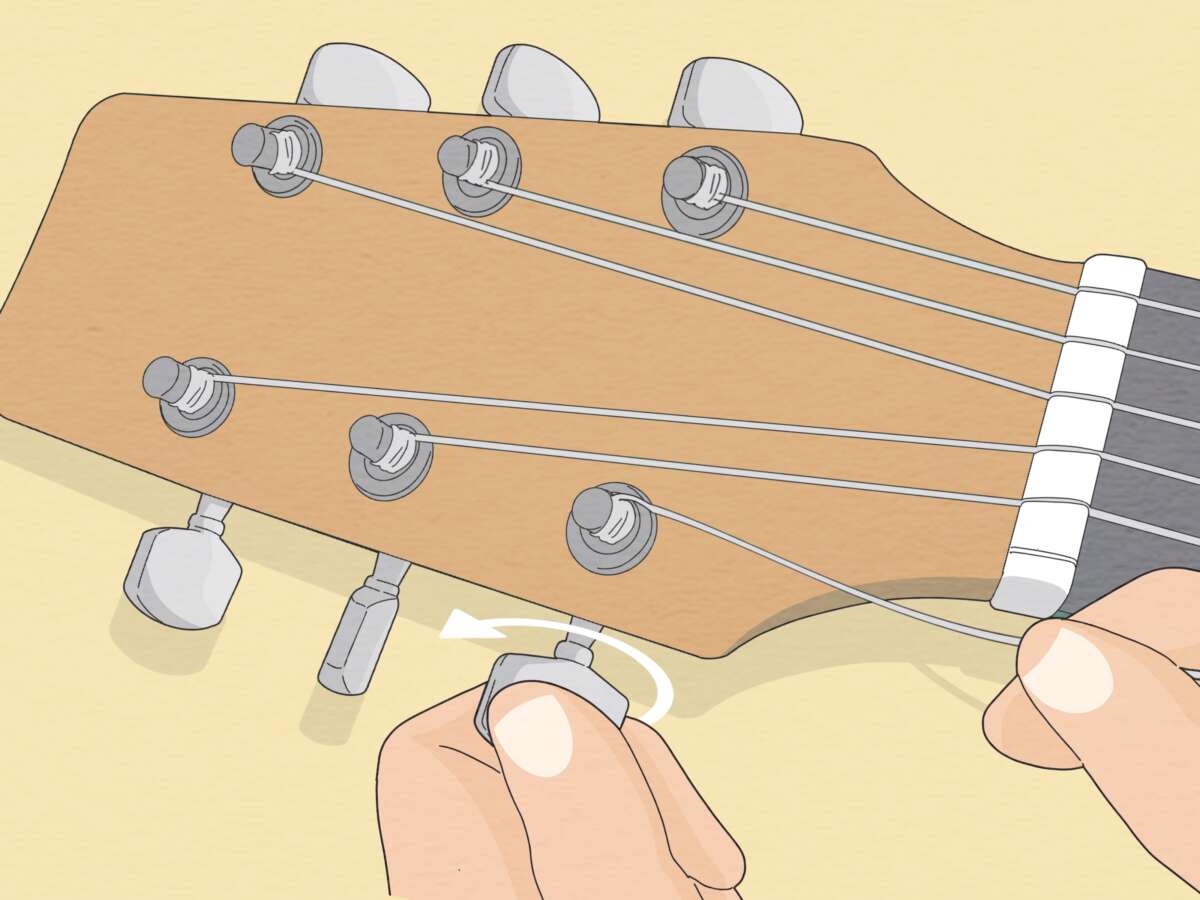
Simple tightening (nut on top of headstock)
- Loosen the string slightly or remove it.
- Hold the tuner post steady with pliers or your fingers.
- Use the correct wrench to tighten the nut atop the tuner post. Tighten until snug. Do not overtighten.
- Restring and tune. Test for slipping.
Tightening the screw on the tuner gear
- Locate the small screw on the back of the tuner.
- Use a small screwdriver to tighten it a quarter turn. Check tuner action.
- If the screw spins freely, replace it. A stripped screw hole often needs a new screw or a bushing insert.
Use a shim for a loose bushing or hole
- Remove the string and loosen the tuner nut.
- Slide a thin shim (paper, tape, or a tuned plastic washer) around the post between the post and headstock hole.
- Tighten the nut to compress the shim. The post should stop wobbling.
- Trim excess shim material if needed.
Apply threadlocker for persistent slip
- Remove the tuner nut and back plate screw if needed.
- Apply a drop of low-strength threadlocker or clear nail polish to the threads.
- Reassemble and allow to cure per product instructions. This prevents screws from backing out.
Lubricate sticky gears
- Remove the tuner back cover if present.
- Clean old grease and dirt with a cloth and alcohol.
- Apply a tiny amount of light machine oil or special gear grease to the gear mesh.
- Work the tuner back and forth, then wipe excess.
Replace worn parts or whole tuner
- Identify the tuner type and measurements (screw spacing, bushing size).
- Order matching replacement parts or new tuners.
- Remove old tuners by loosening screws and nuts.
- Fit new tuners. Tighten parts evenly to avoid cracking the headstock.
Tips from my experience
- Always tighten small screws slowly and test action often.
- If a nut won’t tighten, check for a missing or damaged washer underneath.
- Keep screws and small parts organized in a tray.
- For vintage guitars, use care. Avoid over-tightening on thin headstocks.

When to replace tuning pegs
You can often fix loose tuning pegs. But sometimes replacement is best.
Signs you should replace tuners
- Gear teeth are visibly worn or stripped.
- Post or bushing is heavily oval or worn.
- Screw threads are stripped and won’t hold.
- Tuner binding despite cleaning and lubrication.
Types and cost
- Basic closed-gear tuners are inexpensive and easy to fit.
- Vintage-style open-gear tuners suit older guitars and may need bushings.
- Locking tuners cost more but improve tuning stability and string changes.
If replacement is needed, buy quality parts. Better tuners save time and tuning headaches long-term.

Preventive maintenance to avoid loose tuners
A little care stops most problems.
- Check tuner screws and nuts every few months.
- Keep gears clean. Wipe with a cloth after humid gigs.
- Use light lubricant only when needed. Too much attracts dirt.
- Wind strings neatly with 2–3 wraps on the post for non-locking tuners.
- Store guitar in stable humidity and temperature to avoid wood movement.
I check tuners before each gig. Small checks prevent big problems on stage.

Troubleshooting common scenarios
Here are fast fixes for common tuner problems.
Tuner slips only under high bend
- Problem: String wraps slip on the post.
- Fix: Add more neat wraps or use a locking tuner. Ensure the string is seated in the nut slot.
Tuner wobbles but holds pitch
- Problem: Loose bushing or nut.
- Fix: Add a thin shim or tighten the top nut. Avoid over-tightening to prevent headstock damage.
Tuner screw keeps backing out
- Problem: Vibrations loosen screws.
- Fix: Use a drop of low-strength threadlocker or clear nail polish. Retighten.
PAA-style questions
How long does it take to fix loose guitar tuning pegs at home?
Most simple fixes take 5–20 minutes. Replacing tuners can take 30–60 minutes including parts ordering.
Can I use household glue as threadlocker?
Clear nail polish works in a pinch. It helps but is not as strong or reliable as a low-strength threadlocker.
Will replacing tuners change my guitar’s tone?
Tuners do not change tone. They improve tuning stability and feel. Quality tuners can improve playability.

Frequently Asked Questions of how to fix loose guitar tuning pegs at home
How do I know if a tuner is broken or just loose?
If tightening the nut or screw and adding lubrication stops the wobble, it was loose. If the gear teeth are worn or the post is misshapen, the tuner is likely broken and needs replacement.
Can I fix loose tuners without removing strings?
You can tighten some nuts and screws without removing strings. For shims or replacements you will need to loosen or remove the strings for safe work.
Are locking tuners a good fix for loose pegs?
Locking tuners improve stability and reduce wrap slippage. They do not fix a badly worn bushing or stripped screw without replacement.
Is it safe to use threadlocker on my guitar?
Low-strength threadlocker is safe for screws on tuners. Avoid threadlocker on parts that need frequent removal. Always use small amounts and follow cure times.
How often should I check my tuning pegs?
Check tuners monthly if you gig. For casual players, inspect every few months or when you notice tuning drift.
What size nut do I need when replacing a tuner?
Sizes vary by tuner brand and guitar. Measure the bushing diameter or match the old nut. Many replacement kits list sizes for common guitars.
Conclusion
Fixing loose tuning pegs at home is usually quick and low cost. Tighten nuts and screws first. Use shims, light threadlocker, or replace worn parts when needed. With a few tools and basic steps, you can restore tuning stability and avoid stage surprises. Try the simplest fixes first, then move to replacements only if required. Share your experience, ask a question, or subscribe for more hands-on guitar care tips.

Senior Music Reviewer
Alex Carter is a seasoned music reviewer with over a decade of experience in the world of sound and instruments. Passionate about helping musicians and enthusiasts make informed choices, he brings sharp insights and in-depth knowledge to every review. From classical instruments to modern gear, Alex combines technical expertise with a love for music to deliver content that resonates with readers.
As a Senior Music Reviewer and expert author on Tuneluma.com, Alex is dedicated to sharing honest evaluations, practical advice, and thoughtful commentary to guide readers in their musical journey.