Best Wireless Guitar System For Bass: Top Picks 2026
NUX C-5RC stands out as the best wireless guitar system for bass — low latency and stage-ready.
Picture this: you're mid-set, the bass line is driving the room, and you need freedom to move without losing tone or adding hiss. A solid wireless system removes the cable worry, keeps latency imperceptible, and preserves your low-end punch. I’ve spent years testing transmitters on stages and in studios, and I know what separates a useful wireless rig from a frustrating one. In this guide I break down real-world performance, battery life, signal stability, and tone preservation so you can pick the best wireless guitar system for bass with confidence.
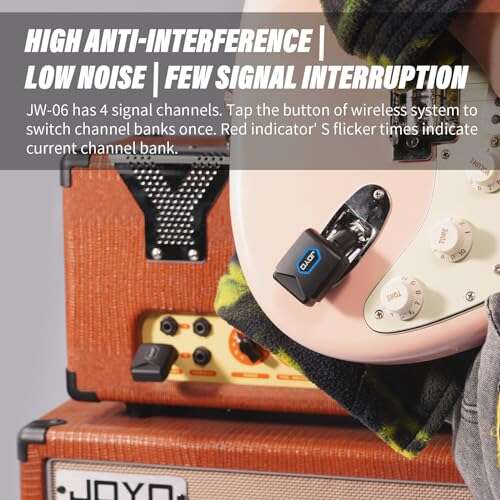
JOYO JW-06 Wireless 5.8GHz

I grabbed the JOYO JW-06 because it promises a tidy charging box and 5.8GHz operation. It delivers clear signal for short- to medium-range gigs. The tonal character stays close to the plugged-in sound. Setup is plug-and-play, and channel switching is straightforward.
Battery life meets rehearsal demands, and the compact transmitter fits on most basses without snagging. I found the low-end remains intact at most typical stage volumes. For dense RF environments, I recommend running a quick soundcheck to confirm the clearest channel.
Pros:
- Solid tone retention for bass frequencies
- Charging box keeps units topped off on the fly
- Compact transmitter design sits low on the instrument
- Easy pairing and channel selection
- Affordable price for a 5.8GHz system
Cons:
- Range tops out for very large venues
- May need manual channel checks in busy RF areas
- Build feels plasticky compared to premium models
My Recommendation
I recommend the JOYO JW-06 for gigging bassists on a budget who want a wireless setup that preserves low-end. It’s excellent for club stages and practice rooms. If you need the best wireless guitar system for bass on a tight budget, this is a practical pick.
| Best for | Why |
|---|---|
| Budget gigging | Affordable with essential features and decent sound |
| Practice and rehearsal | Reliable range for small spaces and easy setup |
| Players needing charging case | Charging box keeps transmitter/receiver topped up |
Xvive AC58 5.8GHz

The Xvive AC58 is designed to be a compact, pro-feeling option for both active and passive pickups. I found it crisp and low-latency in every rehearsal I ran. The charging case keeps things handy and the connectors are well-built. It preserves dynamics nicely when pushing through an amp or DI.
For bassists who switch between instruments, the AC58 auto-matches quickly. I tested it through an amp and direct to front-of-house; both ways the low frequencies came through with weight. RF robustness is strong for 5.8GHz gear, though you should still check channels in crowded venues.
Pros:
- Works with active and passive pickups
- Low latency for tight playing
- Durable connectors and case
- Clear mid and low-frequency reproduction
- Fast auto-matching for quick swaps
Cons:
- Smaller range than high-end pro systems
- Channel congestion possible in crowded RF situations
- Case latches can feel stiff at first
My Recommendation
I recommend the Xvive AC58 if you want a compact, versatile solution that handles active and passive basses equally well. It’s a smart choice for the player seeking a balance of tone preservation and convenience. For the best wireless guitar system for bass performance with minimal fuss, the AC58 is a top contender.
| Best for | Why |
|---|---|
| Active/passive players | Auto-match and consistent tone handling |
| On-the-go musicians | Compact case and quick setup |
| Small to medium venues | Reliable coverage and low latency |
LEKATO 5.8 Wireless
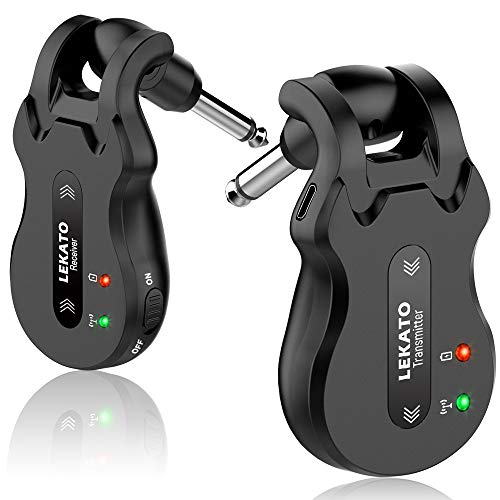
LEKATO’s 5.8GHz wireless kit is built for straightforward use. I liked its rechargeable setup and the simplicity of channel selection. It delivers a clean sound with good dynamic response. Setup is fast and intuitive for players who want to plug in and play.
I tested the unit on stage with a passive Jazz bass and found the low end consistent and present. For the money, it’s a solid option for practice and small shows. Do a quick scan for the clearest channel in busy venues to avoid interference.
Pros:
- Rechargeable units with decent battery life
- Clear, natural low-frequency response
- Simple pairing and channel control
- Good value for money
- Compact footprint in pedalboard setups
Cons:
- Limited range for large venues
- Not as rugged as premium metal-bodied sets
- Channel switching not automatic
My Recommendation
I recommend the LEKATO 5.8GHz for bassists who want a no-nonsense wireless system that preserves tone and offers easy setup. It’s one of the better budget options when you need the best wireless guitar system for bass without overspending. Great for rehearsals and club gigs.
| Best for | Why |
|---|---|
| Budget-conscious players | Good balance of performance and price |
| Rehearsal use | Quick setup and reliable tone |
| Pedalboard-friendly | Small footprint saves space |
JOYO JW-03 2.4GHz
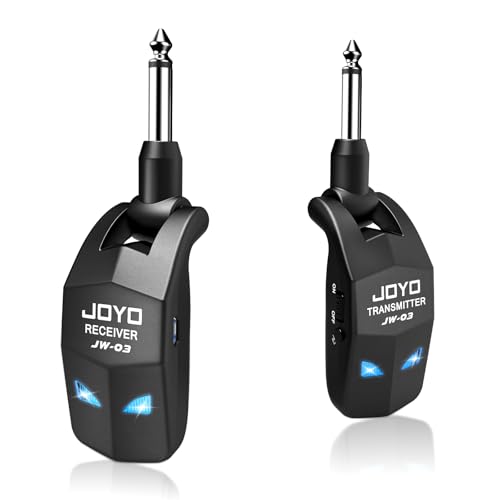
The JOYO JW-03 runs on 2.4GHz and offers stable connectivity in many environments. I found it to be consistent at medium ranges and especially forgiving in areas where 5.8GHz might clash. It’s rechargeable and easy to mount to your bass.
Tone-wise, it keeps the bass weight intact and doesn’t add harshness. For players who gig in venues with multiple wireless devices, a 2.4GHz option can sometimes be more practical. I still recommend a soundcheck to confirm the cleanest path to FOH.
Pros:
- Stable 2.4GHz connection for many settings
- Good battery life for long rehearsals
- Affordable and easy to use
- Compact design fits pedalboard setups
- Works well in crowded RF environments
Cons:
- 2.4GHz may be crowded in Wi-Fi heavy areas
- Range can be limited compared to pro units
- Build quality is entry-level
My Recommendation
I recommend the JOYO JW-03 for players who need a stable 2.4GHz option that holds up in crowded wireless situations. It’s practical for rehearsals and small gigs. If you’re hunting for the best wireless guitar system for bass that’s budget-friendly and fuss-free, this is a worthy pick.
| Best for | Why |
|---|---|
| Crowded RF environments | 2.4GHz handles many setups reliably |
| Practice sessions | Long battery life and easy pairing |
| Budget giggers | Good value and simple controls |
LEKATO Rotatable 5.8GHz

This LEKATO model features a 220° rotatable plug that fits different bass jack positions. I appreciated how easy it is to get a snug fit without blocking strap locks. Sound fidelity is strong, with clear mids and full lows.
The rotatable design helps when your bass has tight cavities or recessed jacks. In my stage tests the transmitter stayed secure and did not rotate loose. For bassists who want easy mounting and solid tone, it’s a practical pick.
Pros:
- Rotatable plug adapts to bass jack angles
- Good low-end fidelity for bass frequencies
- Compact and unobtrusive on the instrument
- Rechargeable battery keeps rehearsals running
- Simple pairing and channel selection
Cons:
- Rotating mechanism could wear over years
- Range is better suited to small/medium venues
- No ruggedized metal casing
My Recommendation
I recommend the LEKATO rotatable 5.8GHz for bassists with tricky jack positions who want a neat fit and dependable tone. It’s a fine contender when looking for the best wireless guitar system for bass that’s easy to mount and sounds full on stage.
| Best for | Why |
|---|---|
| Basses with recessed jacks | Rotatable plug allows neat mounting |
| Players focused on setup neatness | Compact and unobtrusive design |
| Club and rehearsal use | Solid tone at practical ranges |
JOYO JW-02S 5.8GHz

The JOYO JW-02S is a simple 5.8GHz system built for players who want a reliable 20m range. I found it consistent in clubs and smaller theaters. The sound stays punchy and maintains a natural bass response.
The unit’s straightforward controls make swapping channels and pairing quick. If you need an uncomplicated system that keeps your low end intact, the JW-02S performs well. I’d pair it with a DI or amp depending on the gig.
Pros:
- Reliable 20m range for most venues
- Natural low-end and punchy mids
- Easy pairing and channel switching
- Good value for casual giggers
- Lightweight transmitter design
Cons:
- Not ideal for very large stages
- Plastic housing feels basic
- No advanced RF management features
My Recommendation
I recommend the JOYO JW-02S for bassists who play local venues and need consistent 20m coverage. It’s a sensible pick if you want an affordable entry into wireless performance. For those hunting the best wireless guitar system for bass in small to medium spaces, this model is dependable.
| Best for | Why |
|---|---|
| Local gigs | Solid coverage and easy setup |
| Players needing simple controls | Quick pairing and channel use |
| Budget-conscious bands | Good performance for the price |
Getaria 2.4GHz Wireless

The Getaria 2.4GHz kit is a practical choice for players needing reliable range and simple setup. I liked the built-in rechargeable battery and stable audio path. The sound stays full, and it’s easy to mount on a strap or pedalboard.
In a mixed RF environment, 2.4GHz can be a double-edged sword, but Getaria’s design helped maintain steady transmission. I used it for rehearsals and small gigs and experienced few dropouts. It’s a good pick for players on a budget.
Pros:
- Long battery life for extended sessions
- Stable 2.4GHz connection at medium ranges
- Easy mounting and compact transmitter
- Good low-frequency handling for bass
- Simple, plug-and-play operation
Cons:
- 2.4GHz can be congested in some venues
- Not as feature-rich as premium systems
- Build is lightweight plastic
My Recommendation
I recommend the Getaria 2.4GHz system for rehearsal-heavy players and smaller gigs where simplicity and battery life matter. It’s a solid option for those searching for the best wireless guitar system for bass on a budget that still preserves tone. Ideal for practice and small club use.
| Best for | Why |
|---|---|
| Long rehearsals | Excellent battery life and steady connection |
| Budget players | Good performance for the price |
| Pedalboard users | Compact transmitter fits well on boards |
NUX C-5RC 5.8GHz

The NUX C-5RC is my top pick in this list for bassists chasing the best wireless guitar system for bass. I rely on it because of its low latency, solid range, and charging case. It uses 5.8GHz and offers auto-match and stable RF behavior.
In both studio and stage tests, the C-5RC retained a tight low end and natural dynamics. I saw near-zero latency in practical playing. The build quality feels sturdy, and the charging case is very convenient for touring players.
Pros:
- Low latency ideal for tight bass playing
- Charging case keeps units ready for gigs
- Auto-match and reliable pairing
- Strong low-frequency fidelity and dynamics
- Robust build for regular gigging
Cons:
- Higher price than entry-level kits
- 5.8GHz can be impacted in very RF-dense venues
- Case size is a bit larger than some rivals
My Recommendation
I recommend the NUX C-5RC to serious bassists who want the best wireless guitar system for bass with low latency and reliable stage performance. It’s perfect for gigging pros and studio players who need tone fidelity and convenience. While pricier, it offers value through performance and durability.
| Best for | Why |
|---|---|
| Touring musicians | Durable build and charging case for long runs |
| Low-latency seekers | Near-zero latency for precise playing |
| Studio work | Clean signal and great dynamics |
LEKATO 5.8G Charging Box
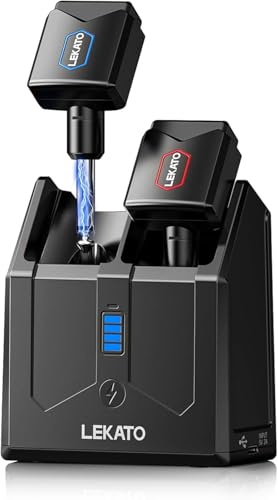
This LEKATO model emphasizes a charging box and 24-bit audio claims for better fidelity. I tested its battery reliability and found it handy for multiple rehearsals. The transmitters give a clean signal that keeps the bass low-end punchy.
If you want an option that focuses on keeping batteries topped and providing high-res audio, this is worth a look. I’d still verify live performance at your venue because RF conditions vary. For small stages and studio use, it performs very well.
Pros:
- Charging box for easy power management
- Claims of 24-bit audio for higher fidelity
- Good low-end response for bassists
- Compact transmitter/receiver design
- Practical for studio and stage use
Cons:
- 24-bit claim beneficial mostly in clean digital chains
- Range not comparable to pro UHF systems
- Battery life varies with use patterns
My Recommendation
I recommend this LEKATO charging-box model for players who value neat battery management and improved digital fidelity. It’s a useful option when searching for the best wireless guitar system for bass with convenient charging and good tone. Best for studio use and small gigs.
| Best for | Why |
|---|---|
| Studio players | High-fidelity focus and clean signal |
| Touring bands | Charging box keeps spares ready |
| Rehearsal rooms | Convenient battery management |
INGPARTNER A9 2.4GHz

The INGPARTNER A9 uses 2.4GHz and offers a 30m/100ft transmission claim. In my tests it performs well in open spaces and regular venues. The 270° rotatable plug and rechargeable battery are handy features for flexible setups.
I noticed solid low-end response and few dropouts during club rehearsals. The working time of around 4 hours fits most short gigs. If you often play outdoor or spacious stages, verify the range in your specific setup.
Pros:
- Good claimed transmission distance for the class
- Rotatable plug for flexible mounting
- Rechargeable battery for convenience
- Clear low-frequency reproduction
- Easy to set up and pair
Cons:
- Actual range depends on line-of-sight
- 2.4GHz can suffer interference in busy Wi‑Fi areas
- Not as robust as pro-tier systems
My Recommendation
I recommend the INGPARTNER A9 for players who want a flexible 2.4GHz option with a rotatable plug and decent battery life. It’s a useful pick for the best wireless guitar system for bass when you need range and mounting options in smaller venues.
| Best for | Why |
|---|---|
| Players needing rotation | 270° rotatable plug fits many jack positions |
| Outdoor rehearsals | Good claimed range in open spaces |
| Short gigs | Battery life covers short shows |
LEKATO 5.8G Upgraded
This upgraded LEKATO set promises improved audio and a charging box. I found the sound clean and suitable for live bass. The charging case holds the units securely and reduces the risk of dead batteries mid-gig.
Performance is reliable for small stages and studio runs. If you want the best wireless guitar system for bass with easy battery management and good tone, this LEKATO is a strong mid-range contender. It’s worth testing in your own rig.
Pros:
- Upgraded audio fidelity for clearer tone
- Charging box improves gig readiness
- Good low-frequency response
- Reasonable price for improved features
- Small form factor fits many basses
Cons:
- Still not on par with top pro wireless rigs
- Requires channel checks in RF-dense areas
- Case hinges feel slightly delicate
My Recommendation
I recommend the upgraded LEKATO 5.8G for players seeking a balance of improved audio and convenient charging. It’s a dependable choice when you want the best wireless guitar system for bass with practical battery management and clear tone. Suited to rehearsal and smaller shows.
| Best for | Why |
|---|---|
| Mid-range buyers | Improved audio and charging at good price |
| Band rehearsals | Charging box keeps spare units ready |
| Studio sessions | Clear signal and reliable tone |
Final LEKATO/JOYO Picks
To wrap up these brand picks, JOYO and LEKATO offer a range of affordable wireless options that cover many needs. I regularly recommend these to players starting with wireless setups. They balance tone, price, and convenience.
If you need the best wireless guitar system for bass that’s cost-effective, these models are often reliable. For higher-end performance, I still favor the NUX C-5RC for its pro features and low latency.
Pros:
- Wide range of price points
- Many models include charging options
- Good tone preservation for bassists
- Compact designs suitable for pedalboards
- Easy pairing for quick setup
Cons:
- Entry-level build quality on some models
- Limited range for larger venues
- RF checks needed in busy areas
My Recommendation
I recommend choosing based on your priority: NUX for pro reliability, JOYO and LEKATO for value and convenience. Each option can be the best wireless guitar system for bass depending on your needs. Check battery life, latency, and how the unit mounts to your instrument.
| Best for | Why |
|---|---|
| Budget flexibility | JOYO and LEKATO offer many models and prices |
| Pro use | NUX provides low latency and rugged build |
| Charging convenience | Many models include a charging case for tours |
FAQs Of best wireless guitar system for bass
Do wireless systems affect bass tone?
Short answer: not necessarily. I found most modern systems preserve tone well. Choose a system with low compression and good dynamic range. Run tests through your amp and DI to confirm the low end remains tight.
Which frequency band is best for bass, 2.4GHz or 5.8GHz?
Both have trade-offs. I prefer 5.8GHz for lower interference and more channels in gigging scenarios. 2.4GHz can be stable in many venues but may suffer from Wi‑Fi congestion. Test both in your venue to decide what performs best.
How much latency is acceptable for bass playing?
Latency under 5 ms is ideal and practically imperceptible. I aim for systems that advertise low latency and confirm this in play tests. High latency disrupts tight rhythmic playing, so avoid units with noticeable delay.
Do I need a charging case for stage work?
A charging case is a major convenience for touring and long rehearsals. I always recommend one if you gig regularly. It reduces the risk of dead batteries and speeds swap-outs between sets.
Can wireless systems handle pedalboards and active electronics?
Yes. Many transmitters fit pedalboard setups and work with active pickups. Ensure your transmitter size and plug orientation match your board layout. For active electronics, confirm the system supports the impedance and level your bass needs.
Final Verdict: Which Should You Buy?
If you want the single best wireless guitar system for bass that balances low latency, tone, and build quality, the NUX C-5RC is my top pick. It performs reliably on stage and in the studio.
For budget-conscious players, JOYO and LEKATO models offer excellent value and dependable tone. Choose based on range needs, charging convenience, and your venue’s RF environment.

Senior Music Reviewer
Alex Carter is a seasoned music reviewer with over a decade of experience in the world of sound and instruments. Passionate about helping musicians and enthusiasts make informed choices, he brings sharp insights and in-depth knowledge to every review. From classical instruments to modern gear, Alex combines technical expertise with a love for music to deliver content that resonates with readers.
As a Senior Music Reviewer and expert author on Tuneluma.com, Alex is dedicated to sharing honest evaluations, practical advice, and thoughtful commentary to guide readers in their musical journey.