How Do You Clean Guitar Strings: Easy Care Guide
Wipe guitar strings after playing, then use a safe cleaner to remove oil, sweat, dirt, and harmful residue.
Learning how do you clean guitar strings can help your instrument sound brighter and feel smoother. The right method is simple, but the wrong cleaner can damage a guitar’s finish, fretboard, or coated strings. This guide explains safe tools, clear steps, common mistakes, and the best cleaning habits for acoustic, electric, and bass guitars.

Why Clean Guitar Strings?
Guitar strings collect sweat, skin oil, dust, and salt each time you play. These materials sit between the string and your fingers, much like grit trapped under a wheel. Over time, they can make the strings feel rough and sound dull.
Cleaning does not restore old strings forever. It only removes surface dirt and may extend their useful life for a short time. If the string feels rough, has rust, will not stay in tune, or sounds flat after cleaning, replacement is the better choice.
Knowing how do you clean guitar strings also helps protect other parts of your instrument. Less oil reaches the fretboard, bridge, pickups, and tuning area. This creates a cleaner playing surface and can reduce the need for deep maintenance.
Benefits of cleaning guitar strings
• A brighter and clearer tone
• Smoother movement under your fingers
• Less dirt on the fretboard
• Slower buildup of sweat and oil
• Better comfort during long practice sessions
• A longer useful life for some uncoated strings

What You Need to Clean Guitar Strings
You do not need a large repair kit. A few clean, soft items are enough for routine care. Choose materials that do not leave lint or scratch the guitar.
Basic cleaning supplies
• Two soft microfiber cloths
• A clean cotton cloth for backup
• A commercial guitar string cleaner, if needed
• A string-winding tool for faster restringing
• A soft brush for removing loose dust
• A neck support or stable work surface
Microfiber works well because it lifts oil and dirt without leaving much lint. Use one cloth for wiping and another for drying. Do not use the same cloth for your guitar’s body and strings if it has collected polish, wax, or grit.
A string cleaner should match your string type. Some products work well on standard steel strings, while others are made for coated strings. Always read the product label before use, especially if your guitar has a satin, matte, vintage, or nitrocellulose finish.
Avoid household cleaners, rubbing alcohol, acetone, glass cleaner, furniture polish, and cooking oils. These products may dry wood, stain finishes, soften coatings, or leave a sticky film.

How Do You Clean Guitar Strings Safely?
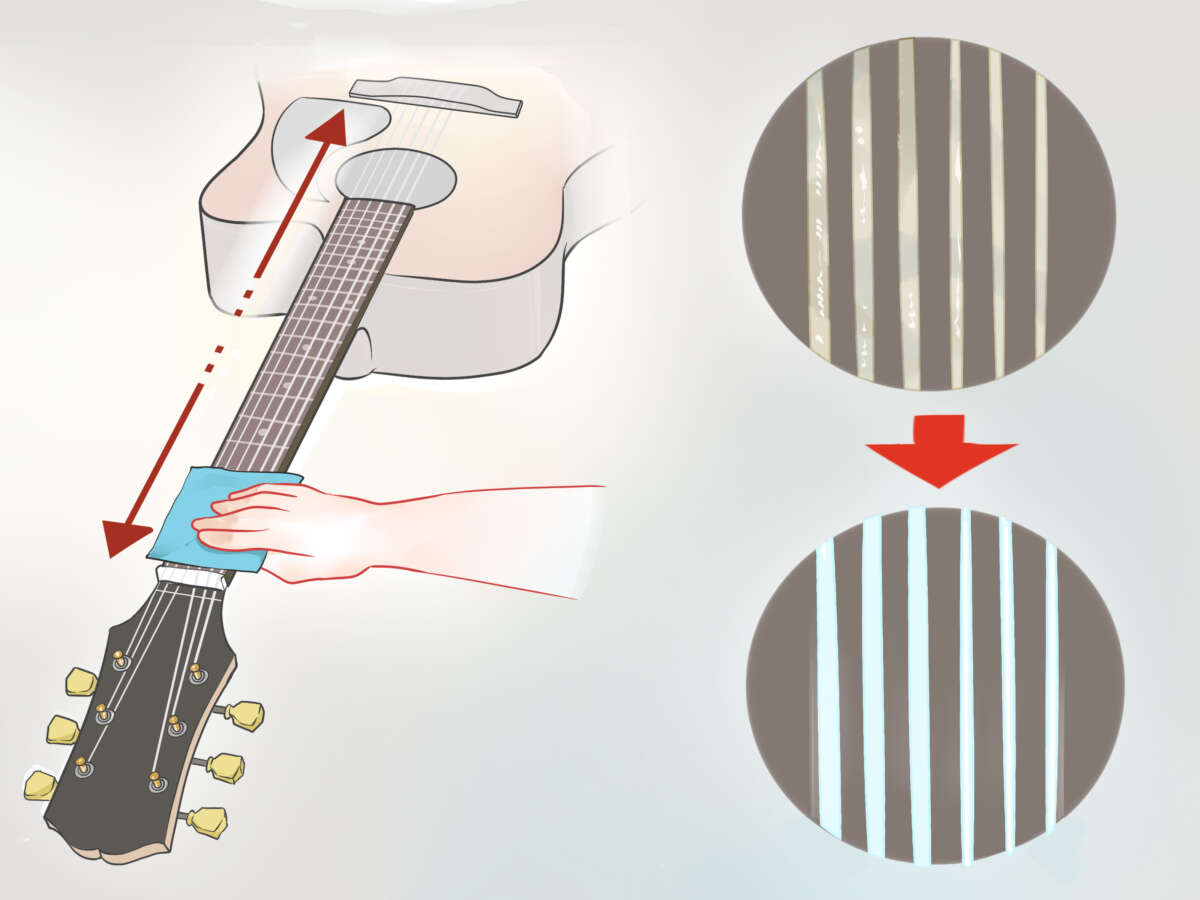
The safest routine is to wipe the strings with a dry microfiber cloth after every playing session. For deeper cleaning, place the cloth around each string and move it along the full length. Work gently and keep liquid away from the guitar body.
Follow these steps
-
Wash and dry your hands before playing. Clean hands transfer less oil to the strings.
-
Put the guitar on a stable surface. Support the neck so it does not twist or slide.
-
Inspect the strings. Look for rust, flat spots, kinks, peeling coating, or dark buildup.
-
Place a dry microfiber cloth under the strings near the sound hole or pickups.
-
Fold the cloth over the strings so the fabric touches both the top and bottom.
-
Gently pinch one or two strings at a time. Move the cloth from the bridge toward the neck.
-
Repeat the motion two or three times. Use light pressure rather than forcing dirt into the windings.
-
Clean each string separately. Pay extra attention to the area between the bridge and the first fret.
-
Wipe the strings again with a dry part of the cloth.
-
Check the fretboard and bridge for loose dirt. Remove it with a separate dry cloth.
The answer to how do you clean guitar strings is not to soak them. Strings are attached to tuners, bridges, and sometimes ball ends that can trap moisture. Water and liquid cleaner can also run onto the fretboard or into an electric guitar’s pickups.
For a coated string set, use extra care. Strong rubbing can damage the protective layer, and a cleaner not approved for coated strings may make the surface feel uneven.

How Do You Clean Guitar Strings With a Cloth?
A dry cloth is the best everyday method. It is fast, low risk, and suitable for most acoustic guitars, electric guitars, and basses. It also avoids the chemical problems linked to household products.
Start at the bridge and move toward the headstock. This direction helps remove dirt from the places where your picking or strumming hand creates the most contact. Turn the cloth to a clean section as it becomes dark or oily.
You can also run the cloth beneath the strings. Slide it carefully between the strings and fretboard, then pull it from the bridge toward the neck. Do not yank the cloth, since force can stress the strings or knock the guitar out of tune.
A simple after-playing routine
• Wipe the front of every string.
• Wipe the underside of the strings.
• Clean the area near the bridge.
• Remove fingerprints from the guitar body.
• Store the instrument in its case or on a safe stand.
When people ask how do you clean guitar strings, I usually suggest this dry method first. It takes less than a minute and prevents most heavy buildup. In practical use, consistent light cleaning works better than occasional aggressive scrubbing.

How Do You Clean Guitar Strings With String Cleaner?
A guitar string cleaner can help remove oil that a dry cloth does not lift. Use only a product designed for guitar strings, and apply it to the cloth rather than spraying the instrument directly.
Place a small amount on the cloth. Wipe the strings one at a time, then use a second dry cloth to remove any residue. Keep the product away from the sound hole, pickups, fretboard edges, bridge, and painted body.
Safe product-use steps
-
Read the label and check whether the product suits your string type.
-
Test a tiny amount on an unseen part of the instrument or on an old string.
-
Apply the cleaner to a cloth, not directly to the guitar.
-
Wipe the string with gentle, even strokes.
-
Buff the string with a dry cloth.
-
Let the guitar air out briefly before placing it in its case.
Some players use small amounts of isopropyl alcohol on uncoated strings, but this approach has limits. Alcohol may affect guitar finishes, plastic parts, binding, and some string coatings. It is not a universal answer to how do you clean guitar strings, so a dry cloth or purpose-made product is usually safer.
Never use oil to make strings feel smooth. Oil can attract dust, create a greasy surface, and transfer to the fretboard or finish.

How Do You Clean Guitar Strings Without Removing Them?
You can clean strings without removing them by using a cloth and light pressure. This is the best choice for routine maintenance because it keeps string tension stable and takes very little time.