Best Bass Guitar Strings For Metal: Top Picks For Tone
Ernie Ball Regular Slinky and D'Addario NYXL shine as top choices for metal bassists.
Picture this: you’re dialing in a crushing low end for a heavy breakdown and your strings sound dull, go dead mid-set, or refuse to stay in tune. I’ve spent years road-testing strings across amps, pedals, and sweaty stages. The right set cuts through distorted guitars, stays tight under aggressive playing, and survives sweat and drop-D or lower tunings. In this guide I’ll walk you through the best bass guitar strings for metal, why they work, and who should use each set so you get a tone that rumbles and locks with the band.
Ernie Ball Regular Slinky 50-105

I’ve used Ernie Ball Regular Slinky on multiple basses for metal rhythm and lead parts. They balance bright attack with a solid low end, which helps a bass cut through guitar distortion. The nickel wound wrap gives a slightly warm top end that still reads clearly through high-gain rigs.
They hold tuning well under heavy picking and slapping, and feel comfortable for fast runs. For standard and drop tunings, these are reliable. Expect a familiar, versatile tone that suits both live and studio work.
Pros:
- Clear midrange that cuts through distorted guitars
- Good balance of brightness and warmth
- Durable for frequent gigging
- Easy to play for fast runs and slides
- Widely available and affordable
Cons:
- Can feel a bit bright for ultra-dark metal tones
- May corrode faster with heavy sweat exposure
My Recommendation
These are great if you want a classic, versatile set that works in most metal contexts. I recommend them for rock/metal players who need clarity and punch without sacrificing low-end warmth. If you play a lot of picked riffs and need strings that respond well to aggression, these deliver solid performance.
| Best for | Why |
|---|---|
| Classic metal tone | Balanced midrange and attack for cutting through mix |
| Live gigging | Durable and reliable tuning stability |
| Versatility | Works well across rock and metal styles |
Ernie Ball Super Slinky 45-100

Super Slinky gauges are lighter and feel faster under the fingers. I use a Super Slinky when I want easier bends and fast fingerstyle work in metal. They provide a snappier attack and respond well to aggressive pick dynamics.
They aren’t the beefiest for lower tunings, but they work great for players who favor speed and articulation. If your rig includes heavy compression or octave pedals, these strings keep notes clear without sounding boxy.
Pros:
- Fast feel for technical playing
- Crisp attack that translates in high-gain mixes
- Great for slap and pop techniques
- Easy on the fretting hand for long sets
- Affordable and popular choice
Cons:
- Less tension for lower tunings like B or drop A
- May flub under heavy pick attack with thin gauges
My Recommendation
I suggest Super Slinky for metal bassists who prioritize speed and articulation. I find them ideal for fast fingered parts and for lead-style bass work. If you mostly play in standard or slightly dropped tunings, these are a smart pick among the best bass guitar strings for metal.
| Best for | Why |
|---|---|
| Speed and technical playing | Light gauges for fast fretting and articulation |
| Fingerstyle metal | Clear, immediate attack under high gain |
| Comfort | Lower tension eases long practice sessions |
CashBeat Stainless Steel 4-String

CashBeat stainless sets deliver a bright, cutting tone that I’ve found works well with heavy distortion and drop tunings. Stainless steel wrap tends to give more edge and clarity than nickel, which helps the bass remain audible through thick guitar walls.
They resist corrosion better, which I appreciate on tours and sweaty rehearsals. The small ball ends make installation easy on most bridges. For aggressive metal styles where clarity matters, these are a budget-friendly option.
Pros:
- Bright, cutting tone that slices through mix
- Good corrosion resistance for long life
- Affordable replacement set
- Consistent intonation and feel
- Works well in lower tunings
Cons:
- Stainless can feel a bit harsh for vintage tones
- Tone may be too bright for darker metal styles
My Recommendation
I recommend CashBeat stainless steel strings if you need bright, durable strings at a low cost. They’re among the best bass guitar strings for metal when you want cut and resilience on the road. Use them if your tone needs to slice through highly distorted guitars and crowded mixes.
| Best for | Why |
|---|---|
| Budget-conscious players | Affordable without sacrificing clarity |
| Tight live mixes | Bright profile helps bass cut through distortion |
| Touring musicians | Stainless steel resists corrosion from sweat |
Piutouyar Stainless Steel Set

I’ve tried Piutouyar strings in the studio and noted a punchy, tight low end with a crisp upper harmonic response. They’re consistent and work well if you want in-your-face tone without muddy lows. They feel slightly stiffer than nickel sets.
These strings suit players who tune low and need note clarity under heavy distortion. They hold tension well and respond predictably to picks and fingers. Overall, they offer great value for aggressive styles.
Pros:
- Strong fundamental low end
- High harmonic clarity for articulate riffs
- Good for drop tunings
- Reasonable price for the tone
- Durable build quality
Cons:
- Slightly stiffer feel for players who prefer soft tension
- May be too bright for vintage-voiced setups
My Recommendation
Choose Piutouyar if you need robust low end and clarity in heavy mixes. I find them to be strong contenders among the best bass guitar strings for metal when you tune down. They’re a solid pick for players who want dependable tone without breaking the bank.
| Best for | Why |
|---|---|
| Drop tunings | Maintains clarity and tension in lower registers |
| Studio tracking | Clean harmonic response for recording |
| Value seekers | Good tone at accessible price |
Guitar Action Gauge Ruler

This gauge ruler is a small tool I always keep in my gig bag. Proper string height and action are critical for the best bass guitar strings for metal to perform — too high and you lose speed, too low and you get fret buzz. I use this to set relief and action accurately.
It’s compact, easy to read, and works on long and short scale basses. If you make frequent string gauge changes, this tool helps you dial in proper setup fast. It’s one of those cheap upgrades that improves tone and playability immediately.
Pros:
- Helps set accurate string height and relief
- Compact and easy to carry
- Works with various scale lengths
- Improves playability after gauge changes
- Simple to use for self-setup
Cons:
- Not a replacement for professional setup in complex cases
- Requires some basic setup knowledge to use properly
My Recommendation
If you change between several sets of the best bass guitar strings for metal, get this gauge. I use it to keep action consistent after swapping gauges or tunings. It’s a small investment that saves time and keeps your tone tight on stage.
| Best for | Why |
|---|---|
| DIY setups | Accurate measurements for string height and relief |
| Players swapping gauges | Keeps playability consistent after changes |
| Touring bassists | Compact tool for quick tweaks |
Ernie Ball 5-String Regular 45-130
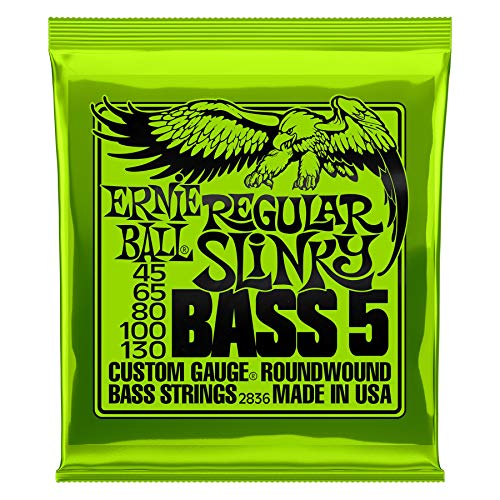
On 5-string instruments, the low B needs clarity and sustain. Ernie Ball’s 45-130 set gives a full low end without flabbiness. I’ve used them live where the bass needed to anchor low-tuned metal parts and still cut through chorus and distortion.
The wound G, D, and A respond well to both fingerstyle and pick attack. These feel balanced across the strings, which helps when switching between riffing and melodic lines. If you play 5-string metal, they’re a reliable workhorse.
Pros:
- Solid low B clarity and punch
- Even tension across five strings
- Good sustain for low-end riffs
- Versatile for various playing styles
- Trusted by many touring players
Cons:
- May require setup adjustments for perfect intonation
- Nickel wrap can darken with sweat
My Recommendation
I recommend this set if you use a 5-string bass for metal. I’ve found them reliable for low-tuned heavy music and clear enough to be heard in dense mixes. For the best bass guitar strings for metal on a 5-string, this is a go-to option for tone and durability.
| Best for | Why |
|---|---|
| 5-string metal players | Balanced tension and clear low B |
| Live low-end support | Good sustain and presence on stage |
| Versatile playing | Responsive for pick and finger techniques |
D’Addario NYXL 45-100

D’Addario NYXL strings are engineered for stability and strength. I trust them for heavy playing and alternate tunings because they resist breakage and stay in tune. They also offer a focused, punchy tone with a slightly tightened low-mid response.
They feel consistent in hand and translate pick attack into tight, articulate notes. For bassists who record or play aggressive metal live, NYXL gives a dependable, modern tone. They last longer than many standard sets in my experience.
Pros:
- Excellent tuning stability
- Durable and less prone to breakage
- Clear, focused tone for heavy music
- Good longevity under heavy use
- Consistent feel across strings
Cons:
- Higher price than standard sets
- Some players find them a bit too rigid initially
My Recommendation
NYXL strings are my pick for players who need reliability and a modern, tight tone. I use them when tuning down and for aggressive styles that push strings hard. They rank among the best bass guitar strings for metal because they combine strength, tone, and stability.
| Best for | Why |
|---|---|
| Heavy players | High tensile strength resists breakage |
| Studio tracking | Consistent tone and intonation for recording |
| Alternate tunings | Stable tuning even when retuning frequently |
D’Addario XL Nickel EXL170S

EXL170S is a long-standing, trusted nickel set. I like it for its balanced warmth and clear response. It’s a comfortable set for players who want a classic tone that isn’t too bright or too dull.
The set offers stable intonation and a smooth feel that helps articulate complex metal arrangements. It performs well both live and in the studio. If you prefer a vintage-leaning sound with modern reliability, this is a solid choice.
Pros:
- Warm, balanced tone ideal for vintage-influenced metal
- Comfortable feel for long sessions
- Good intonation and playability
- Proven reliability on road and studio
- Well-suited for hybrid playing styles
Cons:
- Not as bright as stainless options
- May not cut as sharply in very dense mixes
My Recommendation
I recommend these D’Addario nickel strings for players seeking a balanced, slightly warm metal tone. I use them when I want a classic character without sacrificing clarity. They’re among the best bass guitar strings for metal if you favor a vintage vibe with modern playability.
| Best for | Why |
|---|---|
| Vintage-leaning tones | Warm nickel sound with clear mids |
| Long practice sessions | Comfortable and forgiving feel |
| Hybrid players | Good for fingers and pick dynamics |
Ernie Ball Earthwood Acoustic 45-95
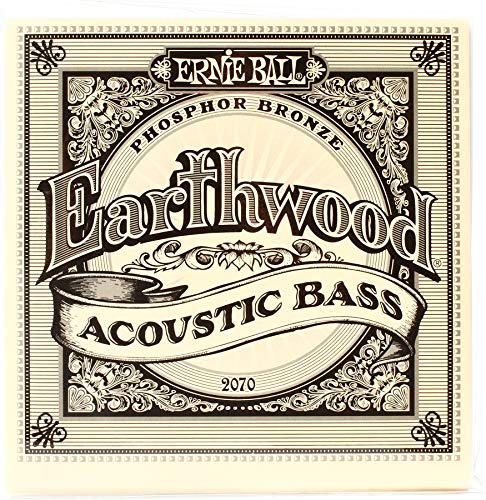
While primarily for acoustic basses, Earthwood strings can be useful for unplugged metal sets and acoustic-driven heavy music. I use them on acoustic basses that need a warm, rich tone with clear fundamentals. They’re phosphor bronze wound for natural acoustic resonance.
They aren’t ideal for electric metal with heavy distortion, but they excel in acoustic or semi-acoustic contexts. If you play unplugged heavy songs or need an acoustic bass voice, these perform well.
Pros:
- Warm, natural acoustic tone
- Good projection for unplugged settings
- Durable phosphor bronze winding
- Clear fundamental response
- Comfortable feel on acoustic fingerboards
Cons:
- Not suitable for electric metal distortion rigs
- Less sustain compared to electric sets
My Recommendation
Use Earthwood when you play acoustic or unplugged metal arrangements. I recommend them if your heavy music includes unplugged segments or acoustic bass parts. They aren’t the usual choice among the best bass guitar strings for metal, but they shine in acoustic-heavy contexts.
| Best for | Why |
|---|---|
| Acoustic metal | Natural warmth and projection for unplugged sets |
| Recording acoustic bass | Clear fundamentals for miking and DI |
| Players with semi-acoustic basses | Designed for acoustic resonance |
D’Addario XL Chromes Flatwound 45-100

Flatwound strings are an acquired taste for metal, but they serve a purpose. I use XL Chromes when a smooth, subdued top end is needed — think doom, gothic, or retro heavy tones. These reduce finger noise and produce a focused low-mid presence.
They’re less bright, so they won’t cut like stainless or plain nickel sets. But for players seeking a smoother attack and rounded tone, they’re invaluable. They also last long and resist grime build-up.
Pros:
- Smooth, mellow tone with reduced finger noise
- Excellent longevity and resistance to grime
- Great for dark, slow metal styles
- Solid low-mid focus for rhythm work
- Comfortable under fingers for sustained lines
Cons:
- Less attack and cut in dense mixes
- Not ideal for fast, punchy metal tones
My Recommendation
Consider flatwounds if you play doom, sludge, or old-school metal that benefits from a fat, smooth tone. I use them to mellow out harsh amp distortion and emphasize low-mid weight. They’re a niche but valuable option among the best bass guitar strings for metal for darker styles.
| Best for | Why |
|---|---|
| Doom and sludge metal | Warm, rounded tone without harsh top end |
| Vintage tones | Subdued attack and long life |
| Studio low-noise work | Minimal finger noise for clean takes |
Ernie Ball Super Slinky (Alt Listing)
This alternate listing of Super Slinky behaves like the main set I reviewed earlier. I keep a spare pack of these for quick gauge swaps. They offer playability and clarity that helps in fast, technical metal passages.
If you like the Super Slinky feel, this listing is an easy way to restock. I appreciate the consistent build and predictable tone across batches. They’re dependable and quick to break in at rehearsal.
Pros:
- Same fast feel and clear attack as main Super Slinky
- Good for rapid technique and complex riffs
- Quick break-in and stable playability
- Widely available and affordable
- Light gauge helps with bends and vibrato
Cons:
- Not as suitable for very low tunings
- May wear out faster under heavy use
My Recommendation
Pick this if you love Super Slinky feel and need a dependable extra pack. I use it for quick swaps between gigs. They’re counted among the best bass guitar strings for metal for speed and clarity, especially in standard and slightly dropped tunings.
| Best for | Why |
|---|---|
| Spare sets | Consistent feel and tone for quick replacement |
| Technical metal | Light gauge aids fast playing |
| Budget restocking | Affordable and widely available |
D’Addario NYXL Alternate Pack
This NYXL listing offers the same high-strength strings I trust for heavy use. I often buy multiples for tour spares. The tone is tight and focused, which helps maintain definition when distortion is thick.
I like how they stay true to pitch after aggressive play and frequent tuning changes. The build quality means less downtime due to snapped strings. For demanding metal gigs, NYXL is one of my go-to choices.
Pros:
- High tensile strength and stable tuning
- Focused tone ideal for heavy distortion
- Long-lasting with consistent feel
- Great for lower tunings and alternate setups
- Trusted by touring musicians
Cons:
- Higher cost relative to basic sets
- Rigid feel may take getting used to
My Recommendation
Buy NYXL if you need dependable strings that survive heavy use. I recommend them among the best bass guitar strings for metal for their combination of strength and tone. They pay off by reducing string-related issues on tour and in the studio.
| Best for | Why |
|---|---|
| Touring pros | String strength reduces breakage on the road |
| Heavy tunings | Holds pitch under increased tension |
| Recording | Consistent tone for takes |
Ernie Ball Earthwood Alternate
This alternate Earthwood listing is the same phosphor bronze acoustic set I use for unplugged metal sessions. I keep one for acoustic tours. They give the right tonal warmth for unplugged arrangements without sounding thin.
They’re not for distorted electric setups, but in acoustic heavy music they shine. If your band does an acoustic segment, swap to these to get a natural bass voice that supports acoustic guitars and vocals.
Pros:
- Rich acoustic tone for unplugged songs
- Durable phosphor bronze winding
- Good projection and clarity for acoustic bass
- Comfortable playability for fingerstyle
- Perfect for duo or unplugged performances
Cons:
- Not designed for heavy electric distortion
- Lower sustain compared to electric sets
My Recommendation
Use this Earthwood alternate if you need an acoustic bass voice for metal unplugged sets. I recommend it for players who switch between electric and acoustic roles. While not in the mainstream list of the best bass guitar strings for metal, it’s essential for acoustic-heavy contexts.
| Best for | Why |
|---|---|
| Unplugged sets | Natural, warm acoustic tone |
| Acoustic recording | Balanced fundamentals for miking |
| Duo performances | Supports vocals and acoustic guitars |
D’Addario XL Chromes Alternate
This alternate flatwound listing matches the earlier Chromes review. I reach for flatwounds when a smoother, darker bass voice suits the music. They reduce finger noise and keep the bottom end focused.
Flatwounds excel in styles that avoid harsh attack. I use them in slow or mid-tempo heavy songs where density matters more than top-end sparkle. They last long and stay comfortable under fingers for long takes.
Pros:
- Subdued attack with focused low-end
- Long lifespan and low maintenance
- Great for dark, heavy sub-genres
- Less finger noise during recording
- Comfortable feel for sustained lines
Cons:
- Lacks bite for fast, punchy metal
- May need amp EQ to add presence
My Recommendation
Choose flatwounds for doom or vintage-influenced metal where warmth and smoothness matter. I consider them among the best bass guitar strings for metal in those specific contexts. They’re a specialty option that delivers when you want to avoid harsh top end.
| Best for | Why |
|---|---|
| Slow heavy styles | Warm, muted attack supports dense mixes |
| Recording clean takes | Minimal string noise for mics and DI |
| Players seeking longevity | Durable construction and less grime build-up |
Ernie Ball Regular Slinky (Short Alt)
This short alternate listing behaves just like the full Regular Slinky set. I keep one for short-scale instruments or as a quick swap. They perform consistently on shorter scale basses while maintaining a familiar tone.
If you use a short-scale bass in heavy music, these strings adapt well. They retain clarity and responsiveness. They’re practical for players who alternate between long and short scale instruments.
Pros:
- Consistent Regular Slinky tone on short scales
- Good for short-scale bass playability
- Reliable feel and tuning stability
- Affordable and easy to find
- Work well for gigging and practice
Cons:
- Shorter scale may need different gauge choices
- Possible need for setup tweaks on some instruments
My Recommendation
If you have a short-scale bass, this Regular Slinky variant is a sensible pick. I recommend it for players who want the classic Slinky voice on smaller instruments. It’s among the best bass guitar strings for metal when you need familiar tone on non-standard scale lengths.
| Best for | Why |
|---|---|
| Short-scale basses | Adapts Regular Slinky feel for shorter necks |
| Players alternating basses | Consistent tone across instruments |
| Gigging flexibility | Easy to swap during quick changes |
FAQs Of best bass guitar strings for metal
What gauge is best for metal bass?
Heavy gauges like 50-105 or 45-130 give more low-end and tension. I use lighter gauges for speed, but heavier sets for low tunings and punch. Choose based on tuning and playing style.
Are stainless or nickel strings better for metal?
Stainless steel cuts brighter and resists corrosion. Nickel is warmer. For cutting through distorted guitars, stainless often helps, but nickel suits vintage tones. I pick based on desired brightness and feel.
How often should I change strings for metal gigs?
I change strings every 6–12 gigs or sooner if you notice dullness or corrosion. Heavy playing and sweat speed wear, so inspect strings regularly and swap before important shows.
Do flatwounds work for metal?
Yes, for slow, heavy styles like doom and gothic metal. Flatwounds reduce attack and finger noise, offering a fat, rounded low end. They’re not ideal for fast, punchy metal.
Can I tune down with light gauge strings?
You can, but expect lower tension and possible flabbiness. I prefer heavier gauges for drop tunings to maintain clarity and tuning stability. If you prefer light gauges, raise string tension or use a longer scale bass.
Final Verdict: Which Should You Buy?
For most metal players, Ernie Ball Regular Slinky and D’Addario NYXL are top choices. Regular Slinky gives a classic balance, while NYXL adds strength and modern focus for heavy use.
If you need bright cut and corrosion resistance, choose stainless sets; for a warm vintage vibe pick nickel or flatwounds. Overall, these options represent the best bass guitar strings for metal depending on your style and tuning.