
Who Is The Inventor Of The Guitar: History Revealed 2026
The guitar does not have a single inventor; it evolved over thousands of years from ancient stringed instruments.
Tracing the lineage of the guitar is like trying to map the family tree of a nomad. As a lifelong musician who has spent decades restoring vintage instruments, I have often wondered about the exact roots of this beautiful machine. We want a tidy origin story—one person in a workshop who invented the guitar. But the real story is broader and more human. Millions of hands, across centuries and continents, refined the idea of a neck, a soundboard, and strings. By following how early tanburs, lutes, and vihuelas turned into the modern acoustic and electric guitars, you will hear more detail in every chord you play. Let’s pull back the curtain on this long evolution and name the key builders, cultures, and innovations behind the instrument we love.

The Ancient Ancestors of the Guitar
Before the guitar was a household name, it was a simple idea: stretch strings over a resonant body and add a neck to change pitch. Historians point to instruments such as the tanbur, oud, and early lutes as the distant grandparents of the guitar. These instruments used hollow bodies and necks to amplify plucked strings. They appear in the archaeological and artistic record across the Middle East, North Africa, and Europe.
The move toward what we now call a guitar picked up in the Middle Ages. The European lute family and the Iberian vihuela were especially important. The vihuela was a Spanish instrument shaped much like early acoustics. It acted as a bridge between medieval string instruments and the refined classical guitars of later centuries.
Early stringed instruments: tanbur, oud, lute
The tanbur and oud are ancient. They influenced construction and tuning. Craftspeople in ancient Persia, Arabia, and the Mediterranean shaped the first necked plucked instruments. Wood choices, gut or silk strings, and simple bridges carried across regions. These early designs added ideas—rounded backs, flat tops, frets—that luthiers would reuse and refine for centuries.
Medieval and Renaissance developments
During the Renaissance, luthiers across Europe experimented with body shape, stringing, and fretting. The lute family diversified. The vihuela emerged in Spain. It looked and played like a guitar in many ways. Musicians wrote music specifically for it. This period sowed the seeds of modern guitar tuning, technique, and repertoire.
The Spanish Influence and Antonio de Torres
If anyone deserves the title “father of the modern guitar,” it would be Antonio de Torres Jurado. In the mid- to late-19th century, Torres changed guitar design in ways that still matter. Before Torres, guitars were smaller, softer, and less stable. He increased body size. He refined the top’s internal bracing. These changes made the sound louder and more even.
Torres perfected a bracing pattern called fan bracing. This let the soundboard vibrate more freely. The result was a warmer, more balanced tone. When I picked up a well-made Torres-style guitar for the first time, the difference was immediate. The instrument had projection, richness, and clarity. Torres did not invent the guitar itself. But he gave it the voice that classical players and songwriters still seek today.
How Torres’s changes affect tone and playability
Fan bracing and a larger soundbox changed how the guitar responded. Lower volume in small, early guitars came from stiff tops and weak bracing. Torres’s approach used thin, well-carved tops and carefully placed braces. This yielded more resonance and sustain. Luthiers after him copied and refined these ideas. That’s why classical guitars and flamenco instruments still trace their lineage to Torres.
Legacy: the Spanish guitar tradition
Spain became a center for guitar-making. Luthiers like Torres set standards for tone, scale length, and playability. The Spanish classical guitar developed a distinct identity. It fed back into world music, classical repertoire, and folk traditions. Today’s classical guitarists still rely on this design heritage.

Evolution to the Electric Guitar
The push to be louder helped create the electric guitar. Jazz and big bands made it hard for acoustic guitars to be heard. Inventors looked for new solutions. They moved from hollow chambers to pickups and solid bodies. George Beauchamp and Adolph Rickenbacker were early pioneers in converting string vibrations into electrical signals.
Electromagnetic pickups changed everything. They let players plug into amplifiers and effects. Later innovators, such as Les Paul and Leo Fender, developed new solid-body designs and mass production methods. These changes made the guitar central to blues, jazz, rock, and pop music.
Key inventors and milestone models
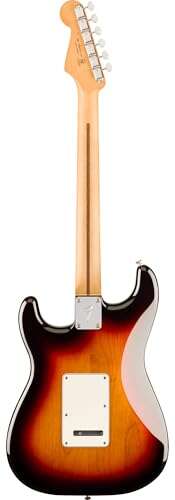
George Beauchamp and Adolph Rickenbacker built some of the first commercially viable electric guitars and lap steels in the 1930s. In the 1940s and 1950s, Les Paul and Leo Fender introduced solid-body electrics that became icons. The Gibson Les Paul and Fender Telecaster/Stratocaster are classic examples. These instruments shaped tone, technique, and music history.
How pickups and electronics work
Pickups use magnets and coils to sense string motion. Vibrating metal strings disturb the magnetic field. The coil converts that motion into an electrical signal. That signal travels to an amp. There, players shape volume and tone with electronics. Amplification removed the need for a resonant body to create volume. Builders then focused on sustain, feedback control, and electronic tone shaping.

Frequently Asked Questions of who is the inventor of the guitar
Did Leonardo da Vinci invent the guitar?
No. There is no historical evidence that Leonardo da Vinci invented the guitar. He sketched many devices and instruments. But guitars and guitar-like instruments existed long before his time. His drawings show curiosity, not invention of the guitar.
Was the guitar invented in Spain?
Spain played a major role in shaping the modern classical guitar. The evolution of the vihuela and the work of Spanish luthiers such as Antonio de Torres helped standardize the instrument. Still, the guitar’s roots stretch far beyond Spain. The instrument evolved through contributions from the Middle East, North Africa, and many parts of Europe.
What is the oldest guitar still in existence?
The oldest guitar-like instrument often cited is the Vihuela de Mano from the late 15th century. One notable example is kept at the Jacquemart-André Museum in Paris. Instruments from the lute family and other early examples give us clues about construction and tuning in earlier periods.
Why do people think there is only one inventor of the guitar?
It is simpler to credit a single inventor. Stories like that are neat and memorable. But the guitar is the product of slow, cumulative change. Craftsmen, players, and communities across centuries made incremental improvements. That collective process resists being pinned to one name.
How has the guitar changed since its invention?
The guitar changed from a fragile, quiet instrument to a durable, loud, and versatile musical tool. Key changes include improved bracing, better woods and adhesives, standardized scales and frets, and electronic amplification. These innovations expanded tonal range and durability. They also widened the guitar’s role across music styles—from baroque and folk to rock and jazz.
Additional FAQs: common questions about guitar origins and makers
Who were important luthiers after Torres?
After Torres, many luthiers in Spain and elsewhere improved techniques and details. Makers in Madrid and Valencia explored different woods and varnishes. 20th-century builders like C.F. Martin adapted bracing ideas for steel-string acoustics. In the electric era, guitar manufacturers such as Gibson and Fender set standards for solid-body construction.
When did the acoustic steel-string guitar appear?
The acoustic steel-string guitar rose in popularity in the 19th and early 20th centuries. C.F. Martin and other American makers adapted bracing patterns and built sturdier necks for steel strings. These changes increased volume and changed tone. The steel-string acoustic became the backbone of folk, country, and popular music.

Conclusion
The guitar is a living record of human curiosity. No single person can claim sole credit. Instead, it is the sum of many ideas. Ancient artisans, Spanish luthiers, American makers, and electronic pioneers all added pieces. That is why the guitar serves so many genres and voices.
Understanding this history deepens respect for the craft behind every note. It also helps you make better choices as a player—about instruments, setup, and tone. Pick up your guitar today and explore its voice. Know that when you play, you join a long and vibrant tradition. Keep practicing, keep learning, and don’t forget to share your favorite musical moments in the comments below.

Senior Music Reviewer
Alex Carter is a seasoned music reviewer with over a decade of experience in the world of sound and instruments. Passionate about helping musicians and enthusiasts make informed choices, he brings sharp insights and in-depth knowledge to every review. From classical instruments to modern gear, Alex combines technical expertise with a love for music to deliver content that resonates with readers.
As a Senior Music Reviewer and expert author on Tuneluma.com, Alex is dedicated to sharing honest evaluations, practical advice, and thoughtful commentary to guide readers in their musical journey.