How To Clean Piano Keys Without Damage: Safe Tips
Use a soft microfiber cloth, distilled water with mild soap, and dry promptly.
I’ve cleaned dozens of keyboards and worked with piano techs to help you learn how to clean piano keys without damaging them. This guide explains safe methods for plastic and older ivory keys, the right supplies, step-by-step instructions, stain fixes, and what to avoid. Read on for clear, tested advice you can trust.

Understanding piano key materials and why care matters
Piano keys are made from different materials. Modern pianos use plastic or acrylic for white keys and phenolic or ebony for black keys. Older or high-end instruments may use ivory and ebony. Each material reacts differently to moisture, heat, and solvents.
Knowing which key material you have changes how to clean them. The method you use for how to clean piano keys without damaging them depends on whether keys are plastic or ivory. Wrong cleaners can warp, stain, or crack keys. Handle keys gently and test first on a hidden spot.
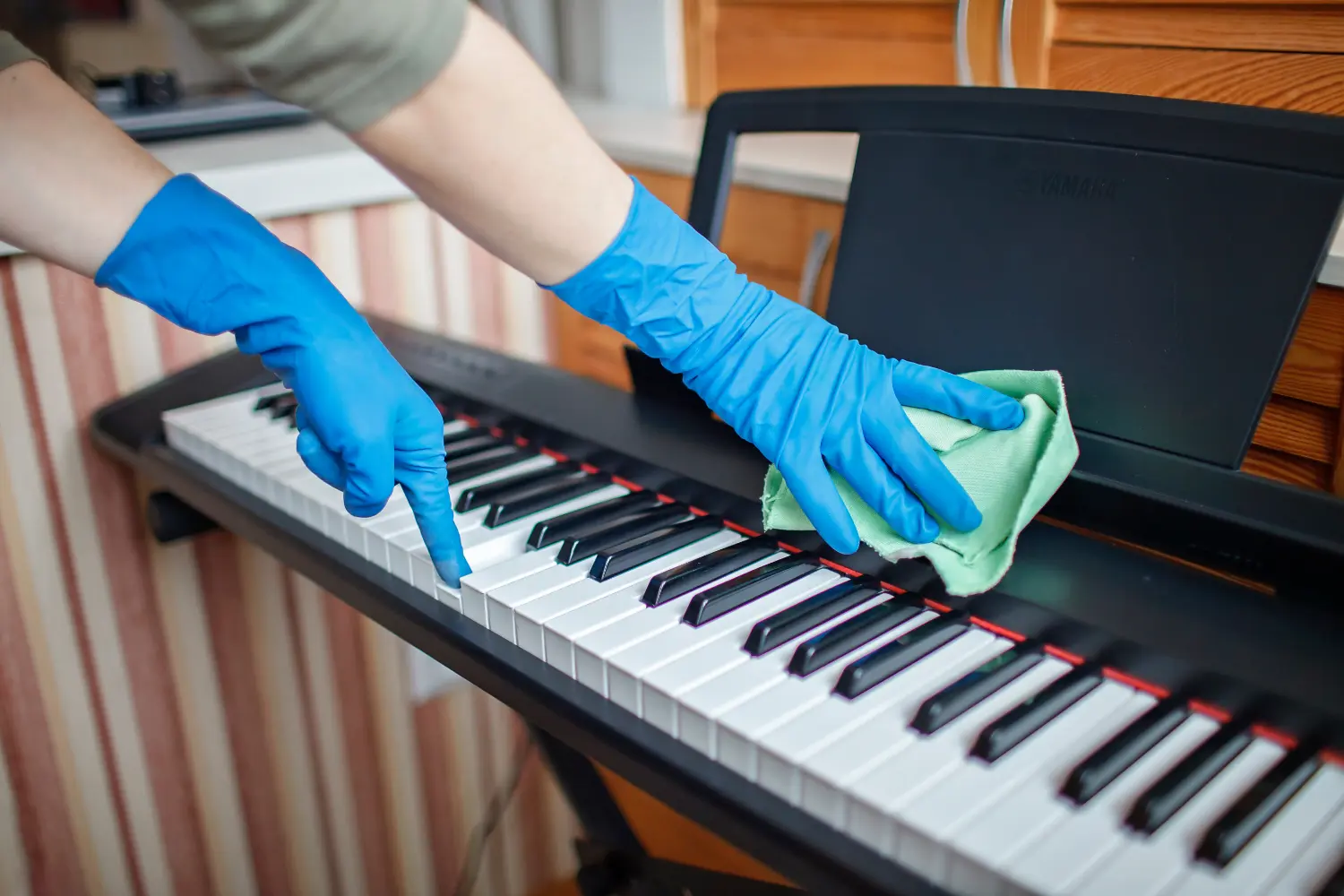
Supplies you’ll need (safe and simple)
Gather these items before you start. Use only what you need. Less is better.
- Soft microfiber cloths (two or three)
- Distilled water (no minerals)
- Mild dish soap (a drop for a cup of water)
- 70% isopropyl alcohol (only for plastic keys, used sparingly)
- Cotton swabs and soft toothbrush
- Small bowl and spray bottle
- Rubber gloves (if you prefer)
- Toothpicks wrapped in tissue to clean gaps
- Soft lint-free towel for drying
These supplies let you follow best practices for how to clean piano keys without damaging them. Avoid household cleaners with bleach, ammonia, or strong solvents.
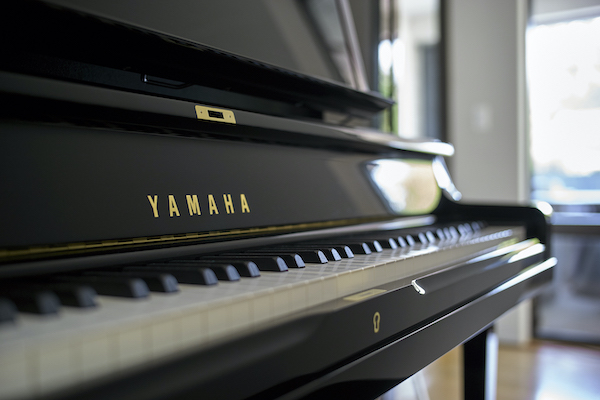
Step-by-step: cleaning plastic keys safely
Plastic keys are common and easier to clean. These steps show how to clean piano keys without damaging them when they are plastic.
- Dust first
- Close the lid and use a soft cloth to remove dust and loose dirt.
- Prepare cleaning mix
- Mix 1 cup distilled water with one drop of mild dish soap. Use a spray bottle for control.
- Wipe keys
- Lightly mist the cloth — never spray keys directly. Wipe each key from back to front with the damp cloth.
- Use cotton swabs for gaps
- Dip swabs in the solution and clean between keys gently.
- Disinfect if needed
- For plastic keys, lightly dampen a cloth with 70% isopropyl alcohol and wipe keys. Do not soak.
- Dry immediately
- Wipe with a dry microfiber cloth. Ensure no moisture remains.
Follow this method every few months or when visibly dirty. Practicing these steps helps you learn how to clean piano keys without damaging them.

Step-by-step: cleaning ivory and older keys (very gentle)
Ivory needs far more care. If you have an older piano, treat ivory keys carefully. These steps explain how to clean piano keys without damaging them when keys are ivory.
- Confirm the material
- Ivory often has a slight texture and age patina. If unsure, consult a professional.
- Dust gently
- Use a dry microfiber cloth only. Avoid scraping.
- Mild damp cleaning
- Mix a teaspoon of mild dish soap in a cup of distilled water. Dampen a cloth lightly and wring it until nearly dry.
- Wipe with care
- Wipe quickly along the key surface. Do not let water sit on the ivory.
- Dry at once
- Use a dry cloth to remove any moisture. Let keys air-dry fully before closing the lid.
- Avoid alcohol and strong cleaners
- Do not use isopropyl alcohol, bleach, or heavy solvents on ivory.
When you need deeper restoration, a trained piano technician or conservator is the safe choice. These actions reduce the chance of harm and teach you how to clean piano keys without damaging them.

Tackling deep stains and yellowing
Stains and yellowing come from oils, sweat, sunlight, and age. Handle them with care.
- Light surface stains
- Use the mild soap solution and a soft toothbrush to rub gently. Rinse the cloth and remove soapy residue. Dry immediately.
- Persistent stains on plastic
- A paste of baking soda and water can help. Rub gently with a soft cloth, rinse, and dry.
- Yellowing on ivory or severe discoloration
- This often needs professional attention. Home bleaching methods risk damage. Contact a piano restorer for safe whitening.
- When to seek a pro
- If keys lift, warp, crack, or if staining penetrates deeply, stop and call an expert.
Knowing when to stop is part of knowing how to clean piano keys without damaging them. Small fixes are fine at home; big issues need pros.

Maintenance habits that protect keys
Good habits reduce cleaning frequency and extend key life.
- Wash hands before playing
- Clean hands lower oil transfer and grime.
- Keep drinks and food away
- No cups near the keyboard.
- Use a keyboard cover or close the lid
- Covers keep dust off between sessions.
- Control humidity and temperature
- Stable humidity prevents warping of wood and ivory.
- Schedule gentle cleanings
- Wipe keys lightly weekly. Deep clean every few months if needed.
These steps make it easier to maintain and show how to clean piano keys without damaging them in the long term.

Common mistakes to avoid
Avoid these frequent errors to protect your keys.
- Spraying cleaners directly on keys — this lets moisture seep into gaps.
- Using bleach, ammonia, or harsh solvents — these strip finishes and can crack ivory.
- Scrubbing hard with abrasive pads — these scratch surfaces.
- Over-wetting or soaking ivory keys — water swells and lifts veneers.
- Ignoring professional help — complex damage usually needs a pro.
Avoiding mistakes is a fast way to learn how to clean piano keys without damaging them.
Quick questions you might have (PAA-style)
Q: Can I use disinfectant wipes on piano keys?
A: On plastic keys, use wipes sparingly and test a small area. Avoid wipes on ivory.
Q: How often should I clean keys?
A: Light wipe-downs weekly are good. Deep cleaning every few months is enough for most homes.
Q: Will olive oil restore yellowed ivory?
A: No. Oils can darken keys and attract dirt. Use a pro for restoration.
Frequently Asked Questions of how to clean piano keys without damaging them
Are cotton swabs safe to use between keys?
Yes. Cotton swabs dampened with a mild solution are safe for cleaning the gaps. Move gently to avoid pushing liquid into the action.
Can I use alcohol to disinfect my piano keys?
Use 70% isopropyl alcohol only on plastic keys and sparingly. Avoid alcohol on ivory and wood surfaces to prevent damage.
How can I tell if my keys are ivory or plastic?
Ivory often has tiny grain lines and a warm feel. Plastic looks uniform and feels cooler. When unsure, consult a technician.
Is it okay to use a steam cleaner on piano keys?
No. Steam introduces moisture and heat that can warp keys and damage the action. Stick to dry or lightly damp methods.
What should I do if a key becomes sticky after cleaning?
Wipe the key with a dry microfiber cloth to remove residue. If stickiness persists, have a technician inspect the action for deeper issues.
Conclusion
Cleaning keys the right way keeps your piano sounding and feeling its best. Use mild solutions, soft cloths, and cautious methods tailored to plastic or ivory. When in doubt, test a hidden spot and call a professional for complex problems. Start small: wash your hands, wipe keys regularly, and follow the step-by-step guidance here to protect your instrument.
Try these tips today and leave a comment about your best cleaning win or a question you want answered. Subscribe for more practical piano care advice.

Senior Music Reviewer
Alex Carter is a seasoned music reviewer with over a decade of experience in the world of sound and instruments. Passionate about helping musicians and enthusiasts make informed choices, he brings sharp insights and in-depth knowledge to every review. From classical instruments to modern gear, Alex combines technical expertise with a love for music to deliver content that resonates with readers.
As a Senior Music Reviewer and expert author on Tuneluma.com, Alex is dedicated to sharing honest evaluations, practical advice, and thoughtful commentary to guide readers in their musical journey.