How To Play Faithfully On Piano: Accurate Performance Tips
Play accurately, honor the score, listen widely, and shape your choices with informed taste.
I have taught piano and performed for many years, helping students learn how to play faithfully on piano. This guide combines practical tips, clear steps, and real-life examples to help you read a score, build sound, and make musical choices that honor the composer while still sounding alive. Read on for a full plan you can use at the piano today.

What "playing faithfully" means
Playing faithfully on piano means honoring the composer's markings, style, and intent. It also means using informed taste when the score is silent. Faithful playing balances literal reading of the score with historical and musical awareness.

Core skills to develop to play faithfully on piano
Build a set of clear, practical skills.
- Score reading and harmonics sense. Know the form and harmonic flow before you play.
- Technical control. Finger strength, evenness, and clean articulation let you follow the text.
- Rhythm and pulse. Steady time makes any faithful interpretation believable.
- Tone and touch. Vary touch to match dynamics and style.
- Pedal control. Clean half-pedaling or sync with harmony avoids blur.
- Historical style knowledge. Baroque, Classical, Romantic, and modern music need different approaches.

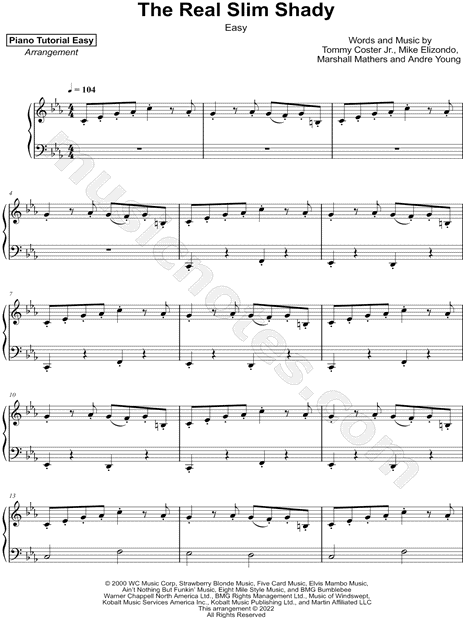
Source: sheetmusicdirect.com
Practice strategies to play faithfully on piano
Practice with goals that match fidelity, not just speed.
- Slow practice with clarity. Play at a tempo where every note and marking is clear.
- Hands separate, then together. Solve technical and voicing issues independently.
- Mark the score. Highlight dynamics, rubato spots, and pedaling choices you will test.
- Use varied rhythm practice. Change subdivisions to fix tricky spots.
- Record and listen. Compare your version to the score and to reliable performances.
- Mental rehearsal away from the piano. Hear the music in your head to lock in intent.

Source: youtube.com
PAA-style questions
How long will it take to play faithfully on piano?
Results depend on background and piece difficulty. With focused work, basic fidelity can appear in weeks; deep stylistic fluency takes months to years.
Do I need to copy a famous recording to be faithful?
No. Use recordings as guides. The goal is to understand choices, not to imitate every detail.
Is strict adherence always best?
Not always. When the score lacks detail, informed choices that aid clarity and structure are part of being faithful.

Interpreting the score while staying faithful
Learn to read what is written and why.
- Dynamic and articulation markings are primary clues to intent. Follow them first.
- Editorial markings and fingerings may be suggestions. Compare editions when possible.
- Ornamentation needs context. Baroque ornament signs differ from Romantic ones.
- Silence and rests are as important as notes. Keep them clean and meaningful.
Making expressive choices that remain faithful
You can be expressive while staying true to the score.
- Use tasteful rubato to highlight phrases, not to hide weak technique.
- Shape phrases around harmonic change points. Let tension and release guide dynamics.
- Respect tempo markings but test small adjustments for musical logic.
- Add tasteful ornamentation only if it fits style and era.
From my experience teaching recitals, small, musical adjustments often win over flashy but unfocused liberties.
Tools and resources that help you play faithfully on piano
Use simple tools to check your fidelity.
- A reliable metronome to maintain pulse.
- Critical editions to see composer intent and variants.
- Reference recordings from respected artists for stylistic context.
- A teacher or coach for outside feedback and historical guidance.
- Score study apps and slow-down audio tools for detailed listening.
Common mistakes and how to fix them
Spot common errors early and correct them with practice.
- Over-rubato that loses structure — fix with metronome and phrase mapping.
- Ignoring articulations — slow practice and accent drills restore clarity.
- Over-pedaling that creates blur — practice with no pedal, then add short pedaling.
- Relying on one recording — listen to multiple takes and read the score.
Sample 4-week plan to play faithfully on piano
A simple plan helps you build steady progress.
Week 1: Score study and slow hands-separate practice. Mark every dynamic and pedal.
Week 2: Bring hands together, focus on voicing and evenness. Record twice.
Week 3: Add stylistic touches, test rubato spots, compare editions.
Week 4: Mock performance. Play through with performance dynamics and tempo.
Repeat the cycle for each new piece. This method trains both skill and taste.
Frequently Asked Questions of how to play faithfully on piano
What does "faithful" mean versus "strict"?
Faithful means true to the score and style. Strict means rigid. Faithful playing preserves musical life while honoring the text.
How do I choose between editions?
Compare markings, check early editions, and use the editor's notes. When in doubt, follow the version closest to the composer's time.
Can I add personal flair and still be faithful?
Yes. Personal flair should stem from musical logic. Small touches that clarify form often enhance faithfulness.
Should I always trust my teacher's view on fidelity?
Teachers are guides, not infallible authorities. Use their feedback, then test choices against the score and historical evidence.
How much should I rely on recordings?
Use recordings to learn context and phrasing. Do not copy them note-for-note. Let recordings inform, not dictate, your interpretation.
How do I handle missing dynamics or phrasing marks?
Study the harmony and form. Add phrasing that highlights direction and contrast while staying simple and logical.
When should I prioritize tone over exact velocity on the keys?
Prioritize tone when it serves clarity and balance. Exact velocity is secondary if tone supports musical shape.
Conclusion
Playing faithfully on piano combines careful score study, focused technical work, and informed expressive choices. Start small: read the score fully, practice slowly, record, and compare. Apply these steps consistently and you will build trust in your musical decisions. Try the four-week plan on one piece and watch your fidelity and confidence grow. Leave a comment with your questions, or try a new piece this week and share your results.

Senior Music Reviewer
Alex Carter is a seasoned music reviewer with over a decade of experience in the world of sound and instruments. Passionate about helping musicians and enthusiasts make informed choices, he brings sharp insights and in-depth knowledge to every review. From classical instruments to modern gear, Alex combines technical expertise with a love for music to deliver content that resonates with readers.
As a Senior Music Reviewer and expert author on Tuneluma.com, Alex is dedicated to sharing honest evaluations, practical advice, and thoughtful commentary to guide readers in their musical journey.