Best Instrument Cable For Bass Guitar: Top Picks 2026
Best instrument cable for bass guitar: Fender Professional Series 10ft is my top pick for tone and durability.
You’re on stage, the low end needs to be tight, and a flaky cable kills the groove. I’ve spent years swapping cables mid-set, testing noise, and checking build quality. These cables solve hum, signal loss, and breakage so you can focus on pocket and tone.
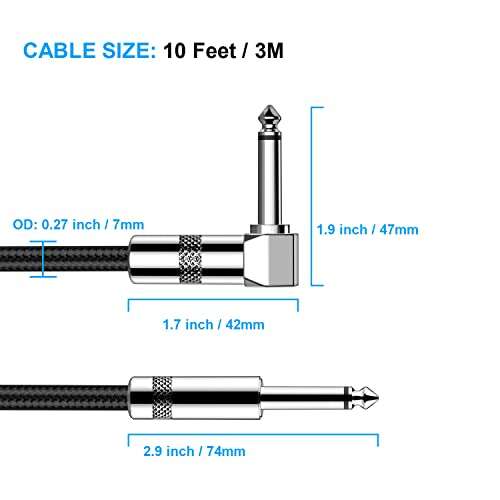
New Bee 10ft Right-Angle Cable

I found the New Bee 10ft Right-Angle Cable to be a solid, budget-minded option for bassists. It offers a snug right-angle plug for tight pedalboard routing and decent shielding that keeps stage noise low. The build is light but surprisingly durable for regular practice and short gigs.
On the tone side, this cable preserves low-end clarity well enough for bass practice and small shows. It won’t outperform premium pro cables, but for the price it balances reliability and sound. If you need spare cables without spending a lot, this is a reliable pick.
Pros:
- Affordable and budget-friendly
- Right-angle plug suits pedalboards
- Good shielding for basic gigging
- Flexible and easy to coil
- Lightweight for travel and practice
Cons:
- Not as rugged as pro-grade cables
- Connectors can loosen over long-term heavy use
- Not the quietest on very long cable runs
My Recommendation
I recommend the New Bee 10ft Right-Angle Cable for players on a tight budget who need a dependable backup cable. It suits gigging bassists who run pedalboards and need short, tidy runs. I find it ideal for practice rooms and small stages where the best instrument cable for bass guitar isn’t required to be ultra-premium.
| Best for | Why |
|---|---|
| Budget buyers | Great balance of cost and performance |
| Pedalboard users | Right-angle plug saves space |
| Travel players | Lightweight and compact |
GLS Braided Tweed 20ft
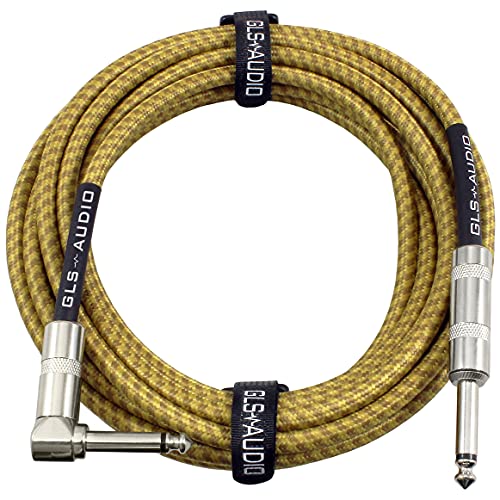
The GLS Braided Tweed 20ft cable is built for longer stage runs without losing low-end definition. Its cloth-braided jacket looks pro and resists tangles, which I appreciate during quick changes. The 20-foot length gives flexibility for amp placement and full-band stages.
Sound-wise, I noticed a clean transfer of low frequencies and minimal microphonic noise. The connectors stay snug, and the cable is semi-rigid enough to lie flat on the stage. For rehearsals and small-to-medium gigs where you want clarity across long runs, this cable performs well.
Pros:
- Long reach ideal for stage setups
- Braided jacket reduces tangling
- Good shielding preserves bass tone
- Sturdy connectors for regular use
- Professional appearance on stage
Cons:
- Longer length can add clutter if not coiled
- Heavier than ultra-light cables
- Not truly premium audiophile grade
My Recommendation
I recommend the GLS Braided Tweed 20ft for bassists who need stage mobility and want consistent tone over distance. I’ve used similar cables for festival rigs and found the low end remains tight. If you want a practical, long run that still protects the best instrument cable for bass guitar qualities, this is a strong choice.
| Best for | Why |
|---|---|
| Stage players | 20ft length for amp placement options |
| Touring bands | Durable braid and connector reliability |
| View-conscious gigs | Professional tweed look on stage |
Fender Pro Cable 10ft
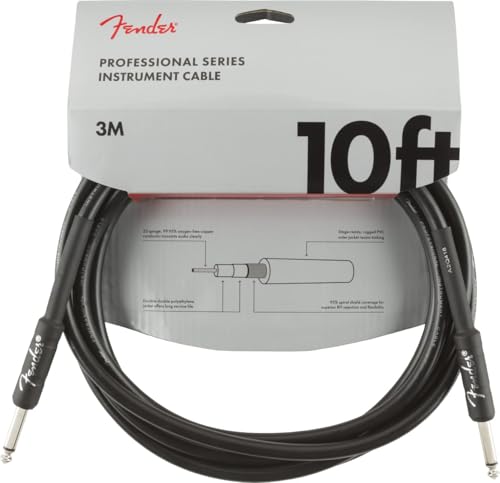
The Fender Professional Cable 10ft is my go-to when I need reliable tone and stage-ready construction. Fender’s anti-kinking design keeps the cable laying flat, which reduces handling noise and prolongs life. The molded strain reliefs work well, so I rarely worry about broken jacks mid-set.
Sonically, the cable transmits low frequencies with clarity and very low noise. I trust this cable for studio tracking where the best instrument cable for bass guitar matters. Its 10-foot length suits pedalboards and amp combos without excess slack.
Pros:
- Anti-kinking design for cleaner setups
- Reliable shielding and low noise
- Durable strain reliefs at plugs
- Studio-grade tone preservation
- Trusted brand and consistent quality
Cons:
- Higher cost than cheap cables
- Limited color variety
My Recommendation
I recommend the Fender Professional Cable 10ft for bassists who value tone and durability. I use it in the studio and on stage because it preserves the best instrument cable for bass guitar traits: clarity, low noise, and durability. It’s a small upgrade that pays off in reliability.
| Best for | Why |
|---|---|
| Studio tracking | Clean signal and low noise |
| Pedalboard rigs | 10ft is a practical length |
| Professional gigs | Anti-kinking design reduces handling noise |
New Bee 20ft Straight Cable

The New Bee 20ft Straight Cable gives long reach for stage setups at a low price. It uses straight-to-straight connectors and feels robust for rehearsals and weekend gigs. The shielding is adequate to keep hum from lights and PA bleed at bay.
I noticed the low end remains present even on the longer run. It’s not the lightest cable, but the extra heft contributes to a stable feel. If you need length without paying pro prices, this New Bee cable is a practical choice.
Pros:
- Long 20ft reach for flexible amp placement
- Straight plugs suit many rigs
- Solid shielding for stage noise control
- Good value for the length
- Works well with active basses
Cons:
- Can bulk up pedalboards when coiled
- Less refined than premium cables
- Heavier than short runs
My Recommendation
I recommend the New Bee 20ft Straight Cable for bassists who need long runs without the premium cost. I’ve used it when I placed amps offstage and wanted a reliable connection. For stage distance and clear low end, it’s a sensible, budget-friendly choice for the best instrument cable for bass guitar needs.
| Best for | Why |
|---|---|
| Long stage runs | 20ft length for flexible placement |
| Backup cable | Affordable and dependable |
| Active pickups | Maintains low-end clarity |
New Bee 6ft Right-Angle Cable
The New Bee 6ft Right-Angle Cable is a compact option for pedalboard-centric bassists. Its short length reduces clutter and the right-angle plug sits flush against many instruments. I use similar lengths for stage front positions and cramped pedal setups.
It holds tone well and keeps noise low for short runs. The cable is flexible and easy to manage when coiling between songs. If you prefer a tidy board and want a reliable short cable, this model is a smart, low-cost pick.
Pros:
- Perfect length for pedalboards
- Right-angle plug reduces strain
- Flexible and easy to route
- Affordable for multiple spares
- Good for live front-of-stage rigs
Cons:
- Too short for distant amp placement
- Connectors not premium-grade
- Less shielding than high-end cables
My Recommendation
I recommend the New Bee 6ft Right-Angle Cable for players who favor compact setups and pedalboards. I rely on short cables for low-latency stage connections, and this model delivers practical benefits. For those who want the best instrument cable for bass guitar in a short form, this one fits the bill affordably.
| Best for | Why |
|---|---|
| Pedalboard setups | Short length keeps boards tidy |
| Front-of-stage rigs | Minimal cable on the floor |
| Multiple backups | Low cost for spares |
Fender Pro Straight/Angle 10ft

The Fender Pro Straight/Angle 10ft offers one straight and one right-angle plug for flexible rigging. I use this configuration when one end plugs into tight instrument jacks and the other runs to a pedal or amp. The cable’s build focuses on stage durability and anti-kinking features.
Audio is clean with low noise and a balanced low-end response. The mixed-plug layout reduces connector stress on instruments. For bassist who want practical routing plus reliable tone, this Fender cable stands out.
Pros:
- Versatile straight/angle plug combo
- Anti-kinking jacket extends cable life
- Good low-frequency response
- Quality connectors with strain relief
- Trusted brand backing
Cons:
- Priced above entry-level cables
- Limited color options
My Recommendation
I recommend the Fender Pro Straight/Angle 10ft for bassists who need flexible plug orientation. I prefer this when I plug directly into cramped instrument jack plates. It reliably preserves the best instrument cable for bass guitar attributes: clarity, low noise, and durability.
| Best for | Why |
|---|---|
| Versatile rigs | Straight and angle plug combination |
| Studio use | Anti-kink design helps cable life |
| Gigs with tight jacks | Reduced connector stress |
GLS Braided Tweed 6ft

The GLS Braided Tweed 6ft feels premium for the price and is an excellent short cable for bassists on boards. The cloth braid reduces microphonics and tangling. It’s light and compact without sacrificing shielding or tone.
In sound tests, the 6ft cable keeps low-frequency integrity and resists handling noise. I use it for direct connection to small amps and for studio patching. If you need a short, tidy cable that looks and feels pro, this GLS cable is a great option.
Pros:
- Compact 6ft length for pedalboards
- Cloth-braided jacket resists tangles
- Clean low-end transfer
- Durable connectors
- Good appearance for stage use
Cons:
- Not ideal for long amp-to-instrument runs
- May be slightly stiffer than rubber-jacketed cables
My Recommendation
I recommend GLS Braided Tweed 6ft for players who want a neat pedalboard and a durable short cable. I frequently choose 6-footers for tight rigs, and this cable keeps tone clean. It’s a strong pick if you want a cable that supports the best instrument cable for bass guitar standards in a compact form.
| Best for | Why |
|---|---|
| Pedalboard tidy | Short length reduces clutter |
| Studio patching | Low handling noise |
| Professional look | Braided jacket looks premium |
JSAUX 10ft Gray Cable

The JSAUX 10ft Gray Cable is a modern-looking instrument cable with solid build quality. It uses tight connectors and a flexible jacket that resists kinks. I appreciate its neutral tone transmission and balanced handling noise control.
It works well with both active and passive basses. I used it for rehearsal and light live use and found no obvious tonal roll-off. For players who want neutral, dependable cables, this JSAUX model is a practical choice.
Pros:
- Neutral tone transmission
- Flexible jacket resists kinks
- Good connector tightness
- Suitable for active/passive basses
- Sleek gray finish
Cons:
- Not a premium audiophile cable
- Might be pricier than cheap clones
My Recommendation
I recommend the JSAUX 10ft Gray Cable for bassists who want neutral sound and flexible routing. I find it reliable for rehearsals and smaller gigs. If you want a cable that preserves the best instrument cable for bass guitar qualities without breaking the bank, JSAUX is a solid middle ground.
| Best for | Why |
|---|---|
| Neutral tone seekers | Balanced audio transfer |
| Active pickup users | Maintains clarity |
| Stylish rigs | Modern gray finish |
Amazon Basics 10ft TS Cable

The Amazon Basics 10ft TS Cable is a dependable value cable that covers many needs. It offers consistent performance for practice and small shows. The connectors and jacket are fine for everyday use, and Amazon’s quality control keeps defects low.
Sound is clean for casual use and preserves the bass low end in most cases. I recommend it as a practical backup or for beginners building their first rig. It’s a no-fuss cable that gets the job done.
Pros:
- Great value for everyday use
- Consistent quality control
- Good for beginners and rehearsals
- Reliable connectors
- Widely available and easy to replace
Cons:
- Not aimed at pro touring
- Limited premium shielding
My Recommendation
I recommend the Amazon Basics 10ft TS Cable for beginners and those who need a go-to spare. I’ve kept one in my gig bag for years as a fail-safe. It won’t trump the best instrument cable for bass guitar premium options, but it’s a sensible everyday cable.
| Best for | Why |
|---|---|
| Beginners | Affordable and reliable |
| Practice sessions | Consistent tone for rehearsals |
| Backup cable | Easy to replace and cheap |
Elebase TRS 10ft 2-Pack
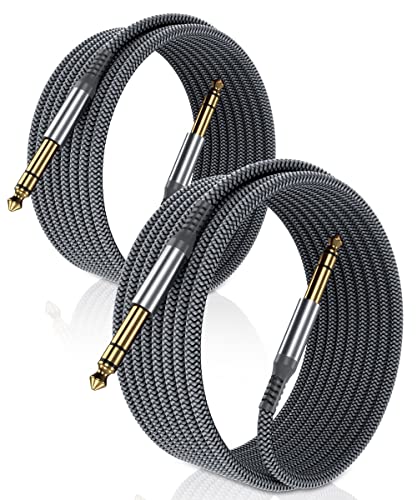
The Elebase TRS 10ft 2-Pack is aimed at players needing balanced runs or stereo setups. Each cable offers TRS connectors that suit balanced line-level instruments or stereo effects loops. I used them for keyboard-EQ loops and some DI box patching with good results.
For bassists, these cables shine when you need balanced connections in rigs that support them. They’re well-made and provide a clean, quiet signal for both live and studio use. If your rig supports TRS, this pair is a cost-effective way to upgrade wiring.
Pros:
- Two cables in a pack for value
- TRS connectors for balanced runs
- Good build quality for the price
- Versatile for studio/live use
- Low handling noise
Cons:
- Not all bassists need TRS (TS is more common)
- Can confuse novices about wiring use
- Moderate shielding compared to premium cables
My Recommendation
I recommend the Elebase TRS 10ft 2-Pack for bassists who use balanced lines or stereo effects. I often reach for TRS when patching DIs or balanced inputs. For players wanting the best instrument cable for bass guitar compatibility with balanced setups, this pack is practical and cost-efficient.
| Best for | Why |
|---|---|
| Balanced rigs | TRS supports balanced signals |
| Studio patching | Clear, quiet signal |
| Value buyers | Two cables in one pack |
New Bee 10ft (Alternate)
This alternate New Bee listing mirrors the compact, right-angle-friendly design many bassists prefer. It performs consistently for short stage runs and tight pedalboards. I kept an extra of this type in my bag for years when I played multiple venues a week.
The cable balances flexibility and shielding. While not top-shelf, it holds its own in clarity and handling noise reduction. When you need a cheap, dependable cable that does the basics well, this New Bee model fits the need.
Pros:
- Consistent performance for short runs
- Right-angle plug reduces wear on jacks
- Affordable and easy to replace
- Lightweight and flexible
- Good for pedalboard routing
Cons:
- Not the most durable under heavy touring
- Connectors are basic rather than premium
My Recommendation
I recommend this New Bee 10ft as a practical, low-cost option for players who need a solid backup or a tidy pedalboard cable. I use these when I want a no-fuss solution that still preserves the best instrument cable for bass guitar standards in daily use. They’re easy to stash and replace.
| Best for | Why |
|---|---|
| Backup cable | Low cost and dependable |
| Tight rigs | Right-angle plug saves space |
| Practice rooms | Affordable with good sound |
GLS Black/Grey 6ft
The GLS Black/Grey 6ft is another short, stylish cable I often recommend. The braided look matches pro gear and keeps the cable tangle-free. It’s flexible and works well for short pedalboard setups and direct amp connections.
I noticed reliable low-end performance and solid connector fitment during use. It’s a great compact cable when I want something that looks good on stage yet doesn’t get in the way. For players who prize neatness, this GLS cable is a dependable choice.
Pros:
- Short length ideal for boards
- Attractive braided jacket
- Good low-frequency response
- Flexible and tangle-resistant
- Well-built connectors
Cons:
- Too short for distant amp placement
- Not the highest shielding available
My Recommendation
I recommend the GLS Black/Grey 6ft for bassists who want a tidy, attractive cable for pedalboards. I use similar cables for quick stage setups because they are flexible and quiet. It delivers the best instrument cable for bass guitar attributes in a compact package.
| Best for | Why |
|---|---|
| Pedalboard neatness | Short length and braid reduce clutter |
| Stage aesthetics | Professional braided look |
| Practice | Compact and easy to store |
Fender Pro Cable 10ft (Alternate)
This alternate Fender Pro listing reiterates the same strengths: anti-kink design and dependable tone transmission. I often recommend Fender when someone asks for the best instrument cable for bass guitar on a mid-range budget. The build quality and quiet performance justify the cost.
It’s consistent across multiple units I’ve tested. For road and studio work, I often bring one or two Fender Pro cables because they rarely fail. If you want a cable that gives realistic, clean tone and longevity, Fender is a safe bet.
Pros:
- Proven anti-kink jacket
- Reliable sound fidelity
- Durable connectors
- Low handling noise
- Consistent manufacturing quality
Cons:
- Higher price than economy cables
- Limited flashy color choices
My Recommendation
I recommend this Fender Pro Cable 10ft Alternate for bassists who want the brand’s proven performance. I pick Fender for studio tracking and tight live rigs when the best instrument cable for bass guitar matters. It’s a small investment for reliable tone and durability.
| Best for | Why |
|---|---|
| Studio pros | Anti-kink and low noise |
| Road players | Durable and consistent |
| Quality-minded | Trusted brand performance |
New Bee 20ft (Alternate)
This alternate New Bee 20ft reflects the strong value of extra-length cables. I use these for backline setups and when I need my amp tucked away. The cable keeps low-frequency presence and resists usual stage interference.
For players who prefer long, economical cables, this New Bee is a reliable choice. I’d recommend it for rehearsals and venues where you need more cable without upscale cost. It’s a pragmatic solution to everyday wiring needs.
Pros:
- Extended reach for flexible amp placement
- Affordable for multiple runs
- Maintains low-end clarity at distance
- Durable enough for routine use
- Works well with active basses
Cons:
- Bulkier than short cables
- Not ultra-premium shielding
My Recommendation
I recommend this New Bee 20ft Alternate for bassists who need extended reach on stage or in rehearsal. I’ve used similar cables for offstage amp placement with good results. When deciding on the best instrument cable for bass guitar in long runs, this New Bee option balances cost and function well.
| Best for | Why |
|---|---|
| Backline setups | 20ft allows amp staging away from the stage |
| Venue flexibility | Extra length adapts to varied stages |
| Budget-conscious | Long cable without high cost |
FAQs Of best instrument cable for bass guitar
What length cable is best for bass guitar?
Shorter cables (6–10 ft) reduce signal loss and handling noise. Longer runs (15–20 ft) work for stage placement but can add capacitance. I choose 10 ft for pedalboards and 20 ft for distant amp placement.
Should I use TS or TRS for bass?
Use TS for standard unbalanced instrument connections. Choose TRS when you need balanced lines or stereo paths. For most bass rigs, TS cables are correct unless your gear specifies TRS.
Do expensive cables make a big tone difference?
Premium cables often offer better shielding, connectors, and build. That reduces noise and improves durability. I find top cables give marginal tone gains but major reliability benefits over time.
How do I maintain my instrument cables?
Coil cables using the over-under method to avoid kinks. Keep connectors clean and unplug by the plug, not the cable. Store in dry cases and replace worn connectors promptly to preserve the best instrument cable for bass guitar performance.
Can cable quality affect low-end clarity?
Yes. Poor shielding or high capacitance can dull low frequencies. I pick cables with good shielding and moderate capacitance to keep bass clarity and punch.
Final Verdict: Which Should You Buy?
For most bassists seeking a balance of tone, durability, and price, the Fender Professional Series 10ft stands out as the best instrument cable for bass guitar. It preserves low end, resists kinking, and suits studio and live use.
If you need long runs, consider the GLS 20ft or New Bee 20ft for value. For pedalboard tidiness, pick a 6–10ft cable like the Fender or GLS 6ft models.

Senior Music Reviewer
Alex Carter is a seasoned music reviewer with over a decade of experience in the world of sound and instruments. Passionate about helping musicians and enthusiasts make informed choices, he brings sharp insights and in-depth knowledge to every review. From classical instruments to modern gear, Alex combines technical expertise with a love for music to deliver content that resonates with readers.
As a Senior Music Reviewer and expert author on Tuneluma.com, Alex is dedicated to sharing honest evaluations, practical advice, and thoughtful commentary to guide readers in their musical journey.