Roland FP-30X delivers rich tone and authentic feel — top pick in roland fp 30x digital piano reviews.
You want a portable, full-size piano that sounds great at home, records easily, and doesn't take over your living room. I faced that exact problem: limited space, picky ears, and a need for a real-feel keyboard that could grow with me. The Roland FP-30X answers that by packing expressive sound, weighted keys, and useful features into a slim package that fits apartments and practice rooms alike.

Is Roland FP-30X Good?
I’ll say yes — with context. The Roland FP-30X is a clear yes for hobbyists, students, and small-space players who want realistic touch and strong piano tones. It’s also a strong option for gigging musicians who need a light, reliable stage piano. In my experience, it delivers a natural hammer-action feel and a full-bodied sound that punches above its weight. I used it for practice, small recitals, and home recording. Once, I swapped my heavier keyboard for the FP-30X at a café gig and noticed cleaner tone and better dynamic control. Another time, I recorded a simple piano track at home and the onboard mic modeling and stereo output made mixing easier. Overall, it’s versatile and dependable.

My First Impression for Roland FP-30X
The unit arrived well-packed and undamaged. Packaging was neat and protective. Unboxing felt premium for the price point. The cabinet is slim and the finish is clean. Keys have an ivory-feel texture and the build feels solid, not plasticky. Setup was quick — plug in the power, attach the pedals, and you are ready. I connected it to my studio monitors and to Bluetooth for a lesson app in under ten minutes. The first notes surprised me: the piano tone was warm and the key action responded naturally to soft and loud playing. I felt excited and confident it would hold up for daily practice.

What Makes It Stand Out / Key Features
- Rich SuperNATURAL piano tone engine for realistic acoustic sounds
- PHA-4 Standard weighted keyboard with ivory-feel keys
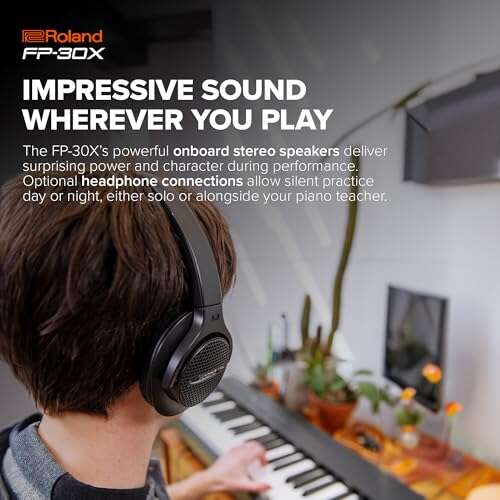
- Built-in amplifier and stereo speakers for robust home sound
- Bluetooth MIDI/audio for apps and wireless playback
- Light, slim chassis perfect for home and stage use
- USB MIDI/audio interface for easy recording

What I Like
- Natural, weighted feel that responds to dynamics
- Warm piano tones that translate well through speakers
- Compact design — easy to move and store
- Bluetooth and USB I/O simplify lessons and recording
- Good speaker volume for small rooms without external amps
- Reliable build that handles daily practice

What Could Be Better
- Speakers are good for small rooms but lack low-end for big venues
- No weighted triple-pedal unit included in some bundles
- Limited advanced sound editing compared to workstation keyboards

My Recommendation
If you want a realistic touch and great piano sound in a compact package, the Roland FP-30X is an excellent pick. I recommend it for students who need a true weighted action and for apartment players who want good onboard speakers. It’s also a practical choice for gigging musicians who prioritize portability without losing expressive control. The FP-30X delivers strong value and is often available through major retailers.
| Best for | Why |
|---|---|
| Students | Real weighted keys aid technique and practice |
| Apartment players | Compact size and good onboard speakers |
| Home recording | USB audio/MIDI makes recording straightforward |

Alternative Products You Can Consider
Yamaha P-125 — A solid alternative with excellent piano samples and a slightly brighter tone. Best for players who prefer Yamaha’s voicing and a straightforward interface. It’s comparable in action but leans toward a crisper sound.
Kawai ES110 — Known for a very natural key action and warm tones. Great for pianists focused on expressiveness. It often feels a touch more acoustic-like in touch than many competitors.
Casio Privia PX-S3100 — A nifty choice if you want ultra-slim design and a wide palette of sounds. It’s more feature-packed for synth and stage use but still delivers good piano realism.
| Product | Best For | Key Difference |
|---|---|---|
| Roland FP-30X | Balanced home use & small gigs | Warm SuperNATURAL tone and PHA-4 action |
| Yamaha P-125 | Students and stage simplicity | Brighter voicing, simple layout |
| Kawai ES110 | Expressive players | Very natural action, warmer tone |
| Casio Privia PX-S3100 | Design-conscious users & synth fans | Slim body, more sound variety |

Final Verdict: Which Should You Buy?
If you want a reliable, expressive, and portable piano with authentic touch, go for the Roland FP-30X. It balances tone, feel, and features in a way that fits most students and home players. Choose the Yamaha P-125 if you prefer a brighter voicing and slightly different feel. Pick the Kawai ES110 for the most acoustic-like action. For a slim, modern option with many sounds, the Casio Privia models are worth a look. The Roland FP-30X stands out for overall value and consistent performance.
FAQs Of roland fp 30x digital piano reviews
Is the Roland FP-30X good for beginners?
Yes. It has weighted keys that build proper technique. It also has useful lesson-friendly features and stable tuning. Beginners get realistic practice with this model.
Can I record directly from the FP-30X?
Yes. The FP-30X supports USB audio/MIDI. I plugged it into my DAW and recorded clean piano tracks with minimal setup.
Does it have Bluetooth for apps?
Yes. Bluetooth MIDI/audio lets you send app audio and receive MIDI. It makes lessons and backing track playback simple.
Is it loud enough for small gigs?
For small venues and cafés, yes. The onboard speakers are strong. For larger stages, use an external PA or amplifier.
How does the keyboard action compare to acoustic pianos?
The PHA-4 action mimics hammer feel well. It’s not identical to a grand, but dynamics and response are very good for practice and performance.

Leave a Reply