
Practice slowly, hands separately, use a metronome, and add speed in small steps every day.
I’ve taught piano for over a decade and trained my own practice around the question of how to practice scales piano. This guide explains why scales matter, how to build an efficient daily routine, and the exact steps I use with students to develop speed, tone, and confidence. Read on for practical, evidence-based methods you can use today.

Why scales matter for pianists
Scales are the backbone of piano technique. They train finger independence, hand coordination, and ear training. Scales also build memory of key signatures and patterns. Practicing scales makes learning pieces faster and cleaner.
- They improve finger strength and evenness.
- They teach common harmonic patterns.
- They train smooth hand shifts and scales phrasing.
- They sharpen sight-reading and transposition skills.

Types of scales to include in practice
You don’t have to practice every scale every day. Focus on core types and rotate them.
- Major scales: The foundation. Practice all 12 keys over time.
- Natural minor scales: Learn relative minors and their sounds.
- Harmonic minor and melodic minor: Useful for classical and jazz colors.
- Chromatic scale: Good for finger agility and evenness.
- Pentatonic and modal scales: Useful for improvisation and modern styles.
- Arpeggios and broken chords: They are scale cousins and must be practiced together.
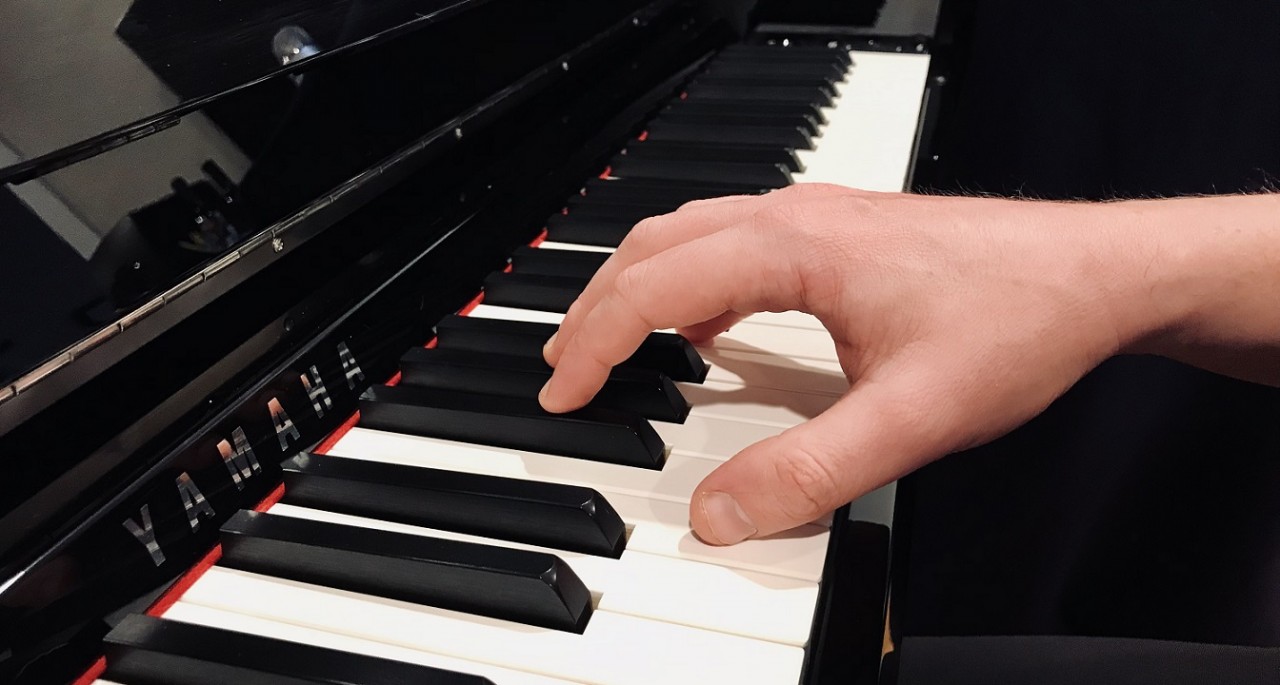
Step-by-step routine for how to practice scales piano
Follow a simple routine each day. Short, focused sessions beat long, unfocused ones.
- Warm up slowly (3–5 minutes)
- Play a few five-finger patterns and a chromatic run. Keep motion relaxed.
- Hands separately (5 minutes per hand)
- Slow, accurate, and even. Use a relaxed wrist and clear articulation.
- Hands together at slow tempo (5 minutes)
- Use a metronome. Keep rhythm steady and fingers aligned.
- Increase tempo in small steps (5–10 minutes)
- Raise the metronome by 4–6 BPM after three clean repetitions.
- Vary rhythm and articulation (5 minutes)
- Play dotted rhythms, staccato, legato, and accents to build control.
- End with musical practice (3–5 minutes)
- Play scales as one long phrase. Shape dynamics and tone.
Repeat this routine for each scale or group of scales. Consistency matters more than length.

Technical tips and recommended fingerings
Fingerings solve many problems before they appear. Learn standard fingerings first. Then adapt for comfort.
- Major scales: Right hand 1-2-3-1-2-3-4-5 through the octave. Left hand 5-4-3-2-1-3-2-1 back down.
- Harmonic minor: Use the same thumb crossings as the natural minor, but watch the raised seventh.
- Chromatic: Use 1-2 or 1-3 patterns depending on passage and key.
- Thumb management: Keep thumb under smoothly. Move the hand slightly to let the thumb fit.
- Wrist and arm: Let the wrist move gently. Avoid rigid fingers or locked elbows.
I often mark fingerings in pencil. That small habit saved students weeks of confusion.

Metronome, tempo progression, and rhythm strategies
A metronome is essential. It stops guesswork and builds steady technique.
- Start at a tempo where every note is perfect.
- Increase tempo in small jumps. Try 4 BPM or 5% increments.
- Use subdivisions: practice with eighths, triplets, and sixteenths.
- Try accent patterns: accent every 3rd note to improve control.
- Use pause drills: play two bars, pause one beat, resume—this catches mistakes.
When you stall at a tempo, go back to slower speeds. Speed without accuracy is wasted practice.

Common mistakes and how to fix them
Mistakes are normal. Fix them with focused, small corrections.
- Rushing the thumb: Slow the passage and isolate the thumb transition.
- Tension in the hand: Stop, shake out, and play more slowly.
- Uneven tone: Work on touch and weight, not just finger movement.
- Ignoring weak keys: Rotate less-practiced keys into every week’s plan.
- Skipping hands-separately work: Always start with hands separately if problems persist.
Use a mirror or record yourself. Visual and audio feedback speeds progress.
Sample practice schedules and exercises
Tailor the plan to your time. Here are three practical options.
- Daily 15-minute plan
- 2 minutes warm-up, 6 minutes hands separately (2 scales each), 4 minutes hands together, 3 minutes articulation work.
- Daily 30-minute plan
- 5 minutes warm-up, 10 minutes hands separately, 8 minutes hands together, 4 minutes rhythm variation, 3 minutes musical shaping.
- Weekly focus rotation
- Monday: All major scales. Wednesday: Minor and harmonic. Friday: Chromatic and arpeggios. Sunday: Review weak keys.
Exercise examples
- Slow up-down three times, then two runs at target tempo.
- Rhythm drill: dotted-eighth–sixteenth pattern across the scale.
- Sequence drill: play the scale in groups of four notes, shifting the starting note each time.
My personal practice tips and mistakes I learned from
I used to rush scales to hit a flashier speed. It backfired. My tone suffered. I slowed down and built speed slowly. That change gave me cleaner phrasing and fewer injuries.
What helped me most
- Mark fingerings clearly and stick to them for a week.
- Record 30 seconds each week. Compare files to track progress.
- Focus on one weak key per week. Small targets add up.
- Rest: short breaks prevent tension and frustration.
I still practice scales daily. They sharpen my playing and make repertoire practice quicker.
Frequently Asked Questions of how to practice scales piano
How long should I practice scales piano each day?
Aim for 10–30 minutes a day, depending on your goals. Short, focused sessions beat long, distracted ones.
Should I practice scales slowly or fast?
Start slowly for accuracy. Increase speed in small steps only after you can play cleanly.
How many scales should a beginner learn at once?
Begin with two or three major scales and their relative minors. Add one new key each week.
Is it okay to use a metronome every time I practice scales?
Yes. A metronome builds steady rhythm and prevents bad habits. Use it, but also practice musically without it sometimes.
When should I start practicing arpeggios with scales?
Start arpeggios once you’re comfortable with major and minor scales. They help with broken chords and left-hand strength.
Can scales help with sight-reading?
Yes. Scales train recognition of key patterns and fingerings, which speeds up sight-reading.
How do I make scales sound musical?
Vary dynamics and phrasing. Shape the scale like a sentence: rise slightly, breathe, then descend.
Conclusion
Scales are simple tools with huge payoffs. Use a clear routine: warm up, hands separately, hands together, tempo progressions, and rhythmic variety. Practice consistently and patiently. Focus on accuracy, then add speed. Try the sample plans and pick one to start this week. Share your progress or questions below, subscribe for more tips, and keep playing—small daily wins lead to big improvements.

Leave a Reply