
Play the main theme in G minor with a swung rhythm, chromatic turns, and a walking left hand.
I teach piano and have spent years arranging jazz standards and film themes. This guide on how to play the Pink Panther on piano breaks the tune into simple chunks. You will learn melody, left-hand patterns, chord shapes, and how to add swing and personality. Read on for clear steps, practice routines, and tips I use with students to master how to play the Pink Panther on piano.

Understanding the Pink Panther theme
The Pink Panther theme is sly, syncopated, and full of chromatic flavor. Learning how to play the Pink Panther on piano starts with recognizing the tune’s short, repeating motif and its playful chromatic approach notes. Most simplified arrangements place the melody in G minor to make fingerings easier. Listen to the main hook, hum it, then try to match it on the keyboard slowly before you worry about chords.

Basic theory and common chords
Knowing basic harmony helps when you learn how to play the Pink Panther on piano. The tune leans on minor tonality, chromatic neighbors, and jazz-inflected dominant chords. A common simplified chord set to accompany the melody is:
- Gm for the home feel
- Cm as the iv minor
- D7 as the dominant to push back to Gm
Experiment with adding a Bb major or Ebmaj7 for color where it fits. These chords let you comp gently while the right hand plays the motif.

Step-by-step tutorial for beginners
Follow these steps to learn how to play the Pink Panther on piano in a simple, reliable way.
- Learn the motif by ear. Hum the hook and find those notes slowly with your right hand.
- Isolate the first phrase. Play it repeatedly until your fingers and ears agree.
- Add the left-hand root notes. Keep them on beats 1 and 3 to start.
- Put both hands together at a slow tempo. Use a metronome and stop if timing slips.
- Increase tempo slightly and add swing feel once comfortable.
- Add two-note comping or a walking bass when the hands are steady.
Practice each step for short focused sessions of 10–15 minutes. This method helps you internalize how to play the Pink Panther on piano without rushing.
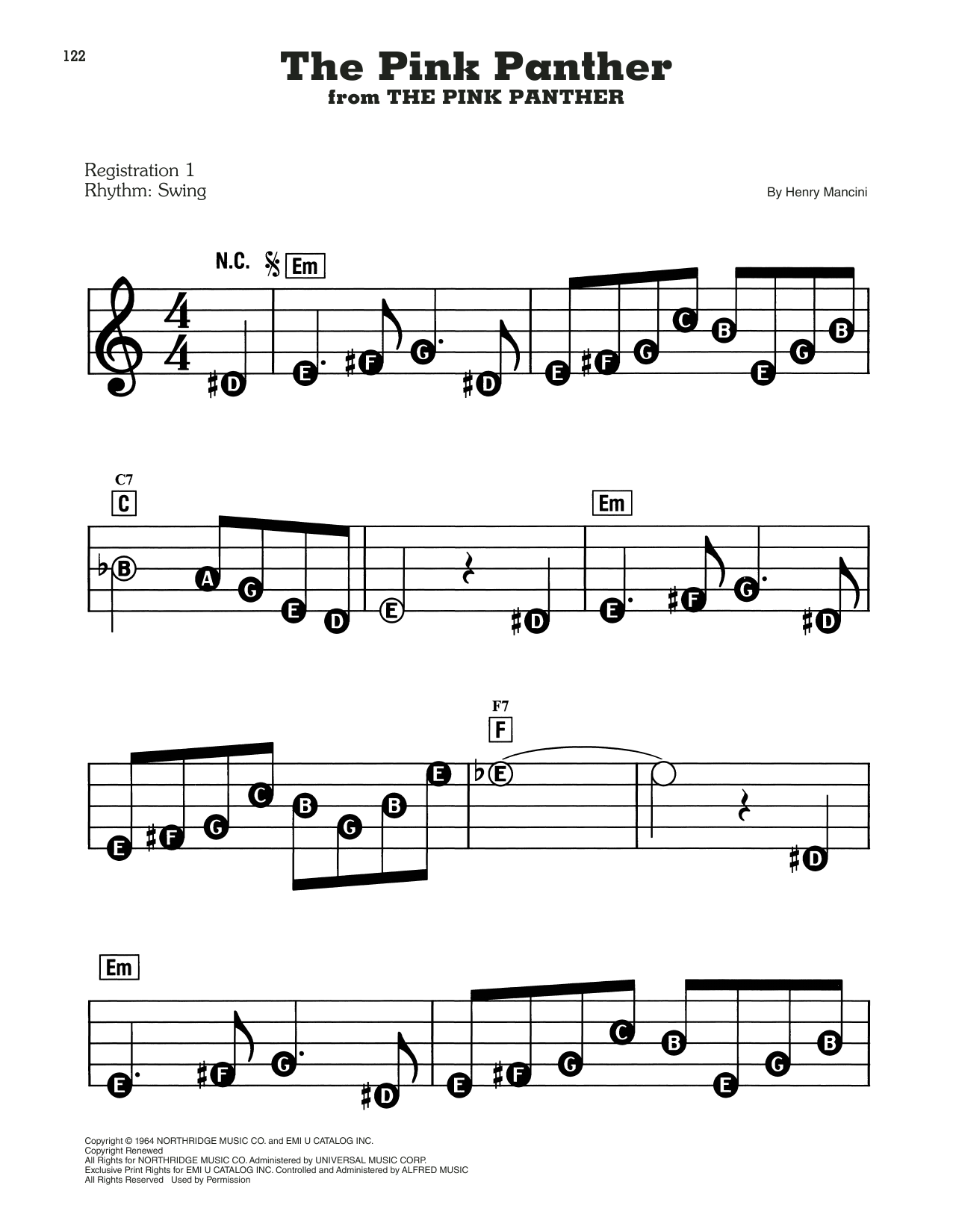
Right hand melody tips
Focus on phrasing and small accents when you practice how to play the Pink Panther on piano with your right hand. Keep these tips in mind:
- Use compact fingerings so you can move chromatic notes smoothly.
- Play the motif slightly behind the beat for a lazy, sly feel.
- Accent the first note of each phrase lightly, then release.
- Practice short loops of 2–4 bars to build memory.
I often drill the first four bars with students until the melody is effortless and the chromatic inflections sound intentional.

Left hand patterns and comping
Your left hand sets the mood when you learn how to play the Pink Panther on piano. Start simple and add complexity over time.
- Play octave root notes on beats 1 and 3 for stability.
- Try two-note root–fifth patterns for a fuller sound.
- Work toward a walking bass or swung two-beat comp when ready.
- Keep the left hand quiet when the right-hand motif needs to shine.
A relaxed left hand and light touch are key. I advise practicing left-hand patterns alone for short drills before combining hands.
Adding swing, groove, and expression
Swing transforms the tune from robotic to mischievous. To master how to play the Pink Panther on piano with groove:
- Convert straight eighths into a long-short swing feel.
- Use subtle staccato for cheeky notes and legato for connecting lines.
- Shape dynamics: play the motif mezzo-piano and raise volume on repeats or endings.
- Use pedal sparingly to avoid blurring the chromatic figures.
Record yourself. You will hear what needs loosening or tightening. I record practice takes and often catch timing issues I wouldn't notice otherwise.
Practice plan and common mistakes
A focused practice plan speeds up how to play the Pink Panther on piano. Try this weekly outline:
- Day 1: Right-hand melody drills, 15 minutes.
- Day 2: Left-hand patterns, 15 minutes.
- Day 3: Hands together slowly, 20 minutes.
- Day 4: Rhythm and swing exercises, 15 minutes.
- Day 5: Play full tune and improvise variations, 20 minutes.
Common mistakes to avoid:
- Rushing through chromatic notes
- Over-pedaling which blurs the motif
- Neglecting the left hand so the pulse disappears
Stick to short, focused sessions. Progress is steady when you practice deliberately.
Arranging and improvisation ideas
Once you can play the basic tune, expand how to play the Pink Panther on piano with simple arrangements.
- Add a walking bass or a Bb7–A7 turnaround for a jazzier ending.
- Harmonize the melody with thirds or sixths for a fuller sound.
- Improvise over the song’s chord structure using G minor pentatonic, Dorian mode, or the blues scale.
- Create a slow rubato intro before launching into the swung main theme.
My students like to trade 8-bar solos over a vamp. That approach builds confidence and musicality fast.
Resources: sheet music, backing tracks, and tutorials
Good resources speed up how to play the Pink Panther on piano. Look for:
- Simplified lead sheets for the melody and chords
- Backing tracks in swing or jazz tempo for practice
- Slow-down apps or MIDI files to isolate tricky passages
- Video lessons that show hand position and fingerings
Use trustworthy vendors for sheet music and credible tutorial channels for technique demos. Combining visual lessons with printed lead sheets gives the best learning mix.
Frequently Asked Questions of how to play the pink panther on piano
What key should I learn the Pink Panther in?
Many teachers use G minor as a beginner-friendly key. It keeps fingerings simple while preserving the tune’s dark, playful quality.
How do I get the swing feel right?
Practice converting straight eighths into long-short pairs and play with a metronome set to a swung subdivision. Light accents and small delays behind the beat create the style.
How long will it take to learn how to play the Pink Panther on piano?
If you practice 20–30 minutes daily, you can learn a simple version in a week and refine it over a month. Time depends on prior experience and practice quality.
Is the Pink Panther hard for beginners?
A basic melody is approachable for beginners. The challenge is rhythm and chromatic notes; those improve with slow, focused practice.
Where can I find good sheet music and backing tracks?
Search for lead sheets and jazz backing tracks from reputable music stores and educational platforms. Backing tracks labeled “swing” or “jazz” fit the tune best.
Conclusion
You now have a clear, practical plan for how to play the Pink Panther on piano. Start with the motif, add simple left-hand patterns, lock in the swing, and practice in short focused sessions. Try the step-by-step routine, record your practice, and experiment with small arrangements. If you enjoyed this guide, try a backing track tonight, subscribe for more lessons, or leave a comment with which part you want broken down next.

Senior Music Reviewer
Alex Carter is a seasoned music reviewer with over a decade of experience in the world of sound and instruments. Passionate about helping musicians and enthusiasts make informed choices, he brings sharp insights and in-depth knowledge to every review. From classical instruments to modern gear, Alex combines technical expertise with a love for music to deliver content that resonates with readers.
As a Senior Music Reviewer and expert author on Tuneluma.com, Alex is dedicated to sharing honest evaluations, practical advice, and thoughtful commentary to guide readers in their musical journey.
Leave a Reply