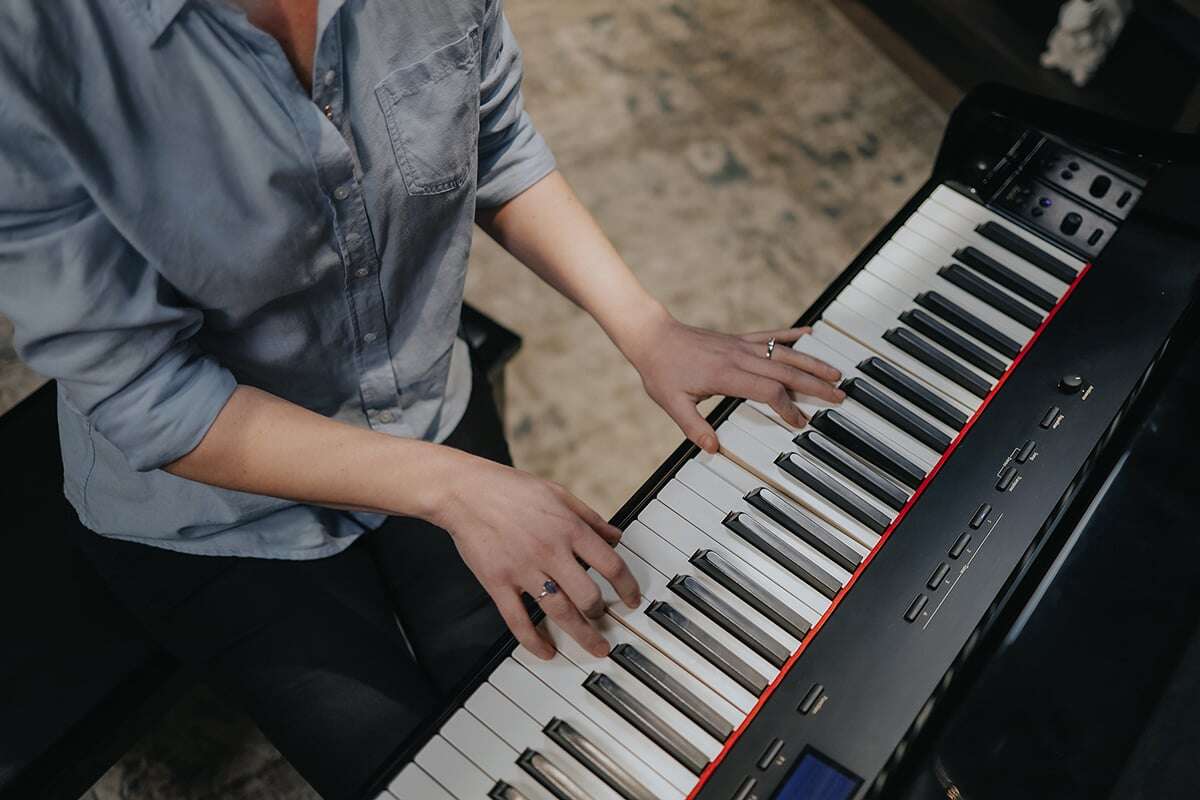
Learning to play with both hands comes from steady practice, simple drills, and patient focus.
I have taught students and learned from my own practice about how to play piano with two hands. This skill blends coordination, timing, and musical sense. In this article I share clear steps, drills, and tips that work. You will get practical methods, common errors, and a simple plan to improve fast. Read on to build confident two-hand playing that sounds musical and feels natural.
Why playing with two hands matters
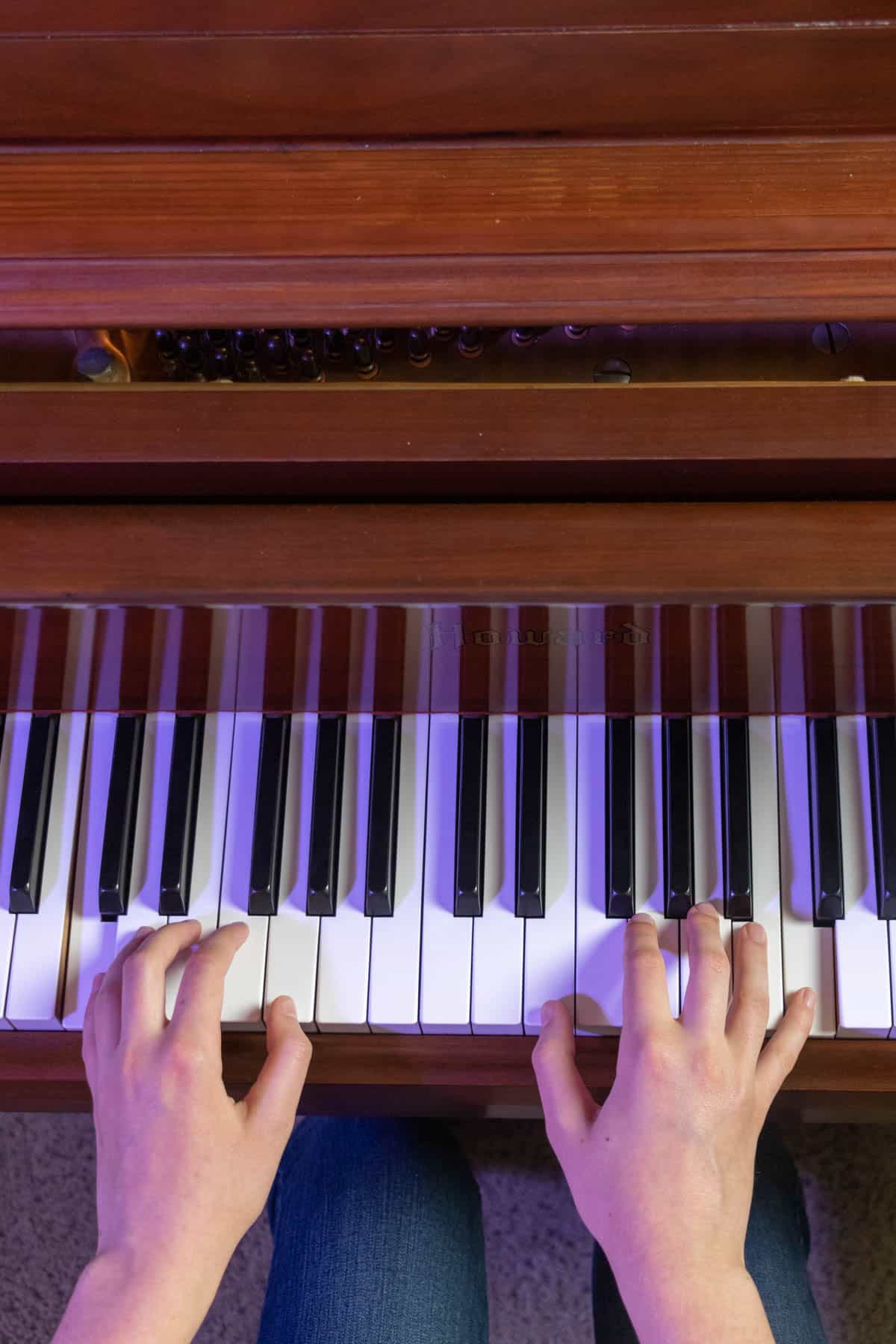
Playing with both hands opens the full range of the piano. It lets you add harmony, bass, and melody at once. Learning how to play piano with two hands makes music richer and more expressive.
When you can control each hand, you can do more musically. You can play simple songs or complex pieces. You also train your brain to handle separate tasks at once. This skill helps in reading, improvising, and arranging music.
Foundations: posture, hand shape, and finger numbers
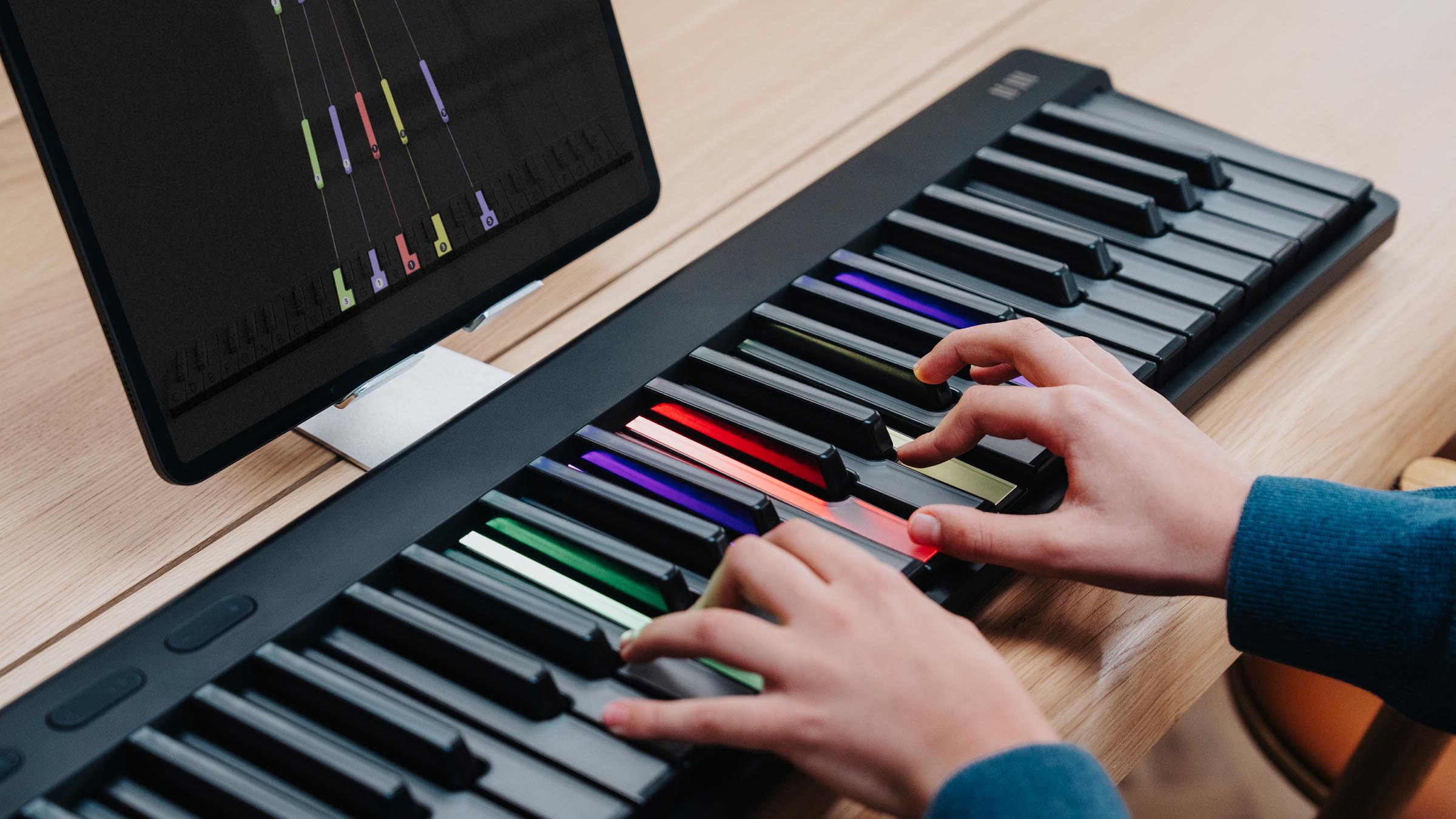
Good basics make learning how to play piano with two hands much easier. Sit at the bench with a straight back. Keep your feet flat on the floor. Your elbows should be slightly above the keys.
Form a relaxed curved shape with each hand. Keep fingers close to the keys. Use standard finger numbers: thumb is 1, index 2, middle 3, ring 4, and pinky 5. This makes reading fingerings simple. Clear posture and hand shape reduce tension and speed learning.
Step-by-step method to learn how to play piano with two hands
Follow a clear process when learning how to play piano with two hands. Use short, slow steps. Focus on one change at a time.
- Learn each hand alone first.
- Practice the right hand until it is steady.
- Practice the left hand until it feels smooth.
- Clap the rhythm together.
- Clap the right-hand rhythm while speaking the left-hand beats.
- Play hands together very slowly.
- Use a metronome at a slow tempo.
- Play four measures at a time. Stop and repeat hard spots.
- Increase speed in small steps.
- Raise the metronome by 2–4 BPM when you can play cleanly.
- Isolate tricky measures.
- Loop 2–4 bars until both hands match.
I used this method to learn a tricky piece. I learned each hand alone, then slowly combined them. The piece sounded better after a few short, focused sessions. This stepwise plan works well for students of any level.
Exercises to build coordination and independence
Targeted drills speed up how to play piano with two hands. Use simple, repeatable patterns.
- Five-finger patterns. Play scales with both hands on five notes.
- Contrary motion. Hands move toward and away from each other.
- Broken chords. Play arpeggios with one hand while the other holds a steady rhythm.
- Rhythm swaps. Right hand plays quarter notes; left plays eighth notes, then swap.
- Hanon-style drills. Short, repeating patterns that build strength and precision.
Do each exercise for three to five minutes. Short, daily drills beat long, rare sessions. Keep the tempo slow at first and aim for even tone and timing.

Rhythm, counting, and pulse
Strong rhythm makes how to play piano with two hands clearer and more musical. Use simple counting to keep both hands aligned.
- Count out loud. Say "one-and-two-and" while you play.
- Use a metronome. Set a slow pulse and follow it strictly.
- Tap the beat with your foot. This anchors timing.
- Subdivide when needed. Count "one-and-two-and" for syncopation.
If one hand rushes, slow the tempo and count each beat. Rhythm training fixes many coordination issues fast.
Common problems and fixes
Trouble will come. Expect it when learning how to play piano with two hands. Here are common issues and clear fixes.
- Hands do not line up
- Fix: Slow down. Count and play two beats at a time.
- Left hand lags or is weak
- Fix: Do separate left-hand drills and play bass lines louder.
- Fingers tense up
- Fix: Shake hands between reps. Use looser wrist motion.
- Reading both staves is hard
- Fix: Practice sight-reading each staff, then combine slowly.
I once had a student who rushed the right hand. We slowed everything and used a metronome. After a week of slow work, his hands synced and his tone improved. Small fixes lead to big gains.
Practice plan and progression
A regular plan makes learning how to play piano with two hands predictable and steady. Follow this plan for three months.
- Daily routine (30 minutes)
- Warm-up: 5 minutes of scales or five-finger patterns.
- Drill: 10 minutes on coordination exercises.
- Repertoire: 10 minutes on hands-together sections.
- Cool-down: 5 minutes of slow, musical playing.
- Weekly goals
- Add small tempo increases.
- Learn one new hands-together passage.
- Record and review one practice session.
Track progress with a practice log. Small, steady steps deliver real improvement.
Applying two-hand skills to real music
Transfer skills to songs and pieces to make learning how to play piano with two hands meaningful. Start with simple music and add complexity.
- Choose pieces with clear left-hand patterns, like folk songs.
- Try simple Bach inventions after you master basic independence.
- Use chord charts to practice accompaniment patterns.
- Transcribe a favorite song and play melody with the right hand and chords with the left.
I practiced pop songs to improve my left hand. Playing bass lines under melody made me more confident in duet textures. Real music gives context to drills and keeps practice fun.
Resources and further study
Use tools to speed how to play piano with two hands. Pick what fits your learning style.
- Metronome apps for steady pulse.
- Slowdown software to loop and reduce tempo.
- Simple method books that focus on hands-together skills.
- Lessons with a teacher for tailored feedback.
Find materials that match your level. A teacher can catch habits that apps miss. Combine tools with focused practice for best results.
Frequently Asked Questions of how to play piano with two hands
How long does it take to play with both hands smoothly?
Most learners see steady improvement in weeks with daily practice. Consistent short sessions often beat long, infrequent ones.
Should I learn each hand separately first?
Yes. Learning each hand alone builds muscle memory and makes hands-together practice faster and cleaner.
How slow should I practice hands together?
Very slow. Slow practice lets you match timing, fingerings, and tone. Gradually raise tempo by a few BPM at a time.
What if my hands keep getting out of sync?
Return to simpler sections and count aloud. Use a metronome and loop small bars until they match.
Can I improve two-hand playing without a teacher?
Yes. Many tools and clear practice plans work well. A teacher speeds progress and catches subtle errors, though.
Conclusion
Learning how to play piano with two hands is a step-by-step skill. Start with strong posture and hand shape. Practice each hand alone. Add slow hands-together work and focused drills. Use rhythm training and a steady practice plan. Stay patient and track small wins. Try the exercises above for a month and note the change. Ready to play with both hands? Start today, keep it simple, and share your progress or questions below.

Leave a Reply