Play the melody in C major, use C–F–G chords, and keep a steady, bouncy left-hand pattern.
I’ve taught piano for over a decade, and I can show you exactly how to play Old MacDonald on the piano with clear steps, simple chords, and practice tips that work for kids and adults. This guide covers hand position, chord diagrams, a beginner-friendly accompaniment, ways to learn the melody by ear, common mistakes to avoid, and fun variations. Read on to get confident, musical, and ready to play how to play Old MacDonald on the piano today.
Why Old MacDonald is perfect for beginners
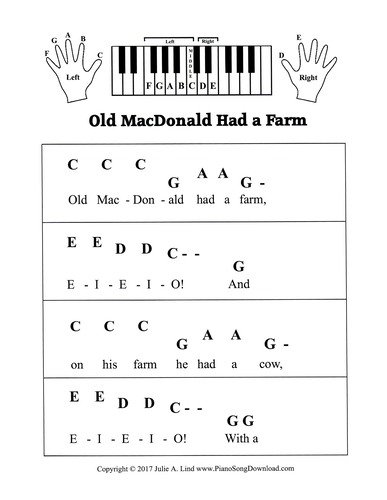
Old MacDonald is simple. The tune uses a narrow range of notes. That makes it easy to learn for new players and children.
The song also helps you practice rhythm, timing, and basic chords. All skills are key if you want to learn how to play Old MacDonald on the piano well.

What you need before you start
Get comfortable with the piano bench height. Sit so your forearms are level with the keys. This prevents tension and helps control.
Know the C major scale and basic triads: C, F, and G or G7. These three chords will carry the whole song.
Have a metronome or a simple drum app to keep a steady beat. That will make it easy to practice how to play Old MacDonald on the piano cleanly.

Step-by-step: How to play Old MacDonald on the piano
Follow these steps. I keep each step short so you can practice and progress fast.
- Find the key and starting note
- Choose C major for an easy start. The key is comfortable for most beginners.
- With your right hand, sing the first phrase and hum until you find the starting note. I usually find the first sung note sits on G in C major. This helps you learn how to play Old MacDonald on the piano by ear.
- Learn the chord pattern
- Basic chord progression: C — F — C — G7 (then back to C). This fits the verses and the E-I-E-I-O lines.
- Play simple block chords with the left hand first. Hold each chord for one or two measures as needed.
- Right-hand melody approach
- Start by playing short melodic phrases. Play one phrase slowly and repeat until it feels natural.
- Use fingerings that keep your hand relaxed. Common fingering: 1-1-1 or 1-2-3 depending on the small leaps. Practicing how to play Old MacDonald on the piano phrase by phrase makes the tune less overwhelming.
- Combine hands slowly
- Play chord changes with the left hand while the right hand plays the melody. Go very slow at first.
- Use a metronome at 50–60 bpm. Increase speed only when both hands stay steady.
- Add rhythm and style
- Make the left hand a steady oom-pah pattern: bass note on beat one, chord on beats two and four.
- Use simple syncopation later to add bounce. This helps the song sound playful when you learn how to play Old MacDonald on the piano for children.
- Practice loops
- Repeat short sections of 2–4 bars. Fix the hard spots first.
- Record yourself and listen back. It helps you spot timing problems.

Simplified chord and accompaniment patterns
Here are safe patterns to use. Keep them simple and musical.
-
Block chord accompaniment
- Left hand: root note on beat one. Right hand: full triad or melody.
- Works well for beginners learning how to play Old MacDonald on the piano.
-
Broken chord pattern
- Left hand: play root-octave, then the third and fifth as single notes. This gives a fuller sound.
- Play eighth notes on the chord to create momentum.
-
Oom-pah pattern
- Left hand: bass note on beat one. Right hand: chord on beats two and four.
- This is perfect for sing-alongs and preschool groups practicing how to play Old MacDonald on the piano.
Simple ear-training method to learn the melody
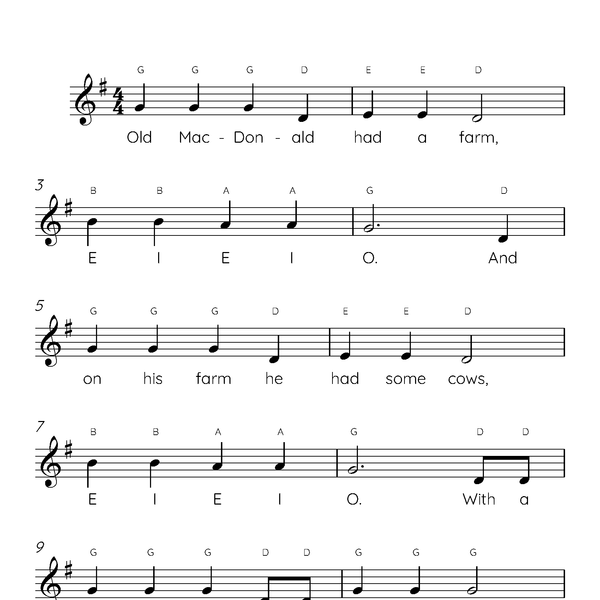
If you want to learn how to play Old MacDonald on the piano without sheet music, use this ear method.
-
Hum and match
- Hum one line. Pause and find the first note on the piano. Mark it mentally.
- Play the short phrase slowly on the piano and repeat it.
-
Stepwise practice
- Move one note at a time. Check if the interval is up, down, or the same.
- Work phrase by phrase until you can sing and play together.
-
Use patterns
- The melody mostly moves by step or small leaps. Spot these patterns to memorize quickly.
- This habit makes it easier to learn other children’s songs after you master how to play Old MacDonald on the piano.

Variations, transposition, and fun arrangements
Once you know the core, you can change it up.
-
Transpose to other keys
- Move the whole chord pattern up or down if the singer’s range needs it. For example, D major uses D, G, A7.
- Transposing is a useful skill when you want to teach children with different vocal ranges how to play Old MacDonald on the piano.
-
Make it jazzy
- Replace plain triads with seventh chords (Cmaj7, Fmaj7, G7).
- Add a walking bass or swing rhythm for an adult-friendly version.
-
Add sound effects
- Play short staccato notes for animal sounds. This makes lessons fun for kids and adds character when you perform how to play Old MacDonald on the piano.

Common mistakes and how to avoid them
Avoid these traps when learning how to play Old MacDonald on the piano.
- Rushing the tempo
- Beginners often speed up. Use a metronome and keep it steady.
- Ignoring hand posture
- Slumped shoulders cause tension. Sit tall and use light fingers.
- Trying full song too soon
- Work on small sections. Repetition beats long, unfocused practice.
Personal tips from teaching experience
I’ve taught groups of kids and adults this song for years. Here are practical things that helped my students.
- Teach lyric-linked practice
- Pair each musical phrase with the lyric line. It creates memory anchors and helps rhythm.
- Use call-and-response
- Play a short phrase and have kids echo it. This builds confidence and listening skills.
- Start with the left hand
- Many students find the left-hand pattern simple. Lock that in first, then add the melody.
Two quick PAA-style questions
How long does it take to learn how to play Old MacDonald on the piano?
Most learners can play a simplified version in a few practice sessions of 15–20 minutes. Mastery with both hands and good rhythm usually takes a few weeks of steady practice.
Can beginners sing while they play how to play Old MacDonald on the piano?
Yes. Start by singing without playing, then add the left-hand pattern, and finally introduce the melody. Take it slow and repeat short phrases until singing and playing line up.
Frequently Asked Questions of how to play old macdonald on the piano
What key is best to start learning how to play Old MacDonald on the piano?
C major is best for beginners because it has no sharps or flats and is easy to read and play.
Do I need to read sheet music to learn how to play Old MacDonald on the piano?
No. You can learn by ear using chords and patterns, though simple sheet music can speed learning for some students.
Which chords are used most when learning how to play Old MacDonald on the piano?
The main chords are C, F, and G (or G7). These three chords cover the whole basic arrangement.
How can I make the song fun for kids when teaching how to play Old MacDonald on the piano?
Add animal sound effects, clapping, and call-and-response games. Short, playful practice keeps kids engaged.
What tempo should I use when first practicing how to play Old MacDonald on the piano?
Start around 50–60 bpm. Slow practice helps accuracy. Gradually increase speed when both hands are confident.
Conclusion
Learning how to play Old MacDonald on the piano is a great first-step song that teaches chords, rhythm, and melody in a playful way. Start in C major, lock in the left-hand chord pattern, learn the melody phrase by phrase, and use a metronome to keep a steady pulse. With short daily practice sessions and a focus on small sections, you’ll be playing confidently in no time. Try one practice routine today: 10 minutes on left hand, 10 minutes on right hand melody, and 10 minutes combining hands—then share your progress or ask for feedback.

Senior Music Reviewer
Alex Carter is a seasoned music reviewer with over a decade of experience in the world of sound and instruments. Passionate about helping musicians and enthusiasts make informed choices, he brings sharp insights and in-depth knowledge to every review. From classical instruments to modern gear, Alex combines technical expertise with a love for music to deliver content that resonates with readers.
As a Senior Music Reviewer and expert author on Tuneluma.com, Alex is dedicated to sharing honest evaluations, practical advice, and thoughtful commentary to guide readers in their musical journey.
Leave a Reply