
Learn the main ostinato, practice hands separately, then combine with steady rhythm and dynamics.
I have taught and arranged Carol of the Bells for many students and recitals, so I know what helps you learn quickly and play confidently. This guide on how to play carol of the bells piano walks you through the melody, the repeating ostinato, left-hand patterns, and clear practice steps. Read on for a friendly, expert roadmap that breaks the piece into tiny, usable parts and helps you move from beginner attempts to a polished performance.

Why learn Carol of the Bells on piano?
Carol of the Bells is instantly recognizable. The main motif repeats and layers in a way that sounds complex but it is actually very learnable. Learning how to play carol of the bells piano builds rhythm, coordination, and finger independence. It also sounds impressive in recitals and holiday sets with relatively short practice time.

Basic structure and musical theory to know
The piece is built on a short ostinato that repeats. That ostinato is driven by steady eighth notes and a narrow melodic range. Time signature is often 3/4 or 4/4 in arrangements, but many common piano versions use 3/4 feeling with grouped patterns. Harmony is simple: minor modal color with repeated intervals and triads. Understanding the motif and harmony makes learning how to play carol of the bells piano much faster.

Step-by-step tutorial: hands, rhythm, and assembly
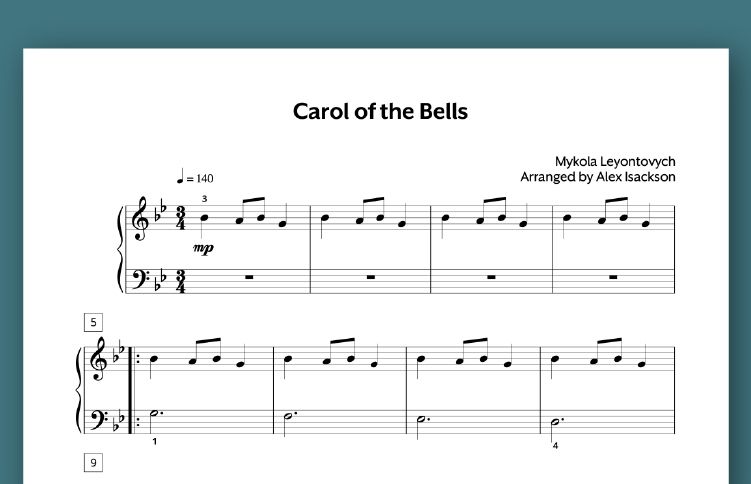
Right hand: learn the main motif
- Listen to the motif several times to lock the rhythm.
- Play single-note phrases slowly at first. Count out loud while you play.
- Focus on even spacing between notes; keep fingers close to the keys.
Left hand: learn the accompaniment pattern
- Start with the repeated ostinato or block chords depending on your arrangement.
- Practice left-hand pattern alone until it is steady and comfortable.
- Use a metronome at a slow pace to keep the pulse consistent.
Putting hands together
- Play one measure at a time with both hands. Stop and repeat trouble spots.
- Keep the right hand slightly louder for melody. Let the left hand support rhythm.
- If hands feel tangled, slow the tempo by 20–40 percent and rebuild speed.
Dynamics and phrasing
- Mark louder and softer sections before you practice at speed.
- Use small dynamic shifts to create tension and release in the repeating motif.
- Accent the first beat of each phrase to keep musical shape.
Practice routine (short and focused)
- Warm up 5 minutes with scales and finger independence drills.
- Spend 10 minutes on right-hand motif only.
- Spend 10 minutes on left-hand accompaniment only.
- Spend 10 minutes combining hands slowly, then run full sections.
- End with 5 minutes of tempo practice with a metronome.
how to play carol of the bells piano becomes manageable when you follow these steps daily. The piece rewards focused repetition and small, regular practice blocks.

Common mistakes and how to avoid them
- Rushing the motif and losing clarity. Fix by slowing tempo and counting.
- Letting the left hand overpower the melody. Fix by practicing dynamics deliberately.
- Skipping hand-separate practice and attempting full runs too soon. Fix by isolating trouble spots.
- Ignoring breath and shape in a repeating pattern. Fix by marking accents and rests.
- Not using a metronome. Always use a metronome when increasing speed.
From experience, learning how to play carol of the bells piano faster comes from disciplined hand separation and consistent tempo work. I once taught a student who wanted to perform in two weeks. We split practice into tiny chunks and focused only on the opening motif. In two weeks, the student played with clean hands and convincing energy.
Recommended practice schedules and technical exercises
-
15-minute beginner plan
- 5 minutes warm-up with scales
- 5 minutes right-hand motif practice
- 5 minutes left-hand pattern practice
-
30-minute intermediate plan
- 5 minutes warm-up
- 10 minutes right-hand detail (articulation, accents)
- 10 minutes left-hand rhythm and voicing
- 5 minutes hands together at slow tempo
-
Technical drills to speed up cleanly
- Slow four-note patterns to build finger independence
- Staccato exercises to clarify short notes in the motif
- Rhythmic subdivisions practice to master syncopation and accents
how to play carol of the bells piano becomes easier if you commit to short, consistent practice sessions. Small daily wins add up quickly.

Sheet music, arrangements, and learning resources
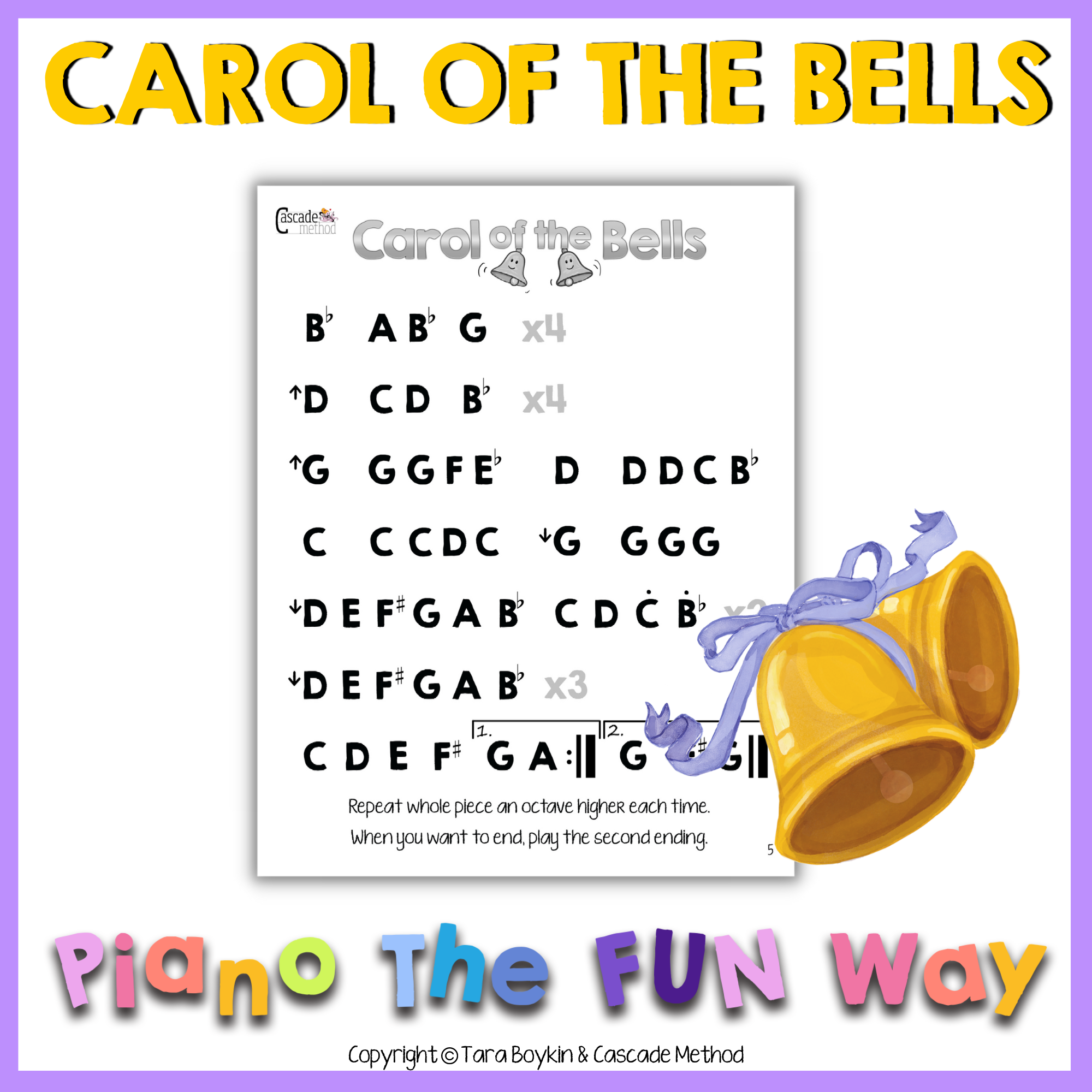
- Choose an arrangement that matches your skill level. Simplified versions keep the motif but reduce left-hand complexity.
- Use annotated sheet music that marks fingerings and dynamics. Fingerings prevent bad habits.
- Try playing along with slowed recordings or backing tracks. That helps lock in tempo.
- If you read music, select an edition that clearly shows repeats and phrasing marks.
- For teachers: create a condensed lead sheet with the ostinato and melody to build sight-reading speed.
When choosing materials for how to play carol of the bells piano, aim for clarity over complexity. Start simple and add ornamentation later.
Frequently Asked Questions of how to play carol of the bells piano
What is the easiest way to start learning Carol of the Bells on piano?
Start with the main motif in the right hand and a simplified left-hand ostinato. Practice each hand separately, then combine slowly while counting aloud.
How fast should I practice the piece initially?
Begin at about 40–60 percent of performance tempo. Increase speed only after several clean, steady repetitions with both hands.
Do I need to read sheet music to learn this piece?
No. You can learn by ear and by pattern recognition, but reading sheet music speeds up learning and reduces errors.
How long will it take to learn Carol of the Bells on piano?
Times vary by skill, but a focused student can learn a simple arrangement in a few days and polish it over 2–4 weeks with daily practice.
Should I focus on dynamics or speed first?
Focus on clean rhythm and correct notes first, then add dynamics. Speed and expression should follow accuracy and steady pulse.
Conclusion
Mastering how to play carol of the bells piano is about breaking the song into small parts, practicing hands separately, and building tempo slowly. Start with the motif, lock the left-hand pulse, then combine both hands with clear dynamics. With consistent, focused practice, you can move from clumsy attempts to confident performances in weeks. Try the practice plan above for a week and track your progress. If you found this guide useful, leave a comment, share your recording, or subscribe for more practical piano lessons.
Related Posts


Leave a Reply