

Play "Can't Help Falling in Love" on piano with simple chords, a gentle arpeggio, and slow tempo.
I’ve taught and arranged this song for students for years, and I’ll walk you through how to play can't help falling in love on piano step by step. You’ll get clear chord maps, a beginner-friendly arrangement, practice tips, and my real-world tricks to make the tune sing. Read on to learn how to play can't help falling in love on piano with confidence and feel.
Why this song is perfect for piano players
"Can't Help Falling in Love" is a short, lyrical song with a clear chord structure. That makes it ideal for beginners and expressive players alike. The melody sits comfortably on the piano and the harmony is repeatable. If you want a song that sounds full with only simple left-hand patterns, this is it.

Key, tempo, and basic chord progression
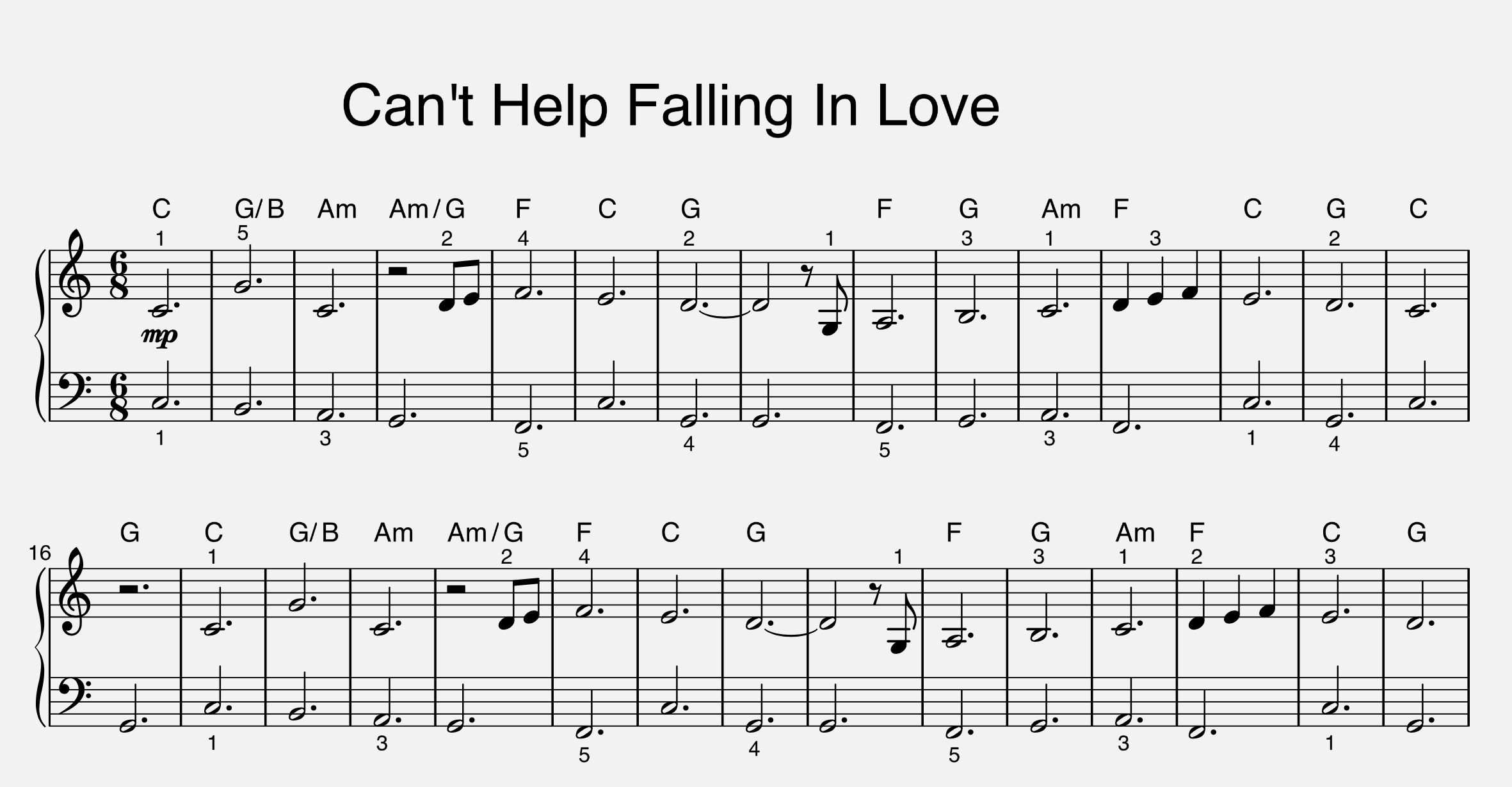
Most players use the key of C major for ease. The common chord progression is easy to learn. Use a slow tempo around 60–72 BPM for a tender feel.
Basic chords in C major:
- C major
- G major (or G7)
- A minor
- F major
- Em (optional passing chord)
- Dm (optional)
Typical progression (verses):
- C G Am F
- C G C
This progression is the backbone of how to play can't help falling in love on piano. Knowing these chords makes the whole song approachable.
Step-by-step arrangement for beginners
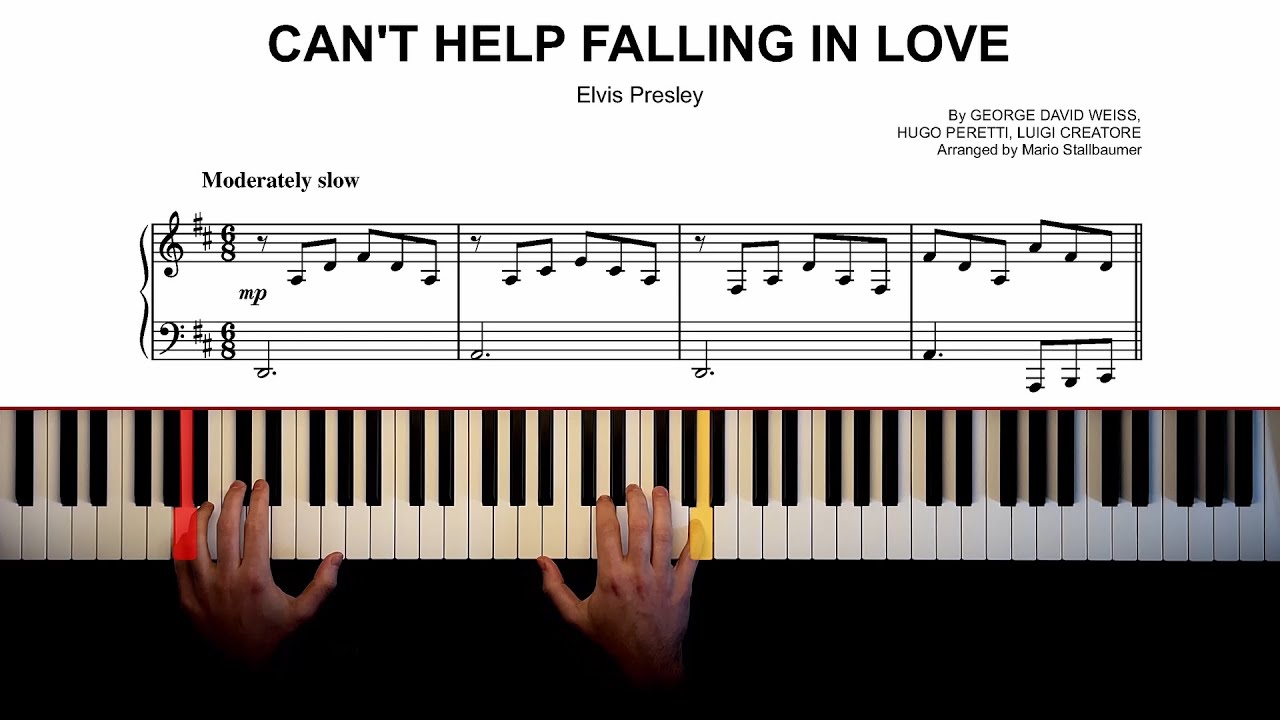
Follow these steps to learn how to play can't help falling in love on piano from scratch.
- Learn the chord shapes
- Play C, G, Am, F in root position with your left hand.
- Keep fingers 1–5 comfortable and relaxed.
- Play the melody alone
- Sing the line as you play single-note melody with your right hand.
- Focus on smooth legato.
- Add a simple left-hand pattern
- Use single bass notes on beats 1 and 3, or a block chord on beat 1.
- Keep the rhythm steady and slow.
- Combine hands slowly
- Start at half speed. Keep hands separate if needed, then join.
- Add embellishments when ready
- Use arpeggios or broken chords in left hand.
- Add gentle grace notes or suspensions in the right hand.
These steps show a clear route for how to play can't help falling in love on piano. Take each step slowly and repeat.

Left-hand patterns (bass and harmony)
The left hand gives the song its pulse and feeling. Try these left-hand ideas.
- Basic bass and chord
- Play root note on beat 1, then the full chord on beat 3.
- Broken arpeggio
- Play low root, mid-chord, high-chord in a steady triplet or eighth pattern.
- Walking bass (intermediate)
- Connect chords by stepping between chord tones to create motion.
Start with the basic pattern. It supports the melody while you learn how to play can't help falling in love on piano.
Right-hand melody and embellishments
The melody is simple and lyrical. Learn it in small phrases.
- Phrase approach
* Divide the melody into 2–4 bar phrases. Learn each phrase slowly. - Keep the melody prominent
- Play melody louder than left hand. Use finger legato.
- Embellishments to try
- Small grace notes into the entry of a phrase.
- Suspensions: hold a non-chord tone briefly, then resolve.
- Simple fills: short broken-chord runs at phrase ends.
These ideas help you shape the tune as you learn how to play can't help falling in love on piano.
Putting hands together: a focused practice plan
A clear practice plan speeds progress. Use short, focused sessions.
- Warm-up (5 minutes)
- Play scales or arpeggios in C major.
- Melody practice (10 minutes)
- Right hand only, hands separate if needed.
- Chord practice (10 minutes)
- Left hand patterns and chord changes.
- Hands together (15 minutes)
- Slow, hands together. Use a metronome.
- Musical run-through (5 minutes)
- Play the whole song, focus on dynamics.
Repeat daily. This routine is practical for learning how to play can't help falling in love on piano without overwhelm.
Common mistakes and how to fix them
Many players hit similar roadblocks. Here’s how to fix them fast.
- Rushing the tempo
- Slow down and keep beat steady. Use a metronome.
- Uneven balance
- Keep melody louder. Play left-hand quieter.
- Stiff hands
- Relax shoulders and wrists. Play with light touch.
- Skipping chord changes
- Practice transitions slowly and isolate hands if needed.
Addressing these makes learning how to play can't help falling in love on piano smoother and more musical.
Personal tips and real-life experience
I’ve taught beginners and performed this song at small gigs. These tips come from that work.
- Use the key of C at first. It saves time and builds confidence.
- Record your practice. You’ll hear phrasing issues you miss in the moment.
- Start with a simple left-hand pattern before adding arpeggios.
- When accompanying singers, lower the tempo and sprinkle rubato.
- Practice the endings and transitions separately—those are where mistakes hide.
From experience, small changes to touch and timing make this song feel intimate. These steps show how to play can't help falling in love on piano in a way that moves listeners.
Quick questions (PAA style)
How long does it take to learn the basic version?
Most beginners can learn a simple version in a few days with focused practice. Mastery and expressive phrasing take a few weeks.
What is the easiest key to use?
C major is easiest for piano players because it uses no sharps or flats. You can transpose later if you sing with the song.
Can I use a chord chart only?
Yes. A chord chart works well with a simple left-hand pattern and the melody played by ear or from sheet music.
Frequently Asked Questions of how to play can't help falling in love on piano
What chords do I need to play this song?
You need C, G, Am, F, and optional Em or Dm for passing tones. These give the full harmonic shape of the tune.
Is the melody hard to learn for beginners?
The melody is simple and sings on one staff. Breaking it into short phrases makes it easy to learn.
Can I play this song with only one hand?
Yes. You can play the melody with the right hand and add single bass notes with the left for support. That is a great beginner approach.
How should I practice the transitions between chords?
Practice chord changes slowly, isolate hands, and use a metronome. Repeat transitions until they are fluid.
Should I learn the original key or transpose?
Start in C major for ease. Transpose later if you need to match a singer’s range.
How much should I focus on dynamics versus notes?
Both matter. Learn notes first, then shape dynamics in later practice sessions. Dynamics bring emotional life to the song.
Conclusion
Learning how to play can't help falling in love on piano is a rewarding journey. Start with the chords, learn the melody in short phrases, and use a steady practice plan. Focus on slow hands-together work, and add simple embellishments once the basics feel natural. Take one step at a time, record your practice, and enjoy the process.
Try the steps in this guide tonight. Practice five focused minutes on each section, then play through the whole song. If you liked this guide, subscribe for more tutorials or leave a comment with your progress.

Senior Music Reviewer
Alex Carter is a seasoned music reviewer with over a decade of experience in the world of sound and instruments. Passionate about helping musicians and enthusiasts make informed choices, he brings sharp insights and in-depth knowledge to every review. From classical instruments to modern gear, Alex combines technical expertise with a love for music to deliver content that resonates with readers.
As a Senior Music Reviewer and expert author on Tuneluma.com, Alex is dedicated to sharing honest evaluations, practical advice, and thoughtful commentary to guide readers in their musical journey.
Leave a Reply