How To Play C Major Scale On Piano: Easy Beginner Guide
Play C major scale by starting on middle C, use correct fingerings up and down the keyboard.
I’ve taught hundreds of students how to play c major scale on piano, and I’ll guide you step by step. This article explains notes, fingerings, hand posture, common mistakes, and practice plans. Read on to build confident, musical scale technique that transfers to songs and improvisation.
Why learn the C major scale?
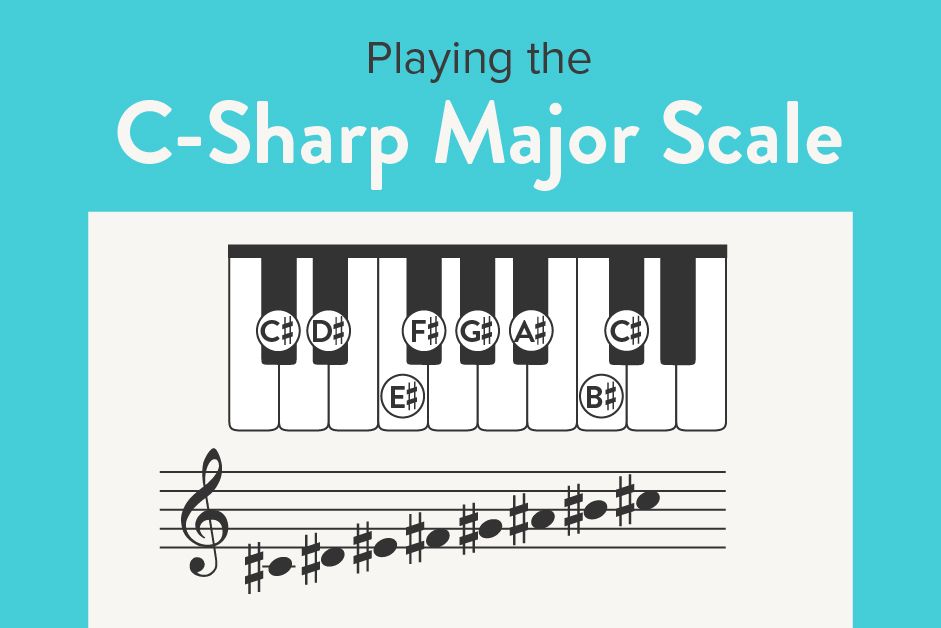
The C major scale is the foundation of piano technique. Learning how to play c major scale on piano trains your fingers, builds ear training, and clarifies keyboard geography. It's the simplest scale with no sharps or flats, so it’s perfect for beginners and pros polishing basics.
Anatomy of the scale: notes, intervals, and pattern
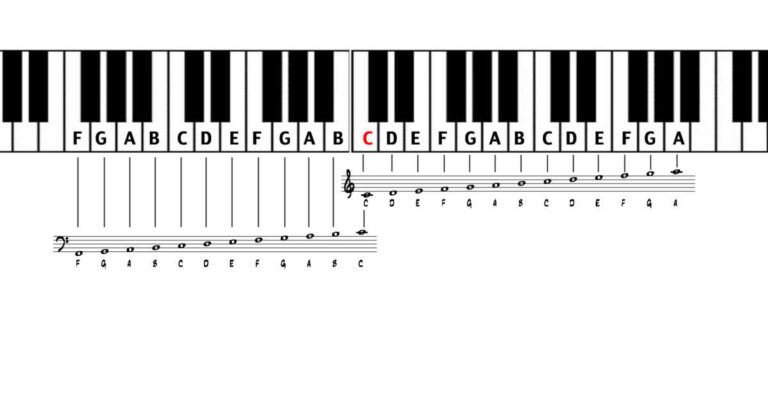
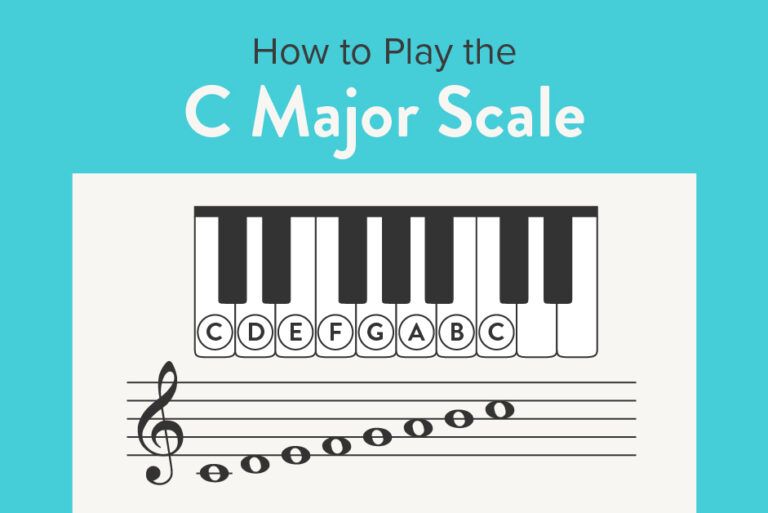
The C major scale is eight notes from C to C. Notes are C D E F G A B C. Intervals are whole, whole, half, whole, whole, whole, half. Knowing this pattern helps you learn other scales faster. When you know how to play c major scale on piano, you gain a template for all major keys.
How to play c major scale on piano: step-by-step
Follow these steps. Practice slowly and cleanly.
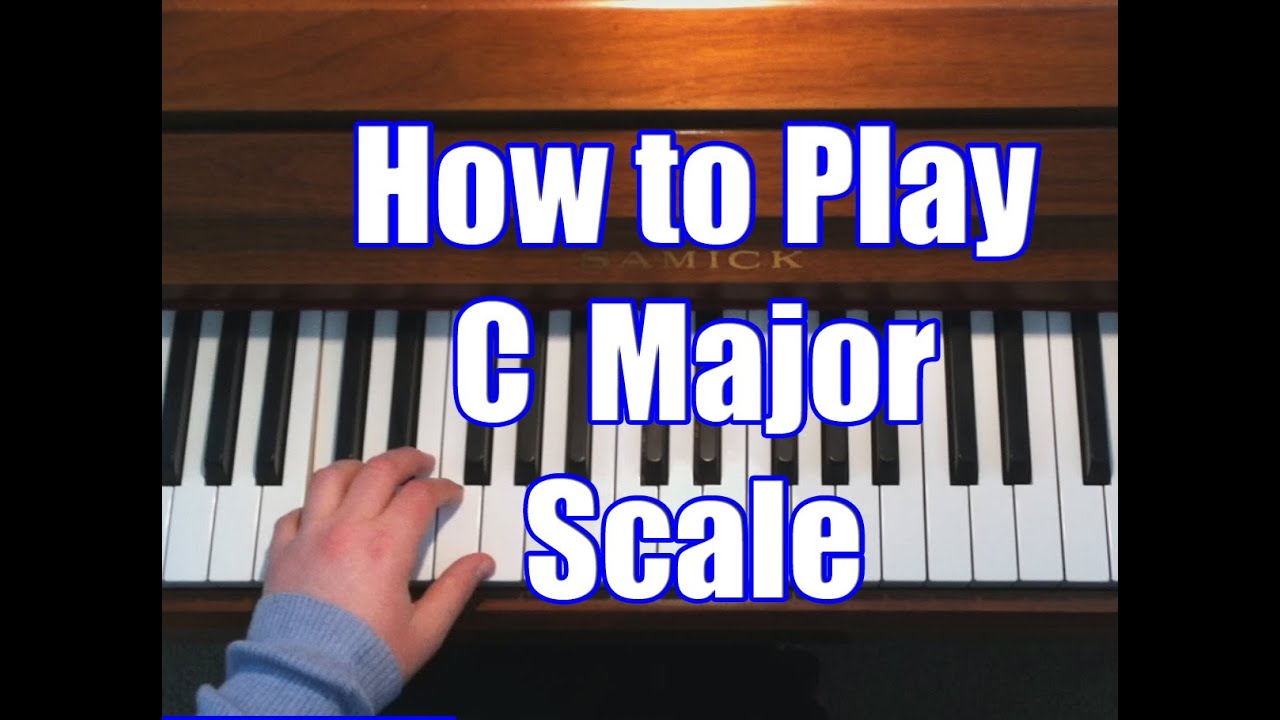
- Find middle C. Sit with relaxed shoulders and curved fingers.
- Right hand ascending:
- Place finger 1 (thumb) on C, 2 on D, 3 on E.
- Tuck the thumb under to play F with 1, then 2 on G, 3 on A, 4 on B, 5 on high C.
- Right hand descending:
- Play 5 on high C down to 3 on A.
- Cross the 2nd finger over the 3rd to get to G, then 1 on F and continue down.
- Left hand ascending:
- Start with finger 5 on low C, then 4 on D, 3 on E, 2 on F.
- Cross finger 3 over to play G with 1 on G, then 2 on A, 3 on B, 4 on high C.
- Left hand descending:
- Reverse the above. Use the thumb under technique where needed.
- Coordinate hands:
- Practice hands separately for a week if needed.
- Then play both hands together slowly, matching fingers and rhythm.
Practice each step slowly. Use a metronome. When you can play cleanly at slow tempo, raise speed in small steps. Repeating how to play c major scale on piano this way builds muscle memory.
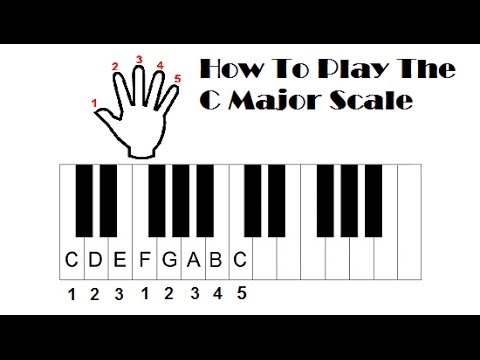
Fingering charts and quick references
Clear finger patterns help you avoid hesitation.
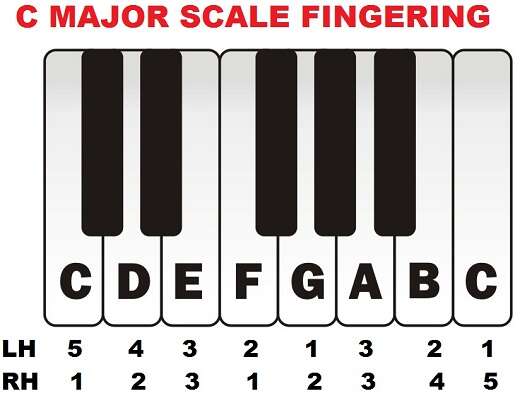
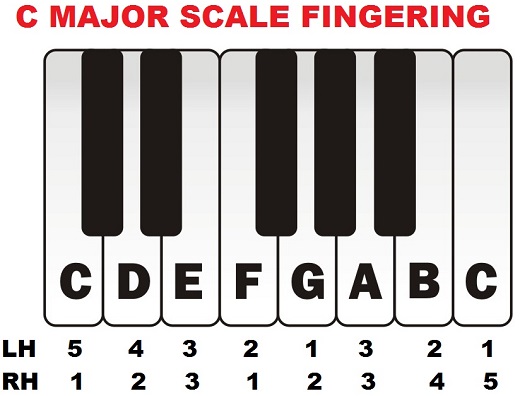
- Right hand one octave ascending: 1 2 3 1 2 3 4 5
- Right hand descending: 5 4 3 2 1 3 2 1
- Left hand one octave ascending: 5 4 3 2 1 3 2 1
- Left hand descending: 1 2 3 1 2 3 4 5
For two octaves, repeat the same thumb-under transitions. Keep wrists level and relaxed when you practice how to play c major scale on piano for longer runs.
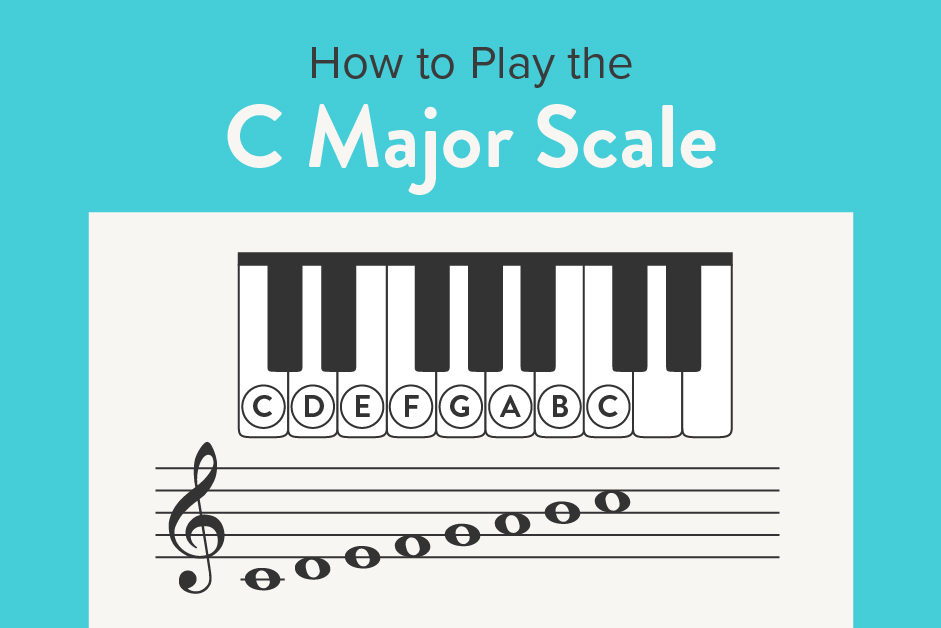
Common mistakes and how to fix them
Identify errors early. Fix them with focused drills.
- Rushing through thumb transitions
– Slow the scale and isolate the thumb-under motion until it feels smooth. - Tense wrists and hunched shoulders
- Drop your shoulders and let the wrist move slightly with each thumb tuck.
- Uneven note lengths or accents
- Practice with a metronome to make notes even and steady.
- Looking at the keys constantly
- Learn to feel the thumb position; practice with eyes closed briefly to build touch.
These fixes help you play better and make learning how to play c major scale on piano faster and more enjoyable.

Practice routines and exercises
A clear routine speeds progress. Try this weekly plan.
- Daily warm-up (5 minutes)
- Play one-octave C major scale slowly, focusing on fingerings.
- Technique block (10 minutes)
- Do two-octave scales hands separately, then together. Use a metronome.
- Musical application (10 minutes)
- Play chords and simple songs in C major to hear the scale in context.
- Variation drills (5 minutes)
- Play the scale in thirds, in contrary motion, and with staccato.
Repeat this routine five days per week. Track tempo gains. When you have reliable control, increase speed by 5-10 BPM. Regular practice will make how to play c major scale on piano feel natural.
Frequently Asked Questions of how to play c major scale on piano
What fingers do I use to play the C major scale on piano?
Right hand ascending uses 1 2 3 1 2 3 4 5. Left hand ascending uses 5 4 3 2 1 3 2 1. These fingerings help smooth thumb crossings.
How fast should I practice the C major scale?
Start very slow. Aim for clean, even notes. Gradually increase tempo by small steps with a metronome.
How long before I can play the C major scale smoothly?
With focused daily practice, most beginners get smooth one-octave scales in a week. Two-octave coordination can take a few weeks.
Should I look at the keys while learning the C major scale?
Avoid looking once you find middle C. Learn the thumb position by feel. This builds muscle memory.
Can practicing the C major scale improve my playing of songs?
Yes. Practicing how to play c major scale on piano improves finger strength, timing, and ear training. These skills transfer directly to pieces in C major and other keys.
Is it important to use a metronome when practicing scales?
Yes. A metronome builds steady rhythm and makes tempo increases safe. Use it every practice session to track progress.
Conclusion
Mastering how to play c major scale on piano is a high-value skill. You gain finger control, better timing, and musical confidence. Start slow, use correct fingerings, and practice consistently. Try the routine above for two weeks and notice real improvement. If this helped, please practice today, share your progress, or leave a comment with questions.

Senior Music Reviewer
Alex Carter is a seasoned music reviewer with over a decade of experience in the world of sound and instruments. Passionate about helping musicians and enthusiasts make informed choices, he brings sharp insights and in-depth knowledge to every review. From classical instruments to modern gear, Alex combines technical expertise with a love for music to deliver content that resonates with readers.
As a Senior Music Reviewer and expert author on Tuneluma.com, Alex is dedicated to sharing honest evaluations, practical advice, and thoughtful commentary to guide readers in their musical journey.