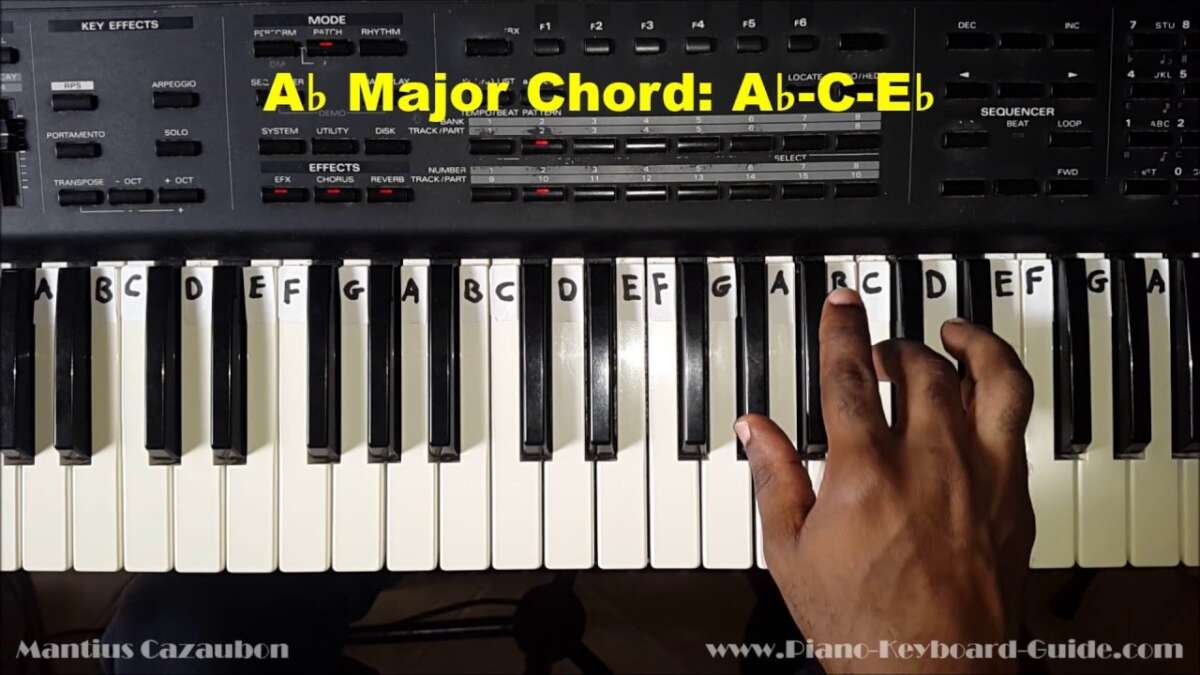
Play A-flat by finding the A♭ key, then play its chord (A♭-C-E♭) and scale with proper fingering.
I’ve taught piano for over a decade and helped students of every level learn tricky keys like A-flat. This guide breaks down how to play ab on piano step-by-step, with clear fingerings, practice routines, common progressions, and real teaching tips. You’ll get both the theory and hands-on exercises to build confidence in A-flat quickly and cleanly. Read on to master how to play ab on piano with reliable method and practical drills.
Understanding A-flat on piano
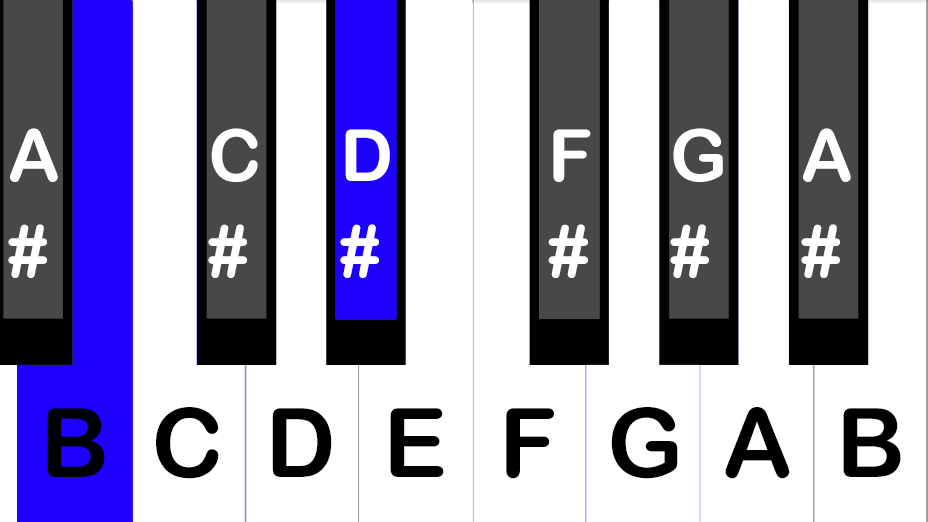
A-flat (A♭) is the black key immediately to the left of the A natural key. It is enharmonic with G-sharp (G♯), meaning they sound the same but belong to different notations. Knowing both names helps you read music and transpose easily.
A-flat major has four flats in its key signature: B♭, E♭, A♭, and D♭. A-flat minor is less common on piano notation because it uses seven flats; many players use G♯ minor as the enharmonic alternative.
Key points to remember:
- A-flat is a black key to the left of A.
- A-flat major scale notes: A♭, B♭, C, D♭, E♭, F, G, A♭.
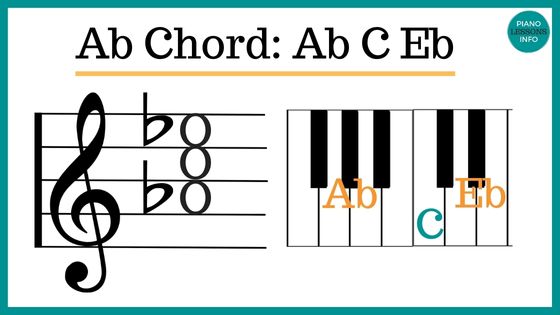
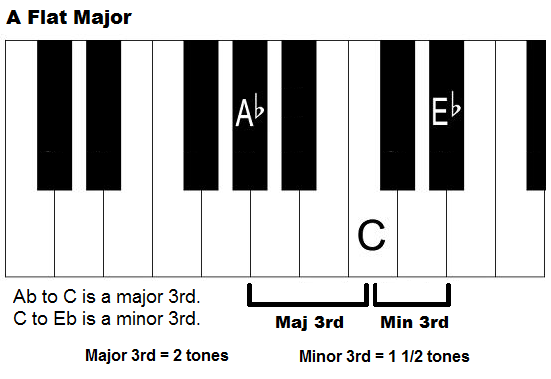
- A-flat major chord (triad): A♭, C, E♭.
These basics set the foundation for learning how to play ab on piano effectively.
How to play Ab major chord (step-by-step)
Playing the A-flat major triad is one of the first practical steps for how to play ab on piano.
Step-by-step:
- Locate the A♭ key: it’s the black key immediately left of A.
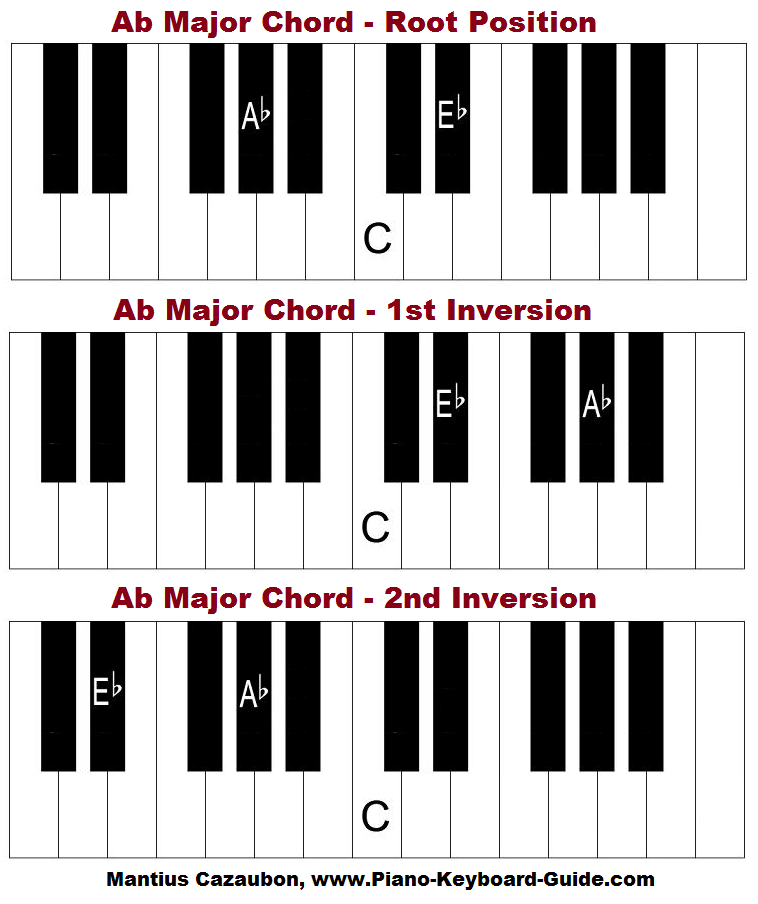
- Play the triad: press A♭, then C, then E♭ together.
- Right-hand fingering: use 1 (thumb) on A♭, 3 on C, and 5 on E♭.
- Left-hand fingering: use 5 on A♭, 3 on C, and 1 on E♭.
Practice patterns:
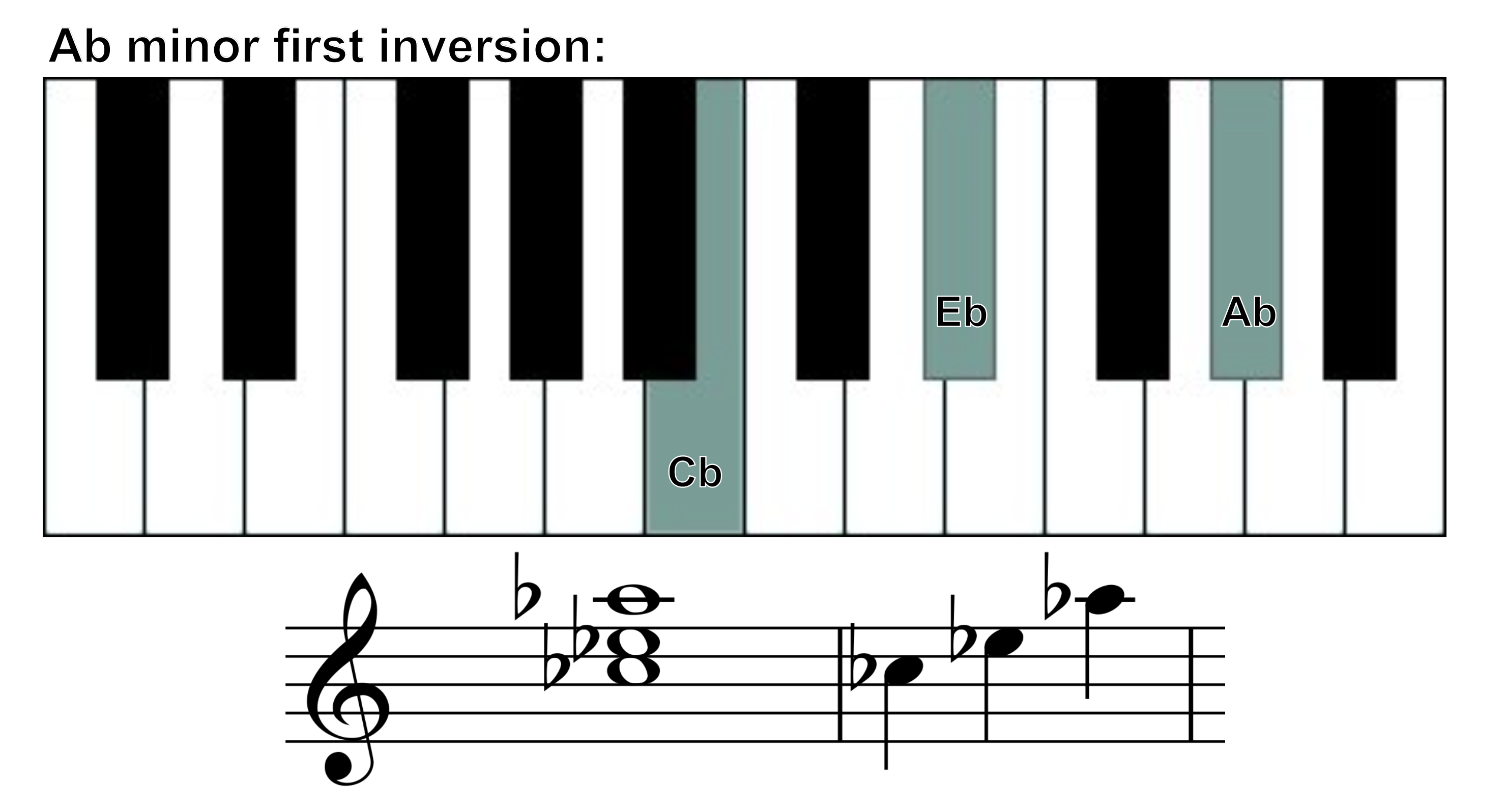
- Play the chord in root position, then play first inversion (C-E♭-A♭) and second inversion (E♭-A♭-C).
- Practice each inversion with both hands, hands separately for 1–2 minutes each.
Learning these steps shows you how to play ab on piano cleanly and prepares you to voice the chord in songs and progressions.

How to play Ab minor and useful alternatives
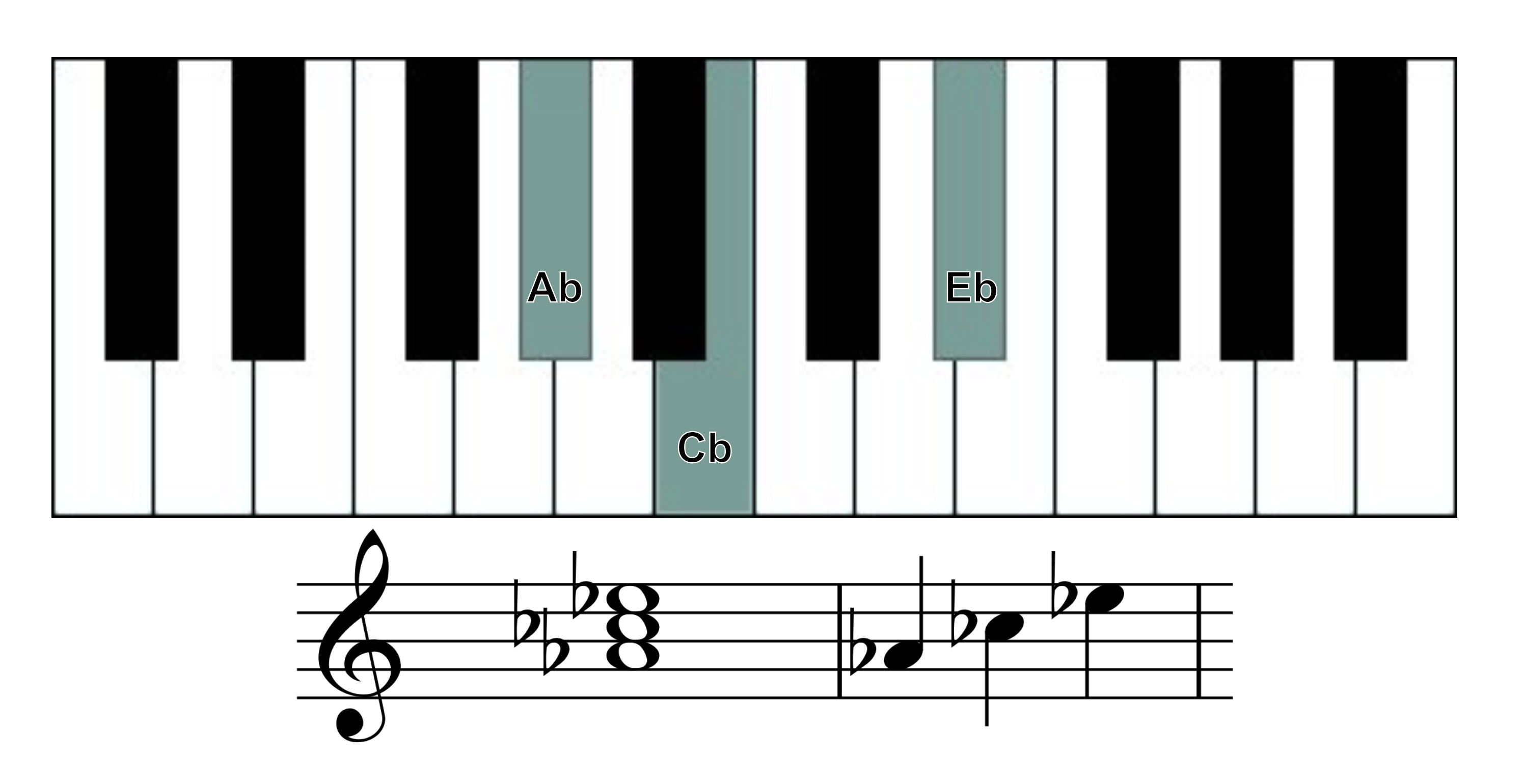
Ab minor exists but is written with seven flats, which can be cumbersome. Many pianists use G♯ minor as the enharmonic equivalent. Still, knowing Ab minor helps with reading some scores.
Notes:
- A♭ natural minor scale: A♭, B♭, C♭, D♭, E♭, F♭, G♭, A♭
- A♭ minor triad: A♭, C♭, E♭
Practical tips:
- For beginners, practice the minor triad fingerings same as major: right hand 1-3-5, left hand 5-3-1.
- If notation shows many flats, consider reading as G♯ minor for easier mental mapping.
Understanding both forms clarifies how to play ab on piano across different musical styles.
Playing the A-flat scales: major, natural minor, and modes
Scales give keyboard familiarity and finger strength. Practicing scales is central to how to play ab on piano well.
A-flat major scale fingering (right hand ascending):
- 1 on A♭, 2 on B♭, 3 on C
- 1 on D♭, 2 on E♭, 3 on F, 4 on G, 5 on A♭
Left hand is the mirror: 5-4-3-2-1 then cross under accordingly.
Natural A-flat minor (less common) uses seven flats; you can practice its fingering the same way, or practice G♯ minor instead.
Practice routine:
- Play scales slowly with a metronome at 60 BPM.
- Use hands separately for 2 minutes, then hands together for 3 minutes.
- Practice two octaves up and down, focusing on even tone and steady rhythm.
Scales are one of the most effective ways to cement how to play ab on piano in your fingers.

Common chord progressions and songs in Ab
Knowing common progressions helps you apply how to play ab on piano in real music.
Basic progressions in A♭ major:
- I–IV–V: A♭ – D♭ – E♭
- I–vi–IV–V: A♭ – Fm – D♭ – E♭
- ii–V–I (jazz): B♭m7 – E♭7 – A♭maj7
Voicing tips:
- Use closed triads for simple accompaniment.
- Add the major 7th (G) to the A♭ chord for a richer sound (A♭maj7 = A♭-C-E♭-G).
- For ballads, play the left hand as block chords and right hand with broken arpeggios.
Practicing these uses shows practical ways to apply how to play ab on piano in songs and accompaniment.
Practical exercises and drills to master A-flat
Exercises train finger memory and confidence.
Daily drill list:
- Five-minute scale warm-up: A♭ major, two octaves, hands separate then together.
- Three-minute arpeggio practice: A♭ major broken in 8th notes.
- Inversion workout: 1 minute per inversion, left and right hands.
- Progression loop: play I–IV–V for 5 minutes, varying rhythm patterns.
Technique focus:
- Keep wrist relaxed.
- Use steady tempo with a metronome.
- Aim for even volume across fingers.
These focused drills make learning how to play ab on piano faster and less frustrating.
Advanced voicings, improvisation, and creative tips
Once basic chords and scales are solid, explore richer tones and improvisation.
Voicing ideas:
- Add 7ths and 9ths: A♭9 (A♭-C-E♭-G-B♭) for color.
- Spread voicings: play root in bass and higher chord tones in the right hand.
- Drop-2 voicings for jazz comping.
Improvisation tips:
- Start by playing the A♭ major scale over I chords.
- Outline chord tones on the strong beats.
- Use pentatonic and blues scales for solos in A♭.
Creative practice:
- Record yourself and listen back.
- Transpose a simple song into A♭ to sharpen reading and ear skills.
These approaches deepen your understanding of how to play ab on piano musically.
Mistakes to avoid and troubleshooting
Common errors slow progress. Address them early.
Frequent mistakes:
- Wrong fingerings: memorize standard fingerings for scale and chord shapes.
- Tension: keep shoulders and wrists relaxed to avoid stiffness.
- Ignoring black-key layout: visualize black-key groups to locate A♭ quickly.
Troubleshooting tips:
- Slow down when you feel tension.
- Use small sections of music, repeat 10–20 times, then expand.
- If reading flats is hard, practice sight-reading simple pieces in A♭ major.
Avoiding these pitfalls speeds how to play ab on piano progress and builds reliable technique.

My personal experience learning and teaching A-flat
I remember my first time teaching A♭ to a beginner. The student felt overwhelmed by flats. I used these steps:
- Showed the A♭ key visually and let the student press it repeatedly.
- Introduced the triad A♭-C-E♭ as a small win.
- Used slow metronome practice for scale and arpeggio drills.
What worked best:
- Hands-separate practice for muscle memory.
- Short sessions daily rather than long weekly ones.
- Encouraging small, clear goals like “play three clean A♭ scales this week.”
These methods made the lesson emotional and effective, and they illustrate practical ways to learn how to play ab on piano quickly.
Frequently Asked Questions of how to play ab on piano
What notes are in the A-flat major scale?
A-flat major has A♭, B♭, C, D♭, E♭, F, G, and returns to A♭. Its key signature contains four flats: B♭, E♭, A♭, and D♭.
How do I play an A-flat chord on piano?
Play A♭, C, and E♭ together. Right hand typically uses 1-3-5 while left hand uses 5-3-1 for clean finger placement.
Is A-flat a hard key to learn on piano?
It can feel harder at first because of flats, but practice and visualizing black-key patterns make learning A♭ straightforward and quick.
Should I practice A-flat as G-sharp instead?
For theory clarity, A♭ is correct in many pieces. G♯ is the enharmonic equivalent and can be easier in some contexts; use whichever matches the sheet music.
What fingering is best for the A-flat scale?
Right-hand ascending: 1-2-3, then 1-2-3-4-5. Mirror this pattern for the left hand. Practice slowly to internalize the cross-under points.
Conclusion
Mastering A-flat on piano starts with knowing the key, playing the triad A♭-C-E♭, and practicing the A♭ scale and common progressions. Use short, focused practice sessions, work hands separately, and build from triads to inversions and voicings. Apply the drills and troubleshooting tips consistently to see steady improvement.
Make a plan: practice A♭ for 10 minutes daily for two weeks and track progress. Try transposing a simple song into A♭ and share your recording or questions in the comments. Keep practicing, stay curious, and enjoy making music.

Senior Music Reviewer
Alex Carter is a seasoned music reviewer with over a decade of experience in the world of sound and instruments. Passionate about helping musicians and enthusiasts make informed choices, he brings sharp insights and in-depth knowledge to every review. From classical instruments to modern gear, Alex combines technical expertise with a love for music to deliver content that resonates with readers.
As a Senior Music Reviewer and expert author on Tuneluma.com, Alex is dedicated to sharing honest evaluations, practical advice, and thoughtful commentary to guide readers in their musical journey.
Leave a Reply