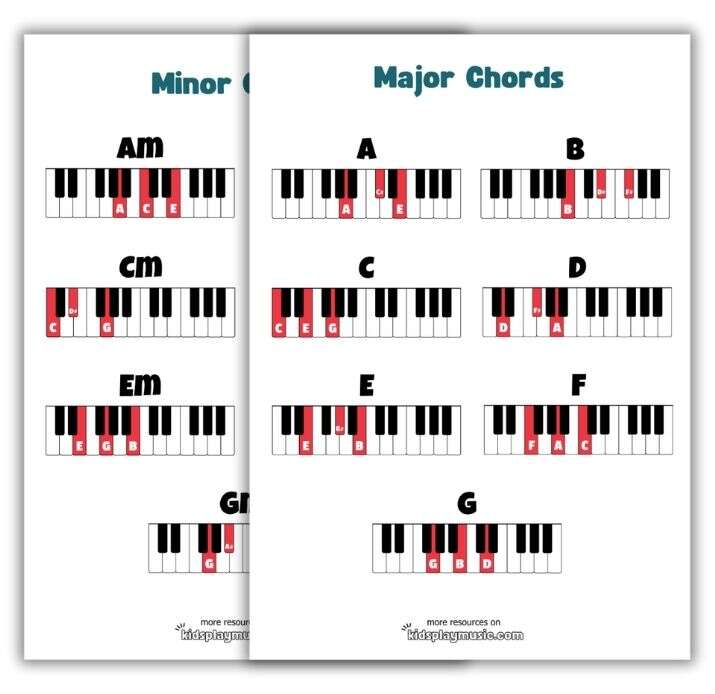
Practice simple triads, play them slowly, and repeat daily while learning chord progressions.
I’ve taught and played piano for years, and I’ll show you exactly how to learn chords on piano in clear, practical steps. This guide breaks down the theory, fingerings, practice routines, ear training, and real-song examples so you can build confident chord knowledge fast. Expect short drills, mistakes to avoid, and a 30-day plan you can actually use.
Why learning chords matters for piano
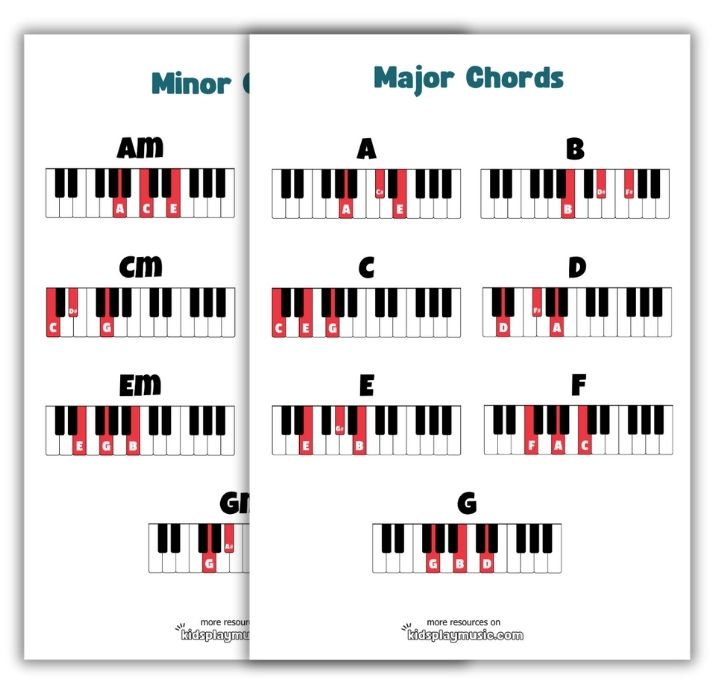
Chords are the building blocks of most music. When you learn chords on piano, you gain the ability to play songs, create accompaniments, and improvise with confidence.
Chords help you read lead sheets, follow pop songs, and arrange simple pieces. They also speed up learning because many songs use the same progressions. Knowing chords makes practice purposeful and fun.
Basic music theory you need to know
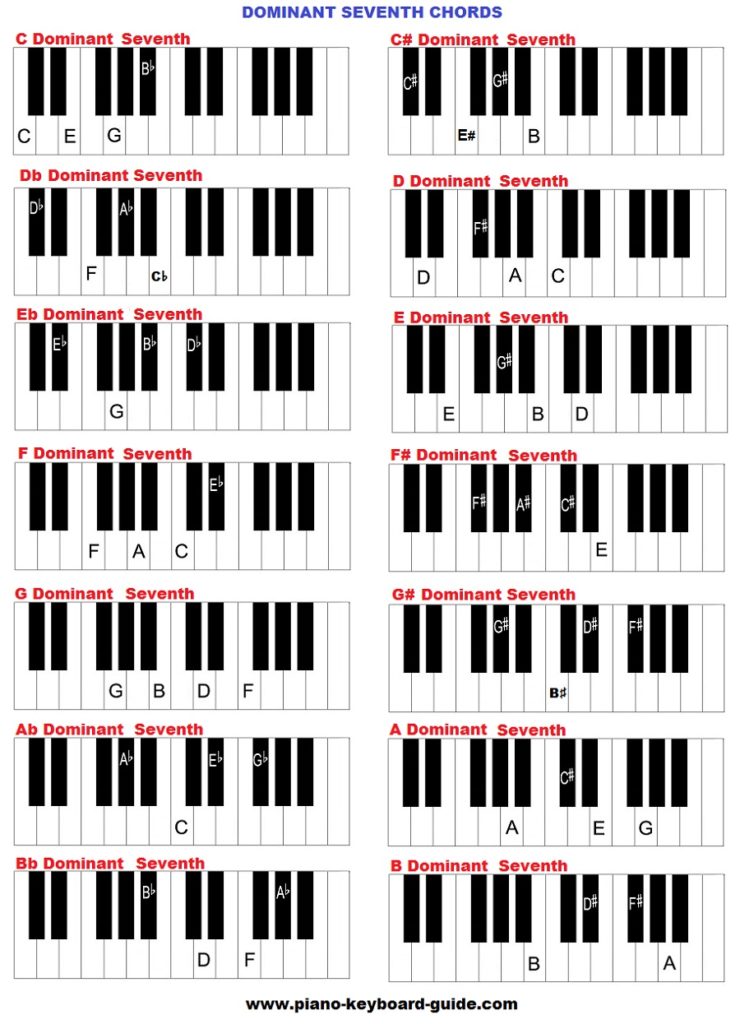
Start with simple terms. A chord is at least three notes played together. A triad has three notes: root, third, and fifth. Major chords sound bright. Minor chords sound sad. Dominant sevenths add tension and lead to resolution.
Learn intervals: root to third is key for quality. A major third has four semitones. A minor third has three semitones. Practice naming intervals by ear and on the keys. That skill helps when you learn chords on piano because you’ll hear what each chord should sound like.
A step-by-step method to learn chords on piano
Follow these steps to make steady progress.
- Learn the layout
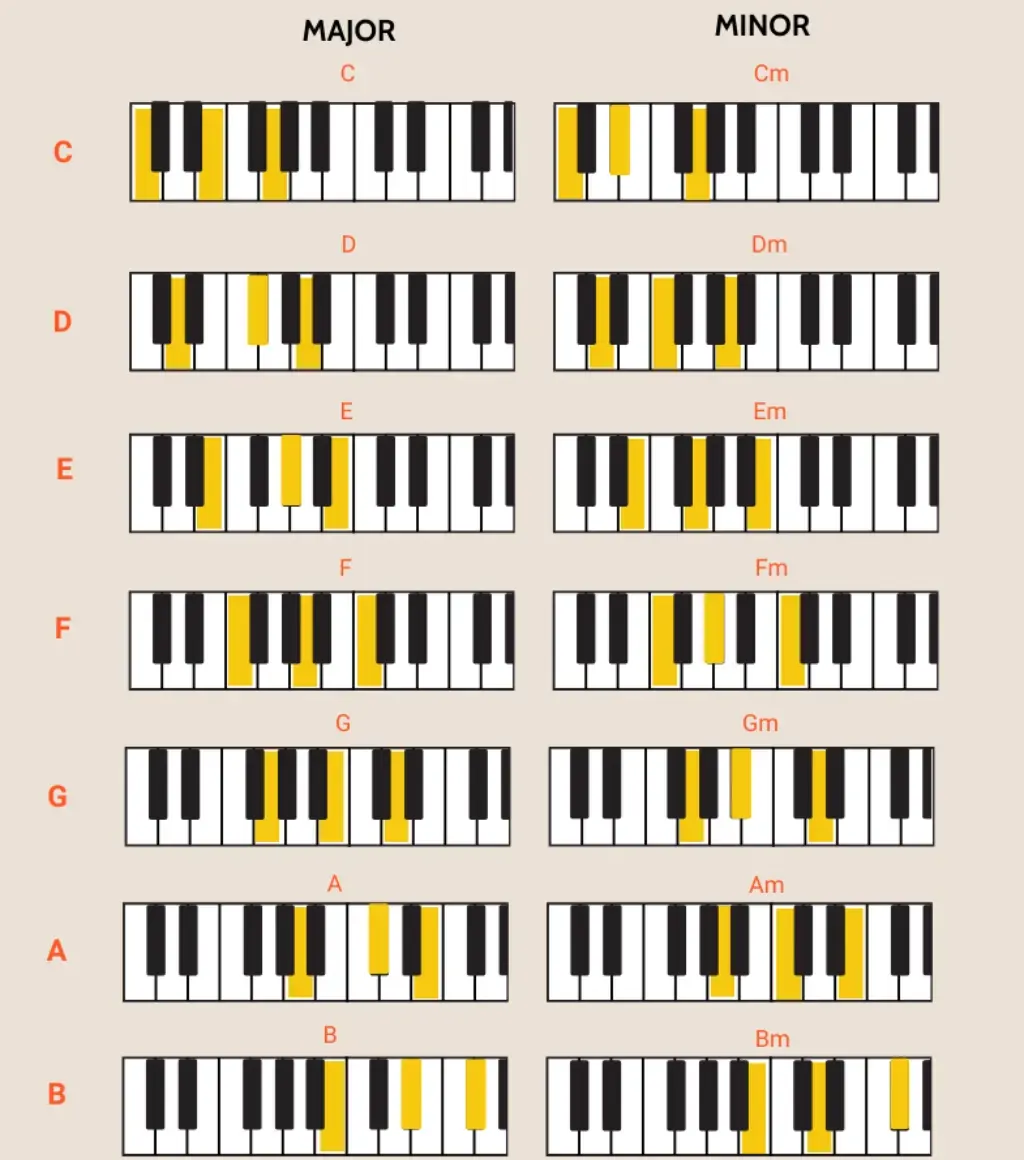
- Find C major, G major, A minor on the keyboard. Play them often.
- Learn triad fingerings
- Right hand: 1-3-5 for root position triads. Left hand: 5-3-1 or 1-2-3 depending on comfort.
- Practice shapes slowly
- Play root position, first inversion, and second inversion for each triad.
- Use a metronome
- Start at a slow tempo and increase by small increments.
- Add chord progressions
- Practice I-IV-V and vi-IV-I-V in different keys.
- Train your ear
- Play a chord and sing the root and third. Name the quality by ear.
I learned this sequence while teaching beginners. Starting with shapes and then adding ear work made my students progress faster. When I first taught myself, I skipped inversions. That slowed my ability to move smoothly, so don’t skip them.
Common chord types and how to play them
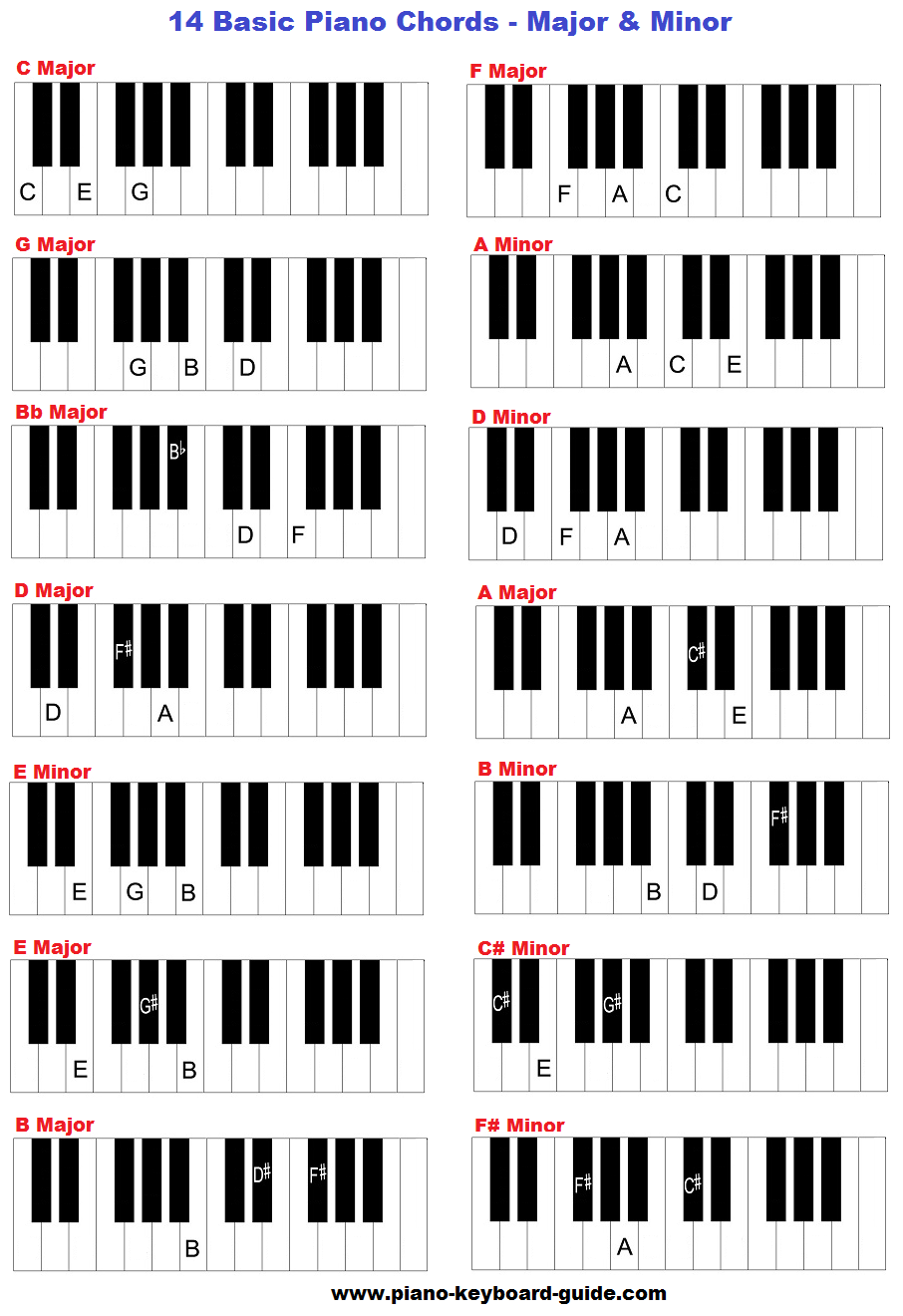
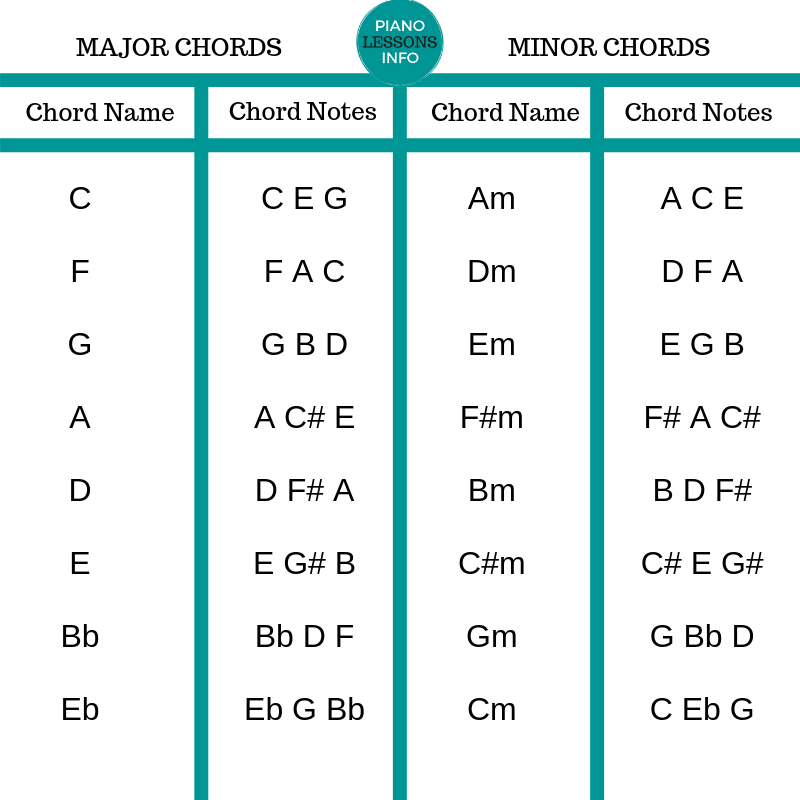
Understanding chord families makes learning efficient. Below are the most useful chords to master.
Major triads
- Notes: root, major third, perfect fifth.
- Sound: bright and stable.
Minor triads
- Notes: root, minor third, perfect fifth.
- Sound: warm and moody.
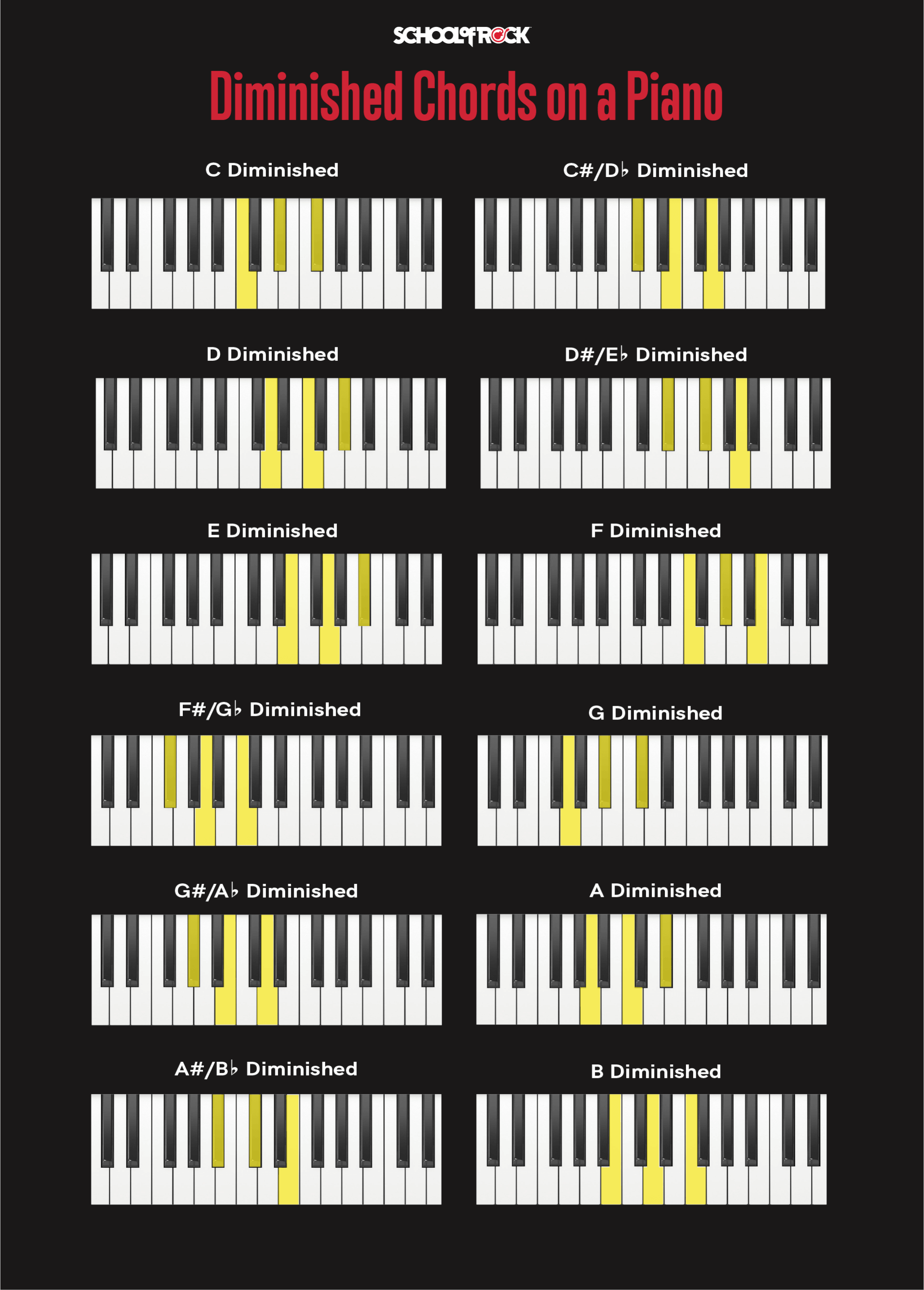
Diminished triads
- Notes: root, minor third, flat fifth.
- Sound: tense and unresolved.
Augmented triads
- Notes: root, major third, sharp fifth.
- Sound: dreamy or unsettled.
Seventh chords
- Types: dominant 7, major 7, minor 7.
- Use: add color and motion in progressions.
Practice each type in three positions. Play each chord in all 12 keys. This routine helps you internalize shapes. When you practice how to learn chords on piano, cycle through types to build a mental catalog.

Practical chord progressions and songs to practice
Learning progressions helps you apply chords in music. Practice these common progressions and try songs that use them.
- I–IV–V
- Songs: many folk and classic pop tunes.
- vi–IV–I–V (the pop four-chord)
- Songs: modern pop and countless hits.
- ii–V–I
- Songs: jazz standards and easy ballads.
- I–vi–IV–V
- Songs: 1950s pop and doo-wop.
Try the progressions in C, G, and F. Play with different rhythms: block chords, arpeggios, and broken patterns. I used the pop four-chord to teach harmony quickly to students. They could play dozens of songs after a few weeks.
Tips to speed learning and avoid common mistakes
Small changes make a big difference. Use these tips to accelerate learning how to learn chords on piano.
- Focus on muscle memory first, then speed.
- Practice inversions so you can move between chords without jumping.
- Limit your practice to 15–20 minutes per chord type to avoid fatigue.
- Record yourself to hear timing and balance.
- Don’t ignore dynamics; chords should have musical shape.
A common mistake is looking at the keys too long. Look ahead and plan your next hand shape. I used to freeze because I tried to read too many notes. Forcing short practice bursts fixed that.
Tools and resources that help you learn chords
The right tools make practice clearer and more effective.
- Digital keyboard with weighted keys for realistic feel.
- Metronome or tempo app for steady practice.
- Backing tracks to play along and hear progressions in context.
- Simple chord charts and lead sheets to follow songs.
- Ear-training apps for recognizing chord quality.
I recommend recording practice sessions and using slow-down features when learning complex progressions. That helped me spot mistakes and tune my timing quickly.
30-day practice plan to master basic chords
Follow this short plan to build steady skills. Spend 20–30 minutes daily.
Week 1: Basics and triads
- Days 1–3: Learn root position major and minor triads in C and G.
- Days 4–7: Add inversions and practice with a metronome.
Week 2: Expand keys and ear training
- Days 8–11: Move triads to F, D, and A.
- Days 12–14: Do ear drills—identify major vs minor.
Week 3: Sevenths and progressions
- Days 15–18: Learn dominant and major 7 chords.
- Days 19–21: Practice I–IV–V and vi–IV–I–V in multiple keys.
Week 4: Apply to songs and improvise
- Days 22–25: Play three songs you love using learned chords.
- Days 26–30: Improvise chord voicings and record for feedback.
Repeat cycles and increase tempo slowly. Track progress by noting songs you can play without stopping. This plan focuses on how to learn chords on piano with clear, daily steps.

Frequently Asked Questions about how to learn chords on piano
What is the fastest way to learn piano chords?
Learn common triads and their inversions first, then practice a few standard progressions slowly with a metronome. Repetition and regular short sessions are faster than long, infrequent practice.
How long does it take to learn basic chords?
With daily 20–30 minute practice, you can play basic triads and simple progressions in 2–4 weeks. Mastery and speed will take more months of consistent practice.
Should I learn chords before reading sheet music?
You can learn both in parallel, but many find chords more rewarding early on because they can accompany songs quickly. Chords give practical playing ability while you develop reading skills.
How do I memorize chord shapes on the piano?
Use patterns and inversions in multiple keys, and practice transitions between related chords. Visualize root notes and sing chord tones to strengthen memory.
Can I learn chords by ear?
Yes. Start by distinguishing major and minor qualities, then identify the root and third. Ear training complements theory and speeds up learning how to learn chords on piano.
What fingers should I use for chords?
Common fingerings are 1-3-5 in right hand and 5-3-1 in left hand for root positions. Adjust as needed for comfort when playing inversions or wide stretches.
Conclusion
Chords are the fastest path to playing songs, accompanying others, and composing. Start with triads, add inversions, train your ear, and practice short, steady sessions to master how to learn chords on piano. Use the 30-day plan, focus on common progressions, and apply what you learn to songs you love.
Take one small step today: pick three chords and play them for five minutes. If you found this helpful, try the practice plan, leave a comment, or subscribe for more piano guides.

Senior Music Reviewer
Alex Carter is a seasoned music reviewer with over a decade of experience in the world of sound and instruments. Passionate about helping musicians and enthusiasts make informed choices, he brings sharp insights and in-depth knowledge to every review. From classical instruments to modern gear, Alex combines technical expertise with a love for music to deliver content that resonates with readers.
As a Senior Music Reviewer and expert author on Tuneluma.com, Alex is dedicated to sharing honest evaluations, practical advice, and thoughtful commentary to guide readers in their musical journey.
Leave a Reply