How To Adjust Piano Bench Height For Proper Posture: Guide
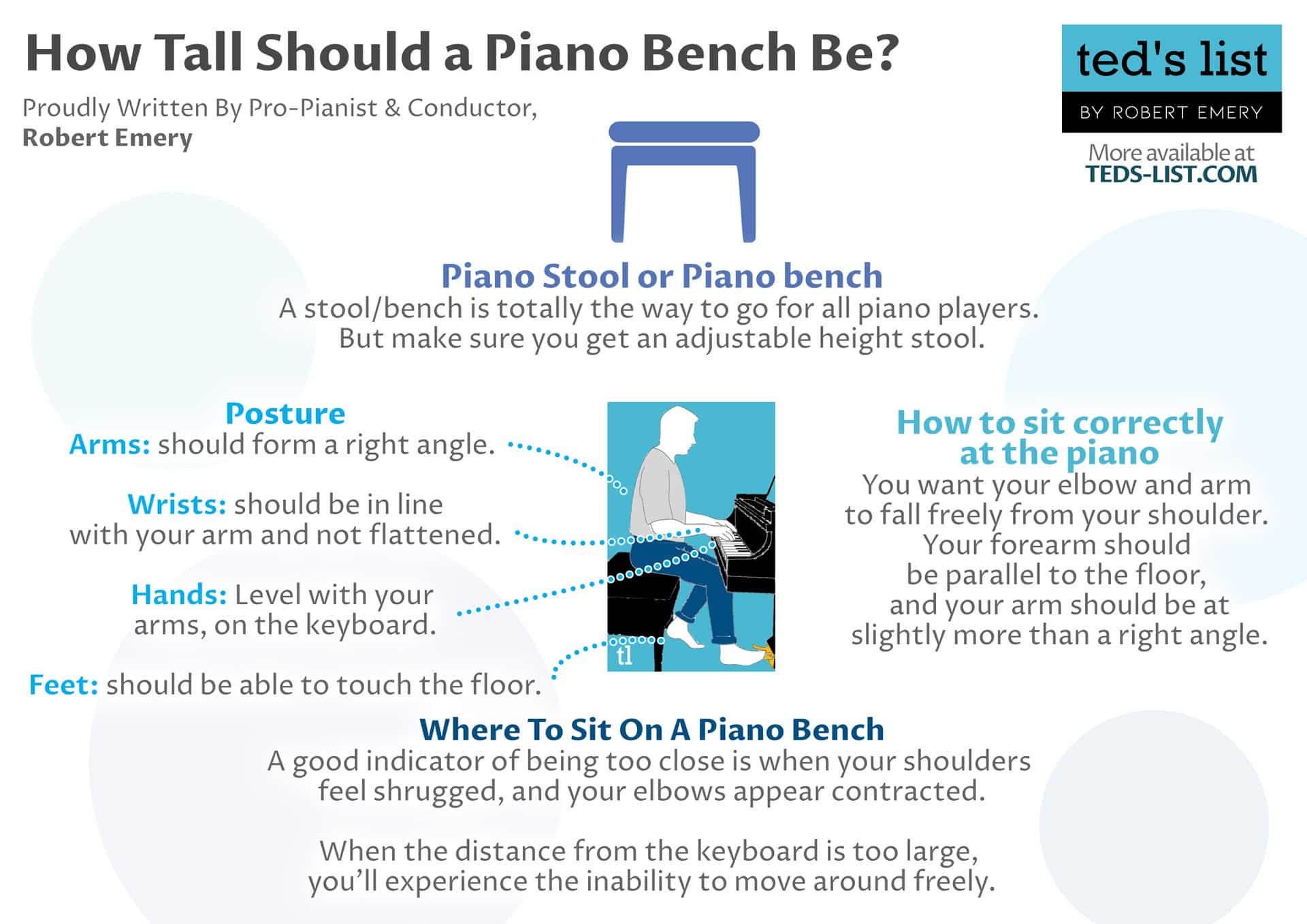
Set the bench so your elbows sit just above the keys, feet flat, and spine upright.
I’ve taught dozens of students and adjusted countless setups, so I know how small changes in how to adjust piano bench height for proper posture can stop pain, speed learning, and improve tone. This guide shows clear steps, simple checks, and real-life tips so you can sit smarter, play longer, and feel more confident at the piano.
Why bench height matters for posture and performance
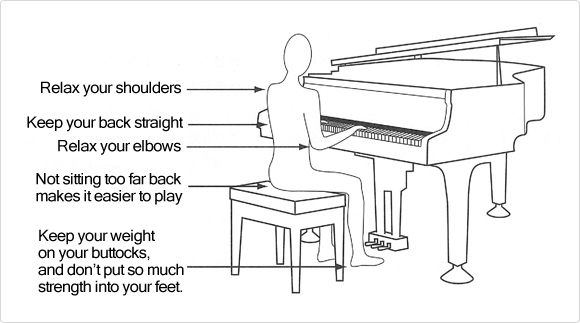
Bench height affects arm angle, wrist alignment, back support, and foot contact. Poor height leads to tension, fatigue, and limits control.
Good posture helps tone production, accuracy, and endurance. Learning how to adjust piano bench height for proper posture isn’t just comfort — it’s part of better technique.
How to adjust piano bench height for proper posture: Step-by-step
Follow these clear steps to set a stable, ergonomic playing position.
- Prepare the piano and bench
- Sit on the bench at the center of the keyboard.
- Wear typical shoes you will practice in.
- Check feet and knees
- Place both feet flat on the floor.
- Knees should be slightly under the keyboard edge and roughly level with or slightly below the hips.
- Align elbows and keys
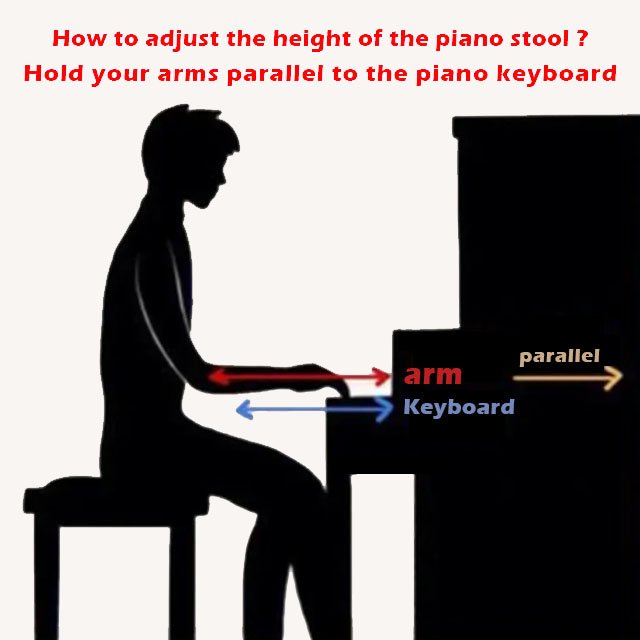
- Lower or raise the bench until your elbows sit just above the top surface of the keys.
- Your forearms should slope gently down toward the keys, not lift or drop sharply.
- Set distance from the keyboard
- Sit so your forearms can float, with elbows about a fist’s width from your torso.
- If you must lean forward to reach, move the bench closer rather than hunching.
- Check wrist and hand position
- Wrists should be neutral — not collapsed downward or cocked upward.
- When fingers rest on middle C, wrists remain level with the knuckles.
- Confirm back and shoulders
- Sit on the front half of the bench with a slight forward tilt in the pelvis.
- Shoulders should be relaxed and down, not raised.
- Final play test
- Play scales and chords slowly; notice comfort and tone.
- Adjust by a half-inch at a time until movement feels free.
- Lock and mark
- If your bench has adjustable feet or screws, lock the setting and mark it for repeatability.
This sequence explains how to adjust piano bench height for proper posture in a methodical, repeatable way.

Fine-tuning: measurements, checks, and quick fixes
Use simple checks to fine-tune posture after the basic setup.
- Elbow angle
- Elbows should be roughly level with or slightly above the keys.
- Knee angle
- Aim for a 90–100 degree bend in the knees; avoid fully locked legs.
- Distance check
- When you extend your arms, you should reach keys easily without leaning.
- Foot contact
- Both feet flat gives stability; use a small footstool for short legs.
If your bench is too low
- You’ll hunch and collapse wrists.
- Fix by raising bench or using a cushion.
If your bench is too high
- You’ll raise shoulders and tense the neck.
- Lower bench until shoulders relax.
These checks help you refine how to adjust piano bench height for proper posture so small tweaks yield big improvements.

Common mistakes and how to fix them
Here are typical errors and simple fixes.
-
Sitting too far back
- Problem: Hunching and reaching.
- Fix: Move bench forward so elbows are near the keys.
-
Bench too low
- Problem: Dropped wrists and poor tone.
- Fix: Raise seat or add a firm cushion.
-
Bench too high
- Problem: Tense shoulders and shallow breathing.
- Fix: Lower seat until arms are comfortable.
-
Feet dangling or unsupported
- Problem: Loss of balance and pedaling control.
- Fix: Use a footstool or platform.
-
Static setup for different pianos
- Problem: One height doesn’t fit every instrument.
- Fix: Recheck settings each time you change pianos.
Avoiding these mistakes helps you consistently apply how to adjust piano bench height for proper posture and prevents long-term strain.

Bench types, tools, and accessories that help
Choose equipment that makes adjustments simple and stable.
- Adjustable artist bench
- Pros: Easy height changes; consistent support.
- Hydraulic or lever benches
- Pros: Fast, tool-free adjustments.
- Cushions and wedges
- Pros: Cheap fix for small height changes.
- Footstools and pedal extenders
- Pros: Essential for young players.
- Marking tape or stickers
- Pros: Quick re-set marks for different users.
Pick a bench and tools that match your body and practice habits. The right gear simplifies how to adjust piano bench height for proper posture and keeps settings steady while you play.

Personal experience: lessons, mistakes, and practical tips
When I started teaching, I ignored bench height and watched students develop wrist pain. I learned to measure, not guess. A student improved speed and comfort after a small 1-inch raise — that one change made practice enjoyable again.
Tips I use with students
- Always test with a short warm-up and slow scales.
- Keep a written note of bench height for each piano.
- Reassess when you change shoes, clothes, or instrument.
The practical takeaway: simple, repeatable checks beat guessing. That’s how to adjust piano bench height for proper posture in real life.

Maintenance and ergonomics for long practice sessions
Small habits keep posture healthy over time.
- Take short breaks every 20–30 minutes to stand and stretch.
- Re-check bench height and posture monthly or when you feel strain.
- Replace worn bench padding to avoid sinking and incorrect angles.
- Use lumbar support or a small cushion if you need back support.
These maintenance steps sustain the benefits of how to adjust piano bench height for proper posture and reduce injury risk.
Frequently Asked Questions of how to adjust piano bench height for proper posture
How high should my piano bench be for proper posture?
Your bench should place your elbows just above the keybed so forearms slope gently toward the keys. This usually means hips level with or slightly above knees and feet flat.
Can a cushion fix a too-low bench?
Yes, a firm cushion or wedge can raise height by an inch or two and immediately improve wrist angle. Use a non-slip cushion and test comfort during playing.
What if I play different pianos with different heights?
Re-check and adjust each time; mark favorite settings with tape if possible. Portable notes help you quickly replicate the ideal height.
Should kids use footstools instead of raising the bench?
Yes, a footstool helps children keep feet flat and stable while the bench stays at the correct height for arm mechanics. It preserves good posture and pedaling control.
How often should I reassess bench height?
Check your bench height whenever you change shoes, experience discomfort, or switch instruments; a monthly posture check is a good habit.
Conclusion
Setting the right bench height is a small effort with big rewards: better tone, less pain, and more efficient practice. Use the step-by-step checks above, keep adjustments small, and re-test often to find a comfortable, repeatable setup.
Try one change this week — raise or lower your bench by an inch and play for ten minutes. Notice the difference and share your results or questions below.

Senior Music Reviewer
Alex Carter is a seasoned music reviewer with over a decade of experience in the world of sound and instruments. Passionate about helping musicians and enthusiasts make informed choices, he brings sharp insights and in-depth knowledge to every review. From classical instruments to modern gear, Alex combines technical expertise with a love for music to deliver content that resonates with readers.
As a Senior Music Reviewer and expert author on Tuneluma.com, Alex is dedicated to sharing honest evaluations, practical advice, and thoughtful commentary to guide readers in their musical journey.