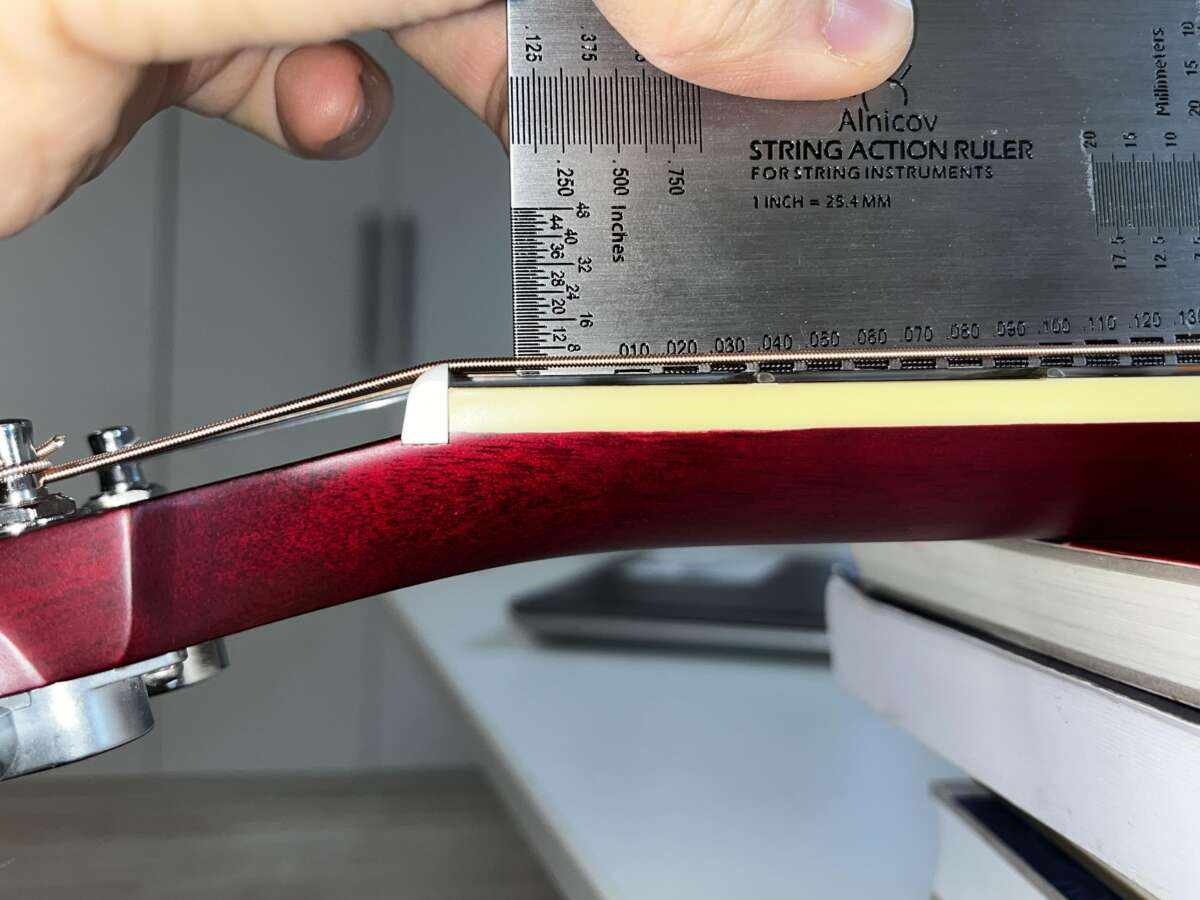
Ideal acoustic guitar action is about 2.0–2.5 mm at the 12th fret, slightly higher on the bass side.
I’ve set up hundreds of guitars and taught players from beginners to pros how to get the best tone and playability. In this guide I’ll explain how high should the action be on an acoustic guitar, why those measurements matter, and how to measure and adjust action safely. Read on to get clear numbers, step-by-step methods, and practical tips you can use today.

What is action and why it matters
Action is the distance between the string and the fretboard. It controls playability, tone, and how clean notes sound. Low action makes fretting easy and fast. High action gives more volume and sustain but can make playing tiring.
Knowing how high should the action be on an acoustic guitar helps you pick the right setup for your style. A good setup balances comfort and tone. Small changes can make a big difference.
Standard action measurements and how they’re measured
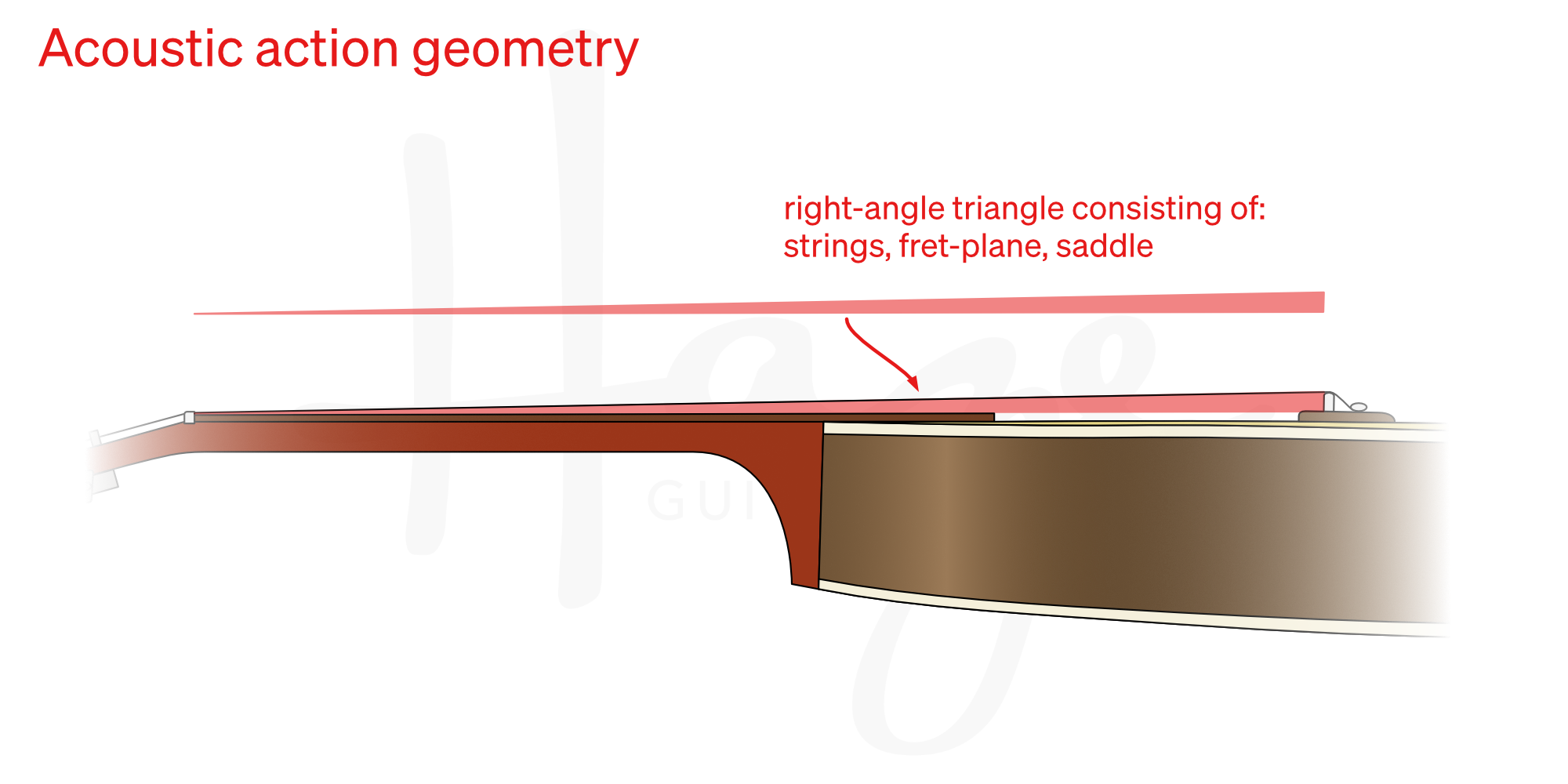
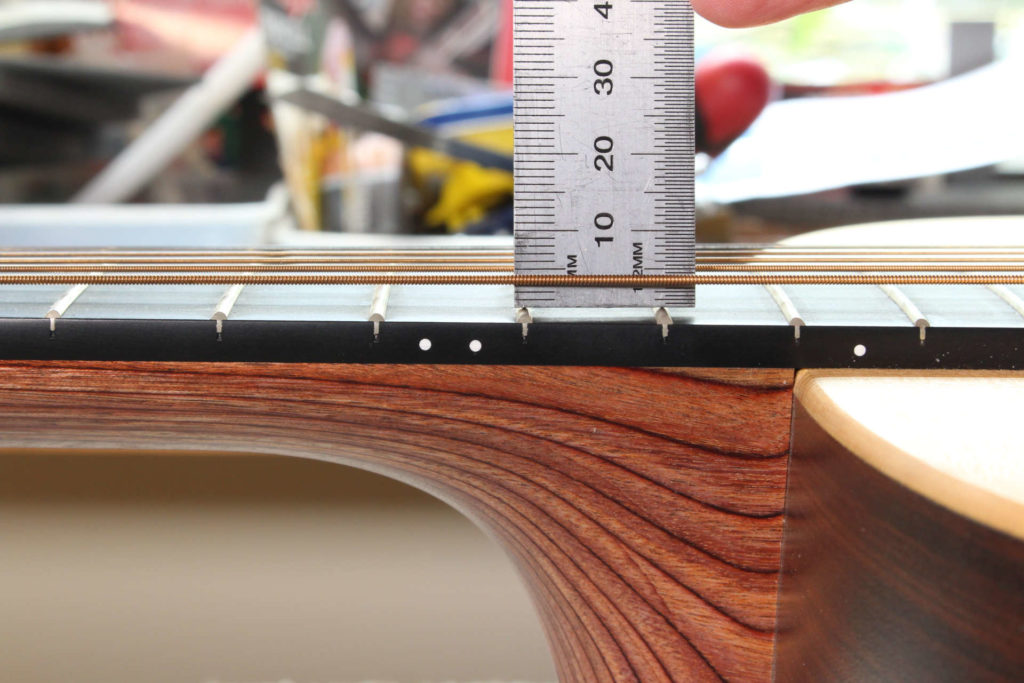
Action is usually measured at the 12th fret for accuracy. Common reference points:
- 12th fret, treble side: 1.5–2.0 mm for low action players
- 12th fret, bass side: 2.0–2.5 mm for balanced tone
- Nut height at 1st fret: about 0.25–0.5 mm for open string clearance
- Press the low E at the 1st fret and measure string height at 12th fret.
- Use a feeler gauge, ruler with mm marks, or a string action gauge.
- Record bass and treble values separately; many acoustic bridges are sloped.
These standards show how high should the action be on an acoustic guitar in practical terms. They are starting points, not strict rules.
Practical action ranges for different players
Different players need different setups. Here are simple ranges to match play style:
- Fingerstyle players:
- Treble: 1.8–2.3 mm
- Bass: 2.3–2.8 mm
- Strummers and rhythm players:
- Treble: 2.0–2.5 mm
- Bass: 2.5–3.0 mm
- Slide players:
- Treble and bass: 3.0–4.0 mm or more
- Beginners:
- Aim for easier play: treble 1.8–2.2 mm, bass 2.2–2.6 mm
When someone asks how high should the action be on an acoustic guitar, these ranges give real-world context. If you switch string gauge or style, retune the setup.
Factors that affect ideal action height
Several things change the ideal action. Consider each when you set a guitar.
- Playing style
- Faster leads need lower action. Heavy strumming benefits from a bit more height.
- String gauge
- Heavier strings need slightly more action to avoid buzz.
- Neck relief (truss rod)
- A bowed neck raises action. A back-bowed neck can cause buzz.
- Saddle and nut height
- High saddle increases action at the 12th fret. High nut makes open chords hard.
- Fret wear
- Worn frets cause high action or dead frets and often need leveling.
- Climate and humidity
- Wood swells or shrinks, changing action over seasons.
Think of how high should the action be on an acoustic guitar as a moving target. Adjust for these factors to find your sweet spot.

How to measure action step-by-step
Simple tools and clear steps help you measure accurately.
Tools needed:
- Ruler with mm markings or action gauge
- Capo
- Feeler gauges (optional)
- Small mirror or phone light for sightlines
Steps:
- Tune guitar to pitch and capo the 1st fret.
- Press the 6th string at the 1st fret (or hold the string down as with a capo).
- Measure the gap between the bottom of the string and the top of the 12th fret.
- Repeat on the 1st string. Record both mm values.
- Check nut string height by fretting at the 3rd fret and measuring at the 1st position.
Answering how high should the action be on an acoustic guitar starts with good measurements. Keep notes so you can track changes.
Adjusting action: DIY vs professional
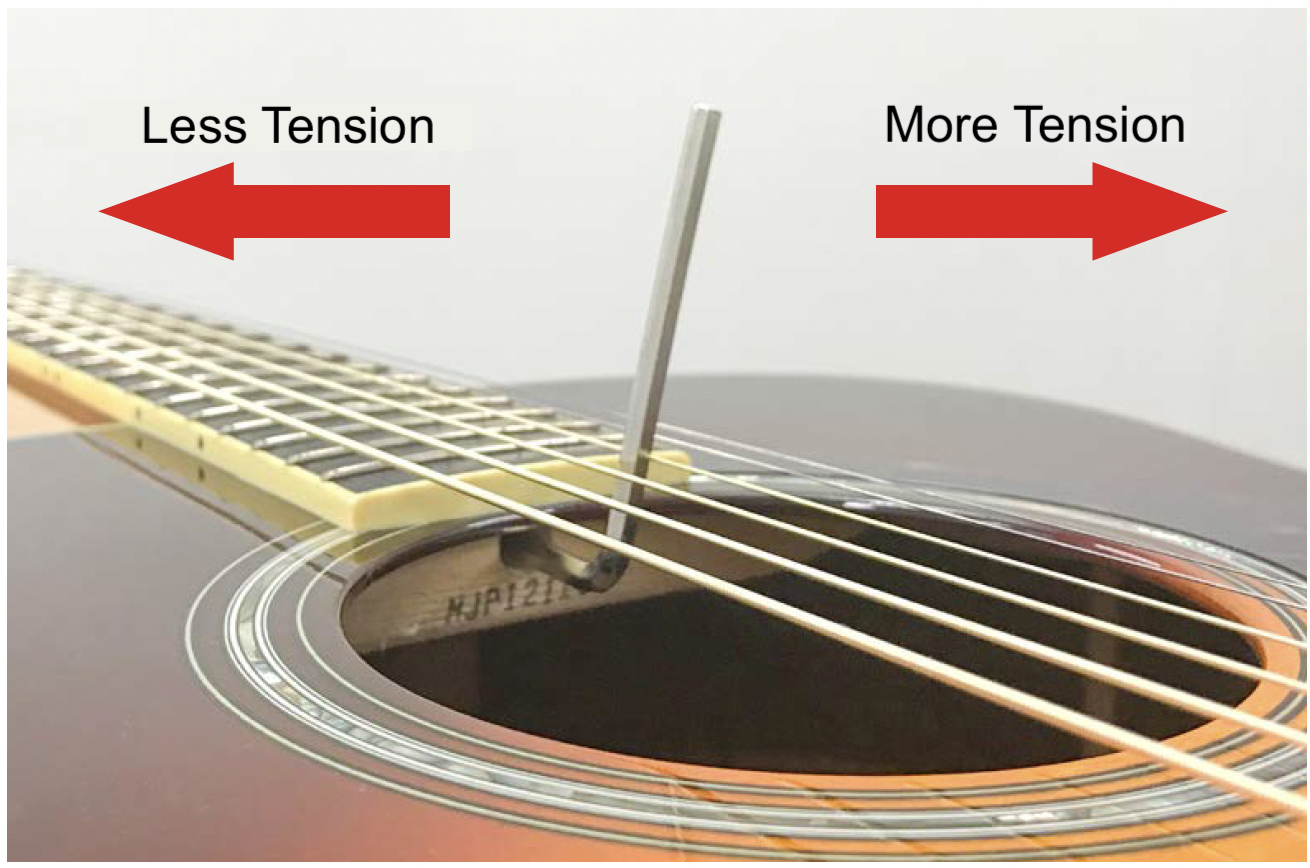
Small adjustments you can do at home:
- Lower or raise saddle by sanding or shimming
- Adjust truss rod for neck relief
- Replace or file nut slots carefully
When to see a pro:
- Complex fret work is needed (leveling, crowning)
- Bridge or neck repairs required
- You’re unsure about truss rod work
I’ve sanded many saddles and adjusted truss rods with care. If you are new, take photos, go slow, and stop if things feel risky. When you wonder how high should the action be on an acoustic guitar and the setup feels out of reach, get a luthier to help.
Common problems and fixes
Problem: Fret buzz
- Cause: Action too low or neck back-bowed.
- Fix: Increase saddle height slightly or correct neck relief.
Problem: Action too high and hard to play
- Cause: High saddle, raised nut, or high frets.
- Fix: Lower saddle carefully or check for fret wear.
Problem: Dead or choking notes
- Cause: High fret wear or uneven frets.
- Fix: Fret leveling or replacement by a pro.
Knowing how high should the action be on an acoustic guitar helps diagnose these problems faster. Small measurement shifts often cure issues.
Personal experience and pro tips
I once set up a student guitar with dreadfully high action. After measuring, I found a saddle raised too much after a repair. I sanded 0.8 mm off the bass side and the player’s vibrato improved overnight. Lessons I learned:
- Measure before you change anything.
- Make small shifts and test for a week.
- Keep a log of string gauge, temp, and action numbers.
Fast tip: When changing from light to medium strings, add 0.2–0.4 mm at the 12th fret as a starting point. If you ask how high should the action be on an acoustic guitar in a gigging situation, err on the side of a touch higher for reliability.
Frequently Asked Questions of how high should the action be on an acoustic guitar
What is the easiest way to measure action at home?
Tune the guitar, capo the 1st fret, fret the string at the 1st fret, and measure the string gap at the 12th fret with a ruler or action gauge. Record treble and bass values separately.
Will lowering action change my guitar’s tone?
Yes. Lower action often reduces sustain and volume a little but improves playability. Small, careful changes keep tone balanced.
How often should I check action on an acoustic?
Check action every season or after major humidity shifts, string changes, or long storage periods. Regular checks prevent surprises.
Can I adjust the saddle myself safely?
Yes, small sanding work is safe if done slowly and evenly. If the saddle needs major reshaping or the bridge is damaged, seek a pro.
How does string gauge affect how high should the action be on an acoustic guitar?
Heavier strings require slightly higher action to avoid buzzing and allow room for vibration. Move up 0.2–0.5 mm when switching to heavier sets.
Is there a universal action height that fits all players?
No. Ideal action depends on play style, string gauge, neck relief, and personal preference. Use standard ranges as a starting point and fine-tune from there.
Conclusion
Finding the right action is about balance. Use the standard ranges and simple measurements as your starting map. Measure, make small changes, and test over days to find the setup that fits your style and guitar. A well-set action will improve comfort, tone, and playing joy.
Try adjusting one variable at a time and keep notes. If you’re unsure, consult a luthier for a pro setup. Share your results or questions below, and subscribe or comment to get more setup tips and step-by-step guides.

Senior Music Reviewer
Alex Carter is a seasoned music reviewer with over a decade of experience in the world of sound and instruments. Passionate about helping musicians and enthusiasts make informed choices, he brings sharp insights and in-depth knowledge to every review. From classical instruments to modern gear, Alex combines technical expertise with a love for music to deliver content that resonates with readers.
As a Senior Music Reviewer and expert author on Tuneluma.com, Alex is dedicated to sharing honest evaluations, practical advice, and thoughtful commentary to guide readers in their musical journey.
Leave a Reply