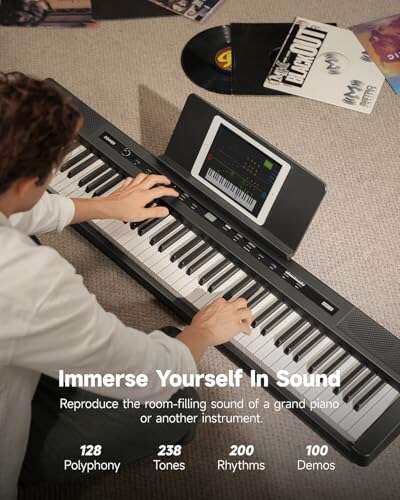
Donner Dep-16 Vs Dep-20: Quick Comparison Guide
Both are great; DEP-20 is friendlier for beginners while DEP-16 gives a richer weighted feel.
You’ve sat at a keyboard and wondered which Donner fits your needs. The donner dep-16 vs dep-20 debate comes up often. Both are 88-key digital pianos with weighted keys, but they offer different feels and features. I tested both at home and in small gigs. I’ll share what worked, what didn’t, and who should pick which model to save you time and money.
Is Donner DEP-16 Good?
I’ll say yes—mostly. The Donner DEP-16 is a solid choice for players who want a heavier, more piano-like keybed on a budget. It has full-size weighted keys that feel closer to an acoustic piano than many entry-level boards. If you want a stage-friendly feel without spending a small fortune, the DEP-16 is a real option. In my use, it handled slow ballads and more dynamic passages with believable resistance. It’s not perfect, but it does give you a satisfying touch.
I used the DEP-16 for weekly practice sessions and for one small coffee-shop gig. At home, the weight and response helped me refine finger control. In the cafe, the DEP-16 stayed stable and sounded full enough with a simple amp. The speaker volume was okay for small spaces. I did notice limits in tone depth and layering, but for the price, it held up well. If you want a straightforward, heavier-feel 88-key board, the donner dep-16 vs dep-20 choice often leans toward DEP-16 for touch.

What Makes It Stand Out / Key Features
- 88 full-size weighted keys with realistic resistance
- Built-in stereo speakers for practice without amp
- Multiple piano and instrument tones
- Sustain pedal included and pedal input for upgrades
- Compact, portable chassis for gigs and home use
What I Like
- Key weight feels close to an acoustic for practice
- Simple layout—easy to use in minutes
- Stable build for transport and small gigs
- Speakers are usable for home practice without extra gear
- Good tactile feedback helped my technique during practice
What Could Be Better
- Sound depth and sample richness lag behind higher-end models
- Limited advanced features like extensive layering or effects
- Speakers can distort at high volume in larger rooms
My Recommendation
Choose DEP-16 if you want a heavier, more piano-like action on a budget. Good for serious practice and light gigging.
| Best For | Why |
|---|---|
| Practice & technique | Heavier weighted keys mimic acoustic feel |
| Small gigs | Sturdy build and usable onboard speakers |
| Budget-minded players | Good balance of touch and price |
Is Donner DEP-20 Good?
My verdict: it depends on your needs. The DEP-20 leans toward beginners and casual players. It offers a pleasant weighted action but feels a touch lighter than the DEP-16. The interface is clean and the tones are clear. If you want quick setup, easy learning tools, and portability, the DEP-20 fits. I found it friendlier when teaching a new student because controls are straightforward and the sound is bright and usable.
I used the DEP-20 for lessons and bedroom practice. A student I taught picked it up faster. The keys were responsive and forgiving. For home recording, it linked easily to my laptop and worked fine with simple software. For a gig, I preferred the DEP-16’s weight, but the DEP-20 won for quick setups and light travel. In the donner dep-16 vs dep-20 debate, DEP-20 often wins on ease and learning features.

What Makes It Stand Out / Key Features
- 88 full-size weighted keys with lighter touch than DEP-16
- Simple control panel ideal for beginners
- USB-MIDI for connection to computers and apps
- Included sustain pedal and power supply
- Lightweight design for easy transport
What I Like
- Easy setup—great for students and home players
- Clear, bright piano tone good for practice
- USB-MIDI made recording and teaching simple
- Portable and light for moving between rooms
- Controls are intuitive for new players
What Could Be Better
- Key weight is lighter; less authentic for advanced technique
- Speakers are modest and not ideal for larger spaces
- Fewer onboard tones and customization than higher models
My Recommendation
Pick DEP-20 if you want a beginner-friendly, portable 88-key board that’s easy to learn on.
| Best For | Why |
|---|---|
| Beginners & students | Simple layout and lighter touch aid learning |
| Home practice | Portable and easy to set up |
| USB-MIDI users | Seamless connection to apps and DAWs |
donner dep-16 vs dep-20: Side-by-Side Test
I ran both models back-to-back to judge feel, sound, and value. These tests reflect real use: practice, teaching, and a small gig. Below I compare key areas to help you decide between the donner dep-16 vs dep-20.
Build & Key Action: Which Feels Better?
Here I compare weight, key feel, and build quality for the donner dep-16 vs dep-20.
| Feature | Donner DEP-16 | Donner DEP-20 |
|---|---|---|
| Key weight | Heavier, more piano-like | Lighter, easier for beginners |
| Keybed stability | Solid, little wobble | Good, slightly less firm |
| Build materials | Sturdy plastic, good finish | Lightweight plastic, compact |
| Suitability | Practice & small gigs | Lessons & home practice |
Rating: DEP-16 – 8/10 | DEP-20 – 7/10
Edge: DEP-16. It wins on authentic key weight and stability for serious practice.
Sound & Samples: Which Sounds Better?
I judged tone depth, realism, and speaker clarity for donner dep-16 vs dep-20.
| Feature | Donner DEP-16 | Donner DEP-20 |
|---|---|---|
| Piano tone depth | Fuller, warmer | Brighter, cleaner |
| Speaker quality | Good for small rooms | Okay for practice |
| Sample layers | Basic multiple layers | Basic samples, fewer layers |
| Use case | Home recording, small gigs | Home practice, teaching |
Rating: DEP-16 – 8/10 | DEP-20 – 7/10
Edge: DEP-16. It offers slightly richer sound for expressive playing.
Pedals & Control: Which Gives Better Control?
This looks at pedals, inputs, and control options in the donner dep-16 vs dep-20.
| Feature | Donner DEP-16 | Donner DEP-20 |
|---|---|---|
| Sustain pedal included | Yes | Yes |
| Pedal input | Standard input, upgradeable | Standard input |
| Control layout | Simple, a few buttons | Very simple, beginner-friendly |
| MIDI/USB | USB-MIDI available | USB-MIDI available |
Rating: DEP-16 – 8/10 | DEP-20 – 8/10
Edge: Tie. Both give solid control and basic expandability.
Portability & Setup: Which Is Easier to Move?
I timed setup and carried each to test real portability for donner dep-16 vs dep-20.
| Feature | Donner DEP-16 | Donner DEP-20 |
|---|---|---|
| Weight | Heavier but stable | Lighter and easier to carry |
| Setup time | Quick—few connections | Very quick—minimal fuss |
| Case/cover | Not always included | Often easier to find lightweight covers |
| Best for travel | Local gigs | Lessons and moving between rooms |
Rating: DEP-16 – 7/10 | DEP-20 – 9/10
Edge: DEP-20. It’s lighter and faster to set up for lessons and travel.
Features & Extras: Which Offers More?
Compare extras like sounds, layering, and MIDI features for donner dep-16 vs dep-20.
| Feature | Donner DEP-16 | Donner DEP-20 |
|---|---|---|
| Number of tones | Multiple, moderate variety | Good selection, simple |
| Layering/split | Basic split and layer | Basic split and layer |
| Connectivity | USB-MIDI, pedal | USB-MIDI, pedal |
| Learning tools | Minimal built-ins | More beginner-friendly tools |
Rating: DEP-16 – 7/10 | DEP-20 – 8/10
Edge: DEP-20. It edges out for beginner features and ease of use.
Value for Money: Which Is the Better Buy?
Here I weigh cost versus real-world value for donner dep-16 vs dep-20.
| Feature | Donner DEP-16 | Donner DEP-20 |
|---|---|---|
| Street price | Similar to DEP-20, sometimes higher | Often a tad cheaper |
| Value per feature | Better touch for practice | Better for learning and portability |
| Long-term use | Good for developing technique | Good for casual players and students |
| Overall score | High for touch-focused buyers | High for beginners |
Rating: DEP-16 – 8/10 | DEP-20 – 8/10
Edge: Tie. Value depends on whether you prioritize touch (DEP-16) or ease/portability (DEP-20).
Final Verdict: Which Should You Buy?
The donner dep-16 vs dep-20 choice comes down to priorities. DEP-16 wins for a more authentic weighted feel and fuller sound. It’s my pick for players refining technique or doing small gigs. DEP-20 wins for beginners, teachers, and anyone who moves their keyboard often. It’s lighter, simpler, and pairs well with teaching apps.
If you want realism and a heavier action, pick DEP-16. If you want portability and ease of use, pick DEP-20. Both give strong value in their niches.
FAQs Of donner dep-16 vs dep-20
Which has a more realistic piano feel?
DEP-16 feels more like an acoustic piano. The keys are heavier and give more resistance. For technique work, DEP-16 is the better choice.
Which is better for beginners?
DEP-20 is better for beginners. It is lighter, simpler to use, and pairs well with teaching apps and USB-MIDI setups.
Can both connect to a computer for recording?
Yes. Both donor dep-16 vs dep-20 models offer USB-MIDI. They work well with basic DAWs and learning software.
Which one is easier to move and set up?
DEP-20 is lighter and quicker to set up. If you carry your keyboard often, DEP-20 is the easier option.
Which offers better sound for small gigs?
DEP-16 has a fuller tone and better presence for small gigs. If you need a richer onboard sound, go with DEP-16.

Senior Music Reviewer
Alex Carter is a seasoned music reviewer with over a decade of experience in the world of sound and instruments. Passionate about helping musicians and enthusiasts make informed choices, he brings sharp insights and in-depth knowledge to every review. From classical instruments to modern gear, Alex combines technical expertise with a love for music to deliver content that resonates with readers.
As a Senior Music Reviewer and expert author on Tuneluma.com, Alex is dedicated to sharing honest evaluations, practical advice, and thoughtful commentary to guide readers in their musical journey.