Boss Ds 1 Distortion Guitar Pedal Review: Best Tone Tips
Boss DS-1 Distortion delivers classic, punchy distortion with simple controls and rock-ready tone.
You’re standing in your tiny practice space. Your amp sounds thin and lifeless. You want grit, sustain, and bite without fuss. The Boss DS-1 Distortion is meant to fix that. It gives you a wide range of aggression—subtle breakup to snarling lead tone—with a stompbox that survives road life. If you need a reliable, easy-to-dial distortion that works with many amps and playing styles, this pedal aims to be the go-to.

Is Boss DS-1 Distortion Good?
I’ll give a clear verdict: yes — for most players, the Boss DS-1 is a solid buy. It’s great for beginners, gigging players who need a durable pedal, and anyone chasing classic rock and punk tones. The DS-1 is not a studio-only boutique unit. It’s a workhorse with a distinct midrange bite that cuts through mixes. I’ve used it with a small practice amp, a tube amp, and in a band rehearsal. In each case, the pedal added character without masking my guitar’s core voice.
Two quick anecdotes: I ran the DS-1 into a Fender-style clean amp and got an aggressive rhythm tone for punk songs with little tweaking. Another time, I stacked it slightly before a tube amp’s breakup and found it gave leads more sustain and edge without sounding harsh. If you want an all-purpose, proven distortion, the Boss DS-1 fits that role well.

My First Impression for Boss DS-1 Distortion
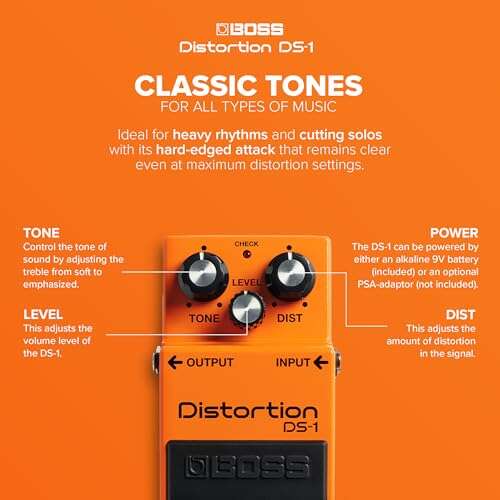
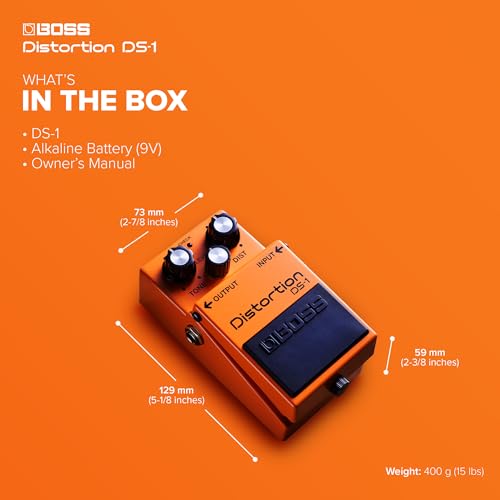
The pedal arrived in typical Boss packaging: small, sturdy, and nothing flashy. The box protected a compact black-orange pedal that feels rugged. My first physical interaction showed clean machining, a solid metal enclosure, and a confident stomp switch. The knobs—Tone, Level, and Dist—have a firm feel and clear detents.
Setup was immediate. I plugged in power and guitar. The controls reacted predictably. My initial sound test met expectations: the distortion is focused, with a crunchy midrange presence. I felt pleased and a bit nostalgic. The DS-1’s simple layout removes guesswork. I was excited to bring it into rehearsal to hear it sit with drums and bass.

What Makes It Stand Out / Key Features
- Classic mid-forward distortion voicing that cuts through band mixes
- Simple three-knob control: Dist (gain), Tone, and Level for instant dialing
- Compact, road-ready metal chassis that fits on any pedalboard
- Runs on 9V battery or standard Boss-style adapter for gig flexibility
- Proven legacy design used by countless players across genres
- Wide tone range from mild overdrive to aggressive distortion

What I Like
- Reliable, predictable tone that works in many musical contexts
- Sturdy build that survives gigs and transport
- Very easy to dial in usable tones fast
- Affordable price for the quality and legacy
- Pairs well with other pedals and amp types for stacking
- Battery or adapter power gives flexibility on small stages

What Could Be Better
- The tone can be mid-heavy and may need EQ to sit in some mixes
- Not as transparent as some boutique overdrives for amp-like breakup
- No true-bypass on older models; slight tone loss when off in some chains
My Recommendation
If you want a classic, affordable distortion that’s easy to use, get the Boss DS-1. It’s best for players who need a reliable pedal for practice, rehearsals, and gigs. It’s also a smart pick if you like a mid-forward, cutting tone for rhythm or lead work. For recording, you may want to pair it with EQ or use it in front of a tube amp for extra warmth.
Overall value is high. The Boss DS-1 is widely available and stays useful across years of playing. I recommend it for players who want simple, proven distortion without a steep learning curve.
| Best for | Why |
|---|---|
| Beginners | Simple controls and forgiving tone make learning easy |
| Gigging players | Rugged build and consistent sound night after night |
| Classic rock/punk players | Distinct midrange bite that cuts through mixes |
Alternative Products You Can Consider
MXR M75 Super Badass Distortion — This is for players who want a more modern, versatile distortion with tighter low end and more control. It has additional voicing options and fittings for heavier tones. If you need variety and heavier settings, MXR gives more shape than the DS-1.
Pro Co RAT2 — The RAT2 is grittier and works well for fuzz-like textures and heavier rock. It responds nicely to pickup changes and amp gain. Compared to the DS-1, the RAT2 has a thicker mid-to-low presence and more volume headroom.
Ibanez Tube Screamer TS9 — Not a direct distortion twin, the TS9 is an overdrive that pushes tube amps softly and keeps more of your guitar’s tone intact. Use it for smooth breakup and precise control. It’s a great stack partner for the DS-1 or an alternative if you prefer amp-like saturation over raw grit.
| Product | Best For | Key Difference |
|---|---|---|
| Boss DS-1 Distortion | Classic, no-fuss distortion | Mid-forward bite, simple controls |
| MXR M75 Super Badass Distortion | Versatile modern distortion | More voicing options and tighter lows |
| Pro Co RAT2 | Gritty rock and fuzz textures | Thicker mid/low presence, more grit |
| Ibanez Tube Screamer TS9 | Smooth overdrive and amp feel | Softer, amp-like saturation vs. raw distortion |
Final Verdict: Which Should You Buy?
The Boss DS-1 is the right choice if you want a tried-and-true distortion that’s simple, durable, and full of character. It shines for players who value direct control and a tone that cuts. If you need more modern shaping, consider the MXR M75. If you want thicker, grittier tones, the Pro Co RAT2 is a solid alternative. For amp-like breakup and smooth overdrive, the Ibanez TS9 will suit you better.
For most players, especially beginners and giggers, I recommend the Boss DS-1. It’s affordable, dependable, and delivers a classic sound that still works today.
FAQs Of boss ds 1 distortion guitar pedal review
Is the Boss DS-1 good for beginners?
Yes. The DS-1 is easy to use. The three knobs make tone dialing fast. It’s also built tough, so it survives regular use.
Does the DS-1 work with single-coil pickups?
Yes. Single-coils pair well with the DS-1’s midrange bite. Expect bright, cutting tones; you may need to tweak the Tone knob to tame highs.
Can I power the DS-1 with a standard 9V adapter?
Yes. The DS-1 accepts a standard 9V Boss-style adapter. It also runs on a 9V battery for lightweight setups.
Is the DS-1 true bypass?
Most vintage DS-1s use a buffered bypass typical of Boss. That means you keep signal strength in long chains, but some players prefer true bypass for ultimate signal purity.
Will the DS-1 work well with my tube amp?
Yes. The DS-1 stacks nicely with tube amps. It can push the amp into richer saturation or add more bite depending on settings.

Senior Music Reviewer
Alex Carter is a seasoned music reviewer with over a decade of experience in the world of sound and instruments. Passionate about helping musicians and enthusiasts make informed choices, he brings sharp insights and in-depth knowledge to every review. From classical instruments to modern gear, Alex combines technical expertise with a love for music to deliver content that resonates with readers.
As a Senior Music Reviewer and expert author on Tuneluma.com, Alex is dedicated to sharing honest evaluations, practical advice, and thoughtful commentary to guide readers in their musical journey.