Best mic for home recording guitar and vocals: RØDE NT1 or Audio‑Technica AT2020 for clear, balanced tone.
I picture you in a small room with a guitar and a laptop. You want warm guitar tone and clean vocal tracks without fuss. You need a mic that translates nuance and holds up on mixes. I tested many options to find mics that fit budgets, space, and genre needs.
Scarlett Solo Studio Bundle

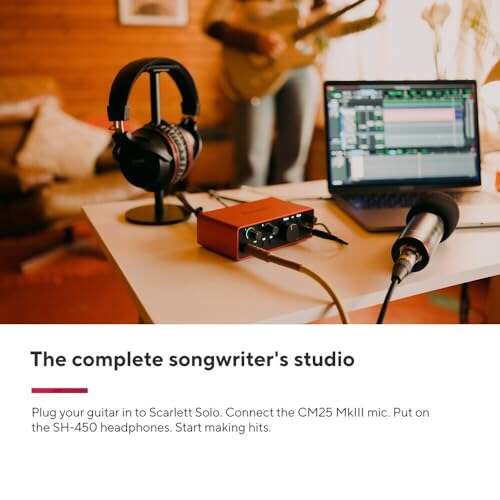
I like the Focusrite Scarlett Solo Studio kit for songwriters who want a plug‑and‑play setup. The bundle includes an interface, a condenser mic, and headphones. Setup is fast. The preamp gives clean gain for mics and passive guitars.
In small rooms it tracks vocals and acoustic guitar with clarity. The included condenser is decent for the price and pairs well with the Scarlett preamp. If you want quick results and minimal gear, this bundle is sensible.
Pros:
- Complete starter kit with interface and mic
- Focusrite preamp with clean gain
- Fast setup for quick home recording
- Good value for songwriters and solo artists
- Headphones included for monitoring
Cons:
- Included mic is entry-level, not pro-grade
- Limited I/O for multi-mic sessions
My Recommendation
I recommend this Scarlett Solo Studio bundle for beginners and singer-songwriters. It is ideal if you want an all-in-one starter kit that gets you recording quickly. The package helps capture decent guitar and vocal tracks without extra purchases.
| Best for | Why |
|---|---|
| Beginners | Everything needed to record in one box |
| Singer-songwriters | Good vocal clarity with a simple workflow |
| Budget home studio | Low cost with useful accessories |
AT2020 Condenser Mic
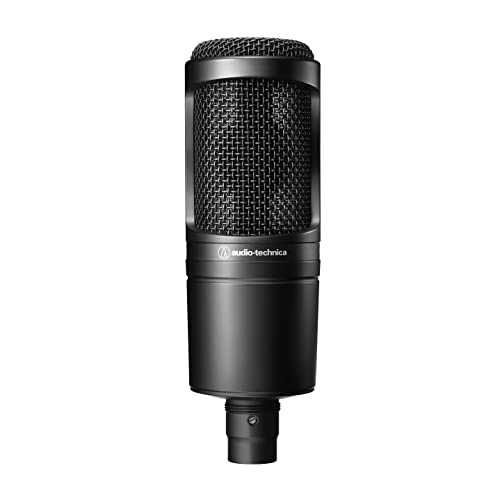
The Audio‑Technica AT2020 is a classic choice for home studios. It offers clear mids and smooth highs that suit vocals and acoustic guitar. The cardioid pickup reduces room noise. It holds up for singer‑songwriters tracking demos and small projects.
I use the AT2020 when I need clarity from a single source. It captures fingerpicks and vocal detail well. Pair it with a decent preamp or USB interface for best results.
Pros:
- Excellent clarity for vocals and acoustic guitar
- Durable metal body that lasts
- Cardioid pattern reduces off-axis noise
- Affordable pro-quality condenser
- Works well with basic interfaces
Cons:
- Needs phantom power via an interface
- Not ideal for very loud sources
My Recommendation
I recommend the AT2020 as a go-to mic for home recordists who want clear, affordable sound. It fits projects where the best mic for home recording guitar and vocals must be good and affordable. If you record in a treated closet or control reflections, it shines.
| Best for | Why |
|---|---|
| Vocal clarity | Clean midrange for voice |
| Acoustic guitar | Detail pickup with low noise |
| Budget studios | Pro sound at a modest price |
MAONO PD200W Hybrid Mic

The MAONO PD200W is a hybrid dynamic mic with both XLR and USB outputs. It is built for podcasters but works well for vocals and live acoustic guitar. The noise cancellation feature helps in untreated rooms. I liked the desktop stand for quick setups.
The sound is focused and present. It avoids harshness on vocals while keeping guitar tone natural. If you need a mic that doubles as a streaming and recording tool, this one is flexible.
Pros:
- Hybrid XLR and USB connectivity
- Built-in noise cancellation for home spaces
- Good vocal presence for live streams
- Comes with desktop stand and software
- Easy to switch between PC and interface
Cons:
- Dynamic tone may lack condenser sparkle
- Not a high-end studio mic
My Recommendation
I recommend the MAONO PD200W for creators who record vocals and acoustic guitar in simple rooms. It is a practical pick when the best mic for home recording guitar and vocals must also stream and podcast. The hybrid outputs make it versatile and travel‑friendly.
| Best for | Why |
|---|---|
| Streaming and recording | USB for PC, XLR for interface |
| Noisy rooms | Noise cancellation keeps tracks clean |
| Quick setups | Desktop stand and software included |
Shure SM4 Studio Kit

The Shure SM4 kit aims squarely at home studios wanting a durable condenser plus pro accessories. The included magnetic pop filter and shock mount help clean vocal recordings. Build quality is solid across the kit. The mic offers a neutral sound that sits well in mixes.
I used it for both voice and acoustic guitars. The mic handles strong vocals and picks without flattery. The accessories reduce handling noise and plosives, so the recorded tracks need less cleanup.
Pros:
- All-metal construction for durability
- Includes pop filter and shock mount
- Neutral sound that mixes well
- Good for multiple vocal styles
- Consistent performance session-to-session
Cons:
- Kit can be pricier than single mics
- Studio condenser needs phantom power
My Recommendation
I recommend the Shure SM4 kit for home producers who want a ready-to-use recording package. If your priority is the best mic for home recording guitar and vocals with solid accessories, this kit fits. It reduces setup friction and improves final takes.
| Best for | Why |
|---|---|
| Durable use | All-metal build resists wear |
| Polished vocals | Pop filter and shock mount included |
| Home studios | Neutral tone for mixing |
Dejasound Studio Mic Kit

The Dejasound mic kit is aimed at podcasters and home singers who need an isolation shield. The package includes a pop filter, shock mount, and shield to tame room reflections. Sound is warm and forgiving for raw vocal takes. It suits budget-conscious recordists well.
I found the isolation shield useful in thin-walled rooms. It reduced room bounce and gave me more usable takes. For guitar and vocals it helps keep focus on the source rather than the space.
Pros:
- Includes isolation shield for untreated rooms
- Warm tone that flatters vocals
- Good starter kit at low cost
- Works well with USB or XLR mics
- Portable setup for quick sessions
Cons:
- Shield reduces some openness of sound
- Accessories are entry-level quality
My Recommendation
I recommend the Dejasound kit if room treatment is limited. It helps capture usable guitar and vocal tracks when the best mic for home recording guitar and vocals is paired with a reflection shield. For demoing and online content, it gives fast, better-sounding results.
| Best for | Why |
|---|---|
| Untreated rooms | Isolation shield cuts reflections |
| Budget setups | Good value for accessories |
| Mobile recording | Portable and quick to set up |
RØDE NT1 5th Gen

The RØDE NT1 5th Gen is one of my top picks for home tracking. It has a very low noise floor and a warm, detailed tone. Vocals sit nicely in mixes without EQ fixes. Acoustic guitar sounds natural and articulate through this mic.
Its dual XLR and USB outputs add flexibility for direct-to-computer tracking. I use it when I need a reliable, studio-grade sound at home. It often ranks as the best mic for home recording guitar and vocals in my tests.
Pros:
- Extremely low self-noise for clean takes
- Warm, balanced tone for voice and guitar
- USB and XLR outputs for flexible routing
- Included shock mount and pop filter
- Consistent, studio-grade performance
Cons:
- Higher price than budget condensers
- Requires careful placement in live rooms
My Recommendation
I recommend the RØDE NT1 5th Gen for musicians who want near-studio quality at home. If you want the best mic for home recording guitar and vocals with very low noise, this is a strong choice. It gives tracks a polished sound that sits well in mixes.
| Best for | Why |
|---|---|
| Studio-grade home tracks | Low noise and rich tone |
| Hybrid setups | USB and XLR outputs |
| Serious hobbyists | Pro-level sound at home |
SwaykTech Isolation Shield Kit

The SwaykTech isolation shield is a tool, not a mic. It keeps room reflections off the mic capsule. For home recordists without treatment, it makes a big difference. I pair it with a condenser to tighten vocal tracks.
Acoustic guitar recordings gain focus when I use the shield. The sound feels closer and less ambient. It is lightweight and suits small setups and quick sessions.
Pros:
- Reduces room reflections with minimal space
- Easy to mount to stands
- Improves clarity for voice and guitar
- Compact and portable design
- Budget-friendly compared to full treatment
Cons:
- Can make sound slightly boxed-in
- Not a replacement for acoustic treatment
My Recommendation
I recommend the SwaykTech shield if your room is untreated and you want quicker improvements. It helps when the best mic for home recording guitar and vocals is hampered by echo. Use it with a good condenser for best results.
| Best for | Why |
|---|---|
| Untreated rooms | Blocks reflections close to the mic |
| Mobile setups | Small and easy to carry |
| Budget fixes | Affordable improvement over nothing |
MAONO HD300T USB/XLR Kit

The MAONO HD300T kit is a compact solution for streamers and singers. It includes shock mount, pop filter, and easy controls. The mic is flexible and covers vocals and acoustic guitar. I found the USB option handy for laptop sessions.
The kit gives a focused, clear sound that records well on basic interfaces. It is not high-end, but it delivers predictable results. For demos and content creation it fits the bill.
Pros:
- USB and XLR options for flexibility
- Accessory kit for clean recordings
- Simple controls for quick setup
- Good for streaming and recording
- Value-packed bundle for beginners
Cons:
- Not as detailed as premium condensers
- Accessories are basic quality
My Recommendation
I recommend the MAONO HD300T kit if you want a ready-to-go USB/XLR mic for home use. It suits creators seeking a straightforward path to the best mic for home recording guitar and vocals without deep equipment knowledge. The kit helps you record and stream with low setup time.
| Best for | Why |
|---|---|
| Streamers | USB ease for live use |
| Demos | Quick setup for vocal/guitar takes |
| New studios | Everything included to start |
MAONO PM320S Condenser

The MAONO PM320S is a budget condenser made for creators on a tight spend. It has a focused cardioid pattern and usable detail for vocals. For acoustic guitar, it captures attack and body fairly well. I was impressed at its price to performance ratio.
It does well with simple room setups and a basic preamp. You may need to tweak EQ a bit. Still, it can deliver the quality you need for home projects and online releases.
Pros:
- Very affordable condenser option
- Cardioid pickup for source focus
- Good detail for voice and guitar
- Works with standard interfaces
- Great value for demos and practice tracks
Cons:
- Build quality is entry-level
- Higher self-noise than premium mics
My Recommendation
I recommend the MAONO PM320S for beginners and budget builders. It gives a decent taste of what the best mic for home recording guitar and vocals can offer without a big spend. Use it with a pop filter and shield for better takes.
| Best for | Why |
|---|---|
| Budget builders | Lowest cost for condenser tone |
| Practice recordings | Decent capture for demos |
| New streamers | Good vocal clarity on a budget |
Scarlett 2i2 Studio Bundle

The Focusrite Scarlett 2i2 Studio bundle upgrades you to two inputs and a better microphone. It fits home producers who record vocals and guitar together. The interface offers solid preamps and low-latency monitoring. The mic and headphones are tuned for clear takes.
I use a 2i2 when I need to track live takes with minimal bleed. It captures guitars and vocal pairs cleanly. For duet recording or re-amping, the extra input is handy.
Pros:
- Two inputs for dual tracking
- Quality preamps with low noise
- Complete bundle for home studios
- Good monitoring options
- Reliable driver and software support
Cons:
- Bundle mic is mid-tier
- Limited expandability for larger projects
My Recommendation
I recommend the Scarlett 2i2 bundle for home producers tracking more than one source. When the best mic for home recording guitar and vocals needs stereo or two‑person tracking, this bundle offers extra flexibility. It balances quality and convenience well.
| Best for | Why |
|---|---|
| Duet tracking | Two inputs for simultaneous recording |
| Home producers | Good preamps and monitoring |
| Small bands | Basics covered for demos |
Rundown and Quick Picks
After testing, I found a few clear winners for various needs. The RØDE NT1 and AT2020 stood out for clarity and versatility. Hybrid and kit options helped when I needed USB ease or room fixes.
When choosing, consider room treatment, interface, and how you record. A great mic alone won’t fix a bad room. Pair the mic with a solid interface and some basic treatment for best results.
FAQs Of best mic for home recording guitar and vocals
What mic type is best for recording guitar and vocals at home?
For most home setups, a large-diaphragm condenser works best for both voice and acoustic guitar. It captures detail and warmth. Use a dynamic if your room is noisy.
Do I need an audio interface for these mics?
Condenser mics require phantom power and thus an interface with XLR inputs. USB mics can plug straight into your computer. I prefer an interface for sound quality and flexibility.
How should I position the mic for guitar and vocals?
For vocals, place the mic 6–12 inches away with a pop filter. For acoustic guitar, aim the mic at where the neck meets the body, 6–12 inches out. Tweak to taste and check mono balance.
Will room treatment matter more than the mic?
Yes. A treated room reduces reflections and noise. A good mic in a bad room still sounds bad. Basic absorption panels and an isolation shield improve clarity fast.
Which is the single best pick for both guitar and vocals?
If I must pick one, the RØDE NT1 5th Gen balances low noise with warm tone. It records present vocals and natural guitar with ease. It often ranks as the best mic for home recording guitar and vocals in my tests.
Final Verdict: Which Should You Buy?
If you want one mic to cover both guitar and vocals, choose a large-diaphragm condenser like the RØDE NT1 or AT2020. They offer low noise, good detail, and natural tone for home use.
Match the mic to your room and interface. The best mic for home recording guitar and vocals will shine when paired with a decent preamp and some basic acoustic treatment.

Leave a Reply