Best gauge strings for acoustic guitar are usually light (11–52) or extra light (10–47) for balance.
You know that moment when your fingertips ache after a long practice, or your guitar sounds brittle in the mix? Choosing the right gauge solves that. The best gauge strings for acoustic guitar give you a mix of tone, playability, and tuning stability. They help you play longer, hit the right feel, and get a fuller sound without breaking the bank. I’ve tested many sets across styles and necks. Below I share clear picks, real pros and cons, and who should pick each set.
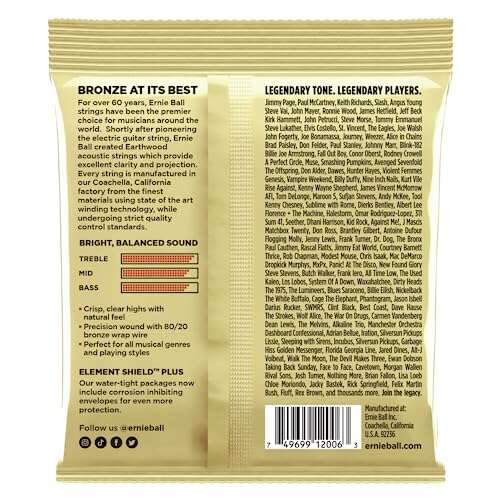
Ernie Ball Earthwood Extra Light 10-50

Ernie Ball Earthwood Extra Light 10-50 feel fast under the fingers. The 80/20 bronze wrap gives bright top end. I found them ideal for players who like bends and quick runs. They break in quickly and tune up fast.
These strings suit light strumming and fingerstyle. They stay lively for weeks with regular play. If you want easy fretting and clear highs, they deliver. They may lack the low-end push of heavier sets.
Pros:
- Easy on the fingers for long sessions
- Bright tone with clear articulation
- Fast response for lead runs
- Good intonation and tuning stability
- Affordable and widely available
Cons:
- Less bass presence than medium gauges
- May not suit heavy strummers
- Shorter lifespan than coated strings
My Recommendation
I recommend these to gigging beginners and lead players who favor ease and clarity. They are one of the best gauge strings for acoustic guitar when you need light tension and easy bends. They fit small-bodied guitars well and suit players switching between fingerstyle and light strum. Overall, they offer fast playability and bright tone at a fair price.
| Best for | Why |
| Beginners | Low tension eases finger pain |
| Lead players | Fast response for solos |
| Small guitars | Balanced tone without heavy bass |
D’Addario EJ11 Light 12-53 (3-Pack)

D’Addario EJ11 Light 12-53 are a modern classic. They use 80/20 bronze for a crisp high end and solid mids. I like how balanced they feel across the neck. Tuners settle quickly and sustain is good.
These strings work well for many styles. They give enough low end for strumming without being stiff. The 3-pack saves money for frequent changers. For tone and reliability, they are a safe bet.
Pros:
- Balanced tone across all strings
- Great value in multi-packs
- Consistent manufacturing quality
- Good sustain and clarity
- Suitable for many playing styles
Cons:
- Brilliance fades faster than coated sets
- Not as finger-friendly as extra light gauges
My Recommendation
I recommend these for recording and live work where balance matters. They rank among the best gauge strings for acoustic guitar for players seeking dependable tone and value. Pick them if you want consistent results across guitars and gigs. They offer solid performance and good availability.
| Best for | Why |
| Recording | Balanced tone and clarity |
| Frequent changers | Cost-effective multi-pack |
| All-round players | Versatile gauge and tone |
Elixir 80/20 NanoWeb Light .012-.053

Elixir 80/20 NanoWeb Light .012-.053 are coated for long life. NanoWeb keeps tone bright and string feel close to uncoated sets. I noticed less finger grime buildup. The coating helps tone last weeks longer.
Playability is smooth with steady tuning. They cost more, but last. For traveling players, the lower maintenance is a win. Expect warm mids and a slightly tamed top end compared to uncoated bronze.
Pros:
- Extended string life thanks to NanoWeb coating
- Consistent tone longer between changes
- Smooth feel with less finger noise
- Good corrosion resistance for humid climates
- Great for frequent gigging and travel
Cons:
- Higher price than uncoated sets
- Slightly less raw brightness
My Recommendation
These suit gigging players and travelers who want low upkeep. I find Elixir to be among the best gauge strings for acoustic guitar when longevity and stability matter. They cost more up front but save time and keep tone steady across long tours. Choose them for reliable performance.
| Best for | Why |
| Touring players | Lasts longer under heavy use |
| Humid climates | Coating prevents corrosion |
| Low maintenance | Retains tone longer |
D’Addario EJ11 Light 12-53
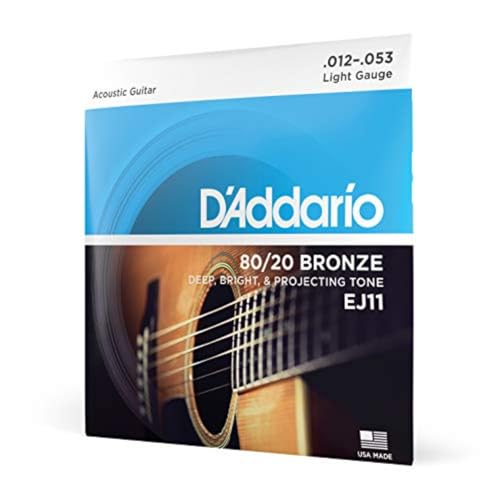
This single pack of D’Addario EJ11 Light 12-53 is ideal if you want a one-off change. Tone is bright and balanced. I like the reliable stretch and quick settling. The uncoated bronze rings clear and full.
They match many guitars well. I use them on dreadnoughts and jumbos for open strum. They hold tune with normal warming in. For players who want classic 80/20 bronze tone, these fit well.
Pros:
- Classic 80/20 bronze brightness
- Good for full-strum acoustic bodies
- Quick tuning stability
- Affordable single-pack option
- Works well with varied picks and fingerpicks
Cons:
- Uncoated—faster tone fade
- Not ideal for players needing extra longevity
My Recommendation
Choose this set if you want classic acoustic brightness. I often pick D’Addario EJ11 as one of the best gauge strings for acoustic guitar for balanced strumming. They suit players who swap strings often and chase bright tone. They are a straightforward, reliable option with wide appeal.
| Best for | Why |
| Strummers | Full-bodied brightness for chords |
| One-off buyers | Buy single packs as needed |
| Classic tone fans | Authentic 80/20 bronze sound |
Elixir Phosphor Bronze NanoWeb .012-.053
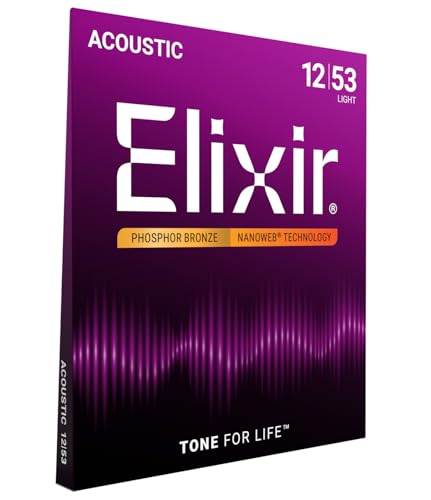
Elixir Phosphor Bronze NanoWeb .012-.053 gives a warmer tone than 80/20 bronze. The phosphor alloy adds richness in the mids. The NanoWeb coating keeps the feel close to uncoated strings. I hear smooth top end with fuller low mids.
These strings handle heavy strumming well. They keep a balanced voice in band mixes. The coating also reduces finger squeak. For players who want depth and life, they are a smart pick.
Pros:
- Warm, rich midrange from phosphor bronze
- Coating extends usable life
- Smooth feel and less finger noise
- Good for full-bodied guitars
- Stable tuning over time
Cons:
- Higher cost than uncoated sets
- Top-end can be slightly subdued
My Recommendation
Pick these if you need a warm, round acoustic voice. I count this among the best gauge strings for acoustic guitar when you want depth and long life. They work great in ensemble settings where mids matter. They offer solid value for players who want tone that lasts.
| Best for | Why |
| Band players | Mids cut through the mix |
| Warm tone seekers | Phosphor bronze richness |
| Low maintenance | Coating slows wear |
D’Addario EJ10 Extra Light 10-47 (3-Pack)
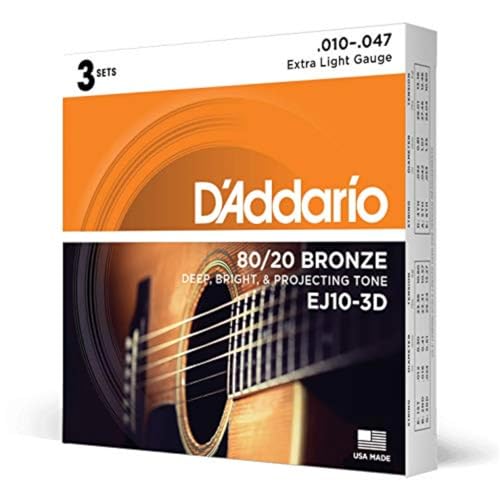
D’Addario EJ10 Extra Light 10-47 are famous for playability. I use them when I want minimal finger strain. They tune quickly and suit drop tunings with ease. The set offers good brightness and ease for bends.
Extra lights suit smaller hands or players with finger pain. They work well for slide players seeking lower tension. If you want the easiest fretting action, these are hard to beat. Be mindful that they can buzz on loose necks.
Pros:
- Lowest tension for easy fretting
- Great for beginners and injured players
- Clean, bright highs for clarity
- Good for alternate tunings and slides
- Value in a 3-pack for frequent players
Cons:
- Less projection than heavier gauges
- Can cause fret buzz on some setups
- Shorter life than coated strings
My Recommendation
I recommend EJ10 when comfort is the top priority. They rank among the best gauge strings for acoustic guitar for players who need minimal tension. These suit practice sessions, gentle fingerstyle, and players rehabbing fingers. They give easy playability with bright tone.
| Best for | Why |
| Beginners | Low tension eases learning |
| Slide players | Lower breakaway tension |
| Injury recovery | Gentle on fingers |
Ernie Ball Earthwood Light Phosphor 11-52

Ernie Ball Earthwood Light Phosphor 11-52 add warmth and strength. The phosphor bronze mix gives a rounded low end. I use them on larger bodies for fuller sound. They balance bright trebles with solid bass.
They bring projection without the bite of 80/20 bronze. Players who strum hard will like the extra body. They feel slightly firmer than extra light sets. The overall tone stays musical and even.
Pros:
- Fuller low end and strong projection
- Warm mids for balanced sound
- Good for robust strumming
- Longevity typical of phosphor bronze
- Great for live rhythm sections
Cons:
- Higher tension may tire fingers
- Not ideal for delicate fingerstyle
My Recommendation
I recommend these to rhythm players who need body and punch. They are among the best gauge strings for acoustic guitar for strummers and fuller-bodied instruments. These sets give depth and sustain for stage and studio. They are solid value for heavy playing.
| Best for | Why |
| Rhythm players | Punchy low end and projection |
| Large-bodied guitars | Balanced tone across the spectrum |
| Live gigs | Projection cuts through mix |
Ernie Ball Earthwood Medium Light 12-54

Ernie Ball Earthwood Medium Light 12-54 aim at players who want strong lows. The higher gauge adds fullness and attack. I found these great for rhythm and drop tunings. They hold up well in mixed ensembles.
They are firmer to play but reward with volume. Fingerstyle players may find them too stiff. For strummers and flatpickers, they give satisfying depth and presence.
Pros:
- Deep low end and authoritative tone
- Excellent for flatpicking and rhythm
- Stays stable in varied tunings
- Rich sustain for recording
- Good for large-bodied acoustics
Cons:
- High tension is harder on fingers
- Not ideal for light fingerstyle
My Recommendation
Pick these for power and projection on stage. I consider them one of the best gauge strings for acoustic guitar when heft and volume matter. They work best on guitars set up for higher tension. If you need throatier tone and strong projection, these shine.
| Best for | Why |
| Flatpickers | Strong attack and volume |
| Drop tuning | Maintains tension and tone |
| Large guitars | Fills the body with sound |
Martin Extra Light 10-47

Martin Extra Light 10-47 are tuned for comfort and Martin tone. They are 80/20 bronze and ring with clear highs. I use them on Martins for sweet trebles and good projection. They feel smooth and break in fast.
They suit players who want the Martin voice without heavy tension. They do well in mixed acoustic sets and recordings. If you need light gauges with authentic Martin flavor, these fit the bill.
Pros:
- Classic Martin brightness and clarity
- Easy on the fingers for long play
- Quick break-in and stable tuning
- Good for small to medium guitars
- Strong intonation across fretboard
Cons:
- Less low-end than heavier sets
- Uncoated—tone fades faster
My Recommendation
I recommend Martin 10-47 to players who want classic acoustic tone with low tension. These are top choices for the best gauge strings for acoustic guitar when you prioritize ease and Martin-style brightness. They are great for studio and home use where feel matters.
| Best for | Why |
| Martin lovers | Characteristic Martin voice |
| Home recording | Sweet, clear trebles |
| Comfort seekers | Low tension for long play |
Ernie Ball Silk & Steel Extra-Soft 10-50

Ernie Ball Silk & Steel Extra-Soft 10-50 use silk winding for a softer feel. They are the gentlest on fingertips I’ve tried. Tone is mellow with less bite. They suit fingerpickers and older players who need a soft touch.
The silk wrap reduces attack and bright shimmer. They create a warm, intimate tone. If you want comfort and a vintage voice, these are ideal. They are not the loudest, so consider amp support for stage work.
Pros:
- Exceptionally soft on fingertips
- Mellow, vintage-style tone
- Great for fingerstyle and light touch
- Comfortable for long practice sessions
- Reduced finger noise
Cons:
- Lower volume and projection
- Less clarity for heavy strumming
- May not suit modern bright tones
My Recommendation
These are perfect for players prioritizing comfort. I consider them some of the best gauge strings for acoustic guitar for anyone with tender fingers or a prefer mellow tone. Use them at home or in intimate sets. They provide gentle touch and vintage warmth.
| Best for | Why |
| Older players | Soft feel reduces finger pain |
| Fingerstylists | Mellow, nuanced tone |
| Home use | Low volume, warm voice |
Ernie Ball Earthwood Extra Light 80/20 Bronze 10-50
This set mirrors the first pick but highlights 80/20 bronze brightness. I often return to this gauge for balanced feel. They bring articulate highs and decent lows. They are an economical go-to for many guitars.
They work for mixed styles. I use them in practice and informal gigs. If you want bright attack without high tension, they fit. They remain one of the top choices for clarity.
Pros:
- Bright, clear top end
- Good for mixed playing styles
- Quick break-in and stable tuning
- Affordable and easy to find
- Comfortable feel with low tension
Cons:
- Not as full as phosphor bronze
- Susceptible to corrosion without coating
My Recommendation
These are solid if you want a bright acoustic voice. They qualify as the best gauge strings for acoustic guitar for players who favor clarity and comfort. Use them on smaller-bodied guitars or when you need crisp articulation. They are reliable and budget-friendly.
| Best for | Why |
| Mixed-style players | Clear articulation for both lead and rhythm |
| Budget buyers | Affordable and effective |
| Practice use | Low tension eases long practice |
D’Addario EJ10 Extra Light 10-47 (Pack of 3)
This 3-pack of EJ10 offers great value for extra-light fans. I noticed consistent string-to-string quality across packs. They are easy to fret and bend. The tone stays bright despite the low tension.
I recommend the multi-pack if you change strings frequently. They are practical for teachers and gigging multi-guitarists. The packs keep tone consistent across sessions and instruments.
Pros:
- Low tension for ease of play
- Value pack reduces cost per set
- Consistent sound and manufacturing
- Quick tuning stability after stretch
- Bright and lively tonal character
Cons:
- Less fullness than heavier gauges
- Fret buzz on low action setups possible
My Recommendation
Buy the 3-pack if you change often. They are among the best gauge strings for acoustic guitar for teachers and multi-guitar owners. Their consistency and price make them smart for regular swaps. They keep your guitars sounding similar across sets.
| Best for | Why |
| Teachers | Multiple spares at good price |
| Multi-guitarists | Consistency across instruments |
| Frequent changers | Cost-effective bulk buy |
Elixir Acoustic Phosphor Bronze NanoWeb Light
This NanoWeb phosphor bronze light set mixes warmth and long life. I prefer it when I want sustained mids and reliable tone. The coating keeps the strings cleaner. Play feels natural and smooth.
They are a top pick for players who value tone retention. I use them when sessions run long. They strike a good balance between warmth and clarity in band contexts.
Pros:
- Warm tonal balance with long life
- Smooth playability and low finger noise
- Good for mixed playing styles
- Resists grime and sweat
- Consistent manufacturing quality
Cons:
- Price premium over uncoated strings
- Some players miss raw brightness
My Recommendation
These are ideal if you want lasting tone and warm sound. I view them among the best gauge strings for acoustic guitar for studio players and long rehearsals. They save time replacing strings and keep a steady voice. The value grows with fewer changes.
| Best for | Why |
| Studio owners | Consistent tone for sessions |
| Long rehearsals | Lasts through repeated use |
| Warm tone fans | Phosphor bronze depth |
Elixir 80/20 NanoWeb Light .012-.053 (Repeat)
Elixir 80/20 NanoWeb is worth a second mention for consistent coated brightness. I return to these for travel and longer tours. The NanoWeb keeps the clarity while reducing maintenance. They stay in tune and feel close to uncoated strings.
For players who want bright tone with durability, these win. I use them on stage and on the road. They are one of the best gauge strings for acoustic guitar for reliability and ease.
Pros:
- Bright, long-lasting tone with coating
- Low maintenance for touring
- Feels nearly like uncoated strings
- Good corrosion resistance
- Reliable manufacturing quality
Cons:
- Costlier than standard sets
- Some may miss raw bronze shimmer
My Recommendation
These are my go-to when I need coating benefits. I count them as the best gauge strings for acoustic guitar for players who need brightness and longevity on the road. They reduce time spent changing sets and keep tone consistent across shows.
| Best for | Why |
| Touring musicians | Less care, more uptime |
| Players who travel | Resists wear from sweat and dirt |
| Busy pros | Longer usable life |
Ernie Ball Earthwood Light 11-52 (Repeat)
Ernie Ball Earthwood Light 11-52 remain a dependable choice for stage and studio. I favor their balance of warmth and projection. They bring an even response across strings. I find them versatile for many acoustic roles.
If you want a single set to do many jobs, these are very useful. They handle pick attack and fingerstyle with ease. They are part of my go-to list for live work.
Pros:
- Versatile tone for many styles
- Balanced across bass, mids, and treble
- Durable for regular gigging
- Good intonation and sustain
- Reasonable price for quality
Cons:
- Not as soft as silk-wrapped sets
- Slightly heavier tension for some
My Recommendation
These are great if you want one reliable set for most situations. I rank them among the best gauge strings for acoustic guitar for players who need all-round performance. They give a full voice without overwhelming the neck. Great for artists who play varied sets.
| Best for | Why |
| All-round players | Balanced tone across styles |
| Stage use | Durable and consistent |
| Studio work | Even response for recording |
FAQs Of best gauge strings for acoustic guitar
What gauge should a beginner use?
Beginners often do best with extra light or light gauges. I suggest 10–47 or 11–52. They reduce finger strain and make learning easier.
Do heavier gauges give better tone?
Heavier gauges give more bass and projection. They also require more finger strength. For big-bodied guitars, medium or heavy strings can improve tone.
Are coated strings worth the price?
Yes, if you want longer life and less maintenance. Coated strings keep tone longer and resist sweat and dirt. They cost more but save time replacing sets.
Will changing gauge harm my guitar?
Small changes usually won’t. Large jumps can affect neck relief and action. I recommend a setup if you change from extra light to heavy gauges.
How often should I change strings?
Change strings every 2–12 weeks depending on use. Gigging players change more often. Coated sets can last longer between changes.
Final Verdict: Which Should You Buy?
If you want the best gauge strings for acoustic guitar for easy play, pick extra light or light gauges like 10–47 or 11–52. They balance tone and comfort well for most players.
For longevity, choose coated Elixir sets. For warmth and body, go phosphor bronze. Match gauge to your style and guitar for the best results.

Leave a Reply