How To Self Teach Piano: Ultimate Step-By-Step Guide
You can teach yourself piano with a clear plan, daily practice, and smart tools.
I’ve taught myself and guided many beginners through how to self teach piano. I’ll show a step-by-step, practical path you can follow. This guide blends real experience, simple theory, and proven practice habits so you can learn efficiently and enjoyably.
Why learn how to self teach piano
Learning how to self teach piano lets you move at your own pace. You can focus on songs you love and skip things you do not need.
I learned much by trial and error. Early on I wasted time on slow drills that did not match my goals. Once I structured practice around real songs, my progress sped up.
Teaching yourself piano builds discipline. It also teaches problem solving. You will become a better listener and a more creative player.

Is self-teaching right for you?
If you like independence and self-correction, learning how to self teach piano will suit you. Self-teaching needs patience, curiosity, and steady practice.
If you need regular feedback, consider occasional lessons or video feedback. Many successful self-taught pianists mix personal study with periodic expert checks.
Essential gear and simple setup
You don’t need much to start learning how to self teach piano.
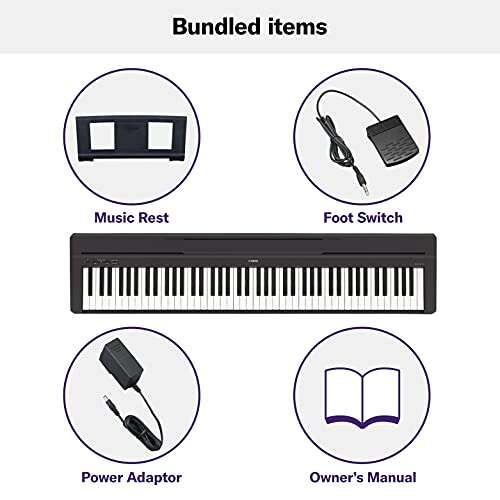
- A keyboard or piano
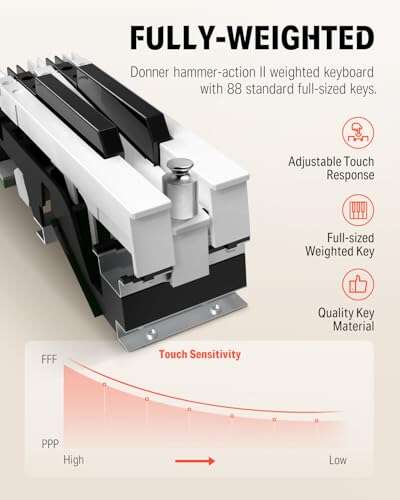
Good feel matters. A full 88-key weighted keyboard is best, but a 61-key with touch-sensitive keys works for starters. - A bench at the right height
Proper posture prevents pain and improves control. - A metronome or metronome app
Keeps your timing honest and steady. - A music stand and simple lamp
Clear sightlines make reading easier. - Recording device
Your phone works fine. Recording shows real progress.
I started on an inexpensive keyboard. Upgrading later made technique easier. The right gear helps, but focus on practice more than perfect equipment.

Core skills to learn first
Focus on a few core skills when you learn how to self teach piano. Build these habits early.
- Hand position and posture
Keep relaxed wrists and curved fingers. That reduces tension and improves tone. - Basic rhythm and counting
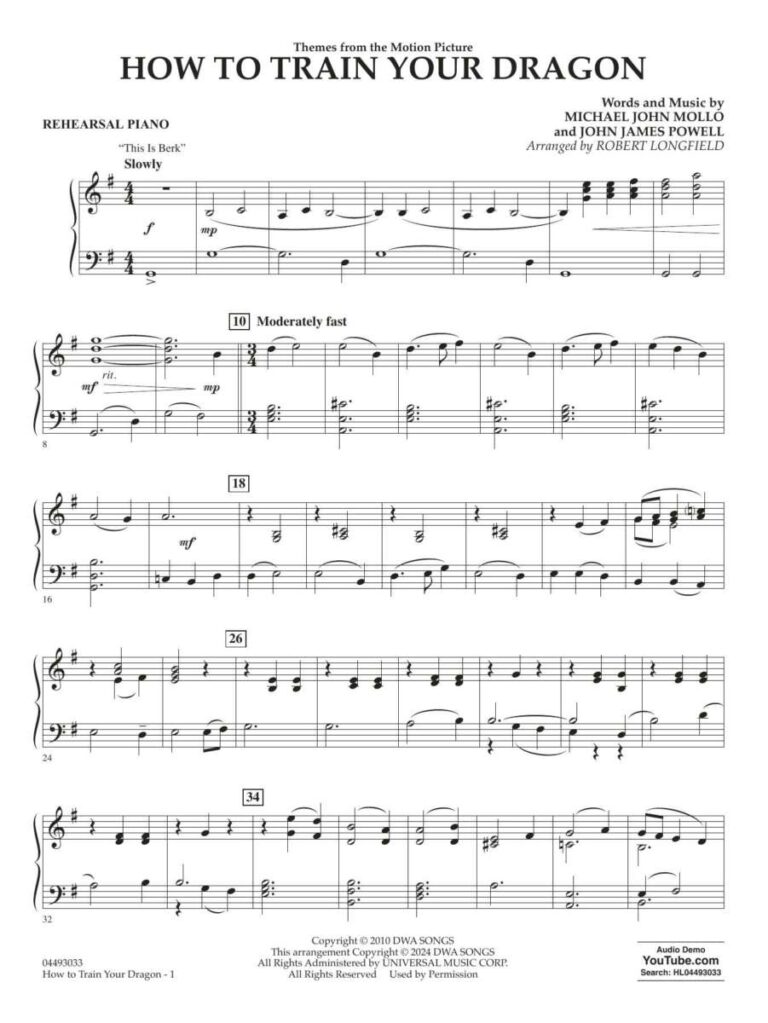
Clap rhythms, tap your foot, and always use a metronome. - Note reading and simple sight-reading
Learn treble and bass clefs one step at a time. - Scales and arpeggios
Practice major and minor scales slowly. They build coordination. - Chords and simple harmony
Learn common triads and basic chord progressions. - Ear training
Sing intervals and play them back to train your ear.
By practicing these skills daily, you cover more ground than by only playing songs. I recommend 10–15 minutes on each core skill in early stages.
A step-by-step plan to teach yourself piano
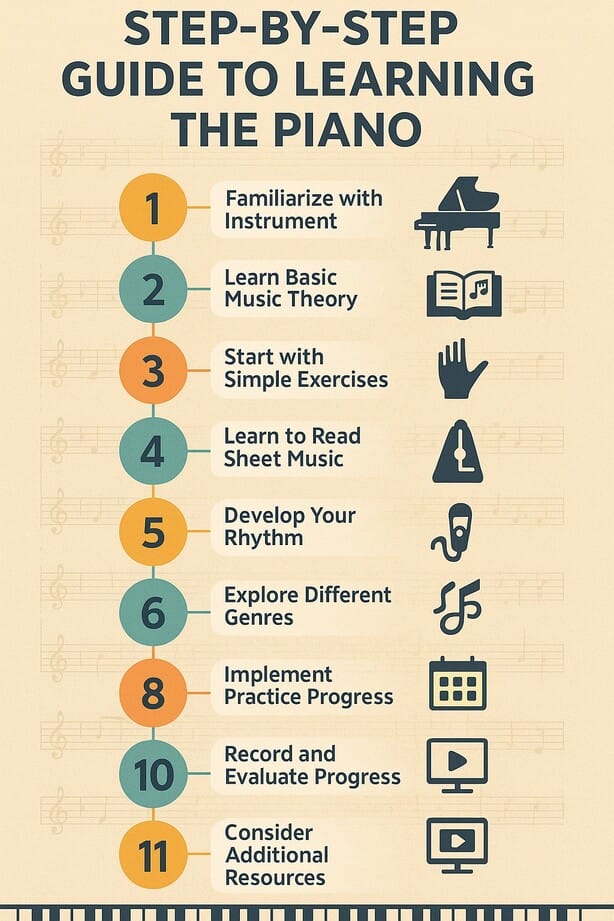
A clear plan helps you learn how to self teach piano without feeling lost. Here is a simple 12-week plan.
- Weeks 1–2: Foundations
Practice posture, hand position, and one simple scale. Work 20 minutes daily. - Weeks 3–4: Rhythm and reading
Add metronome practice and short sight-reading passages. Keep sessions short and focused. - Weeks 5–8: Songs and chords
Pick three easy songs. Learn left-hand patterns and common chords. - Weeks 9–12: Technique and repertoire
Add scale practice, arpeggios, and at least one longer piece. Record weekly to track progress. - Ongoing: Expand and refine
Add ear training, improvisation, and music theory slowly. Revisit weak spots weekly.
This plan gives structure, but adapt it to your pace. If a concept takes longer, slow down. If it’s easy, move forward. Doing this helps keep momentum and prevents burnout.
Practice strategies that actually work
Good practice beats long practice. Focus matters more than time.
- Short, daily sessions
Five consistent 20–30 minute sessions beat one long session. - Deliberate practice
Isolate hard bars, slow them down, and repeat slowly. - Use the metronome
Start very slow, then increase speed by small steps. - Record and review
Listening back highlights issues you miss while playing. - Warm-up routines
Start with scales or simple finger exercises for five minutes. - Set tiny goals
Aim for a clean phrase rather than a whole song.
I began tracking practice with a simple notebook. Seeing streaks kept me consistent. Try a practice log to measure progress.

Learning theory and technique without a teacher
You can learn essential theory yourself while you practice songs.
- Learn the piano keyboard layout
Know where notes repeat and where middle C sits. - Understand chords and progressions
Start with I–IV–V and ii–V–I patterns. They power many songs. - Read simple sheet music
Use beginner books with big notes and short pieces. - Study rhythm basics
Learn whole, half, quarter, and eighth notes and rests. - Explore scales and modes gradually
Major and natural minor scales give strong tonal grounding. - Practice technique in context
Apply scale fingering to song passages to connect technique and music.
When I taught myself, writing little theory notes next to songs made concepts stick. Theory becomes useful when it explains something practical.

Choosing songs and building repertoire
Song choice drives motivation. Pick tunes you love and can play in steps.
- Start with easy arrangements
Simplified versions keep success frequent and fun. - Choose varied genres
Pop, classical, jazz, and film music teach different skills. - Break songs into chunks
Learn two-bar phrases, then link them. - Use chord charts for pop songs
They speed up learning and support improvisation. - Keep a repertoire list
Rotate pieces so you don’t forget old work.
I learned faster by mixing short pop tunes with one slow classical piece. That mix taught technique and musicality at the same time.

Troubleshooting common problems
You will hit plateaus. That is normal. Here’s how to handle common issues when you learn how to self teach piano.
- Slow progress
Shorten goals and track micro-wins. Record weekly to see small gains. - Tension and pain
Stop, stretch, and check posture. Rest before pain becomes injury. - Boredom
Change repertoire or try improvising for variety. - Sight-reading struggles
Practice daily with simple pieces and limit time to avoid fatigue. - Timing problems
Slow practice with a metronome and count aloud until steady.
I once stalled for a month on a scale pattern. Slowing the tempo and focusing on the weakest finger solved it. Small changes add up.
Tools, apps, and resources that help
The right tools speed learning when you teach yourself piano.
- Metronome apps and simple hardware metronomes
Use them every session to improve timing. - Interactive apps for sight-reading and ear training
Short drills build habits without feeling like work. - Online lesson platforms and video tutorials
Use them as references for technique and songs. - Sheet music sites and chord charts
Look for beginner arrangements and lead sheets. - Community forums and social groups
Feedback and accountability help maintain progress.
I used an app for daily sight-reading drills. Ten minutes a day improved my reading hugely within a month. Mix tools with real playing for best results.
Keep a practice log and track progress
Tracking turns vague progress into clear wins. It makes learning how to self teach piano measurable.
- Log session time and focus
Note what you practiced and what improved. - Record weekly audio or video
Compare recordings to see real change. - Set monthly goals
Learn one new song or a new scale each month. - Reflect on problems and fixes
Write short notes about what worked and what didn’t.
Keeping a log helped me avoid repeating unproductive habits. The small records also gave motivation on tough days.
Frequently Asked Questions of how to self teach piano
How long does it take to learn piano on my own?
Most beginners can play simple songs in 2–3 months with regular practice. Becoming intermediate takes 1–2 years of steady work.
Do I need a teacher at all?
A teacher helps with technique and feedback, but many people learn well on their own. Consider occasional lessons for targeted feedback.
How much practice is enough each day?
Aim for 20–45 minutes daily at first. Consistent daily practice beats long, infrequent sessions.
Can I learn to read music by myself?
Yes. Start with easy beginner books and short sight-reading drills. Combine reading with playing real songs to reinforce learning.
What if I hit a plateau?
Change your routine, slow down practice, and record yourself. Small adjustments like a new metronome setting or a different song can break plateaus.
Is ear training necessary for self-taught pianists?
Yes. Ear training helps you play by ear, improvise, and correct mistakes. Spend a few minutes daily on simple interval and chord recognition.
Conclusion
Learning how to self teach piano is fully doable with the right plan. Focus on core skills, use short daily practice sessions, and choose songs that keep you excited. Track progress with recordings and a practice log. If you stay curious and patient, small consistent steps will lead to big musical gains.
Start today: pick one short song, practice 20 minutes, and record it. Share progress or ask questions in the comments to keep the momentum going.
Related Posts

Senior Music Reviewer
Alex Carter is a seasoned music reviewer with over a decade of experience in the world of sound and instruments. Passionate about helping musicians and enthusiasts make informed choices, he brings sharp insights and in-depth knowledge to every review. From classical instruments to modern gear, Alex combines technical expertise with a love for music to deliver content that resonates with readers.
As a Senior Music Reviewer and expert author on Tuneluma.com, Alex is dedicated to sharing honest evaluations, practical advice, and thoughtful commentary to guide readers in their musical journey.