How To Play On Piano Happy Birthday: Easy Piano Tutorial
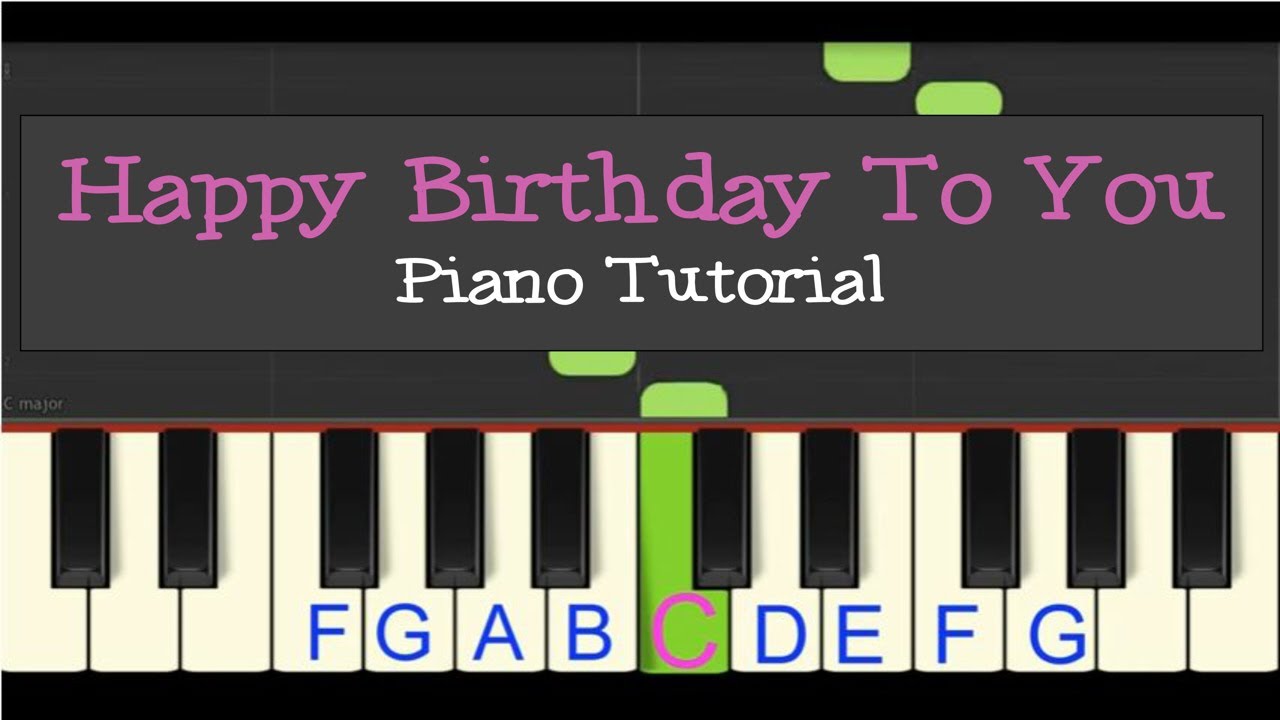
Play the melody in C major with your right hand, then add simple left-hand chords.
I’ve taught dozens of students and played at many birthday gatherings, so I know exactly how to play on piano Happy Birthday in a way that sounds sweet and confident. This guide breaks the song into tiny steps, shows simple chords, and gives practice tips so you can play Happy Birthday smoothly at your next celebration. Read on for clear, friendly instruction and practical examples you can use right away.
Why learn how to play on piano Happy Birthday
Playing Happy Birthday on piano is fast to learn and always useful. The song is short and stays in a comfortable range for most players. If you learn how to play on piano Happy Birthday well, you can accompany singers or lead a small gathering with confidence. I started by learning one hand first, then added chords, and that method works every time.
Basics: melody, key, and timing
Most beginners learn Happy Birthday in the key of C major. C major has no sharps or flats, so all the melody notes are natural white keys. The melody is mostly stepwise and repeats, which makes it easy to memorize.
- Tempo: moderate and steady. Aim for about 70–90 beats per minute.
- Time signature: 3/4 or common feel of three beats per measure.
- Structure: four short phrases. The first two lines repeat a similar idea.
If you want to master how to play on piano Happy Birthday, start slow. Play the melody slowly and count out loud. Short practice sessions work best.

Step-by-step: right-hand melody
Follow these steps to learn the melody with your right hand.
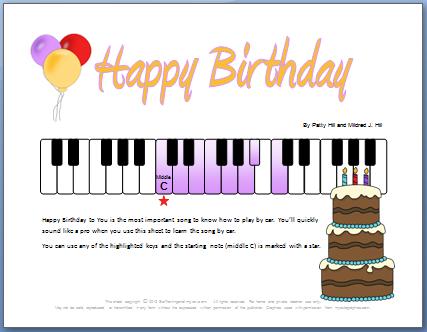
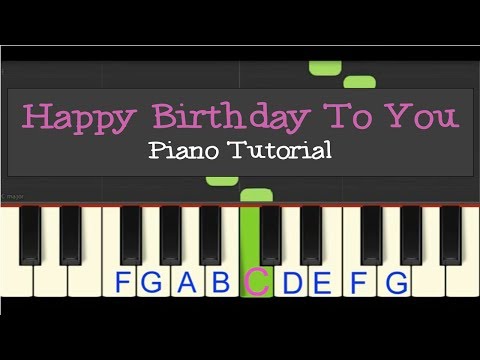
- Find middle C. Place your right thumb on middle C.
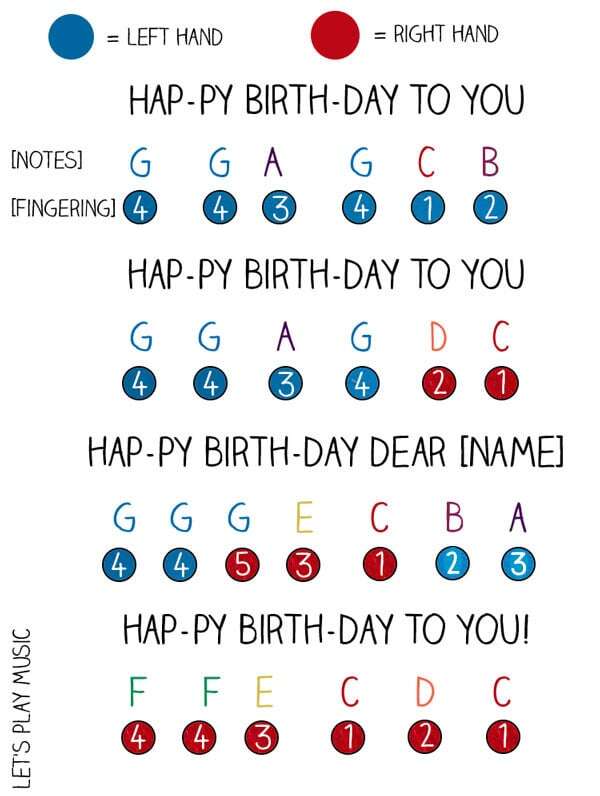
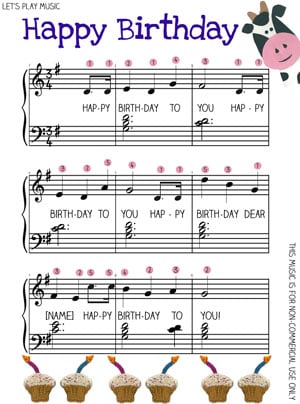
- Learn the first phrase slowly. Play notes: C C D C F E (each syllable matches a note).
- Practice the second phrase. Play G G A G F E.
- Play the third phrase. Play C C C' A F E D (C' means the higher C).
- Finish with the fourth phrase. Play B B A F G F.
Practice tips:
- Use short loops. Repeat each phrase 10–20 times.
- Sing the words while you play. This links rhythm and melody.
- If a phrase feels hard, slow it to half speed.
If you want to learn how to play on piano Happy Birthday smoothly, use a metronome and increase speed only when you feel steady.
Adding left hand: simple chords and accompaniment
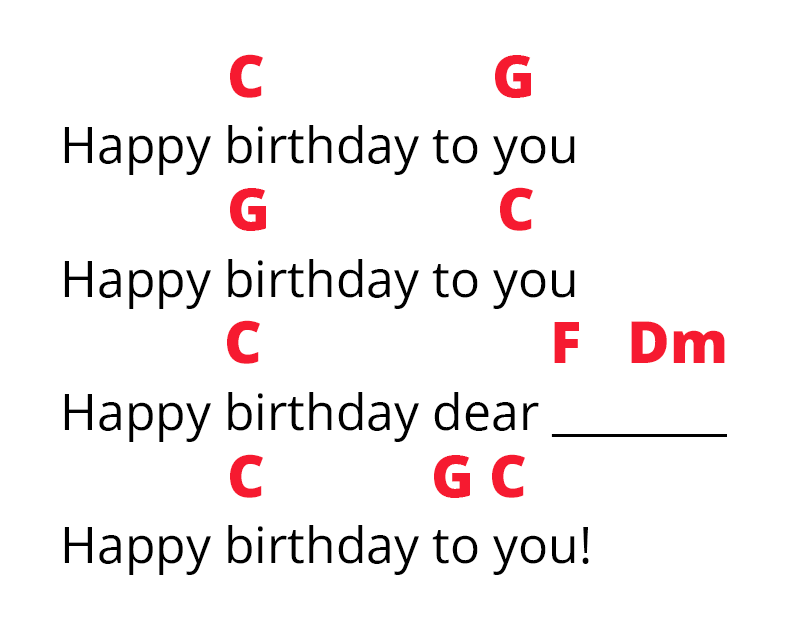
Left-hand chords make the tune fuller. Start with three basic chords in C major.
- C major (C E G) for measures 1 and 4.
- F major (F A C) for measures 2.
- G7 (G B D F) for the turnaround in measure 3.
How to apply them:
- Play single bass notes first: C, F, G.
- Then play block chords in the left hand to match the melody.
- When ready, try a simple broken chord pattern: play root, then top two notes as a pair.
A simple rule is to change chords on the first beat of a phrase. When you combine hands, go slow and match beats. This is a reliable way to learn how to play on piano Happy Birthday with both hands.
Simple arrangements and variations
You can make Happy Birthday sound more musical with tiny changes. These options keep the song easy but more polished.
- Add a short intro: play C major arpeggio twice.
- Use a gentle syncopation: delay a note slightly for expressiveness.
- End with a held C chord and a gentle ritardando (slow down).
For a jazzy twist, swap G7 for G9 or play a passing chord between C and F. These changes help if you already know how to play on piano Happy Birthday and want to personalize your sound.
Common mistakes and how to avoid them
Beginners often rush the melody or forget to match the singer. Here are common mistakes and fixes.
- Mistake: Playing too fast. Fix: Slow down and count beats.
- Mistake: Dropping the left hand. Fix: Keep a steady basic pattern and simplify if needed.
- Mistake: Not listening to singers. Fix: Practice with a recording or a person and adapt your tempo.
From my experience playing at small parties, staying relaxed and listening matters more than perfect technique. If you want to learn how to play on piano Happy Birthday that sounds natural, focus on pace and melody first.

Short practice plan (7-day starter)
This plan helps you progress quickly without overwhelm.
- Day 1: Learn first phrase with right hand, 10 minutes.
- Day 2: Add second phrase and link to first, 10–15 minutes.
- Day 3: Learn third and fourth phrases, slow tempo, 15 minutes.
- Day 4: Add left-hand single bass notes, 15 minutes.
- Day 5: Play hands together slowly, 15–20 minutes.
- Day 6: Add simple chords and small variations, 20 minutes.
- Day 7: Play all the way through with a metronome and sing along.
Repeat this cycle as needed. Personal tip: record yourself on day 7 to hear real progress. This routine teaches how to play on piano Happy Birthday in a practical, stress-free way.
Tips from my experience
I once played Happy Birthday for a dozen people after two days of practice. Here are the practical tips I learned.
- Learn the melody first. It builds confidence quickly.
- Use a clean, steady beat. Everyone can join in if rhythm is steady.
- Keep dynamics soft for singers. A loud piano can overpower voices.
- Be ready to transpose. Some vocalists prefer G or F; learn the chords in one other key.
These small habits make a big difference when you want to know how to play on piano Happy Birthday and sound inviting.
FAQs about how to play on piano Happy Birthday
How long does it take to learn how to play on piano Happy Birthday?
Most people can learn the melody in one to two practice sessions. Adding left-hand chords might take a few more sessions depending on experience.
What key is easiest for beginners to play Happy Birthday?
C major is the easiest key for beginners because it uses only white keys. It keeps fingering simple and learning fast.
Can I transpose Happy Birthday for a singer?
Yes. Transpose by shifting the melody and chords up or down the same number of semitones. Learn the chord shapes in the new key to keep it smooth.
Should I play the melody or accompany the singer?
Start by playing the melody to lead the song. As you gain confidence, add chords to accompany the singer. Matching the singer’s tempo is most important.
What’s a quick way to practice hands together?
Practice hands separately, then play both hands slowly while counting beats. Gradually raise the metronome speed once the pattern feels natural.
Conclusion
Learning how to play on piano Happy Birthday gives you a simple skill that brings joy to gatherings. Start with the right-hand melody, add left-hand chords when you feel ready, and practice in short, steady sessions. Try the 7-day plan, use a metronome, and play for real people when you can. Ready to play at your next party? Practice one phrase today and share your progress or questions below.

Senior Music Reviewer
Alex Carter is a seasoned music reviewer with over a decade of experience in the world of sound and instruments. Passionate about helping musicians and enthusiasts make informed choices, he brings sharp insights and in-depth knowledge to every review. From classical instruments to modern gear, Alex combines technical expertise with a love for music to deliver content that resonates with readers.
As a Senior Music Reviewer and expert author on Tuneluma.com, Alex is dedicated to sharing honest evaluations, practical advice, and thoughtful commentary to guide readers in their musical journey.