How To Fix A Bowed Guitar Neck: Simple Truss Rod Fix
Loosen the strings, make small truss rod turns, measure relief, and adjust patiently until the neck is straight.
I’ve fixed many bowed necks in shops and at home. This guide shows how to fix a bowed guitar neck step by step, with clear checks, safe truss rod technique, humidity tips, and when to bring it to a pro. I explain tools, common mistakes I made early on, and how to avoid them. Read on to get the neck back to playing shape without causing damage.
Understand what causes a bowed guitar neck
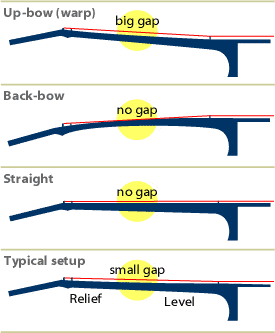
A bowed neck happens when the wood curves along its length. Tension from strings, humidity, heat, and aging can all twist or bow a neck. The truss rod, wood moisture, and neck angle are the main factors to check when you learn how to fix a bowed guitar neck.
I’ve seen guitars that looked hopeless but only needed a truss rod tweak. I’ve also seen instruments that needed a neck reset after long neglect. Knowing the cause helps you pick the right fix.

Tools and materials you’ll need
Use a small, correct-size wrench for the truss rod nut. A radius gauge or feeler gauge is very helpful to measure relief. You’ll also want a capo, tuner, ruler or straightedge, soft cloth, and a humidifier or dehumidifier for climate control.
Optional tools that help
- Socket or truss rod tool specific to your guitar model
- Masking tape to protect the headstock or fretboard edge
- Fret rocker and fret crowning tools if you need fret work
- Neck shim material for bolt-on neck adjustments
These simple items make how to fix a bowed guitar neck safe and repeatable.

Step-by-step: how to fix a bowed guitar neck (truss rod adjustment)
Follow this clear, safe sequence. Small steps protect the guitar.
- Check neck relief
- Loosen the low E string and place a capo at the first fret.
- Press the last fret down with your finger or a second capo.
- Measure the gap at the 7th or 8th fret. Aim for about 0.010 inch (0.25 mm) for steel strings. This measure is the relief.
- Prepare the guitar
- Loosen strings slightly if the neck is under high tension. Major truss work is safer with the strings tuned down a few semitones.
- Remove the neck plate or truss rod cover if needed. Clean dust around the nut and rod access.
- Identify truss rod direction
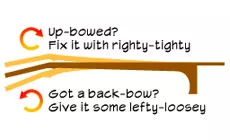
- On most guitars, turning the truss rod nut clockwise (right) tightens the rod and reduces relief. Turning counterclockwise (left) loosens the rod and increases relief.
- Check your guitar manual or test with tiny turns to be sure. Manufacturers can differ.
- Make very small adjustments
- Turn the truss rod a quarter turn at a time. Tighten or loosen by 90 degrees only.
- Wait 10 to 15 minutes after each quarter turn. This lets the neck settle.
- Retune to pitch and recheck the relief after each wait.
- Fine tune the action
- Once relief is correct, tune to pitch and check string height at the 12th fret.
- If action is still high, adjust saddle height or nut slots as needed.
- If action is low and frets buzz, you may need a slight back-bow, or fret dressing.
- If the truss rod won’t move
- Do not force it. Apply penetrating oil sparingly on older steel rods, and tap gently with a plastic mallet if necessary.
- If it remains stuck, stop and get professional help. Forcing can break the rod and make repairs costly.
When you learn how to fix a bowed guitar neck this way, the work is steady and safe. I once fixed a player’s old acoustic with three quarter turns and patience. It played like new the next day.
Other fixes: humidity, shims, fret work, and bridge adjustments
Not all bows are solved by the truss rod. Use these fixes when the truss rod is not the main issue.
Humidity and climate
- Keep guitars at 45–55% relative humidity. Too dry causes forward bow; too wet can cause back-bow or swelling.
- Use case humidifiers for acoustics. For active climate swings, a room humidifier helps.
Bolt-on neck shim
- For bolt-on guitars with a steep neck angle, install a thin shim in the neck pocket to correct action without sanding the saddle.
- Use cardboard or thin wood. Make small changes and test often.
Fret and action work
- If specific frets buzz after neck adjustments, do a fret level and crown. Replace or dress high frets.
- If the saddle or nut is too high, lower them carefully. If you’re not confident, have a luthier slot or file the nut.
Neck resets and heat fixes
- Severe bowing or twists sometimes need a neck reset or heat bending. These are advanced repairs best done by a professional.
- A reset restores scale length and action. Expect higher cost but lasting results.
These options expand how to fix a bowed guitar neck beyond the truss rod. I recommend simple fixes first and pro help for big jobs.

Safety tips and common mistakes to avoid
Simple habits prevent damage when you address how to fix a bowed guitar neck.
Common mistakes
- Over-tightening the truss rod in one go — this can break the rod or cause back-bow.
- Ignoring climate — a great setup can fail if humidity swings.
- Filing the nut or saddle too much without measuring — irreversible mistakes happen fast.
Safe rules
- Quarter-turns only. Wait between moves. Measure carefully.
- Use the right tool. Wrong wrench heads strip nuts.
- Stop and consult a luthier if the rod resists or changes don’t help.
I learned early to avoid brute force. Once I tried a half turn on a vintage neck and regretted it. Slow wins every time.

When to take it to a luthier
Take the guitar to a pro when:
- The truss rod is seized or broken.
- The neck has a twist or severe warp that doesn’t correct with the rod.
- The instrument needs a neck reset or fretboard replacement.
A luthier can diagnose complicated wood movement, perform resets, and fit new hardware. If you value the guitar, professional work is often worth the cost. Knowing when to stop is part of learning how to fix a bowed guitar neck.

Frequently Asked Questions of how to fix a bowed guitar neck
How much should I turn the truss rod to fix a bowed guitar neck?
Start with a quarter turn and wait 10–15 minutes. Repeat small turns until the relief measures about 0.010 inch (0.25 mm); stop if the rod resists.
Can humidity alone fix a bowed guitar neck?
Humidity can help if the bow is caused by moisture changes, but it works slowly. Use humidifiers or dehumidifiers and monitor the neck before making truss rod changes.
Is a bowed neck always fixable at home?
Minor to moderate bows are often fixed at home with care. Severe warps, twists, or broken rods usually need a luthier.
Will tightening the truss rod damage my guitar?
If done correctly in small increments, no. Over-tightening or forcing a stuck rod can break it or damage the neck.
How do I know if the truss rod is broken?
If you get no resistance when turning the nut or it turns freely without changing relief, the rod may be stripped or broken. Stop and get professional help.
Should I loosen my strings before adjusting the truss rod?
Loosening strings a little is smart when you expect large adjustments. For small tweaks, you can keep the guitar tuned, but always be cautious and make small turns.
Conclusion
You can learn how to fix a bowed guitar neck with care, the right tools, and patience. Start by measuring relief, then make tiny truss rod turns, control humidity, and use shims or fret work when needed. If the rod is stuck or the neck is badly warped, seek a luthier to avoid costly damage. Take action now: check your neck, gather the tools, and try the safe quarter-turn method. If this helped, subscribe, share your experience, or leave a comment about your repair story.

Senior Music Reviewer
Alex Carter is a seasoned music reviewer with over a decade of experience in the world of sound and instruments. Passionate about helping musicians and enthusiasts make informed choices, he brings sharp insights and in-depth knowledge to every review. From classical instruments to modern gear, Alex combines technical expertise with a love for music to deliver content that resonates with readers.
As a Senior Music Reviewer and expert author on Tuneluma.com, Alex is dedicated to sharing honest evaluations, practical advice, and thoughtful commentary to guide readers in their musical journey.