How To Get Better At Drums: 10 Proven Practice Tips
Practice with a clear plan, slow tempos, strong timing, and regular feedback to improve your drumming skills.
Learning how to get better at drums is less about playing for hours and more about practicing the right skills in the right order. Timing, technique, coordination, reading, listening, and musical feel all work together. A smart practice routine can turn small daily gains into real progress, whether you play rock, pop, jazz, metal, funk, or worship music.
1. Build a Consistent Drum Practice Routine
The first step in learning how to get better at drums is to practice often. You do not need to play for three hours each day. A focused 30-minute session can help more than a long session with no plan.
Try to practice at the same time each day. This turns drumming into a habit instead of a task you keep delaying. Even ten focused minutes can keep your hands and feet connected to the instrument.
A simple practice session can include:
- Five minutes of warmups
- Ten minutes of rudiments
- Ten minutes with a metronome
- Ten minutes playing grooves or songs
- Five minutes reviewing your progress
Keep a practice journal. Write down the tempo, exercise, and goal for each session. This gives you proof that you are improving, even when progress feels slow.
When I work on a difficult drum part, I avoid repeating the full song over and over. I isolate the hard section, slow it down, and repeat it until it feels easy. This saves time and helps prevent bad habits.
2. Improve Your Timing With a Metronome
Good timing is one of the most important skills for every drummer. A drummer with simple technique and strong time can sound better than a fast drummer who rushes or drags.
A metronome gives you an honest reference. It shows whether your notes land evenly. Start at a tempo where you can play the pattern without tension. Then increase the speed by small amounts.
Use these methods to improve your time:
• Play quarter notes on the bass drum or hi-hat.
• Play eighth notes while keeping each note even.
• Practice with the metronome on beats two and four.
• Set the metronome to half the speed and treat each click as beat three.
• Play a groove for several minutes without stopping.
Do not use the metronome only for fast exercises. Slow practice can reveal uneven strokes, weak accents, and poor control. A slow groove also teaches patience and helps you develop a steady pulse.
Record yourself while practicing. Many timing problems are hard to notice while you are focused on playing. Listening back can reveal rushed fills, uneven hi-hats, or a bass drum that falls behind the beat.

3. Learn the Essential Drum Rudiments
Rudiments are basic sticking patterns used in drumming. They improve control, speed, accuracy, and coordination. You do not need to master every rudiment at once. Start with a small group and apply them to real music.
Useful rudiments include:
• Single strokes: Right, left, right, left
• Double strokes: Right, right, left, left
• Single paradiddles: Right, left, right, right, left, right, left, left
• Flams: A soft grace note followed by a stronger main note
• Five stroke rolls: A controlled roll with five total strokes
Practice each pattern with relaxed hands. Use a pad or snare drum. Start slowly and focus on equal volume. Speed should come from control, not from squeezing the sticks.
After learning a rudiment, move it around the kit. Play singles between the snare and toms. Use paradiddles between the hi-hat and snare. Add bass drum notes to create grooves. This is how basic patterns become musical tools.
One common mistake is treating rudiments like a race. Fast, messy repetitions do not build reliable technique. Clean strokes at a slow tempo give you a stronger base.

4. Develop Better Hand Technique
Hand technique affects speed, power, endurance, and sound. Hold the stick firmly enough to control it, but not so tightly that your wrist and fingers become tense.
Your grip should allow the stick to rebound. Think of the stick as a small spring. Let it bounce from the drum instead of forcing every stroke into the head.
Work on these basic areas:
Relaxed Grip
Keep your thumb and first finger near the balance point of the stick. Let the other fingers support the stick without clenching it.
Full Strokes
Start with the stick high and bring it down for a strong note. Then return it to the starting position. This builds control and prepares you for accents.
Low Strokes
Keep the stick close to the drum for quiet notes. Low strokes help you play soft passages without losing control.
Finger Control
Use your fingers for small, quick movements. This is useful for fast doubles, ghost notes, and quiet patterns.
If your hands hurt, stop and check your technique. Mild muscle tiredness can be normal, but sharp pain is a warning. Adjust your grip, take a break, and seek advice from a qualified teacher or health professional if pain continues.
5. Strengthen Your Bass Drum and Foot Technique
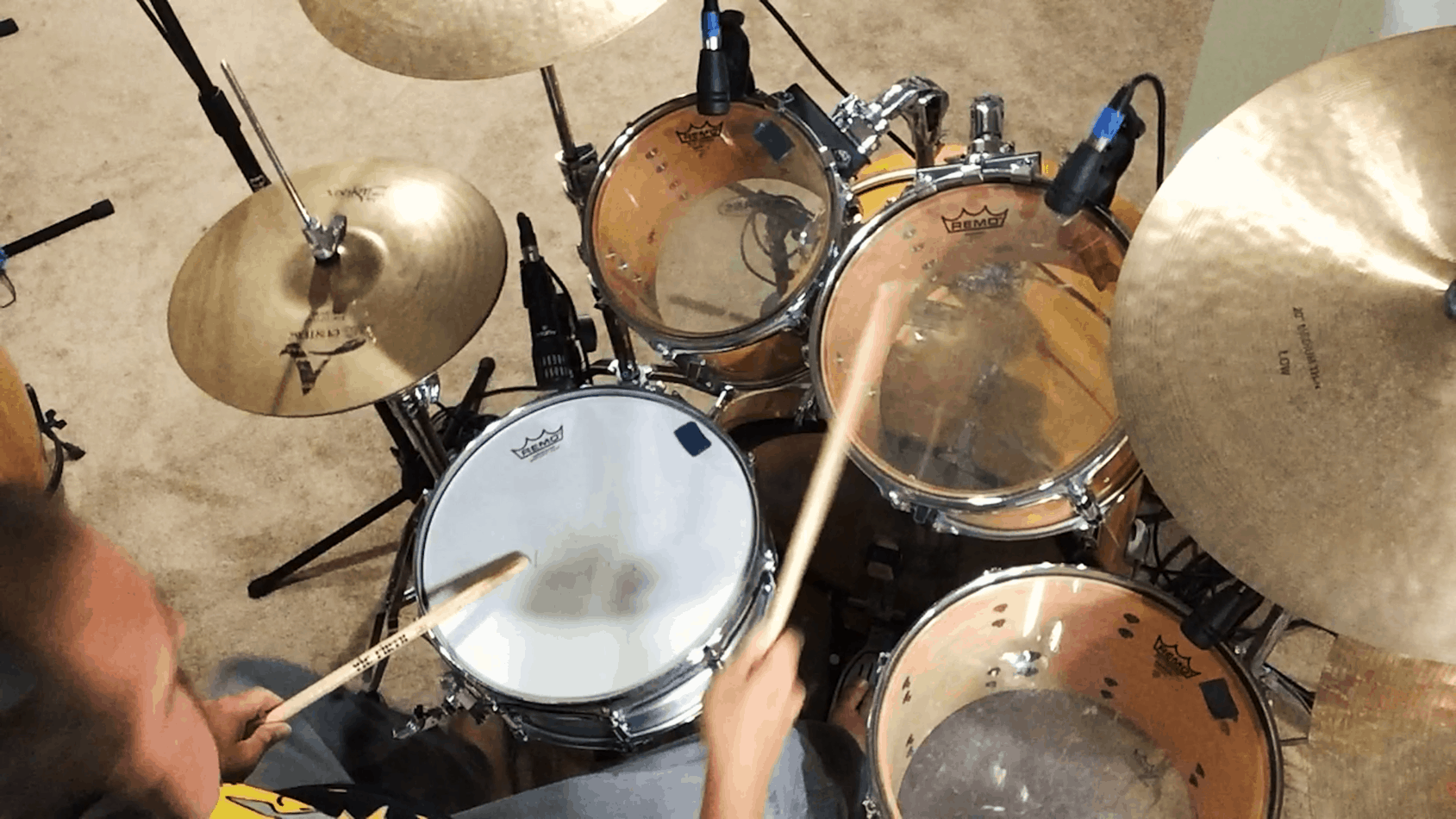
Strong foot technique helps you play steady grooves, fast patterns, and clean fills. Start with simple bass drum exercises before trying advanced double bass work.
Play the following patterns with a metronome:
- Quarter notes on the bass drum
- Eighth notes with the hi-hat
- Bass drum patterns under a snare backbeat
- Single bass drum strokes at different volumes
- Alternating bass drum and hi-hat patterns
Keep your ankle and leg relaxed. Avoid lifting your entire leg for every note unless the style requires it. Smaller movements often give you better speed and control.
For double bass practice, begin slowly. Focus on equal volume between your feet. If one foot is weaker, spend a few minutes playing simple alternating notes each day.
Your feet should support the groove, not fight it. Practice foot patterns alone, then combine them with simple hand rhythms. Coordination improves when you build one layer at a time.

6. Practice Drum Fills That Serve the Song
A drum fill should lead somewhere. It may guide the band into a chorus, mark the end of a phrase, or add energy before a change. A fill is not just a chance to play as many notes as possible.
Start with short fills that use quarter notes and eighth notes. Play them at the end of a four-bar or eight-bar phrase. Always return to the groove on beat one.
Good beginner fills include:
• Four evenly spaced snare hits
• Snare and tom combinations
• A bass drum note followed by three snare hits
• Simple eighth-note patterns around the toms
• A one-beat fill before the next section
Keep the pulse in your mind while playing the fill. Many drummers lose time because they focus on the hands and forget the underlying beat.
Record a song and practice entering the fill at the correct point. Then play the same song without the fill. If the groove falls apart when the fill begins, simplify it.
The best fill is often the one that leaves room. Musical taste matters as much as technical skill.

7. Play Along With Real Songs
Playing along with music is one of the fastest ways to learn how to get better at drums. Songs teach you about form, dynamics, transitions, groove, and musical space.
Choose songs that match your current level. Start with tracks that have clear drums and simple structures. Then move to more complex songs as your control improves.
Use this process:
- Listen to the song several times.
- Identify the intro, verse, chorus, bridge, and ending.
- Find the main groove.
- Practice without the recording.
- Play with the song at a slower speed.
- Increase the speed when the part feels stable.
- Record your final attempt.
Do not copy only the notes. Listen to the drummer’s sound, volume, spacing, and feel. Notice how the drummer supports the singer and other instruments.
A useful challenge is to play the song with fewer notes than the original. If the song still feels good, your time and musical judgment are improving.

8. Improve Your Coordination Step by Step
Drumming requires your hands and feet to perform different patterns at the same time. This can feel confusing at first. Coordination improves when you add one limb at a time.
Begin with a basic rock groove:
• Hi-hat plays steady eighth notes.
• Snare plays beats two and four.
• Bass drum plays beats one and three.
Once this feels comfortable, add a new bass drum note. Then change the hi-hat pattern. Make only one change at a time.
You can also speak the rhythm while playing. Count “one and two and three and four and” for eighth notes. For sixteenth notes, count “one e and ah, two e and ah.” Counting connects your ear, voice, and limbs.
Do not rush to complex independence exercises. If a pattern feels impossible, remove one part and rebuild it. Coordination is like learning a route through a city. You need to know each road before you can travel the whole map.
9. Train Your Ear and Dynamic Control
Drumming is not only about hitting the correct surface. It is also about playing the correct volume and tone. Dynamics help a song breathe.
Practice the same groove at three levels:
- Very soft
- Medium
- Loud
Keep the tempo steady at each level. This teaches control and helps you play with different bands and singers.
Add ghost notes to the snare at a low volume. Keep the backbeat strong while the ghost notes stay soft. The contrast creates movement without making the groove crowded.
Listen to live recordings and studio tracks. Pay attention to how the drummer changes volume between sections. A quiet verse can make a loud chorus feel much bigger.
One lesson I learned early is that playing loudly does not always sound powerful. A controlled accent often sounds stronger than constant force. Power comes from contrast, clarity, and timing.
10. Use Video Feedback and Drum Lessons
A teacher can spot problems that are difficult to notice alone. They can check your posture, grip, timing, and movement. Even occasional lessons can help you avoid months of practicing the wrong motion.
If regular lessons are not possible, record video from the front and side. Look for:
• Raised shoulders
• Tight wrists
• Large movements during simple patterns
• Uneven stick heights
• A foot that loses time
• Poor posture
Online lessons can also help, but choose instructors who explain technique clearly and show slow examples. Avoid lessons that promise instant speed or perfect results.
Feedback should give you a clear next step. Do not try to fix every issue in one week. Choose one technical goal and one musical goal at a time.
11. Protect Your Hearing and Body
Drums are loud. Long exposure to high sound levels can damage hearing. Use musician earplugs or suitable hearing protection during practice, rehearsals, and performances.
Set up your kit so your body stays relaxed. Your throne should allow your knees to sit near a right angle. Keep your back natural and avoid leaning too far forward.
Warm up before difficult playing. Simple wrist circles, gentle stretches, and slow singles can prepare your body. Do not stretch into pain.
Take short breaks during long sessions. Fatigue can make your technique less accurate and increase injury risk. If you notice ringing in your ears after playing, reduce the volume and improve your hearing protection.
These steps may seem basic, but they support long-term progress. The goal is to play for many years, not to win one practice session.
12. Set Measurable Goals
A vague goal such as “I want to get better at drums” is hard to track. A clear goal gives your practice direction.
Use goals such as:
• Play a basic rock beat for five minutes at 90 beats per minute
• Perform a song without losing the form
• Play clean sixteenth notes at a set tempo
• Learn one new rudiment each month
• Record one practice video each week
Make your goals challenging but realistic. If you fail often, lower the tempo or reduce the pattern. Success at a slower speed builds confidence and skill.
Review your goals every two weeks. Keep exercises that help. Replace exercises that no longer challenge you. Progress should feel demanding, but it should not feel impossible.
A useful rule is to finish each practice session with one thing you can play well. This keeps motivation strong and gives your brain a positive result to remember.
13. Avoid Common Practice Mistakes
Many drummers work hard but improve slowly because their practice lacks focus. The most common problems are easy to correct.
Avoid these mistakes:
• Playing only what already feels easy
• Practicing too fast
• Ignoring the metronome
• Repeating mistakes without stopping
• Focusing only on speed
• Never recording yourself
• Learning fills without learning grooves
• Skipping rest and recovery
• Comparing your progress with another drummer
When you make a mistake, stop and identify the cause. Was the tempo too fast? Did one limb lose its place? Did tension build in your hands? A clear answer helps you choose the right solution.
Do not measure progress only by speed. Better sound, steadier time, cleaner transitions, and stronger control are all meaningful gains.
14. A Simple Four-Week Plan
This four-week plan can help you create a balanced path for how to get better at drums.
Week One: Time and Basic Grooves
Practice quarter notes, eighth notes, and basic rock beats. Use a metronome and record one minute of playing each day.
Week Two: Rudiments and Control
Practice singles, doubles, paradiddles, and flams. Keep the volume even and use slow tempos.
Week Three: Coordination and Fills
Add bass drum variations and short fills. Work on returning to beat one without losing time.
Week Four: Songs and Performance
Choose two songs. Learn their form, play along with the recordings, and record a complete performance.
Repeat the plan with harder songs or faster tempos. The structure stays useful even as your ability grows.
15. How Long Does It Take to Get Better at Drums?
Most players notice small improvements within a few weeks of regular practice. Major changes in timing, speed, and coordination often take several months.
Your results depend on practice quality, sleep, musical background, instruction, and natural differences in learning. Ten focused minutes each day can create more progress than one unfocused session each week.
16. Can You Learn Drums Without a Drum Set?
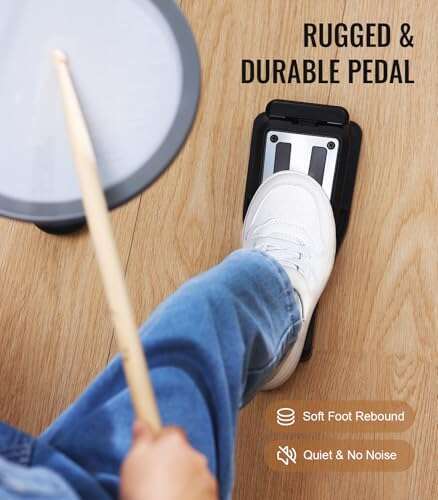
Yes. You can practice rhythm, sticking, and coordination on a practice pad, pillow, or quiet electronic kit. A real kit is still useful for developing full-body coordination and learning how the drums interact.
Use a pad for rudiments and a desk or clap for basic rhythm work. Keep your movements controlled and avoid hitting hard surfaces that may hurt your hands.
17. Should You Practice Drums Every Day?
Daily practice can help, but rest is also important. Short sessions five or six days each week often work well for beginners and intermediate players.
Take a break if you feel pain, extreme fatigue, or loss of focus. Consistency matters more than practicing every single day without a plan.
18. Is Speed the Main Sign of Drum Progress?
No. Speed is only one part of drumming. Good timing, relaxed technique, clean sound, musical phrasing, and dynamic control are just as important.
A drummer who plays slowly with excellent time can build a stronger foundation than a drummer who plays fast with tension and mistakes.
Frequently Asked Questions About How to Get Better at Drums
What is the best way to get better at drums?
Practice with a clear routine that includes timing, rudiments, grooves, fills, and songs. Use a metronome and record yourself so you can measure real progress.
How many minutes should I practice drums each day?
Start with 20 to 30 focused minutes. As your focus and stamina improve, you can add more time, but quality matters more than length.
How can I improve my drum speed?
Practice slowly with relaxed hands and controlled strokes. Increase the metronome by small steps only when your playing stays clean and even.
How do I stop rushing when I play drums?
Use a metronome and practice simple grooves for several minutes. Count out loud, record yourself, and focus on keeping the space between notes even.
Do I need a teacher to become a better drummer?
You can improve alone, but a teacher can identify technique and timing problems faster. Even occasional lessons can provide useful direction and prevent bad habits.
Are rudiments important for drum beginners?
Yes. Rudiments build control, coordination, and sticking skill. They become more useful when you apply them to grooves, fills, and different parts of the drum set.
How do I practice drums quietly at home?
Use a practice pad, electronic drums, mesh heads, low-volume cymbals, or suitable sound dampening. Wear hearing protection when needed and avoid practicing at disruptive hours.
What should I do when I feel stuck in my drum practice?
Change the exercise, lower the tempo, or learn a new song. Recording yourself and asking for outside feedback can also show you what needs attention.
Conclusion
Learning how to get better at drums takes steady practice, patient listening, and clear goals. Focus on timing before speed, build strong rudiments, play real songs, develop relaxed technique, and use recordings to check your progress.
You do not need perfect gear or endless free time. Start with a simple routine today, practice one skill with care, and let small improvements build your confidence. Keep exploring lessons, songs, and drum resources, and share your practice goals or progress with other drummers.

Senior Music Reviewer
Alex Carter is a seasoned music reviewer with over a decade of experience in the world of sound and instruments. Passionate about helping musicians and enthusiasts make informed choices, he brings sharp insights and in-depth knowledge to every review. From classical instruments to modern gear, Alex combines technical expertise with a love for music to deliver content that resonates with readers.
As a Senior Music Reviewer and expert author on Tuneluma.com, Alex is dedicated to sharing honest evaluations, practical advice, and thoughtful commentary to guide readers in their musical journey.