How Many Guitar Chords Are There: The Complete 2026 Guide
Mathematically, there are thousands of possible guitar chords, but most musicians only need a few hundred to play.
I remember when I first picked up a guitar. I thought I had to memorize thousands of chord shapes to be a “real” player. I spent weeks flipping through thick chord dictionaries. I felt overwhelmed. Over years of gigging and teaching, I learned something important: the question “how many guitar chords are there” is more about patterns than raw math. Theoretically, the number of variations is enormous. Practically, learning the logic behind chord construction and voicing matters far more than rote memorization. In this post I’ll explain how many guitar chords are there in real-world use, and how to stop counting and start playing.

The Mathematics of Guitar Chords
A standard guitar has six strings. Each string can be open, fretted at many positions, or muted. If you count every possible fingering across the fretboard, the number of permutations climbs into the tens of thousands. Add different tunings, and the theoretical total becomes effectively infinite.
Most of those shapes are not useful. Many are impossible to play. Others sound dissonant or muddy. In real music we use voiced chords that combine specific intervals. These intervals produce familiar types: major, minor, diminished, augmented, and extended chords like 7ths, 9ths, 11ths, and 13ths. Because interval patterns repeat across the neck, you don’t need to memorize every single fingering to cover the musical ground you want.
How chord math turns into musical sense
Counting combinations is a math exercise. Music is pattern recognition. Once you understand intervals (root, third, fifth, seventh) and shapes like triads and seventh voicings, you can derive many chords from a few core ideas. That’s why learning theory and fretboard logic beats memorizing a dictionary of shapes.
Why Context Matters More Than Quantity
Beginners often think more chord names equals better playing. That is a common trap. Even complex jazz charts rely on a limited set of shapes and voice-leading tricks. Session players I’ve worked with use a core library of chord types and make small adjustments for texture and color.
Patterns you really need
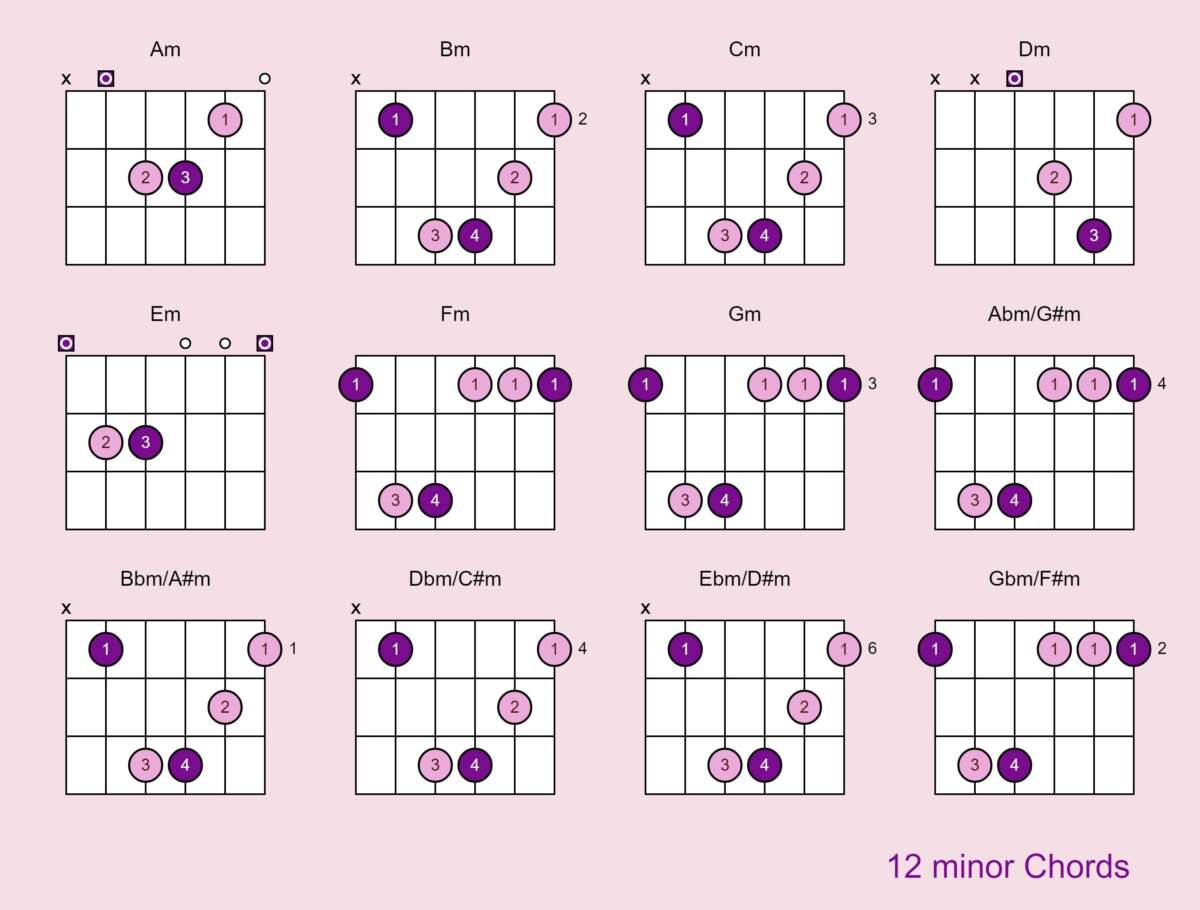
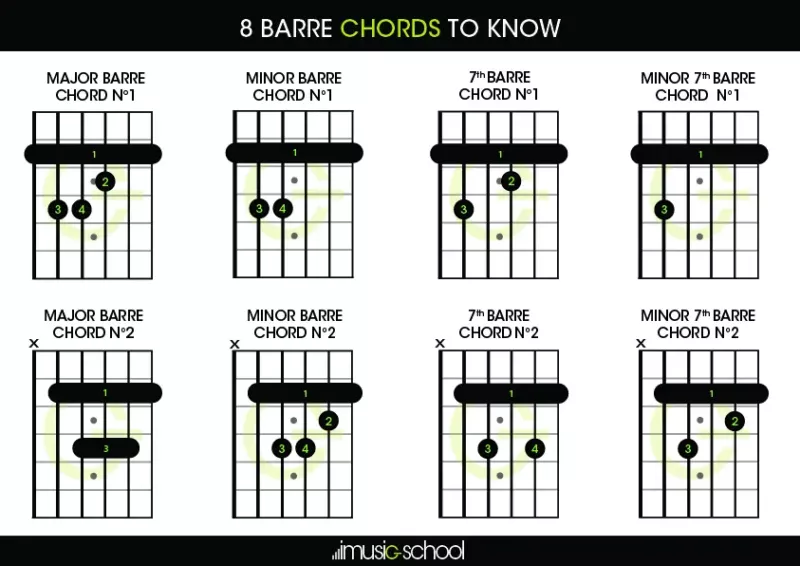
Learn the CAGED system, triad shapes, and common seventh voicings. These systems let you derive hundreds of usable chords from just a few basic forms. For example, move an open E shape up the neck using a barre and you get twelve major chords with the same shape. That single concept multiplies your options without extra memorization.

Practical Tips for Learning Chords
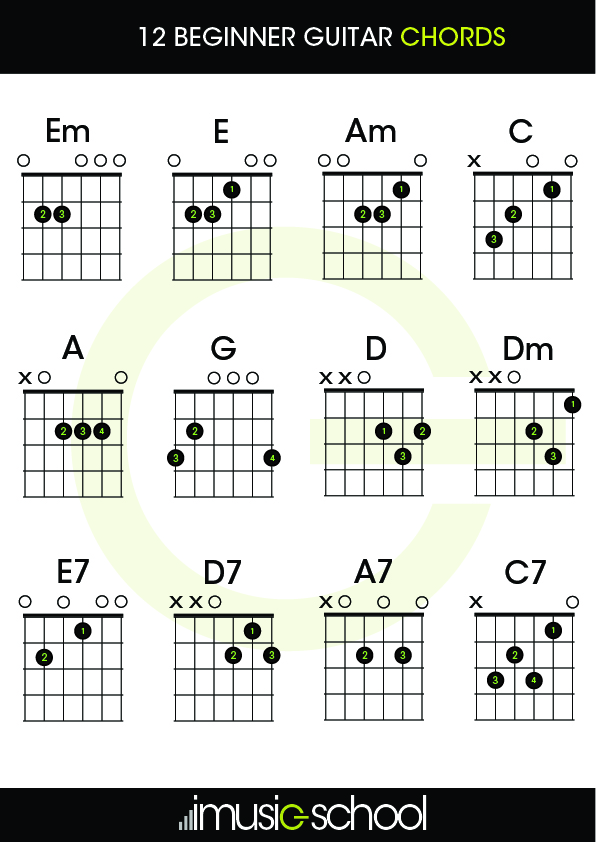
I teach quality over quantity every time. It’s better to know ten chords cleanly than one hundred poorly. Start with open chords in the keys of G, C, D, A, and E. These shapes appear in thousands of popular songs. When those feel natural, add barre chords and movable shapes.
Step-by-step practice plan
- Week 1: Learn three open chords and practice smooth changes.
- Week 2: Add two more open chords and simple strumming patterns.
- Week 3–4: Learn an E-shape barre and move it to play several roots.
- Month 2: Practice triads across three strings and simple inversions.
- Ongoing: Add one new voicing or extension each week (sus2, sus4, 7th).
Why barre chords matter
Barre chords act like a movable nut. One barre shape turns into any major or minor chord when you change the root. This technique dramatically increases the number of chords you can play. It also improves fretboard navigation, fingering economy, and tonal consistency across keys.
Voicings, inversions, and texture
Songs use voicings and inversions to create movement. The same chord can sound very different depending on which note is the lowest. Learn basic inversions (root position, 1st inversion, 2nd inversion) and common voicings for major, minor, and seventh chords. These tools let you craft smoother chord progressions and richer arrangements.
Frequently Asked Questions of how many guitar chords are there
Is there an official limit to how many chords exist?
There is no official limit. Music theory allows many note combinations, and alternate tunings add more. In standard western practice, a few hundred voiced and useful chord fingerings cover most styles. Most players never need the vast theoretical total.
Should I try to memorize every chord in a dictionary?
No. A chord dictionary is a reference, not a roadmap. Learn how chords are built from intervals (root, third, fifth, seventh). With that knowledge you can construct or recognize any chord you encounter.
How many chords do I need to learn to play most songs?
You can play thousands of popular songs with three to eight open and simple barre chords. Pop, rock, folk, and many indie tunes use a small palette of major and minor triads, plus a handful of sevenths and suspensions.
Are guitar chords the same as piano chords?
The notes are the same, but fingerings differ. A guitar chord depends on string and fret placement. A piano chord depends on key proximity and hand shape. The harmonic concept—intervals and chord quality—remains consistent across instruments. See this link for more about piano learning: a piano chord.
How do I stop getting overwhelmed by chord shapes?
Group shapes into families by root and quality. Learn one shape, then move it around the neck. Practice common progressions (I–V–vi–IV, ii–V–I) to see how a few chords form many songs. Break practice into short, focused sessions to build muscle memory and confidence.
Common chord types to prioritize
Focus on these early: major, minor, dominant 7th, major 7th, minor 7th, sus2, sus4, and power chords (5ths). Later add 9ths, 11ths, and 13ths as you expand into jazz, funk, or soul. Learning these core types covers most pop, rock, blues, and folk repertoire.
Conclusion
The number of possible guitar chords is technically vast. Your musical journey does not need to be about memorizing every fingering. It’s about learning patterns, intervals, and how to move shapes on the neck. Focus on fundamentals: open chords, barre shapes, triads, inversions, and common voicings. These tools give you more than enough options to play and create.
Take a breath, pick up your instrument, and master just one new shape today. If you want to dive deeper into the world of music theory or fretboard navigation, check out our recommended beginner resources. Let me know in the comments which chord was the hardest for you to master when you first started!

Senior Music Reviewer
Alex Carter is a seasoned music reviewer with over a decade of experience in the world of sound and instruments. Passionate about helping musicians and enthusiasts make informed choices, he brings sharp insights and in-depth knowledge to every review. From classical instruments to modern gear, Alex combines technical expertise with a love for music to deliver content that resonates with readers.
As a Senior Music Reviewer and expert author on Tuneluma.com, Alex is dedicated to sharing honest evaluations, practical advice, and thoughtful commentary to guide readers in their musical journey.