
How To Pack A Guitar Securely For Intl Shipping: Pro Tips
Pack the guitar in a hard case, pad the body and neck, then double-box with fragile labels.
I’ve packed dozens of guitars for tours and sales across borders. I know what works and what fails. This guide shows you how to pack a guitar securely for international shipping with clear steps, real tips, and mistakes to avoid. Read on to protect your instrument and your peace of mind.

Why packing right matters for international shipping
Shipping a guitar overseas is riskier than local shipping. Long transit, handling, and weather changes can damage the instrument. Learning how to pack a guitar securely for international shipping cuts the risk and may save you money on claims and repairs.
You protect tone, finish, and structural parts. You also meet carrier rules and customs needs. Good packing reduces delays and improves the chance your guitar arrives ready to play.

Materials and tools you need
Gather everything before you start. Using the right materials is half the job when learning how to pack a guitar securely for international shipping.
- Hard guitar case or heavy-duty gig bag with internal padding.
- Cardboard guitar box sized for your case or instrument.
- Corrugated double-wall shipping box larger than the case.
- Foam sheets, bubble wrap, and crumpled packing paper.
- Packing tape, heavy-duty straps or zip ties, and corner protectors.
- Humidity packs (for acoustic guitars), neck support block, and a tuner.
- Fragile and this-side-up labels, and a tracking-enabled insurance option.

Choosing the right case and box
A strong case makes packing simpler. A rigid case absorbs impacts and gives stable shape. Soft gig bags offer less protection for long international moves.
- Use a molded hard case for best protection for electric or acoustic guitars.
- If the guitar is rare or vintage, consider a flight case with foam cutouts.
- Measure the case and instrument. The inner case length and width must fit inside a surviving box.
- Choose a double-wall corrugated box that leaves at least two inches clearance on all sides for padding.
How you pack a guitar securely for international shipping depends on a case that won’t crush and a box that resists punctures.

Step-by-step packing guide
Follow these clear steps to pack a guitar securely for international shipping. Short steps reduce errors.
- Prepare the guitar
- Loosen the strings slightly to reduce neck tension.
- Clean the guitar. Remove accessories like straps and picks.
- Place a small humidity pack in the soundhole for acoustics.
- Protect the neck and headstock
- Use a soft cloth or foam wrap around the headstock.
- Insert a neck support block inside the case to stop movement.
- Wrap the neck in a foam tube or bubble wrap.
- Cushion the body
- Wrap the body in a soft cloth, then in bubble wrap for impact protection.
- Place foam between hardware and body to avoid scratches.
- Secure loose pieces inside the case.
- Close and secure the case
- Fasten latches and lock the case if possible.
- Wrap the entire case in at least two layers of bubble wrap.
- Tape the wrap but avoid adhesive directly on the case finish.
- Double-boxing
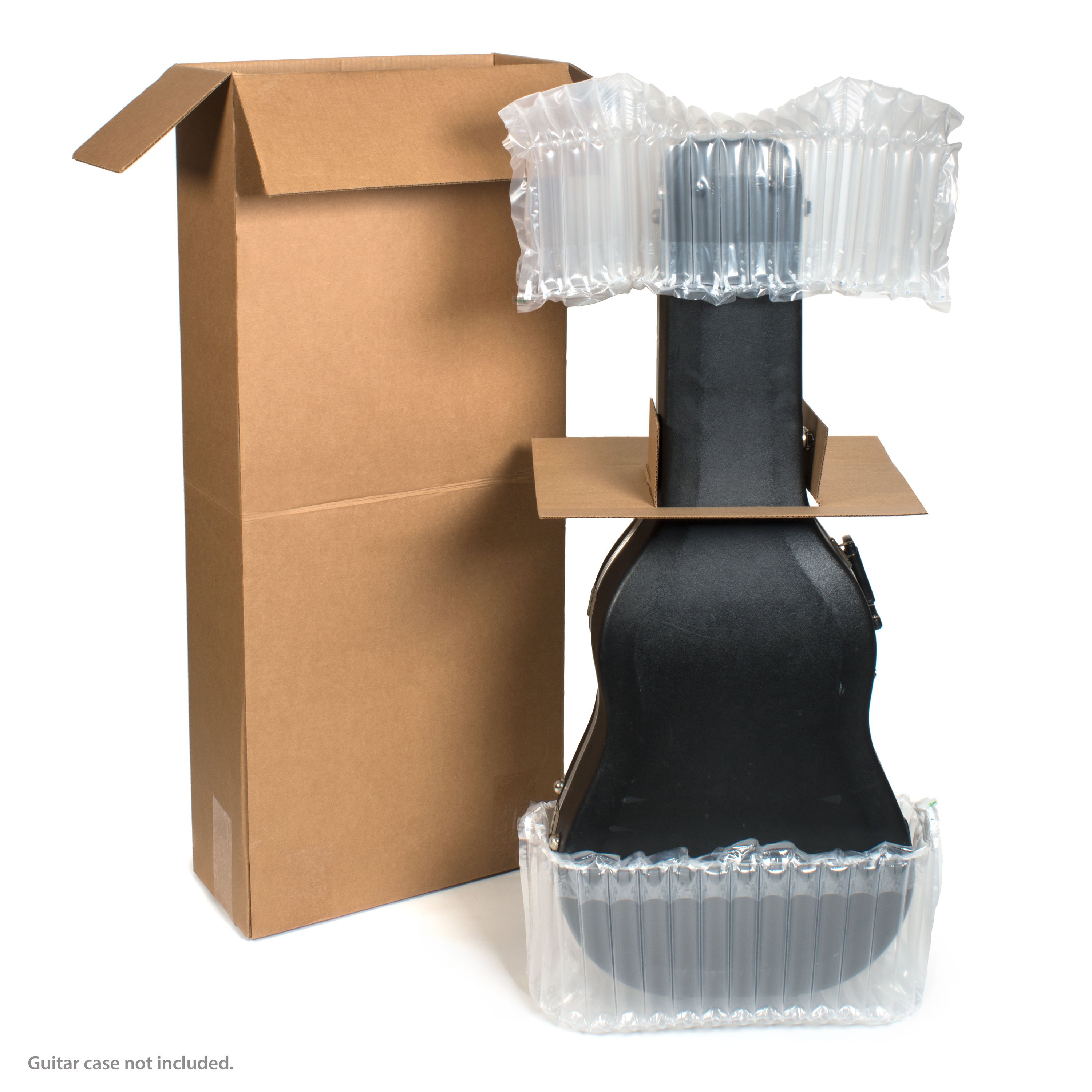
- Place the wrapped case in the inner guitar box with 2-3 inches of foam or crumpled paper on all sides.
- Fill gaps with foam to prevent shifting.
- Close and tape the inner box.
- Put that inner box into a larger double-wall box with 2-3 inches of padding between boxes.
- Labeling and sealing
- Seal seams with heavy-duty packing tape in an H pattern.
- Add fragile and this-side-up labels clearly on at least two sides.
- Include a packing list and contact info inside the box.
These steps are how to pack a guitar securely for international shipping without cutting corners.
Insurance, documentation, and customs
Paperwork matters for international shipping. Skipping it can delay delivery or void claims.
- Declare value accurately when you ship.
- Buy transit insurance that covers the full instrument value.
- Include a commercial invoice for customs. Describe the guitar, value, and reason for export.
- Check destination country rules on wood components and certificates if needed.
- Keep photos of the instrument and packing for claims.
Doing these things is part of how to pack a guitar securely for international shipping and protect your money.

Carrier selection and shipping options
Pick a carrier that handles musical instruments well. Compare transit time, insurance options, and handling policies.
- Major carriers offer international tracking and insurance.
- Specialized couriers handle instruments and offer white-glove service.
- Choose a service with minimal transfers. Fewer handoffs mean less risk.
- Consider door-to-door with signatures required on delivery.
My experience: paying a little more for a reputable carrier often saves more than the extra cost if damage happens.

Common mistakes and how to avoid them
Avoid these common errors when packing and shipping guitars internationally.
- Skipping double-boxing. Single-layer boxes crush easily.
- Over-tightening strings. That increases neck stress during temperature change.
- Using thin packaging material. Thin boxes and no corner protection invite damage.
- Not documenting condition. No photos means weak claims.
- Ignoring humidity control. Wood instruments can warp in dry or wet transit.
When you know how to pack a guitar securely for international shipping, these mistakes are easy to avoid.
PAA-style quick questions
What temperature should I ship a guitar in?
- Avoid extreme heat or cold. Temperatures between 40°F and 90°F are safest. Use humidity packs to stabilize conditions.
Can I ship a guitar with strings on?
- Yes, but loosen strings to reduce neck tension. Leaving them on is fine if the neck is well supported.
Is a hard case enough protection?
- A hard case helps, but double-boxing with padding is recommended for international shipping.
How long before shipping should I pack the guitar?
- Pack it the day of shipping if possible. This reduces exposure to changing humidity.
What if my guitar is vintage or very valuable?
- Use a flight case and work with specialty couriers. Full-value insurance is essential.
Frequently Asked Questions of how to pack a guitar securely for international shipping
How much should I loosen the strings before shipping?
Loosen strings two to three turns to reduce neck tension without causing slack. This balances stability with reduced stress.
Do I need to remove the bridge pins on an acoustic guitar?
No, keep bridge pins in place. Instead use internal padding and a humidity pack to protect the bridge and top.
Can I ship a guitar via regular postal service internationally?
Yes, but confirm insurance limits and handling policies. For high-value or rare guitars, use a specialized courier.
Should I use a humidifier or desiccant?
Use a humidity pack tailored to the guitar’s needs. A stable 45–55% relative humidity is ideal for most wooden guitars.
How many photos should I take for insurance claims?
Take at least six photos: front, back, both sides, headstock, and close-ups of serial numbers and any preexisting damage.
Is it okay to ship the guitar disassembled?
Partial disassembly can help. Removing the bridge pickup or loose parts is fine if you pack them securely in the box.
What if customs opens my package?
Include a duplicate packing list inside the box. Clear documentation speeds the process and proves the instrument’s condition.
Conclusion
Packing a guitar well for international shipping is about planning, the right materials, and clear steps. Use a hard case, support the neck, double-box, add humidity control, and buy proper insurance. Follow the checklist and avoid common mistakes. Take action today: gather materials, photograph your instrument, and book a trusted carrier. If you found this helpful, try these steps on your next shipment and share your experience or questions below.

Senior Music Reviewer
Alex Carter is a seasoned music reviewer with over a decade of experience in the world of sound and instruments. Passionate about helping musicians and enthusiasts make informed choices, he brings sharp insights and in-depth knowledge to every review. From classical instruments to modern gear, Alex combines technical expertise with a love for music to deliver content that resonates with readers.
As a Senior Music Reviewer and expert author on Tuneluma.com, Alex is dedicated to sharing honest evaluations, practical advice, and thoughtful commentary to guide readers in their musical journey.