How To Fix Uneven Volume Between Guitar Strings: Quick Fix
Check the nut, saddle, pickup height, and string gauge — a simple setup usually fixes it.
I’ve spent years setting up guitars for students and pros, so I know how frustrating uneven string volume can be. This article will walk you through why it happens, how to diagnose the problem, and step-by-step fixes for acoustic and electric guitars. I’ll share tools, clear procedures, and real-world tips so you can confidently learn how to fix uneven volume between guitar strings and get a balanced tone across all six strings.

Why uneven string volume happens
Uneven volume shows up as one or more strings sounding louder or quieter than the others. The causes are simple and often mechanical. Common culprits include nut slot depth, saddle shape, pickup height, string gauge mismatch, and action/intonation issues.
What follows are clear, short explanations of each cause. This helps you target the right fix when you learn how to fix uneven volume between guitar strings.

How to diagnose which string is quiet or loud
Start with basic listening tests. Play each open string, then fret the same note on different strings to compare. Use a tuner and record if possible to hear subtle differences.
Steps to follow
- Play each open string softly and loudly to find dynamic differences.
- Fret the same pitch on different strings (example: play open B, then 7th fret on high E to match pitch).
- Compare at the nut, mid-fret, and near the bridge to locate where volume drops.
- Check for buzzing or dead spots that can lower volume on certain frets.
Diagnosing first saves time. When you can describe the problem precisely, fixes for how to fix uneven volume between guitar strings become surgical and fast.
Step-by-step fixes for acoustic guitars
Acoustics show uneven volume mainly due to nut and saddle issues or internal bracing changes. Here are practical fixes.
Nut slot issues
- What to check: Are nut slots too deep, too narrow, or not cut evenly?
- Fix: If a string sits too low, it will be quieter. Use a nut file to slightly widen or raise the slot, or add a thin shim under the nut if too low. For severe problems, replace the nut.
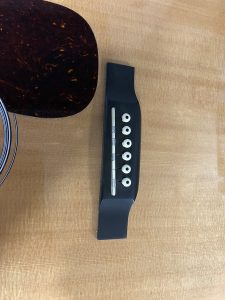
Saddle and bridge
- What to check: Saddle grooves may be uneven or worn.
- Fix: Remove the saddle and inspect the grooves. Sand or file the saddle to level the string contact points. Re-seat the saddle until each string rings with even sustain.
String choice and age
- What to check: Old or mixed-brand strings sound uneven.
- Fix: Change all strings at once. Use a consistent gauge set that matches the guitar’s setup and your playing style.
Top stiffness and internal issues
- What to check: Dull tone from one string can mean the top or bracing is damaged.
- Fix: Tap test along the top near the bracing to find dead spots. Small cracks or loose braces need a luthier. These are common causes that require professional repair.
Bridge plate and saddle slot repair
- What to check: Worn bridge plate or off-center saddle reduces volume on certain strings.
- Fix: For worn bridge plates, add a thin shim under the saddle until balance returns. Major repairs need a tech to replace the plate.
Following this process lets you methodically handle how to fix uneven volume between guitar strings on an acoustic without guessing.

Step-by-step fixes for electric guitars
Electric guitars often suffer uneven volume because of pickup height, pole pieces, electronics, or saddle action. Here’s how to tune those areas.
Pickup height and pole pieces
- What to check: Are pole pieces aligned with strings? Is the pickup too close or too far from the strings?
- Fix: Adjust pickup screws to raise or lower the pickup. For single-coil pickups, raise sections under quieter strings. For humbuckers, tweak overall height and individual pole screws if available.
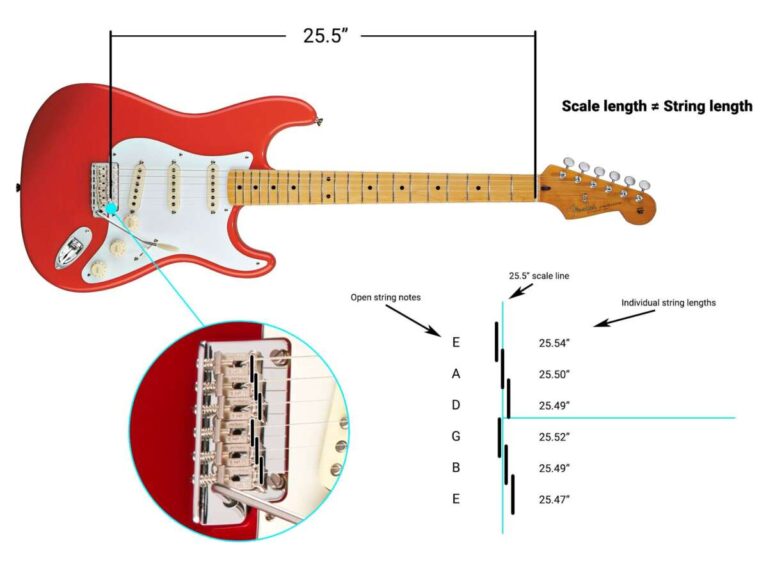
Saddle height and intonation
- What to check: Saddles too low or too far from the pickup can reduce output for one string.
- Fix: Raise the saddle or adjust string length for correct intonation. Small height changes can normalize volume.
Electronics and wiring
- What to check: Cold solder joints or worn pots can reduce signal from one string or pickup position.
- Fix: Wiggle the cable and switch to find inconsistencies. Re-solder cold joints or replace noisy pots. Test with a different cable and amp to isolate the problem.
Pickup swapping and polarity
- What to check: Different pickups have different outputs and tonal balance.
- Fix: If one pickup sounds weak, compare it to others. Consider a pickup raise or replacement. Check phase and polarity when using multiple pickups to avoid cancellations that reduce volume on certain strings.
Using these steps helps you tell whether the problem is mechanical, electrical, or setup-related and shows how to fix uneven volume between guitar strings on electrics.

Setup checklist and tools you need
A good setup saves time and improves tone. These tools will help you fix most problems yourself.
Essential tools
- Quality tuner
- String action gauge or ruler
- Nut files set
- Small screwdrivers for pickup and bridge screws
- Feeler gauges for neck relief
- Sandpaper and small files for saddle work
- Soldering iron for electronics
Step-by-step checklist
- Clean the guitar and restring with a fresh, matched set.
- Tune and check neck relief with a capo and feeler gauge.
- Measure action at 12th fret and compare both sides.
- Adjust pickup height to balance string output.
- Check nut slot heights and saddle geometry last.
Using the checklist helps you work from large, low-effort fixes down to fine adjustments. This ordered approach is crucial to successfully learning how to fix uneven volume between guitar strings.

Tips to prevent uneven volume
Routine care stops many problems before they start. These habits keep strings balanced and tone consistent.
Preventive tips
- Change strings regularly and in complete sets to avoid mismatch.
- Store the guitar in stable humidity and temperature to prevent top warps and nut swelling.
- Clean the fretboard and check for wear that changes string contact.
- Do a quick setup twice a year or when switching string gauges.
- Learn to pick with consistent attack strength; technique often causes perceived uneven volume.
Prevention is easier than cure. Practice these steps to reduce the need to troubleshoot how to fix uneven volume between guitar strings.

Personal experience: common mistakes and lessons learned
I’ve set up hundreds of guitars. Here are real lessons from the shop.
What I learned quickly
- Many players assume pickups are the issue. Often the nut or saddle is the real cause.
- Mixing old and new strings or different brands makes tone lopsided. Change full sets.
- Small pickup adjustments matter. A 0.5 mm move can shift balance noticeably.
Mistakes to avoid
- Don’t file nut slots too deep quickly. Remove tiny amounts and test often.
- Avoid over-tightening pickup screws; this can warp the pickguard or body.
- Don’t ignore neck relief. A back-bowed neck hides volume loss on lower strings.
These are simple, hands-on truths that show how to fix uneven volume between guitar strings in practical settings.

Related concepts to understand
Knowing nearby ideas helps you make better fixes. These concepts are linked to uneven string volume.
Intonation and action
- Intonation affects pitch more than volume, but poor intonation can make strings sound thin or weak.
- Action that’s too low can mute strings slightly, reducing volume.
String gauge and tone
- Thicker strings usually sound louder and have more sustain.
- Matching gauge to guitar setup avoids imbalance and keeps volume consistent.
Pickup type and EQ
- Single-coils and humbuckers have different frequency responses and apparent loudness.
- Simple EQ adjustments on your amp can help compensate for a small imbalance until you fix the root cause.
Understanding these helps you better resolve issues and explains why some fixes work for how to fix uneven volume between guitar strings.
Frequently Asked Questions of how to fix uneven volume between guitar strings
Why does one string sound quieter than the others?
One string may be quieter due to a shallow nut slot, worn saddle groove, old strings, or pickup height mismatch. Diagnose by comparing the same pitch on different strings to find if the issue is near the nut, fretboard, or bridge.
Can pickup height cause uneven string volume?
Yes. If a pickup sits unevenly or pole pieces are misaligned, strings will have different outputs. Adjust pickup screws and pole pieces to balance the string outputs.
Will changing string gauge fix uneven volume?
Changing to a uniform, appropriate gauge set can fix imbalance, especially if previous sets were mixed. After switching gauges, check neck relief and action since setup may change.
Is it safe to file nut slots myself?
Yes, with care. Use the correct nut file and remove tiny amounts, testing frequently; if unsure, consult a tech to avoid over-filing and causing new problems.
When should I see a luthier for uneven volume?
See a luthier if you find loose braces, top cracks, severe bridge plate wear, or if nut and saddle work feels beyond basic filing. Structural repairs and bracing fixes need professional attention.
Could my playing technique be the cause of volume imbalance?
Yes. Inconsistent pick attack or finger placement often makes strings sound uneven. Slow, controlled practice can help isolate technique from mechanical problems.
Conclusion
Balanced tone comes from careful diagnosis and small, precise fixes. Start by identifying whether the issue is at the nut, saddle, pickup, or technique, then follow the step-by-step repairs above. Try one fix at a time and test the results. If you want to get serious about tone, commit to a basic toolkit and a twice-yearly setup routine. Now pick up your guitar, run the diagnostic steps, and take one small action today to restore even volume across your strings. Share your results, ask a question, or subscribe for more setup tips.

Senior Music Reviewer
Alex Carter is a seasoned music reviewer with over a decade of experience in the world of sound and instruments. Passionate about helping musicians and enthusiasts make informed choices, he brings sharp insights and in-depth knowledge to every review. From classical instruments to modern gear, Alex combines technical expertise with a love for music to deliver content that resonates with readers.
As a Senior Music Reviewer and expert author on Tuneluma.com, Alex is dedicated to sharing honest evaluations, practical advice, and thoughtful commentary to guide readers in their musical journey.