Is Electric Guitar Easier Than Acoustic? Truths Revealed!
If you’re standing in a music shop holding both an electric and an acoustic guitar, you might whisper the same question every new player asks: “Is electric guitar easier than acoustic?”
I asked that very thing the first time I wandered into my local Guitar Center. The bright walls shimmered with colorful Stratocasters, dreadnoughts, and amps humming softly in the corner. I wanted something that sounded great, felt good, and wouldn’t punish my fingers after ten minutes.
That question—electric or acoustic—can shape your early experience. One guitar may spark excitement; the other might build stronger technique. Both paths work, but the feel and learning curve are very different.
Today I’ll share what I’ve learned from teaching hundreds of beginners and from my own trial-and-error journey. We’ll explore comfort, tone, setup, and cost so you can decide which instrument fits your hands, lifestyle, and goals.
⚡ Electric Guitar Basics – Why Many Players Find It Easier
Electric guitars are built for playability. Everything about them—string thickness, body size, neck shape—aims to make fretting smoother and less painful.
🎵 String Gauge and Action
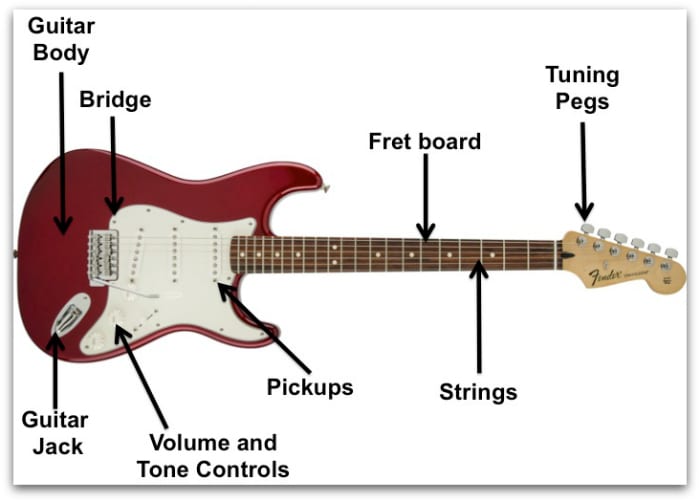
Electric guitars use lighter-gauge strings, often a 9-42 set. These thinner strings require less pressure, so you can fret notes without digging trenches into your fingertips. The action—that’s the space between the strings and the fretboard—is usually lower too. Less distance equals less strain.
When I switched from my first cheap acoustic to a Fender Squier Stratocaster, it felt like moving from sandpaper to silk. I could finally practice scales without my fingers begging for mercy.
Lower action also helps beginners learn clean chords faster. Barre chords—those intimidating shapes that stretch across the neck—suddenly feel possible.
🎸 Neck and Body Size
Electric guitar necks are thinner and smoother. Players with small hands find this shape friendlier because fingers don’t need to reach as far. The smaller, lighter body balances easily on your leg or shoulder. After long sessions, that comfort matters more than most people realize.
A Les Paul or Ibanez RG might weigh more than a travel acoustic, but the compact contour lets your arm and wrist relax. You spend less energy fighting the instrument and more energy enjoying it.
🔊 Sound and Effects (Where the Fun Begins)
Plug an electric into an amp, and you control every aspect of your tone. With a twist of the gain knob or a stomp on a distortion pedal, you jump from gentle jazz to roaring rock.
That variety keeps practice fresh. I’ve watched students double their session time simply because their amp made every note sound exciting. One day they’re playing blues; the next, shimmering ambient tones with a delay pedal.
Still, this flexibility means more gear and more setup—something we’ll talk about later.
🎶 Acoustic Guitar Basics – Pure Tone, More Resistance
Acoustic guitars live at the opposite end of the simplicity spectrum. No amp, no cables, no electronics—just wood, strings, and resonance.
🎵 String Tension and Action
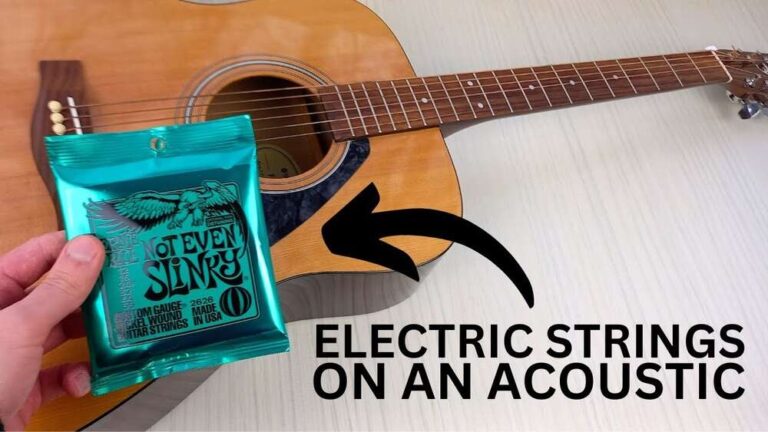
Acoustic strings are thicker—often .011 or .012 gauge—and under higher tension. You’ll need more finger strength to press notes cleanly. Early on, that can feel like doing fingertip push-ups.
But there’s a reward: stronger hands and better control. I’ve seen students who started on acoustic switch to electric months later and glide across the neck like pros. Their fingers were battle-tested.
Most acoustics also have higher action to prevent buzzing. That extra height means you must press harder, which builds endurance but can cause fatigue in long sessions.
If you choose acoustic first, I recommend trimming practice into short bursts—say 15 minutes—until your fingers toughen up.
🎸 Body Shape and Size
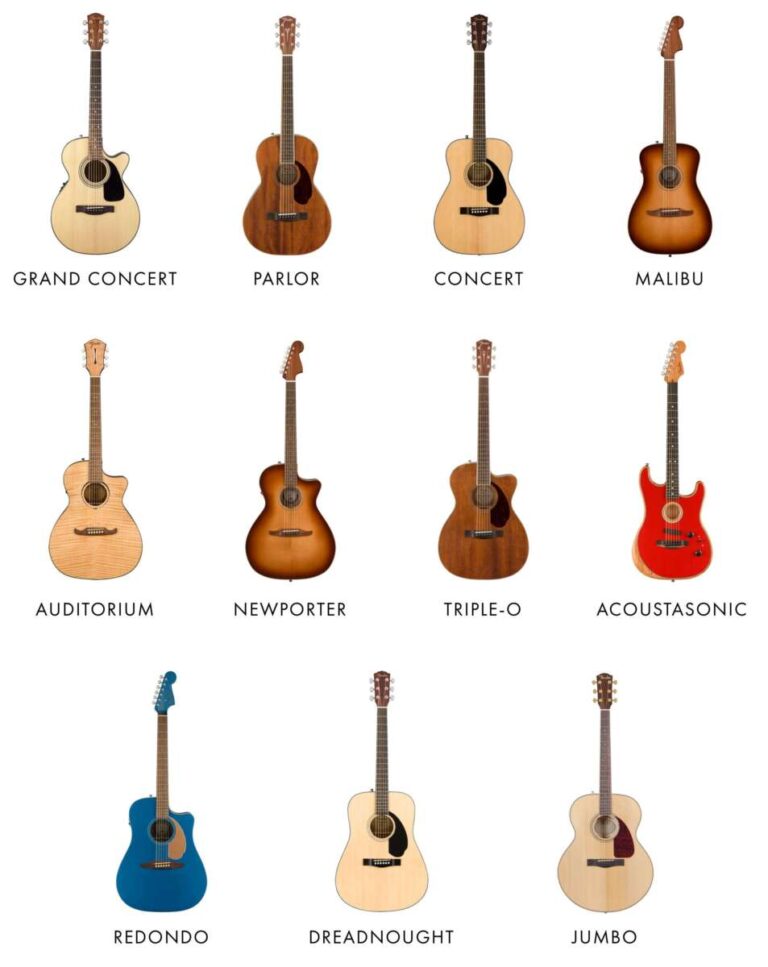
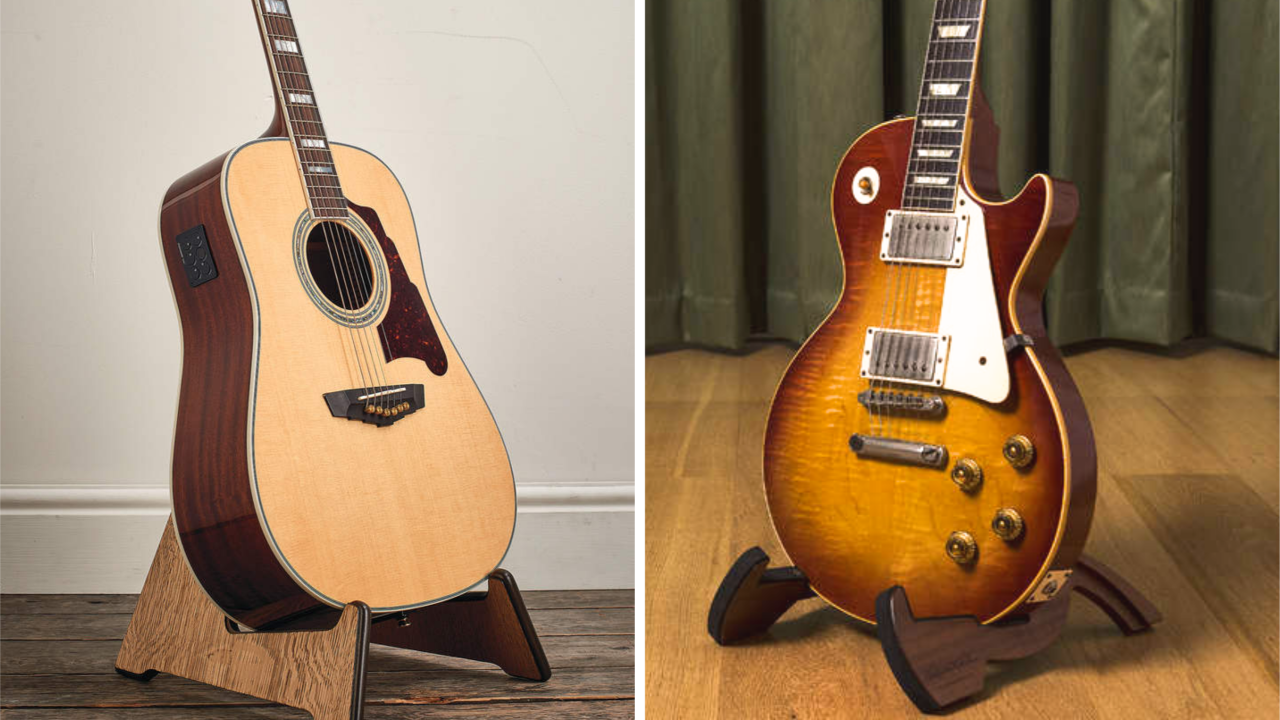
Acoustics come in many shapes: dreadnought, concert, parlor, even jumbo. The larger the body, the louder and fuller the tone. The trade-off? Big guitars can feel bulky, especially for smaller players.
When I swapped my full-sized dreadnought for a Yamaha FGX800C Concert, practice suddenly became easier. I could wrap my arm comfortably, and my strumming felt natural again. Choosing a body that fits your frame is as important as string gauge or price.
🌳 Natural Sound and Tone Character
Every acoustic has its own voice shaped by wood type and construction. A spruce top produces brightness; mahogany gives warmth; rosewood adds depth. Because there’s no amp to color the tone, your playing touch matters more.
That honesty can be humbling. You hear every buzz, every muted string. Yet it teaches precision—and there’s nothing like feeling the sound vibrate straight from the guitar into your chest.
Credit: blog.guitaristnextdoor.com
💬 How Each Feels When You First Start
So which one really feels “easier”?
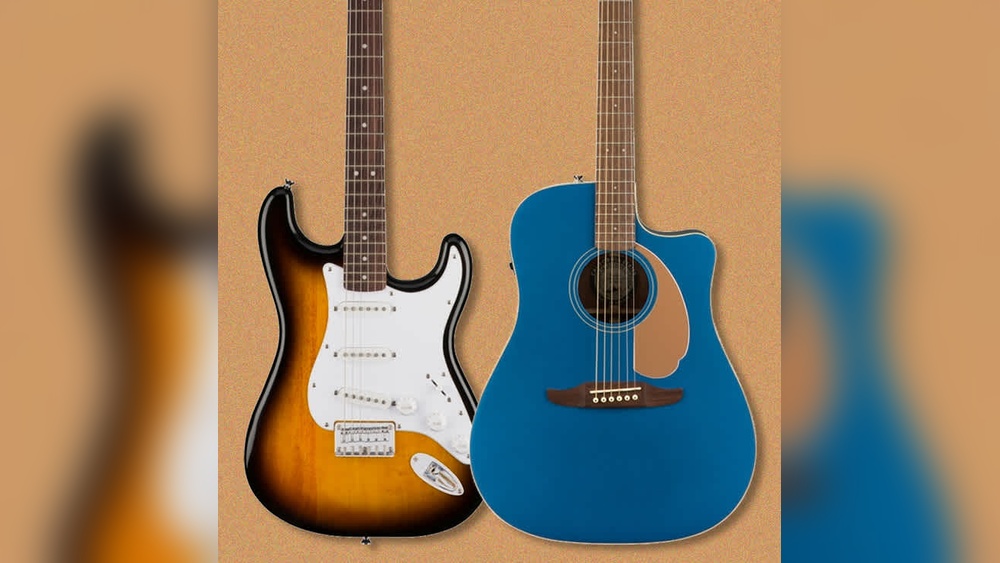
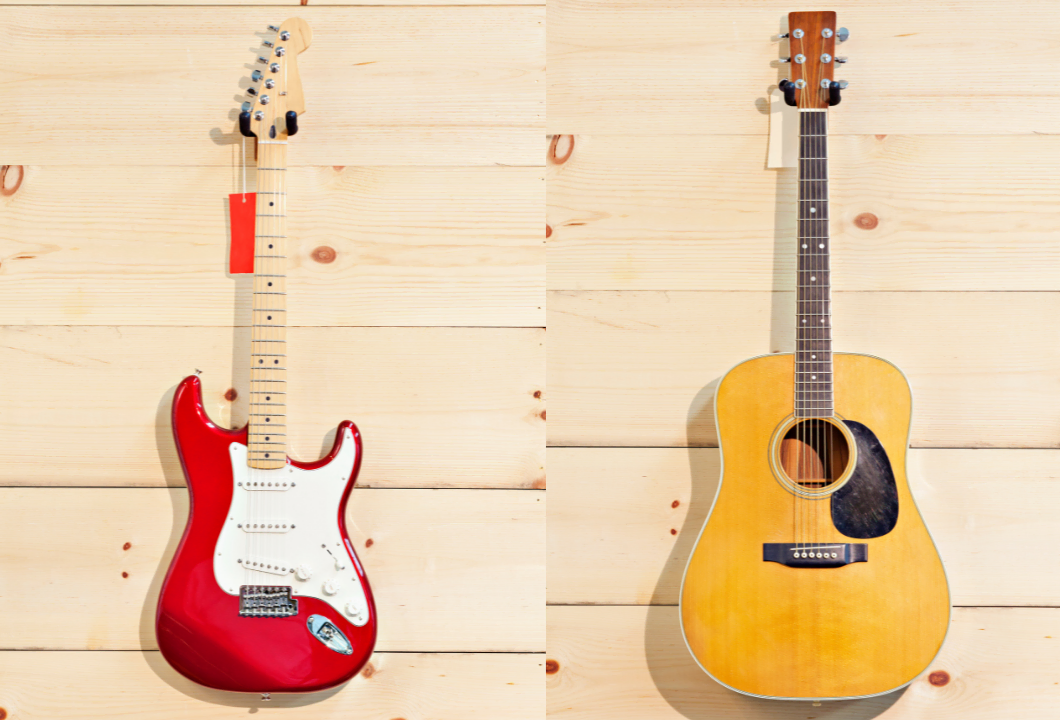
Most beginners notice an instant difference in comfort. Electric strings press down softly; acoustic strings push back. Electric necks feel slim; acoustics feel chunky.
From a technical standpoint, the electric guitar gives faster gratification. Chords ring cleaner sooner. But acoustics build strength, tone control, and a sense of connection to the instrument’s wood and vibration.
I still remember the first week with my Stratocaster: my fingertips barely tingled after an hour. Yet when I picked up my old acoustic the next day, I could suddenly fret an F chord without buzzing. That’s when I realized both guitars complement each other—they just teach different lessons.
📘 Quick Comparison Table
| Feature | Electric Guitar | Acoustic Guitar |
|---|---|---|
| String Gauge | Light (9-42) | Medium/Heavy (11-52 or 12-54) |
| Action Height | Low (1.5–2 mm) | Medium-High (2.5–3 mm) |
| Finger Pressure Needed | Minimal | High |
| Body Size | Small / Slim | Larger / Bulky |
| Sound Source | Amp & Pickups | Resonating Body |
| Tone Variety | Almost Limitless via Effects | Warm and Natural |
| Best For | Rock, Blues, Pop, Metal | Folk, Country, Classical, Singer-Songwriter |
| Maintenance | Electronics + Strings | Strings + Humidity Care |
| Ease for Beginners | Easier to Fret & Hold | Harder but builds strength |
💪 Playability and Comfort — What Your Hands Will Notice First
If you ask ten guitar teachers what makes a guitar “easier,” nine of them will point straight to playability. It’s the first thing you feel when you grab a guitar.
Playability is how easy it is for your fingers, hands, and body to move naturally while playing. It’s not just about strings; it’s about neck width, fret size, action height, and even body weight.
When I started teaching adults who worked office jobs, I noticed something interesting: those who chose electric guitars practiced longer and smiled more during lessons. Their fingers didn’t ache as much, and they could reach chords faster.
But there’s another side to the story—acoustic guitars, though tougher at first, make your fingers stronger in the long run.
🖐️ Finger Strength and Fatigue
Electric guitars usually require less effort. Their strings are lighter, and the low action means even a gentle press makes sound. That’s a huge relief for beginners who haven’t built calluses yet.
Acoustic guitars demand more finger strength. If you’ve ever played an open C chord on a steel-string acoustic, you know the challenge. But this pressure trains your muscles faster. After a month, you’ll notice how solid your grip becomes.
When I switched back to my Fender Telecaster after weeks of acoustic practice, it felt like butter. Every bend, slide, and chord came easier. That’s why I tell my students: even if electric feels easier, acoustic builds a better foundation.
✋ Hand Size and Guitar Fit
If you have smaller hands, an electric guitar is often a better start. The slimmer neck and shorter scale length help you stretch comfortably. A model like the Ibanez GRX20 or Squier Mini Strat is great for smaller hands or teens.
For players with bigger hands, acoustic guitars feel more natural. The neck width allows more room for your fingers to move freely without cramping.
Here’s a simple rule of thumb:
If your wrist hurts or you struggle to wrap your hand around the neck, the guitar doesn’t fit you—it’s not your fault.
Comfort equals progress. The easier the grip, the more often you’ll pick it up.
🎶 Ease of Pressing Strings
Another huge difference lies in string height, or action. Electric guitars generally have an action between 1.5–2 mm, while acoustics range around 2.5–3 mm.
That small difference makes a big impact. Low action means faster chord changes, smoother scales, and fewer buzzes for beginners.
If you want, you can even take your acoustic to a guitar tech and have the action lowered slightly. A simple setup—costing around $40—can turn a tough acoustic into a comfortable companion.
📈 Learning Curve — Which One Helps You Progress Faster?
The learning curve isn’t about talent—it’s about how forgiving the guitar is.
Electric guitars forgive small mistakes. Even light finger pressure makes notes ring clearly. Acoustic guitars demand precision. You’ll know instantly when your fretting is off, because every buzz tells you.
💪 Building Finger Strength
If you’re serious about building long-term skill, starting on acoustic builds endurance. The thicker strings require more effort, which develops strength quickly.
That said, electric guitars let you focus on musical creativity faster. Since you don’t fight the strings as much, you can practice longer and learn songs sooner.
One of my students, Sarah, started on a Yamaha Pacifica electric. She learned ten songs in her first month simply because she practiced daily. Later, when she picked up an acoustic, her fingers already had muscle memory—even if it took more pressure.
Both paths lead to progress, but they shape your skill differently.
🎸 Mastering Chords and Techniques
Acoustic guitars teach accuracy. You’ll learn to press firmly and position fingers precisely, which pays off later when you add bar chords and fingerpicking.
Electric guitars, on the other hand, open the door to expression techniques early—like bending, sliding, palm muting, and vibrato. These techniques are physically easier to do on electric strings, so they’re great for rock, blues, or metal lovers.
Think of it this way: acoustic builds strength and discipline; electric builds creativity and control.
🕒 Practice Challenges
Every instrument has its challenges. Acoustics can be tough on the fingers; electrics can be distracting because of all the gear and effects.
Some beginners get lost experimenting with amp settings instead of learning chords. Others quit acoustic because it hurts at first.
The best approach? Keep things simple. If you’re using an electric, pick one clean tone and practice fundamentals. If you’re on acoustic, play shorter, more frequent sessions.
A 15-minute focused routine beats an hour of distracted noodling every time.
⚙️ Gear and Setup – What You Need to Get Started
Let’s talk about something that often surprises beginners: gear.
The electric guitar setup requires a few more parts than the acoustic, but that’s not as intimidating as it sounds.
🔌 Amplifiers and Cables
An electric guitar needs an amplifier to project sound. Without it, you’ll hear a quiet, tinny tone that doesn’t represent its full potential.
A small amp like the Fender Mustang LT25 or Yamaha THR10II is perfect for home practice. Both are compact, sound fantastic at low volumes, and even come with headphone outputs—so you can play without waking the neighbors.
You’ll also need a good quality instrument cable. Don’t cheap out here—a noisy cable can ruin your tone.
🎚️ Effects and Accessories
Effects are where electric guitars get exciting—and sometimes confusing.
Pedals like distortion, delay, and reverb can make your tone sound magical. But here’s my advice as a teacher: don’t let effects hide sloppy playing.
One of my early students once asked why his solos sounded messy even with distortion cranked high. We switched his amp to a clean channel, and every mistake popped out. Within two weeks of practicing clean, he sounded ten times better—even when he turned distortion back on.
That’s the trick: effects are fun tools, but clean tone builds real skill.
Acoustic guitars, by contrast, focus on pure sound. You might use a clip-on tuner, a capo, and a few picks—that’s it.
🧰 Portability and Maintenance
Electric guitars are heavier and come with more gear—amps, cables, and sometimes pedals. But their metal strings and solid bodies make them less sensitive to humidity or temperature.
Acoustics are simpler and easier to carry, but their wooden bodies need care. Keep them in a case when not in use and avoid extreme humidity. A small guitar humidifier (like the ones by D’Addario) helps prevent cracks or warping.
If you travel often, an acoustic might be easier to bring along, but if you love tweaking your sound, the electric’s worth the extra weight.
🎯 So Which Guitar Is Easier to Live With?
For day-to-day practice, most beginners find electric guitars easier to live with. They’re softer on the fingers, flexible in sound, and adjustable for comfort.
But acoustics reward dedication. Their simplicity teaches discipline. If you love natural tone and want an instrument that’s ready anytime you grab it, the acoustic is your low-maintenance friend.
If you crave variety, love gadgets, and want instant inspiration, the electric wins.
Remember: neither is wrong. The right guitar is the one that makes you want to play tomorrow.
🧠 Quick Expert Insights
-
Fender Play recommends starting on electric if your goal is comfort and modern genres.
-
Sweetwater Sound notes that acoustic guitars build stronger technique early on because of string tension.
-
Yamaha Music School advises choosing based on lifestyle: “The best guitar is the one you’ll reach for daily.”
Credit: www.guitarworld.com
🎧 Sound Variety and Music Styles — The Heart of Your Inspiration
Let’s be honest — sound is what hooks most people. When you first hear that crunchy electric riff or the warm rhythm of an acoustic ballad, something inside you says, “That’s the sound I want to make.”
So, is electric guitar easier than acoustic in terms of sound? It depends on the style you want to play and the tone that keeps you motivated.
🎸 Genre Suitability — What Each Guitar Does Best
If your heart beats for rock, blues, or metal, you’ll feel right at home on an electric guitar. Plug into a small amp, twist the gain knob, and you can go from soft blues licks to heavy distortion in seconds.
Electric guitars shine when you want variety. With just a few settings or pedals, you can sound like Jimi Hendrix, Slash, or John Mayer — all from the same instrument.
If you love folk, country, or acoustic pop, the acoustic guitar wins every time. It’s the sound of Ed Sheeran’s storytelling, Taylor Swift’s early hits, and classic campfire singalongs.
I remember playing my first live open mic with an acoustic Yamaha. The tone filled the room naturally — no amp, no effects, just my strumming and voice. That simplicity felt pure and honest.
That’s the beauty of acoustics — they’re always ready, no power cords required.
🎚️ Sound Customization — The Electric Advantage
Electric guitars let you shape sound like an artist paints with color. From bright cleans to dark distortion, every knob and pedal expands your possibilities.
Amps like the Fender Mustang LT25 or Line 6 Catalyst come loaded with built-in effects — reverb, chorus, delay, even auto-wah. You can explore entire genres without changing guitars.
With acoustic guitars, tone control comes from your hands. The wood type, string choice, and your picking technique define your sound. There’s no quick fix — and that’s both the challenge and the charm.
If you crave flexibility and like experimenting, electric guitars keep things exciting. But if you want to connect deeply with your instrument’s natural tone, acoustics give you that earthy satisfaction.
💡 Practice Motivation Through Sound Variety
Here’s a truth I’ve seen again and again: people who love their sound practice more often.
Electric guitars, with their effects and tone range, make even simple riffs sound cool. That satisfaction can push you to practice daily. When I started using my Boss Katana amp, my sessions doubled because every new tone inspired another riff.
Acoustic guitars inspire in a different way. They make you focus on precision — how cleanly you strum, how gently you fingerpick. It’s rewarding in its own right, especially when you hear a clear, resonant chord bloom naturally.
In short: electric keeps you curious; acoustic keeps you grounded.
💵 Cost and Investment — What You’ll Actually Spend
When choosing your first guitar, cost matters. The right choice fits your budget without sacrificing playability.
💰 Initial Purchase — What You Need Up Front
An entry-level acoustic guitar like the Yamaha FG800, Fender FA-15, or Epiphone DR-100 costs around $150–$250 USD. You can play straight out of the box — no amp needed.
A starter electric, such as the Squier Stratocaster, Yamaha Pacifica, or Ibanez GRX, costs about $200–$300, but you’ll need an amp. Budget an extra $100–$150 for something reliable like the Fender Frontman 10G or Orange Crush 20.
So, overall, going electric can cost about $100–$200 more to get started.
But don’t let that scare you — that extra investment often pays off in motivation and sound flexibility.
🧩 Additional Equipment — Small Things Add Up
Here’s what each setup might need:
For Electric Guitar:
-
Amplifier (essential)
-
Instrument cable
-
Guitar strap
-
Picks and tuner
-
Optional: pedalboard or effects
For Acoustic Guitar:
-
Picks
-
Capo (for changing keys easily)
-
Clip-on tuner
-
Case or gig bag
The acoustic’s simplicity saves money early, while the electric’s gear offers more creative tools later.
When I bought my first electric, I didn’t realize how much fun experimenting with pedals would be. My Boss DS-1 distortion pedal turned a plain rhythm into a rock anthem overnight. That’s part of the electric journey — every new gadget opens a door.
🔧 Long-Term Costs — Maintenance and Upgrades
Both guitars need new strings every 2–3 months if you play often. Electric strings cost a bit less (about $6–$8 per set) than acoustic ones ($8–$12).
Electric amps might need repairs or tube replacements down the line, while acoustics sometimes need fret polishing or neck adjustments.
I still have my first acoustic from college. After ten years, all it’s needed is a few string changes and a quick bridge adjustment — total cost under $50.
That’s one reason many players keep an acoustic even if they move to electric later. It’s dependable, low-maintenance, and always ready to play.
⚠️ Common Beginner Mistakes — What to Avoid Early
Whether you start electric or acoustic, beginners share the same pitfalls. Avoiding them makes your journey smoother.
🎛️ Overreliance on Effects
Many electric beginners think pedals or amp settings can “fix” bad technique. They crank up distortion to hide mistakes. But effects can’t fix sloppy timing or muted chords.
When I teach new players, I always say, “If it doesn’t sound good clean, it won’t sound good distorted.”
Start with a clean tone. Learn to control your fingers first. Once your clean playing sounds solid, effects will only make it better.
⏩ Skipping Fundamentals
No matter what guitar you choose, basics are your best friend. Many skip simple drills like finger exercises, chord transitions, and scales.
But here’s the truth: every advanced solo, every tricky riff, every rhythm groove comes from those basics.
I had a student who wanted to play “Sweet Child O’ Mine” by week two. Instead, I taught him finger stretches and rhythm strumming first. By week six, he nailed the song effortlessly — because his foundation was solid.
🔧 Ignoring Setup and Maintenance
A poor setup can ruin your motivation. High string action, old strings, or poor tuning can make even the best guitar sound terrible.
If your fingers hurt too much or chords buzz, take your guitar to a technician. A professional setup—usually under $50—can make it feel like a brand-new instrument.
When I first adjusted the action on my acoustic, it was like magic. Suddenly, bar chords felt easy, and my playing time doubled.
🎶 What Really Keeps You Playing — Comfort and Joy
After years of teaching, I’ve learned something every new guitarist should know:
The easiest guitar isn’t just the one that feels light on your fingers. It’s the one that makes you want to pick it up every day.
If you smile when you strum your acoustic and feel the wood resonate under your arm — that’s your guitar.
If you can’t stop experimenting with your amp tones — that’s your guitar.
Ease matters, but enjoyment keeps you playing.
🧠 Expert Tips — Straight From The Pros
-
Guitar World notes that most beginners find electric guitars physically easier but warns that “acoustics train precision and rhythm control.”
-
Sweetwater Sound emphasizes that acoustic guitars help players “develop strong fundamentals that carry over to any style.”
-
Fender Play suggests starting with whichever guitar “matches your music taste — motivation builds mastery.”
These expert views echo one truth: both paths lead to success, just with different lessons along the way.
Credit: nationalguitaracademy.com
🎯 Choosing Based on Your Goals
By now, you’ve learned that “easy” depends on what you want from the guitar.
Maybe you dream of jamming with a rock band or writing quiet acoustic songs in your bedroom.
Your personal goals will decide which guitar fits best — not someone else’s opinion.
🎵 Preferred Music Styles
Your music taste is the first clue.
If you love riffs and solos from artists like Slash, Jimi Hendrix, or Eric Clapton, the electric guitar is your playground.
It gives you access to distortion, sustain, and dynamic control that acoustic guitars simply can’t replicate.
If your playlist leans toward Ed Sheeran, John Denver, or Fleetwood Mac, an acoustic guitar will feel natural.
Its warm tone fits folk, pop, and singer-songwriter styles perfectly.
Think about the songs that make you pick up your air guitar — that’s usually your answer.
💪 Physical Comfort
Comfort determines whether you’ll enjoy practice or dread it.
Electric guitars usually have thinner necks, lighter bodies, and softer strings.
They’re easier on the fingers, especially during those first few weeks when you’re still building calluses.
Acoustic guitars need more finger strength but reward you with stronger hands and cleaner technique.
If you’re physically small or have hand-mobility limits, start with electric.
If you’re fit and want to build strength early, acoustic can be a great challenge.
I once had a student named Mike who struggled with a full-size dreadnought.
We switched him to a Squier Mini Strat, and within a month, he doubled his daily practice time.
It wasn’t about talent — it was about finding the right fit.
💵 Budget and Space
Budget matters.
Acoustics are simpler: one guitar, a tuner, and you’re ready.
Electric setups require an amp and cable — slightly pricier and bulkier.
If you live in a dorm or small apartment, acoustic wins for convenience.
If you have a bit of room for gear and love experimenting, go electric.
When I moved into my tiny studio apartment, my Yamaha acoustic became my travel companion.
But when I upgraded my home office, I pulled out my Fender Telecaster again.
Different seasons of life call for different guitars — and that’s okay.
🧠 Expert Insights and Real-World Tips
You don’t have to take only my word for it.
Here’s what the experts and experienced players say:
-
Guitar World: “Electric guitars are easier to fret and bend, ideal for quick progress.”
-
Sweetwater Sound: “Acoustics demand more precision but build technique faster.”
-
Fender Play: “Choose the guitar that fits your musical taste — motivation drives mastery.”
-
Yamaha Music School: “If your goal is long-term skill development, alternating between both is ideal.”
Most professionals agree that both guitars teach transferable skills.
If you can play one, you can adapt easily to the other.
💬 Frequently Asked Questions
❓ Is Electric Guitar OK for Beginners?
Yes — electric guitars are often easier for beginners.
The strings are lighter, the neck is thinner, and the action is lower, which reduces finger pain.
You’ll also find it easier to explore styles like blues, rock, or jazz.
Just remember: you’ll need an amp to hear the full sound.
❓ Should I Learn Acoustic Guitar First Before Electric?
Not necessarily.
Many players start with electric and later move to acoustic with ease.
If you’re drawn to acoustic tone and simplicity, start there.
If you want fast results and less finger pain early on, go electric.
Your motivation is the key factor — pick the guitar that inspires you most.
❓ What Is the Easiest Guitar to Learn?
For most beginners, the electric guitar is the easiest to learn.
The combination of light strings, small body, and low action helps you play longer without fatigue.
Acoustic guitars may take more effort but improve strength and precision faster.
❓ Does Electric Guitar Build Different Skills?
A bit.
Electric guitars make it easier to learn techniques like bending, sliding, and vibrato.
These expressive skills are tougher on acoustic strings but translate perfectly once mastered.
Acoustics emphasize rhythm, timing, and dynamic control — skills that every musician needs.
❓ How Long Until I Can Play Songs?
With consistent practice (15–30 minutes daily), most beginners play full songs within two to three months.
Electrics usually show faster progress because they’re less physically demanding.
Acoustics may take longer but give deeper control over tone and rhythm.
⚡ Pro Setup and Maintenance Tips
No matter which guitar you choose, a few habits make everything easier:
-
Get a professional setup.
Ask a local luthier to adjust string height and neck relief. A $50 setup can transform your guitar’s playability. -
Use the right strings.
-
Electric: .009 or .010 gauge for beginners.
-
Acoustic: .011 “custom light” set if your fingers hurt early on.
-
-
Keep it in tune.
Use a clip-on tuner like the D’Addario Micro or Snark SN-5X. -
Store it properly.
Acoustics need stable humidity (40–60%).
Electrics should be kept away from direct heat or moisture. -
Play daily, even five minutes.
Consistency beats long but rare sessions.
Regular practice keeps your calluses and rhythm sharp.
💡 Real Experience – My Journey from Acoustic to Electric
When I first picked up a guitar, I started on a cheap steel-string acoustic.
It hurt — a lot.
My fingertips felt like they’d touched fire after ten minutes.
But I stuck with it.
Three months later, I could play “Wonderwall” without buzz.
Then I bought my first electric — a Fender Stratocaster.
The difference blew my mind.
Suddenly, barre chords felt easy, and solos flowed naturally.
Yet every skill I’d built on the acoustic transferred perfectly.
That’s when I realized: the best path is the one that keeps you moving forward.
The acoustic made me strong; the electric made me expressive.
Together, they completed my musical voice.
❤️ Why Your First Guitar Choice Isn’t Permanent
The great thing about guitars? You can always switch later.
Many players own both and use them for different moods.
Acoustic mornings, electric nights — it’s a common rhythm for musicians.
Your first guitar is just the start of your journey.
Once you learn a few chords, your confidence will grow, and your preferences will naturally evolve.
Some of my students started on electric and later fell in love with unplugged acoustic fingerstyle.
Others went the opposite way. Both paths led to music they loved.
🧭 Final Decision Guide
If you’re still unsure, here’s a quick checklist:
| Preference | Best Choice | Why |
|---|---|---|
| Softer strings & easy fretting | Electric | Lower tension and action |
| Natural tone & no extra gear | Acoustic | Simple setup |
| Rock, blues, metal genres | Electric | Works with pedals & amps |
| Folk, country, unplugged pop | Acoustic | Warm resonance |
| Apartment or small space | Acoustic | Portable, quiet |
| Love gadgets & tone shaping | Electric | Effects & amp modeling |
| Building finger strength fast | Acoustic | Higher tension develops muscles |
Whichever box you tick most, that’s your starting point.
🎵 Conclusion – The Guitar That Keeps You Playing Wins
So, after all this, is electric guitar easier than acoustic?
Yes — in many ways.
The electric guitar is softer on the fingers, lighter in feel, and more adaptable for modern styles.
But “easier” doesn’t always mean “better.”
The acoustic guitar challenges you, strengthens your hands, and connects you to the pure sound of wood and string.
It rewards patience.
Electric guitars offer excitement and variety.
They reward curiosity.
Here’s the truth I’ve learned from years of teaching and performing:
The best guitar is the one that makes you want to pick it up again tomorrow.
If you love how it sounds, if it makes you forget time when you play, you’ve chosen the right one — no matter what it is.
And remember, every great guitarist once played their first shaky chord.
Start small, stay consistent, and soon the difference between acoustic and electric won’t matter.
You’ll just be playing guitar — and that’s the best feeling in the world.
If you’re standing in a music shop holding both an electric and an acoustic guitar, you might whisper the same question every new player asks: “Is electric guitar easier than acoustic?”
I asked that very thing the first time I wandered into my local Guitar Center. The bright walls shimmered with colorful Stratocasters, dreadnoughts, and amps humming softly in the corner. I wanted something that sounded great, felt good, and wouldn’t punish my fingers after ten minutes.
That question—electric or acoustic—can shape your early experience. One guitar may spark excitement; the other might build stronger technique. Both paths work, but the feel and learning curve are very different.
Today I’ll share what I’ve learned from teaching hundreds of beginners and from my own trial-and-error journey. We’ll explore comfort, tone, setup, and cost so you can decide which instrument fits your hands, lifestyle, and goals.
⚡ Electric Guitar Basics – Why Many Players Find It Easier
Electric guitars are built for playability. Everything about them—string thickness, body size, neck shape—aims to make fretting smoother and less painful.
🎵 String Gauge and Action
Electric guitars use lighter-gauge strings, often a 9-42 set. These thinner strings require less pressure, so you can fret notes without digging trenches into your fingertips. The action—that’s the space between the strings and the fretboard—is usually lower too. Less distance equals less strain.
When I switched from my first cheap acoustic to a Fender Squier Stratocaster, it felt like moving from sandpaper to silk. I could finally practice scales without my fingers begging for mercy.
Lower action also helps beginners learn clean chords faster. Barre chords—those intimidating shapes that stretch across the neck—suddenly feel possible.
🎸 Neck and Body Size
Electric guitar necks are thinner and smoother. Players with small hands find this shape friendlier because fingers don’t need to reach as far. The smaller, lighter body balances easily on your leg or shoulder. After long sessions, that comfort matters more than most people realize.
A Les Paul or Ibanez RG might weigh more than a travel acoustic, but the compact contour lets your arm and wrist relax. You spend less energy fighting the instrument and more energy enjoying it.
🔊 Sound and Effects (Where the Fun Begins)
Plug an electric into an amp, and you control every aspect of your tone. With a twist of the gain knob or a stomp on a distortion pedal, you jump from gentle jazz to roaring rock.
That variety keeps practice fresh. I’ve watched students double their session time simply because their amp made every note sound exciting. One day they’re playing blues; the next, shimmering ambient tones with a delay pedal.
Still, this flexibility means more gear and more setup—something we’ll talk about later.
🎶 Acoustic Guitar Basics – Pure Tone, More Resistance
Acoustic guitars live at the opposite end of the simplicity spectrum. No amp, no cables, no electronics—just wood, strings, and resonance.
🎵 String Tension and Action
Acoustic strings are thicker—often .011 or .012 gauge—and under higher tension. You’ll need more finger strength to press notes cleanly. Early on, that can feel like doing fingertip push-ups.
But there’s a reward: stronger hands and better control. I’ve seen students who started on acoustic switch to electric months later and glide across the neck like pros. Their fingers were battle-tested.
Most acoustics also have higher action to prevent buzzing. That extra height means you must press harder, which builds endurance but can cause fatigue in long sessions.
If you choose acoustic first, I recommend trimming practice into short bursts—say 15 minutes—until your fingers toughen up.
🎸 Body Shape and Size
Acoustics come in many shapes: dreadnought, concert, parlor, even jumbo. The larger the body, the louder and fuller the tone. The trade-off? Big guitars can feel bulky, especially for smaller players.
When I swapped my full-sized dreadnought for a Yamaha FGX800C Concert, practice suddenly became easier. I could wrap my arm comfortably, and my strumming felt natural again. Choosing a body that fits your frame is as important as string gauge or price.
🌳 Natural Sound and Tone Character
Every acoustic has its own voice shaped by wood type and construction. A spruce top produces brightness; mahogany gives warmth; rosewood adds depth. Because there’s no amp to color the tone, your playing touch matters more.
That honesty can be humbling. You hear every buzz, every muted string. Yet it teaches precision—and there’s nothing like feeling the sound vibrate straight from the guitar into your chest.
Credit: blog.guitaristnextdoor.com
💬 How Each Feels When You First Start
So which one really feels “easier”?
Most beginners notice an instant difference in comfort. Electric strings press down softly; acoustic strings push back. Electric necks feel slim; acoustics feel chunky.
From a technical standpoint, the electric guitar gives faster gratification. Chords ring cleaner sooner. But acoustics build strength, tone control, and a sense of connection to the instrument’s wood and vibration.
I still remember the first week with my Stratocaster: my fingertips barely tingled after an hour. Yet when I picked up my old acoustic the next day, I could suddenly fret an F chord without buzzing. That’s when I realized both guitars complement each other—they just teach different lessons.
📘 Quick Comparison Table
| Feature | Electric Guitar | Acoustic Guitar |
|---|---|---|
| String Gauge | Light (9-42) | Medium/Heavy (11-52 or 12-54) |
| Action Height | Low (1.5–2 mm) | Medium-High (2.5–3 mm) |
| Finger Pressure Needed | Minimal | High |
| Body Size | Small / Slim | Larger / Bulky |
| Sound Source | Amp & Pickups | Resonating Body |
| Tone Variety | Almost Limitless via Effects | Warm and Natural |
| Best For | Rock, Blues, Pop, Metal | Folk, Country, Classical, Singer-Songwriter |
| Maintenance | Electronics + Strings | Strings + Humidity Care |
| Ease for Beginners | Easier to Fret & Hold | Harder but builds strength |
💪 Playability and Comfort — What Your Hands Will Notice First
If you ask ten guitar teachers what makes a guitar “easier,” nine of them will point straight to playability. It’s the first thing you feel when you grab a guitar.
Playability is how easy it is for your fingers, hands, and body to move naturally while playing. It’s not just about strings; it’s about neck width, fret size, action height, and even body weight.
When I started teaching adults who worked office jobs, I noticed something interesting: those who chose electric guitars practiced longer and smiled more during lessons. Their fingers didn’t ache as much, and they could reach chords faster.
But there’s another side to the story—acoustic guitars, though tougher at first, make your fingers stronger in the long run.
🖐️ Finger Strength and Fatigue
Electric guitars usually require less effort. Their strings are lighter, and the low action means even a gentle press makes sound. That’s a huge relief for beginners who haven’t built calluses yet.
Acoustic guitars demand more finger strength. If you’ve ever played an open C chord on a steel-string acoustic, you know the challenge. But this pressure trains your muscles faster. After a month, you’ll notice how solid your grip becomes.
When I switched back to my Fender Telecaster after weeks of acoustic practice, it felt like butter. Every bend, slide, and chord came easier. That’s why I tell my students: even if electric feels easier, acoustic builds a better foundation.
✋ Hand Size and Guitar Fit
If you have smaller hands, an electric guitar is often a better start. The slimmer neck and shorter scale length help you stretch comfortably. A model like the Ibanez GRX20 or Squier Mini Strat is great for smaller hands or teens.
For players with bigger hands, acoustic guitars feel more natural. The neck width allows more room for your fingers to move freely without cramping.
Here’s a simple rule of thumb:
If your wrist hurts or you struggle to wrap your hand around the neck, the guitar doesn’t fit you—it’s not your fault.
Comfort equals progress. The easier the grip, the more often you’ll pick it up.
🎶 Ease of Pressing Strings
Another huge difference lies in string height, or action. Electric guitars generally have an action between 1.5–2 mm, while acoustics range around 2.5–3 mm.
That small difference makes a big impact. Low action means faster chord changes, smoother scales, and fewer buzzes for beginners.
If you want, you can even take your acoustic to a guitar tech and have the action lowered slightly. A simple setup—costing around $40—can turn a tough acoustic into a comfortable companion.
📈 Learning Curve — Which One Helps You Progress Faster?
The learning curve isn’t about talent—it’s about how forgiving the guitar is.
Electric guitars forgive small mistakes. Even light finger pressure makes notes ring clearly. Acoustic guitars demand precision. You’ll know instantly when your fretting is off, because every buzz tells you.
💪 Building Finger Strength
If you’re serious about building long-term skill, starting on acoustic builds endurance. The thicker strings require more effort, which develops strength quickly.
That said, electric guitars let you focus on musical creativity faster. Since you don’t fight the strings as much, you can practice longer and learn songs sooner.
One of my students, Sarah, started on a Yamaha Pacifica electric. She learned ten songs in her first month simply because she practiced daily. Later, when she picked up an acoustic, her fingers already had muscle memory—even if it took more pressure.
Both paths lead to progress, but they shape your skill differently.
🎸 Mastering Chords and Techniques
Acoustic guitars teach accuracy. You’ll learn to press firmly and position fingers precisely, which pays off later when you add bar chords and fingerpicking.
Electric guitars, on the other hand, open the door to expression techniques early—like bending, sliding, palm muting, and vibrato. These techniques are physically easier to do on electric strings, so they’re great for rock, blues, or metal lovers.
Think of it this way: acoustic builds strength and discipline; electric builds creativity and control.
🕒 Practice Challenges
Every instrument has its challenges. Acoustics can be tough on the fingers; electrics can be distracting because of all the gear and effects.
Some beginners get lost experimenting with amp settings instead of learning chords. Others quit acoustic because it hurts at first.
The best approach? Keep things simple. If you’re using an electric, pick one clean tone and practice fundamentals. If you’re on acoustic, play shorter, more frequent sessions.
A 15-minute focused routine beats an hour of distracted noodling every time.
⚙️ Gear and Setup – What You Need to Get Started
Let’s talk about something that often surprises beginners: gear.
The electric guitar setup requires a few more parts than the acoustic, but that’s not as intimidating as it sounds.
🔌 Amplifiers and Cables
An electric guitar needs an amplifier to project sound. Without it, you’ll hear a quiet, tinny tone that doesn’t represent its full potential.
A small amp like the Fender Mustang LT25 or Yamaha THR10II is perfect for home practice. Both are compact, sound fantastic at low volumes, and even come with headphone outputs—so you can play without waking the neighbors.
You’ll also need a good quality instrument cable. Don’t cheap out here—a noisy cable can ruin your tone.
🎚️ Effects and Accessories
Effects are where electric guitars get exciting—and sometimes confusing.
Pedals like distortion, delay, and reverb can make your tone sound magical. But here’s my advice as a teacher: don’t let effects hide sloppy playing.
One of my early students once asked why his solos sounded messy even with distortion cranked high. We switched his amp to a clean channel, and every mistake popped out. Within two weeks of practicing clean, he sounded ten times better—even when he turned distortion back on.
That’s the trick: effects are fun tools, but clean tone builds real skill.
Acoustic guitars, by contrast, focus on pure sound. You might use a clip-on tuner, a capo, and a few picks—that’s it.
🧰 Portability and Maintenance
Electric guitars are heavier and come with more gear—amps, cables, and sometimes pedals. But their metal strings and solid bodies make them less sensitive to humidity or temperature.
Acoustics are simpler and easier to carry, but their wooden bodies need care. Keep them in a case when not in use and avoid extreme humidity. A small guitar humidifier (like the ones by D’Addario) helps prevent cracks or warping.
If you travel often, an acoustic might be easier to bring along, but if you love tweaking your sound, the electric’s worth the extra weight.
🎯 So Which Guitar Is Easier to Live With?
For day-to-day practice, most beginners find electric guitars easier to live with. They’re softer on the fingers, flexible in sound, and adjustable for comfort.
But acoustics reward dedication. Their simplicity teaches discipline. If you love natural tone and want an instrument that’s ready anytime you grab it, the acoustic is your low-maintenance friend.
If you crave variety, love gadgets, and want instant inspiration, the electric wins.
Remember: neither is wrong. The right guitar is the one that makes you want to play tomorrow.
🧠 Quick Expert Insights
-
Fender Play recommends starting on electric if your goal is comfort and modern genres.
-
Sweetwater Sound notes that acoustic guitars build stronger technique early on because of string tension.
-
Yamaha Music School advises choosing based on lifestyle: “The best guitar is the one you’ll reach for daily.”
Credit: www.guitarworld.com
🎧 Sound Variety and Music Styles — The Heart of Your Inspiration
Let’s be honest — sound is what hooks most people. When you first hear that crunchy electric riff or the warm rhythm of an acoustic ballad, something inside you says, “That’s the sound I want to make.”
So, is electric guitar easier than acoustic in terms of sound? It depends on the style you want to play and the tone that keeps you motivated.
🎸 Genre Suitability — What Each Guitar Does Best
If your heart beats for rock, blues, or metal, you’ll feel right at home on an electric guitar. Plug into a small amp, twist the gain knob, and you can go from soft blues licks to heavy distortion in seconds.
Electric guitars shine when you want variety. With just a few settings or pedals, you can sound like Jimi Hendrix, Slash, or John Mayer — all from the same instrument.
If you love folk, country, or acoustic pop, the acoustic guitar wins every time. It’s the sound of Ed Sheeran’s storytelling, Taylor Swift’s early hits, and classic campfire singalongs.
I remember playing my first live open mic with an acoustic Yamaha. The tone filled the room naturally — no amp, no effects, just my strumming and voice. That simplicity felt pure and honest.
That’s the beauty of acoustics — they’re always ready, no power cords required.
🎚️ Sound Customization — The Electric Advantage
Electric guitars let you shape sound like an artist paints with color. From bright cleans to dark distortion, every knob and pedal expands your possibilities.
Amps like the Fender Mustang LT25 or Line 6 Catalyst come loaded with built-in effects — reverb, chorus, delay, even auto-wah. You can explore entire genres without changing guitars.
With acoustic guitars, tone control comes from your hands. The wood type, string choice, and your picking technique define your sound. There’s no quick fix — and that’s both the challenge and the charm.
If you crave flexibility and like experimenting, electric guitars keep things exciting. But if you want to connect deeply with your instrument’s natural tone, acoustics give you that earthy satisfaction.
💡 Practice Motivation Through Sound Variety
Here’s a truth I’ve seen again and again: people who love their sound practice more often.
Electric guitars, with their effects and tone range, make even simple riffs sound cool. That satisfaction can push you to practice daily. When I started using my Boss Katana amp, my sessions doubled because every new tone inspired another riff.
Acoustic guitars inspire in a different way. They make you focus on precision — how cleanly you strum, how gently you fingerpick. It’s rewarding in its own right, especially when you hear a clear, resonant chord bloom naturally.
In short: electric keeps you curious; acoustic keeps you grounded.
💵 Cost and Investment — What You’ll Actually Spend
When choosing your first guitar, cost matters. The right choice fits your budget without sacrificing playability.
💰 Initial Purchase — What You Need Up Front
An entry-level acoustic guitar like the Yamaha FG800, Fender FA-15, or Epiphone DR-100 costs around $150–$250 USD. You can play straight out of the box — no amp needed.
A starter electric, such as the Squier Stratocaster, Yamaha Pacifica, or Ibanez GRX, costs about $200–$300, but you’ll need an amp. Budget an extra $100–$150 for something reliable like the Fender Frontman 10G or Orange Crush 20.
So, overall, going electric can cost about $100–$200 more to get started.
But don’t let that scare you — that extra investment often pays off in motivation and sound flexibility.
🧩 Additional Equipment — Small Things Add Up
Here’s what each setup might need:
For Electric Guitar:
-
Amplifier (essential)
-
Instrument cable
-
Guitar strap
-
Picks and tuner
-
Optional: pedalboard or effects
For Acoustic Guitar:
-
Picks
-
Capo (for changing keys easily)
-
Clip-on tuner
-
Case or gig bag
The acoustic’s simplicity saves money early, while the electric’s gear offers more creative tools later.
When I bought my first electric, I didn’t realize how much fun experimenting with pedals would be. My Boss DS-1 distortion pedal turned a plain rhythm into a rock anthem overnight. That’s part of the electric journey — every new gadget opens a door.
🔧 Long-Term Costs — Maintenance and Upgrades
Both guitars need new strings every 2–3 months if you play often. Electric strings cost a bit less (about $6–$8 per set) than acoustic ones ($8–$12).
Electric amps might need repairs or tube replacements down the line, while acoustics sometimes need fret polishing or neck adjustments.
I still have my first acoustic from college. After ten years, all it’s needed is a few string changes and a quick bridge adjustment — total cost under $50.
That’s one reason many players keep an acoustic even if they move to electric later. It’s dependable, low-maintenance, and always ready to play.
⚠️ Common Beginner Mistakes — What to Avoid Early
Whether you start electric or acoustic, beginners share the same pitfalls. Avoiding them makes your journey smoother.
🎛️ Overreliance on Effects
Many electric beginners think pedals or amp settings can “fix” bad technique. They crank up distortion to hide mistakes. But effects can’t fix sloppy timing or muted chords.
When I teach new players, I always say, “If it doesn’t sound good clean, it won’t sound good distorted.”
Start with a clean tone. Learn to control your fingers first. Once your clean playing sounds solid, effects will only make it better.
⏩ Skipping Fundamentals
No matter what guitar you choose, basics are your best friend. Many skip simple drills like finger exercises, chord transitions, and scales.
But here’s the truth: every advanced solo, every tricky riff, every rhythm groove comes from those basics.
I had a student who wanted to play “Sweet Child O’ Mine” by week two. Instead, I taught him finger stretches and rhythm strumming first. By week six, he nailed the song effortlessly — because his foundation was solid.
🔧 Ignoring Setup and Maintenance
A poor setup can ruin your motivation. High string action, old strings, or poor tuning can make even the best guitar sound terrible.
If your fingers hurt too much or chords buzz, take your guitar to a technician. A professional setup—usually under $50—can make it feel like a brand-new instrument.
When I first adjusted the action on my acoustic, it was like magic. Suddenly, bar chords felt easy, and my playing time doubled.
🎶 What Really Keeps You Playing — Comfort and Joy
After years of teaching, I’ve learned something every new guitarist should know:
The easiest guitar isn’t just the one that feels light on your fingers. It’s the one that makes you want to pick it up every day.
If you smile when you strum your acoustic and feel the wood resonate under your arm — that’s your guitar.
If you can’t stop experimenting with your amp tones — that’s your guitar.
Ease matters, but enjoyment keeps you playing.
🧠 Expert Tips — Straight From The Pros
-
Guitar World notes that most beginners find electric guitars physically easier but warns that “acoustics train precision and rhythm control.”
-
Sweetwater Sound emphasizes that acoustic guitars help players “develop strong fundamentals that carry over to any style.”
-
Fender Play suggests starting with whichever guitar “matches your music taste — motivation builds mastery.”
These expert views echo one truth: both paths lead to success, just with different lessons along the way.
Credit: nationalguitaracademy.com
🎯 Choosing Based on Your Goals
By now, you’ve learned that “easy” depends on what you want from the guitar.
Maybe you dream of jamming with a rock band or writing quiet acoustic songs in your bedroom.
Your personal goals will decide which guitar fits best — not someone else’s opinion.
🎵 Preferred Music Styles
Your music taste is the first clue.
If you love riffs and solos from artists like Slash, Jimi Hendrix, or Eric Clapton, the electric guitar is your playground.
It gives you access to distortion, sustain, and dynamic control that acoustic guitars simply can’t replicate.
If your playlist leans toward Ed Sheeran, John Denver, or Fleetwood Mac, an acoustic guitar will feel natural.
Its warm tone fits folk, pop, and singer-songwriter styles perfectly.
Think about the songs that make you pick up your air guitar — that’s usually your answer.
💪 Physical Comfort
Comfort determines whether you’ll enjoy practice or dread it.
Electric guitars usually have thinner necks, lighter bodies, and softer strings.
They’re easier on the fingers, especially during those first few weeks when you’re still building calluses.
Acoustic guitars need more finger strength but reward you with stronger hands and cleaner technique.
If you’re physically small or have hand-mobility limits, start with electric.
If you’re fit and want to build strength early, acoustic can be a great challenge.
I once had a student named Mike who struggled with a full-size dreadnought.
We switched him to a Squier Mini Strat, and within a month, he doubled his daily practice time.
It wasn’t about talent — it was about finding the right fit.
💵 Budget and Space
Budget matters.
Acoustics are simpler: one guitar, a tuner, and you’re ready.
Electric setups require an amp and cable — slightly pricier and bulkier.
If you live in a dorm or small apartment, acoustic wins for convenience.
If you have a bit of room for gear and love experimenting, go electric.
When I moved into my tiny studio apartment, my Yamaha acoustic became my travel companion.
But when I upgraded my home office, I pulled out my Fender Telecaster again.
Different seasons of life call for different guitars — and that’s okay.
🧠 Expert Insights and Real-World Tips
You don’t have to take only my word for it.
Here’s what the experts and experienced players say:
-
Guitar World: “Electric guitars are easier to fret and bend, ideal for quick progress.”
-
Sweetwater Sound: “Acoustics demand more precision but build technique faster.”
-
Fender Play: “Choose the guitar that fits your musical taste — motivation drives mastery.”
-
Yamaha Music School: “If your goal is long-term skill development, alternating between both is ideal.”
Most professionals agree that both guitars teach transferable skills.
If you can play one, you can adapt easily to the other.
💬 Frequently Asked Questions
❓ Is Electric Guitar OK for Beginners?
Yes — electric guitars are often easier for beginners.
The strings are lighter, the neck is thinner, and the action is lower, which reduces finger pain.
You’ll also find it easier to explore styles like blues, rock, or jazz.
Just remember: you’ll need an amp to hear the full sound.
❓ Should I Learn Acoustic Guitar First Before Electric?
Not necessarily.
Many players start with electric and later move to acoustic with ease.
If you’re drawn to acoustic tone and simplicity, start there.
If you want fast results and less finger pain early on, go electric.
Your motivation is the key factor — pick the guitar that inspires you most.
❓ What Is the Easiest Guitar to Learn?
For most beginners, the electric guitar is the easiest to learn.
The combination of light strings, small body, and low action helps you play longer without fatigue.
Acoustic guitars may take more effort but improve strength and precision faster.
❓ Does Electric Guitar Build Different Skills?
A bit.
Electric guitars make it easier to learn techniques like bending, sliding, and vibrato.
These expressive skills are tougher on acoustic strings but translate perfectly once mastered.
Acoustics emphasize rhythm, timing, and dynamic control — skills that every musician needs.
❓ How Long Until I Can Play Songs?
With consistent practice (15–30 minutes daily), most beginners play full songs within two to three months.
Electrics usually show faster progress because they’re less physically demanding.
Acoustics may take longer but give deeper control over tone and rhythm.
⚡ Pro Setup and Maintenance Tips
No matter which guitar you choose, a few habits make everything easier:
-
Get a professional setup.
Ask a local luthier to adjust string height and neck relief. A $50 setup can transform your guitar’s playability. -
Use the right strings.
-
Electric: .009 or .010 gauge for beginners.
-
Acoustic: .011 “custom light” set if your fingers hurt early on.
-
-
Keep it in tune.
Use a clip-on tuner like the D’Addario Micro or Snark SN-5X. -
Store it properly.
Acoustics need stable humidity (40–60%).
Electrics should be kept away from direct heat or moisture. -
Play daily, even five minutes.
Consistency beats long but rare sessions.
Regular practice keeps your calluses and rhythm sharp.
💡 Real Experience – My Journey from Acoustic to Electric
When I first picked up a guitar, I started on a cheap steel-string acoustic.
It hurt — a lot.
My fingertips felt like they’d touched fire after ten minutes.
But I stuck with it.
Three months later, I could play “Wonderwall” without buzz.
Then I bought my first electric — a Fender Stratocaster.
The difference blew my mind.
Suddenly, barre chords felt easy, and solos flowed naturally.
Yet every skill I’d built on the acoustic transferred perfectly.
That’s when I realized: the best path is the one that keeps you moving forward.
The acoustic made me strong; the electric made me expressive.
Together, they completed my musical voice.
❤️ Why Your First Guitar Choice Isn’t Permanent
The great thing about guitars? You can always switch later.
Many players own both and use them for different moods.
Acoustic mornings, electric nights — it’s a common rhythm for musicians.
Your first guitar is just the start of your journey.
Once you learn a few chords, your confidence will grow, and your preferences will naturally evolve.
Some of my students started on electric and later fell in love with unplugged acoustic fingerstyle.
Others went the opposite way. Both paths led to music they loved.
🧭 Final Decision Guide
If you’re still unsure, here’s a quick checklist:
| Preference | Best Choice | Why |
|---|---|---|
| Softer strings & easy fretting | Electric | Lower tension and action |
| Natural tone & no extra gear | Acoustic | Simple setup |
| Rock, blues, metal genres | Electric | Works with pedals & amps |
| Folk, country, unplugged pop | Acoustic | Warm resonance |
| Apartment or small space | Acoustic | Portable, quiet |
| Love gadgets & tone shaping | Electric | Effects & amp modeling |
| Building finger strength fast | Acoustic | Higher tension develops muscles |
Whichever box you tick most, that’s your starting point.
🎵 Conclusion – The Guitar That Keeps You Playing Wins
So, after all this, is electric guitar easier than acoustic?
Yes — in many ways.
The electric guitar is softer on the fingers, lighter in feel, and more adaptable for modern styles.
But “easier” doesn’t always mean “better.”
The acoustic guitar challenges you, strengthens your hands, and connects you to the pure sound of wood and string.
It rewards patience.
Electric guitars offer excitement and variety.
They reward curiosity.
Here’s the truth I’ve learned from years of teaching and performing:
The best guitar is the one that makes you want to pick it up again tomorrow.
If you love how it sounds, if it makes you forget time when you play, you’ve chosen the right one — no matter what it is.
And remember, every great guitarist once played their first shaky chord.
Start small, stay consistent, and soon the difference between acoustic and electric won’t matter.
You’ll just be playing guitar — and that’s the best feeling in the world.

Senior Music Reviewer
Alex Carter is a seasoned music reviewer with over a decade of experience in the world of sound and instruments. Passionate about helping musicians and enthusiasts make informed choices, he brings sharp insights and in-depth knowledge to every review. From classical instruments to modern gear, Alex combines technical expertise with a love for music to deliver content that resonates with readers.
As a Senior Music Reviewer and expert author on Tuneluma.com, Alex is dedicated to sharing honest evaluations, practical advice, and thoughtful commentary to guide readers in their musical journey.